Tribute to Paul Moist | Canadian Union of Public Employees


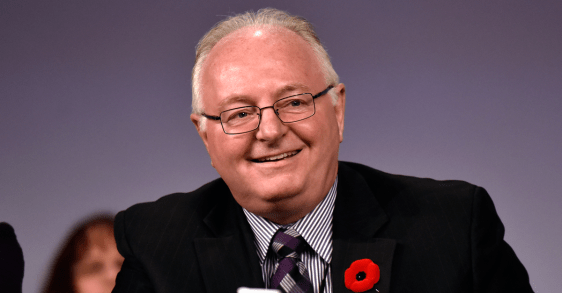
Convention delegates paid tribute to Paul Moist, recognizing his 40 years as a CUPE member, activist, staffer and leader.

Charles Fleury, national secretary-treasurer, led off the tribute by highlighting Moist’s many roles with CUPE over the past four decades and the time he has dedicated.

“I want to thank Paul’s family for all the years you have shared him with us,” said Fleury. “During his 40 years of Paul’s work life he has always been committed to those less fortunate.”

Video tributes included long time friend and executive assistant Pam Beattie. “Paul Moist is first and foremost a worker. A leader yes, but a leader of workers,” said Beattie. “Paul, your dream of a better world for all workers will be realized.”

Maude Barlow, national chair of the Council of Canadians also sent a video message, reflecting on her time working with Paul over the last decades. “You have a wealth of knowledge, but also a huge heart. Putting the heart and head together is what made you such a great leader,” said Barlow.

Stephen Lewis praised Moist’s dedication as a life-long member of the NDP with another video message. “He has been a wonderful supporter of the New Democratic Party; always taking a principled stand in supporting the party, and bringing CUPE into the party sphere,” said Lewis.

In the convention hall, Barry O’Neil, former president of CUPE BC, praised Moist’s compassion for workers.

“Anyone who has seen his schedule, knows his dedication to being the voice of Canadian workers,” said O’Neil.

“On behalf of my family to all delegates, thank you for taking such great care of our dad, but now is our time to take him back,” said Kelly Moist, president of CUPE Manitoba, speaking on behalf of the Moist family.

Delegates added their tributes to Moist from the floor. Many thanked Moist for his leadership, particularly on defending pensions and being a strong voice for all workers in Canada and around the world. 

Source: Tribute to Paul Moist | Canadian Union of Public Employees

Mark Hancock Elected National President Of CUPE

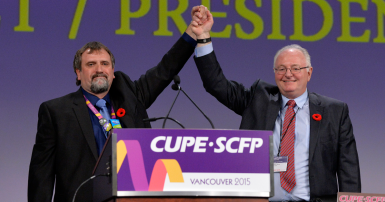
Mark Hancock has been elected the national president of the Canadian Union of Public Employees. Over 2,100 delegates, representing CUPE locals from across the country, elected Hancock to lead Canada’s largest union. The vote took place at CUPE’s 27th biennial national convention taking place this week in Vancouver.

“I will do my best each and every day for all our members across this great country. I am so honoured to be your national president,” said Hancock to convention delegates, after being elected. Hancock, who has been president of CUPE’s British Columbia division since 2013, won on the first ballot, defeating Fred Hahn, currently president of CUPE Ontario.

Source: Mark Hancock elected national president of CUPE

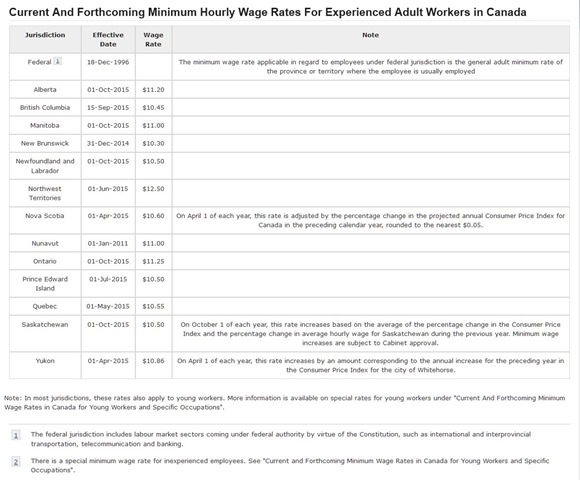
B.C.’s Minimum Wage Ranks Second From Worst In Canada

By Andrew Chernoff

Over 1 in 7 British Columbians Living In Poverty

Tying Minimum Wage To The CPI Essentially Is Indexing Poverty

In September, when B.C.’s minimum wages saw a few pennies raise, Irene Lanzinger, president of the B.C. Federation of Labour told the Georgia Straight, in a interview with  Travis Lupick that the increase in the minimum wage would do little to get British Columbians out of poverty in the province.

Lanzinger said an insufficient increase to the minimum wage is half the problem. The other half, she continued, is that B.C. simultaneously pegged the province’s minimum wage to the Consumer Price Index (CPI), a statistical estimate similar to a measure of inflation.

By itself, Lanzinger said, that would be a good thing that provides predictability to both employees and employers. However, she asserted, tying the minimum wage to the CPI coupled with that modest bump of 20 cents means the bottom of the country is where B.C.’s new minimum wage will remain.

“We are essentially indexing poverty,” she said. “We’ve got people earning poverty wages at our current minimum wage, and they will never get out of poverty. If you are going to peg it to something, you need to raise it above the poverty line first.”

In British Columbia the lack of a provincial poverty reduction strategy, income inequality, a fair tax system, and a minimum wage above the poverty line, in the last 10-years, has resulted in, “the average household income of the top 1% in B.C. has increased by 36% while, for the rest of us, real median incomes have stagnated, even though we’re working harder.”, according to the BC Poverty Reduction Coalition:

This isn’t just about market forces. Government policies keep incomes at the bottom low and give tax breaks to those at the top. Our welfare rates are completely inadequate at $610 a month for a single person. And the final minimum wage rate of $10.25 an hour will not put a worker above the poverty line in Vancouver and other large cities in B.C. But the view from the top is pretty rosy, with the top 1% of B.C. households paying a lower overall tax rate than others. In fact, provincial income tax cuts introduced since 2001 have delivered, on average, $41,000 to the top 1%.

Poverty is concentrated in specific populations, such as Aboriginal people, people with disabilities, recent immigrants, lone-mother households and single senior women, so the negative effects of inequality are more likely to be experienced by these groups.

Let’s get to the heart of the problem. Economic growth doesn’t make societies more equal; in fact, it may do the opposite. A poverty reduction strategy and a fair tax system would make our society more equal and our communities healthier, both physically and socially.

In December, 2014 when the last poverty stats from StatsCan were released, the BC Poverty Reduction Coalition reacted in its article titled, Latest poverty stats show BC still has one of the highest poverty rates in Canada. Trish Garner, the Community Organizer with the BC Poverty Reduction Coalition, a broad-based network of over 400 organizations throughout BC calling on the government to implement a poverty reduction plan,wrote:

The latest poverty statistics were released by Statistics Canada last Wednesday, and the data once again shows that BC has one of the highest poverty rates in Canada.

Using the Low Income Cut-Off – After Tax (LICO-AT) as the poverty line, 1 in 10 British Columbians are living in poverty. That’s 469,000 people struggling to make ends meet. In relation to the rest of the country, BC is tied third with Quebec after Ontario and Manitoba.

As always, there’s a two-year delay in the data from Statistics Canada so these numbers describe the situation from 2012. However, this year there’s also another challenge with the data – it’s produced from a new survey so we cannot compare to previous years. The silver lining perhaps is that it may stop the government from saying that we’ve seen a dramatic reduction in poverty by choosing their reference year from the past as that which had the highest poverty rate, (neglecting to mention that it spiked due to government cuts at the time).

So, we can’t say whether we’re improving or slipping backwards but, whichever way the trend might be going, 1 in 10 people living in poverty should be a concern for government and should drive serious action.

While the LICO-AT is a useful measure, in part because it gives us one of the most conservative estimates of poverty and because the government themselves have begun to use it, it has some big problems. For one, the base year from which the relative family expenditure underlying the data is drawn is 1992 and family spending on food, shelter and clothing in relation to their income has changed significantly since then. It also does not capture any geographical changes in the cost of living, which are especially significant in Metro Vancouver.

So let’s look at the Market Basket Measure (MBM), which is based on up-to-date costs of an adequate standard of living and reflects regional differences in living costs. As Statistics Canada describes, it “attempts to measure a standard of living that is a compromise between subsistence and social inclusion…The MBM represents the cost of a basket that includes: a nutritious diet, clothing and footwear, shelter, transportation, and other necessary goods and services (such as personal care items or household supplies).”

Using the MBM as a poverty line, we find over 1 in 7 British Columbians living in poverty. That’s a shocking 670,000 people. BC now has the second highest poverty rate in Canada after Nova Scotia.

Breaking the data down by age reveals a very interesting feature of the landscape of poverty in BC. While BC is in the middle of the pack in relation to other provinces in terms of child and senior poverty rates, we have the very highest poverty rate in Canada for working age people (18-64 years) across all poverty measures provided. This highlights that there is much more support needed for this age group, many of which are the working poor.

However, this new survey, as with most others, does not count “persons living on reserves and other Aboriginal settlements in the provinces,” and while these exclusions are said to be less than 3% of the total population, it is worth noting that the age demographics of the Aboriginal population might make this more important in counting poverty among the younger ages.

If we add this to the mounting evidence I documented here, including the recently published BC 2014 Child Poverty Report Card based on a different (taxfiler) data source that found 1 in 5 BC children are poor, there clearly continues to be an urgent need for a comprehensive poverty reduction plan for BC with legislated targets and timelines.

Despite the numbers and the heart-rending stories behind them, BC is now the very last province without a poverty reduction plan. It’s time for the government to listen up!

minwages

Consumer Price Index, September 2015

Released: 2015-10-23   image

The Consumer Price Index (CPI) rose 1.0% in the 12 months to September, after increasing 1.3% in August.

The smaller year-over-year increase in the CPI in September compared with August was mostly attributable to an 18.8% year-over-year decline in gasoline prices in September, following a 12.6% decrease the previous month.

12-month change in the major components

Prices were up in seven of the eight major components on a year-over-year basis in September, with the rise in the CPI led by higher prices for food. Increases in the household operations, furnishings and equipment index and the shelter index also contributed to higher consumer prices. The transportation index, which includes gasoline, recorded its 11th consecutive year-over-year decline.

Consumer prices increase in seven of eight major components

Chart 2: Consumer prices increase in seven of eight major components

Consumers paid 3.5% more for food in September compared with the same month a year ago. Prices for food purchased from stores were up 3.9% year over year in September. Prices for fresh vegetables increased more on a year-over-year basis in September (+11.5%) than in August (+7.7%). The meat index rose 4.4% year over year in September, following a 6.3% increase in August. In the 12 months to September, prices for food purchased from restaurants were up 2.7%.

The index for recreation, education and reading increased 2.5% in the 12 months to September, after rising 2.1% the previous month. This acceleration was led by the traveller accommodation index, which was up 10.8% on a year-over-year basis in September, after increasing 7.4% in August. Tuition fees were up 2.8% in September compared with the same month a year earlier.

The clothing and footwear index was up 1.2% in the 12 months to September, after rising 2.1% the previous month. This deceleration was partly attributable to the men’s clothing index and children’s clothing index, which registered smaller year-over-year increases in September than in August. Additionally, the index for women’s clothing recorded no year-over-year change, after posting an increase the previous month.

The transportation index declined 3.5% in the 12 months to September, after decreasing 2.3% in August. This larger year-over-year decrease was mainly attributable to gasoline prices, which fell 7.9% on a month-over-month basis in September, a larger monthly decrease than the index recorded in the same month the previous year. In contrast, the purchase of passenger vehicles index was up 1.6% in the 12 months to September, after increasing 0.6% in August.

12-month change in the provinces

Consumer prices rose in eight provinces in the 12 months to September. Saskatchewan posted the largest increase, followed by Manitoba, Alberta and British Columbia. The CPI in Prince Edward Island registered its 10th consecutive year-over-year decline.

In every province, prices for gasoline decreased more on a year-over-year basis in September than in August.

Chart 3: Consumer prices rise in eight provinces

The CPI in Saskatchewan was up 1.4% in the 12 months to September, after increasing 1.9% in August. The index for passenger vehicle insurance premiums recorded a smaller year-over-year increase in September (+0.3%) than in August (+7.7%). Traveller accommodation prices rose 3.5% in the 12 months to September, a smaller increase than at the national level.

In Prince Edward Island, the CPI decreased 0.8% in the 12 months to September, after declining 0.1% the previous month. This larger year-over-year decrease was partly attributable to the fuel oil index, which declined 31.3% in September, following a 23.9% decrease in August. The basket weight of fuel oil is 10 times greater in Prince Edward Island than in Canada as a whole.

British Columbia was the sole province to show a larger year-over-year increase in its CPI in September (+1.3%) than in August (+1.2%). Prices for men’s clothing were up 5.1% in the 12 months to September, after falling 0.2% the previous month. In addition, the video and audio subscription services index was up 5.0% on a year-over-year basis in September, after rising 0.5% the previous month.

image_thumb[6]

Seasonally adjusted monthly Consumer Price Index decreases

On a seasonally adjusted monthly basis, the CPI decreased 0.2% in September, after posting no change in August.

Seasonally adjusted monthly Consumer Price Index

Chart 4: Seasonally adjusted monthly Consumer Price Index

In September, two of the eight major components decreased on a seasonally adjusted monthly basis. The seasonally adjusted index for shelter posted no change.

The largest decrease in September was recorded in the seasonally adjusted transportation index, which fell 1.4%. The seasonally adjusted clothing and footwear index (-0.1%) also declined.

Conversely, the seasonally adjusted food index and the seasonally adjusted recreation, education and reading index both rose 0.4%.

Bank of Canada’s core index

The Bank of Canada’s core index was up 2.1% in the 12 months to September, matching the increase in August.

The seasonally adjusted core index was up 0.1% on a monthly basis in September, after increasing 0.2% in August.