Australia Bars Foreigners From Buying World’s Largest Ranch

The Australian government announced on Thursday it had barred foreigners from buying a company that owns the world’s largest cattle ranch and other Australian farmland greater in area than South Korea.

The company, S. Kidman & Co. Ltd., owns 10 cattle ranches, a bull breeding stud and a feed lot covering 101,411 square kilometers (39,155 square miles) in four states. That’s an area bigger than South Korea and almost as big as the U.S. state of Virginia.

Treasurer Scott Morrison said that Australia’s Foreign Investment Review Board, or FIRB, found that the sale to foreign investors would be contrary to the national interest.

Kidman owns the world’s biggest cattle ranch, Anna Creek Station, which covers 23,677 square kilometers (9,142 square miles) of arid central Australia. Half of it is inside the 122,188 square kilometer (47,177 square mile) Defense Department-controlled Woomera Prohibited Area, or WPA, the world’s largest rocket firing range.

“The WPA weapons testing range makes a unique and sensitive contribution to Australia’s national defense and it is not unusual for governments to restrict access to sensitive areas on national security grounds,” Morrison said in a statement.

“Given the size and significance of the total portfolio of Kidman properties along with the national security issues around access to the WPA, I have determined, after taking advice from FIRB, that it would be contrary to Australia’s national interest for a foreign person to acquire S. Kidman and Co. in its current form,” he added.

Morrison left open the possibility of the company being split up and partially sold to foreign interests without Anna Creek.

Don Manifold, a director of Ernst and Young who is managing the sale, was not immediately available for comment on Thursday.

He said last month that he expected between six and 12 bidders would lodge formal offers. He would not say how many were foreigners. From that list, a preferred buyer was to be chosen before the end of the year.

Media speculated that the company would sell for more than 300 million Australian dollars ($210 million).

At least three Chinese bidders were reportedly interested in buying the Adelaide-based company which was founded by beef baron Sir Sidney Kidman in 1899 and is now largely owned by his descendants.

The Defense Department blocked two Chinese investments in mines on security grounds in 2009 because they were within the Woomera range.

The FIRB rarely intervenes in corporate sales. But increasing foreign ownership of Australian farmland has become a politically sensitive issue.

The Australian beef industry is emerging from years of low profitability due to drought and a high Australian dollar inflated by a mining boom that has now passed.

Despite the size of Kidman’s land holdings, its ranches are largely semi-desert and carry only an average herd of 185,000 cattle, which is a fraction of a percent of the total Australian herd.

Source: Australia Bars Foreigners From Buying World’s Largest Ranch – ABC News

Every Question You Were Afraid to Ask About Tapeworms, Answered

Photo: Getty Images

If you’ve been online at all these past few weeks, you probably heard about Luis Ortiz, a 26-year-old man in California who had a “still wiggling” tapeworm pulled from his brainshudder.

Parasites in general are a disturbing thought, but for some reason tapeworms are especially freakyhence the Internet firestorm over Ortiz’ story. Making it even scarier is how serious his infection was: he needed emergency brain surgery; ultimately he spent close to three months in the hospital recovering.

All of this got us wondering about the medical specifics here, so we went digging. Thankfully, we learned that what happened to Ortiz is rare, and tapeworms aren’t nearly that dangerous in most cases (though they remain ridiculously disgusting). Here’s everything you need to knowbut were afraid to Googleabout these unsettling infections.

First of all, what exactly are tapeworms?

Tapeworms are flat worm parasites that take up residence in the intestines of people and animals. There are a few species, but the one that most commonly occurs in the United States is Taenia solium, also known as pork tapeworm, according to the U.S. Centers for Disease Control and Prevention (CDC).

The “head” of the worm attaches to the wall of a person’s intestine and absorbs nutrients. From there, tapeworms grow a bunch of little segments called proglottids, which contain eggs, and are often passed out of the body with the host’s stool.

How do tapeworms get into your GI tract in the first place?

The most common way to pick up a tapeworm is through eating undercooked meat.

Some eggs can survive for days or months in feces from infected humans or animals. If cattle or pigs eat infected excrement (usually because it gets into their feed somehow), the eggs can hatch and the larvae form into cysts that make their way into the animals’ muscles.

When the animal is slaughtered for consumption, the tapeworm cysts end up in the meat aisle at the grocery store. If the meat is cooked properly, the larvae die, and the meat is safe to eat. But if you eat it raw or undercooked, a larva can enter your GI tract, where it develops into an adult and can grow up to 25 (!) meters long, depending on the species. (That’s 82 feet, for the metric-challenged.)

So then how did it get into that one guy’s brain?

Tapeworm larvae can travel in your body and survive in brain, liver, and lung tissue. But the good news is that in the United States, this kind of infection—called cysticercosis—is extremely rare. It’s usually caused by ingesting the pork tapeworm eggs directly from infected human fecal matter.

This usually means that you get it from eating something contaminated with feces from another infected person. Also: it’s possible to develop cysticercosis after ingesting your own feces (another reason to wash your hands after you use the bathroom); that’s called autoinfection.

Cysticercosis can be very dangerous: When a person ingests these eggs, the larvae can invade the intestinal wall and travel to your organs. If they reach the brain (a potentially fatal condition called neurocysticercosis), that can cause seizures and other neurological symptoms.

How common are they?

While tapeworms are common all over the world, they tend to show up most in Latin America, sub-Saharan Africa, and parts of Europe and Asia. This is why Americans often think of tapeworms as a hazard for international travelers.

The CDC estimates that fewer than 1,000 people in the United States are infected with a tapeworm each year. According to Peter Jay Hotez, PhD, MD, dean of the national school of tropical medicine at Baylor College of Medicine in Houston, Texas, points out, no one is doing active surveillance for tapeworms in the U.S., and so that number is probably a “vast underestimate.”

Still, there is no evidence to suggest that tapeworms are hanging out in every other deli or restaurant, by any means.

What are the symptoms?

As far as relationships go, the human-tapeworm pairing is unrequited. Contrary to what humans think—get out, get out, get out!—tapeworms are perfectly happy in our GI tract. (Hey, it’s warm and there’s free food.) And they’re so well-adapted to the human body that adult worms often don’t trigger any symptoms in their hosts at all; when they do, it’s usually a stomachache, diarrhea, or weight loss.

So how do you find out that there’s a parasite in your body? Well, there’s a decent chance that you won’t. “[Tapeworms] have a normal life cycle,” Dr. Hotez says. “They can live for up to a few years and then they die.” When that happens, the host simply passes the tapeworm, or it gets absorbed by the intestines.

How do I find out if I have a tape worm?

Their eggs will show up in your stool. So, well, there’s no nice way to put this: most people have to have their poop analyzed to confirm infection.

After providing a stool sample, a doctor will look under a microscope for the eggs, which are less than 1,000th of a millimeter in size, Dr. Hotez says. From there, doctors will likely treat the infection with praziquantel, a very effective antiparasitic drug.

You can also pass a whole proglottid segment in your stool, and if you happen to see it moving—yes, moving—before you flush that’s another tip-off.

How do I prevent a tapeworm infection?

Since most people get it from raw or undercooked meat, the best advice is to really be sure you’re fully cooking meat, the CDC says. If you’re cooking whole cuts of beef or pork, use a food thermometer to check that the temperature reaches at least 145° F (63° C) for whole cuts and 160° F for ground meat.

Source: Every Question You Were Afraid to Ask About Tapeworms, Answered – Health News and Views – Health.com

Powering the next billion devices with Wi-Fi

University of Washington engineers have developed a novel technology that uses a Wi-Fi router — a source of ubiquitous but untapped energy in indoor environments — to power devices.

The Power Over Wi-Fi (PoWiFi) system is one of the most innovative and game-changing technologies of the year, according to Popular Science, which included it in the magazine’s annual “Best of What’s New” awards announced Wednesday.

The technology attracted attention earlier this year when researchers published an online paper showing how they harvested energy from Wi-Fi signals to power a simple temperature sensor, a low-resolution grayscale camera and a charger for a Jawbone activity tracking bracelet.

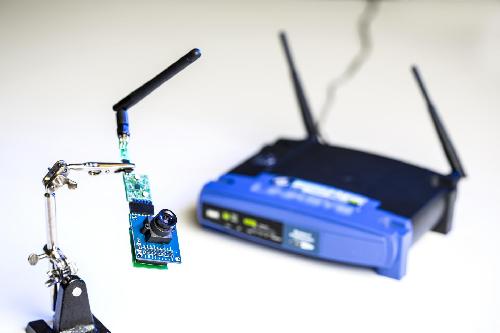
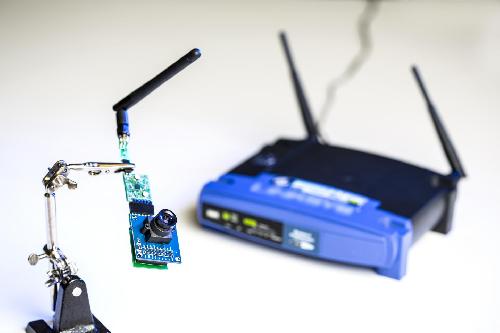
pic The UW team used ambient signals from this Wi-Fi router to power sensors in a low-resolution camera and other devices. Credit: Dennis Wise/University of Washington

The final paper will be presented next month at the Association for Computing Machinery’s CoNEXT 2015 conference in Heidelberg, Germany, on emerging networking experiments and technologies.

“For the first time we’ve shown that you can use Wi-Fi devices to power the sensors in cameras and other devices,” said lead author Vamsi Talla, a UW electrical engineering doctoral student. “We also made a system that can co-exist as a Wi-Fi router and a power source — it doesn’t degrade the quality of your Wi-Fi signals while it’s powering devices.”

PoWiFi could help enable development of the Internet of Things, where small computing sensors are embedded in everyday objects like cell phones, coffee makers, washing machines, air conditioners, mobile devices, allowing those devices to “talk” to each other. But one major challenge is how to energize those low-power sensors and actuators without needing to plug them into a power source as they become smaller and more numerous.

The team of UW computer science and electrical engineers found that the peak energy contained in untapped, ambient Wi-Fi signals often came close to meeting the operating requirements for some low-power devices. But because the signals are sent intermittently, energy “leaked” out of the system during silent periods.

The team fixed that problem by optimizing a router to send out superfluous “power packets” on Wi-Fi channels not currently in use — essentially beefing up the Wi-Fi signal for power delivery — without affecting the quality and speed of data transmission. The team also developed sensors that can be integrated in devices to harvest the power.

In their proof-of-concept experiments, the team demonstrated that the PoWiFi system could wirelessly power a grayscale, low-power Omnivision VGA camera from 17 feet away, allowing it to store enough energy to capture an image every 35 minutes.

It also re-charged the battery of a Jawbone Up24 wearable fitness tracker from zero to 41 percent in 2.5 hours.

The researchers also tested the PoWiFi system in six homes. Users typically didn’t notice deterioration in web page loading or video streaming experiences, showing the technology could successfully deliver power via Wi-Fi in real-world conditions without degrading network performance.

Although initial experiments harvested relatively small amounts of power, the UW team believes there’s opportunity for make the PoWiFi system more efficient and robust.

“In the future, PoWi-Fi could leverage technology power scaling to further improve the efficiency of the system to enable operation at larger distances and power numerous more sensors and applications,” said co-author Shyam Gollakota, assistant professor of computer science and engineering.

source: University of Washington

Source: Powering the next billion devices with Wi-Fi | Science Codex

Hemorrhaging Canucks In Must Win Game Tonight Against Struggling Jets

CANUCKS BANTER     By Andrew Chernoff    November 17, 2015

Canucks Quest To End Losing Streak Continues As They Stumble Into Winnipeg

image

Vancouver (7-6-6) completes its 7-game road trip that is 1-3-2 with a 3-game losing streak (0-2-1) after a 4-3 overtime loss to the Montreal Canadiens on Monday. The Canucks have lost 6 of their last 7 games.

Vancouver has lost 11-one goal games so far this season (0-5-6), most in the NHL. The other loss has being by 2-goals against the Toronto Maple Leafs on November 14, by a 4-2 score.

Winnipeg (8-9-2) begins a 3-game home stand after returning home from a 3-2 loss to the St. Louis Blues on Monday, the final game of a pointless 4-game road trip, that extended their losing streak to 6-games (0-5-1).

The game tonight is the first of three games between the Jets and Canucks who play two more times: March 14, 2016 in Vancouver and March 22, 2016, back in Winnipeg.

Vancouver has a stranglehold on the series with the Jets, at 12-4-1 with one tie. Canucks had won three straight and seven of eight meetings before losing  5-4 in Winnipeg on April 4 last season.

Both teams need to turn things around sooner than later as precious points are being lost, as well as they are both dropping further in the standings of their respective divisions in the Western Conference.

Both have struggling power plays and penalty kills, with Winnipeg being shorthanded 77 times this season, most in the NHL. The Jets are 3 for 22 on the power play at home and 9 for 59 overall. Canucks are 6 for 38 on the power play on the road and 11 for 63 overall. The Canucks penalty kill has allowed 7 power play goals on 34 attempts on the road. The Jets have allowed 5 power play goals on 24 attempts at home.

Both teams seem to be oh-so-close on the verge of dominating a game and sensing a win, only to be their own worst enemies, and at the end, realizing a game is 60-minutes long, and the game isn’t over ‘till it’s over.

The question on the mind of the Canucks brass entering this game has to be, what happens if Vancouver continues to go in the wrong direction—-what is management prepared to do?

CANUCKS JOTTINGS

  • Jannik Hansen leads the Canucks in +/- with a +9, while Radim Vrbata is the worst Canuck at -11
  • Rookie Jared McCann scored his first power play goal, 6th goal of the season on Monday night.
  • McCann is tied for 3rd most goals by a rookie; and is tied for top sniper on the Canucks with Daniel Sedin with his 6 goals.
  • Ryan Miller is 0-4-1 with a 3.46 GAA over a five-game stretch in which he’s surrendered three goals or more each time
  • Miller has a 27-12-6 record against Montreal.
  • In 4 games on the road trip, Miller has allowed 14 goals on 115 shots, a save percentage of .878.
  • Vancouver’s Jannik Hansen had no points Monday night but has 4 goals and 3 assists over his last 8 games.
  • The Canucks have at least one power-play goal in their last 3 games
  • Canucks C Brandon Sutter (lower body) did not practise Sunday and missed his third straight game on Monday.
  • Both D Luca Sbisa (foot) and LW Brandon Prust (ankle) rejoined the team in Toronto and practised.
  • Hunter Shinkaruk called up from Utica Comets in the AHL made his NHL debut against the Canadians. He had 13 shifts and 9:35 minutes/seconds in playing time.
  • Jake Virtanen leads the team and all NHL rookies in hits with 44. Ben Hutton and Jared McCann are tied for 41rst with 10-hits each.
  • Daniel Sedin has 14 points (5-9-14) in his last 15 games.
  • Ben Hutton ranks t-second on the team and second among NHL rookies in assists (8). Hutton has 4 assists in the last 8
    games and had a career-high three game point/assist streak from Nov. 7-10/15. He also ranks t-third among rookies in blocked shots
    with 21.
  • Ryan Miller ranks first in a number of statistical categories this season including games played/started (16), TOI (966:31) and shots
    against (452).
  • Alex Edler leads VAN in time on ice (24:46) and has led the team in that category in 17 of 18 games he’s played, including nine games where he’s led all skaters in TOI. He currently ranks 12th in the NHL in TOI/GP. Last season, Edler ranked first on the team in average ice time per game (23:58) and led the team in TOI on 59 separate occasions including 26 games where led all skaters in TOI
  •  McCann and Ben Hutton are tied for 11th in rookie points with 8-points each. Jake Virtanen has 4-points.
  • Jared McCann and Ben Hutton have the 8th and 9th most shots among rookies with 31 and 29 respectively.  Jake Virtanen has 22-shots.
  • Ben Hutton is 10th among all rookies in TOI, averaging 17:36-minutes/seconds per game. McCann is 56th at 11:27-minutes/seconds per game; Virtanen is 69th at 9:58-minutes/seconds per game
  • Jared McCann is 6th in face-offs won among all rookies with 46 on 128 attempts.
  • Ben Hutton has two power play assists.
  • The Canucks have had 18 different goal scorers this season, t-second most in the League with St. Louis and Boston; Nashville has
    had 19 different goal scorers
  • The Canucks are tied for 8th in the League with 2.84 goals for per game; their 54 goals on the year are tied for 5th most in the NHL.
  • The Canucks have 1-shutout and have yet to be shutout after 19-games.
  • VANCOUVER’S 2015.16 RECORD:
    • Scoring First: 5-1-4
    • Opponent scoring first: 2-5-2
    • Leading after 1 period: 4-0-2
    • Trailing after 1 period: 0-4-2
    • Leading after 2 periods: 5-1-4
    • Trailing after 2 periods: 0-5-0
    • Tied after 2 periods: 2-0-2
    • 1-Goal Games: 2-5-6
    • 2-Goal Games: 1-1
    • 3-Goal Games: 4-0
    • Score 2 or fewer goals: 1-5-3
    • Outshooting Opponent: 4-4-4
    • Outshot by Opponent: 3-2-2
    • Even Shots: 0-0-0
    • SHG Given Up: 4
    • SHG Scored: 1
    • Score 4+ Goals: 5-0-0
      Score 3 Goals or Less: 2-6-6
      Allow 4+ Goals: 0-2-3
      Allow 3 Goals or Less: 7-4-3
      On 0 Days Rest: 2-0-1
      On 1 Day Rest: 2-3-4
      On 2 Days Rest: 2-2-1
      On 3+ Days Rest: 0-1-1
      Score a PPG: 2-3-4
      Give up a PPG: 2-4-3
    • 25+ Shots on Goal: 6-5-5
    • Less than 25 shots: 1-1-1
      20+ Shots on Goal: 7-6-6
      Less than 20 shots:

SEASON SNAPSHOT

image

image

FireShot Screen Capture #142 - '2015-2016 League Standings Standings I NHL_com - Standings' - www_nhl_com_ice_standings_htm_season=20152016&type=LEA

image

PLAYER STATS

FireShot Screen Capture #146 - 'Vancouver Canucks at Winnipeg Jets - 11_18_2015' - canucks_nhl_com_gamecenter_en_preview_id=2015020275

CANUCKS AT A GLANCE

FireShot Screen Capture #143 - '2015 Vancouver Canucks vs_ 2015 Winnipeg Jets - Compare Stats, Leaders and Past Matchups' - www_sportingcharts_com_nhl

FireShot Screen Capture #144 - '2015 Vancouver Canucks vs_ 2015 Winnipeg Jets - Compare Stats, Leaders and Past Matchups' - www_sportingcharts_com_nhl

FireShot Screen Capture #145 - '2015 Vancouver Canucks vs_ 2015 Winnipeg Jets - Compare Stats, Leaders and Past Matchups' - www_sportingcharts_com_nhl

Statistics courtesy of the NHL, Vancouver Canucks and SportingCharts, with thanks.