El Nino ‘reaching its peak’ In Much Of Australia

THE El Nino bringing drought conditions to much of Australia may be reaching its peak but is now one of the strongest on record.

THE Bureau of Meteorology says the El Nino, a warming of sea surface temperatures in the central and eastern tropical Pacific Ocean that tends to bring drier weather to Australia, now matches the strength of record El Ninos in 1997/98 and 1982/83.

Both of those events brought severe droughts to eastern Australia, and the 1982/83 drought was a major factor in the Ash Wednesday bushfires that killed 71 people in Victoria and South Australia on February 16, 1983.

“The (current El Nino) event is comparable to the record events of 1997/98 and 1982/83,” the BOM’s latest fortnightly El Nino Southern Oscillation Wrap Up says.

“International climate models suggest that El Nino sea surface temperatures are approaching their peak, and will decrease in the first quarter of 2016.

“With such warm sea surface temperatures, models suggest the tropical Pacific is unlikely to return to neutral until at least autumn 2016, although impacts on Australian climate are likely to decline prior to this.

” The influence of El Ninos varies at this time of year, depending on how quickly they begin to break down, but most deliver below-average rainfall and a continuing drying influence on southeastern Australia but more rain in inland Western Australia.

Meanwhile, a warming of Indian Ocean sea surface temperatures known as the Indian Ocean Dipole is decaying rapidly, the BOM says. It set sea surface temperature records in October and offset some of the drying influence of the El Nino during winter.

WHAT IS AN EL NINO?

* Warming of sea surface temperatures in eastern and central tropical Pacific Ocean that disrupts weather patterns across the Pacific

* Can cause ocean cooling in the western Pacific and around northern Australia

* Can deliver more rain to the west coast of North and South America

* Can disrupt trade winds that blow moisture-laden air towards eastern Australia

WHAT ARE THE EFFECTS IN AUSTRALIA?

* Lower rainfall through winter and spring, especially in the north and east

* Temperature extremes

* Warmer-than-average weather, particularly in southern Australia in the second half of the year

* Decreased cloud and low rainfall

* Worsening heat extremes for cities such as Adelaide and Melbourne, increase in extreme hot days and heatwaves further north

* Increased frost

* Increased bushfire risk

* Fewer tropical cyclones, especially for Queensland

* Later northern monsoon rains

* Below-average wet season rains early

* Reduced winter snowfall

(Source: Bureau of Meteorology)

Source: El Nino ‘reaching its peak’: BOM | Breaking National News and Australian News | NT News

Turkey shoots down jet near border with Syria

Turkish F-16 fighter jets shot down a war plane of unknown origin on Tuesday after it violated Turkish air space close to the Syrian border and ignored warnings, a Turkish military official told Reuters.

Separately, Prime Minister Ahmet Davutoğlu’s office said he had spoken with the chief of military staff and the foreign minister about developments on the border.

The statement did not mention the downed jet.

Footage from Turkish private broadcaster Haberturk TV on Tuesday showed a crashed jet in flames.

More details soon …

Source: Turkey shoots down jet near border with Syria | World news | The Guardian

Household debt seen as South Korea’s potential time bomb

By Lee Joon-seung       2015/11/24

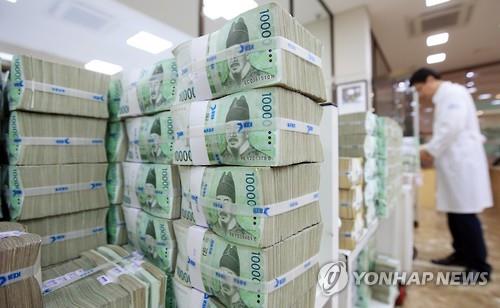
SEOUL/SEJONG, Nov. 24 (Yonhap) — Soaring household debt that could exceed 1,200 trillion won (US$1.03 trillion) by year’s end is becoming a serious liability to South Korea’s long-term economic well-being, local observers said Tuesday.

The alarm bells are going off as the Bank of Korea (BOK) announced earlier in the day that the country’s household credit hit an all-time high of 1,166.4 trillion won as of end-September. This is up 3 percent from 1,131.5 trillion won tallied three months earlier.

What is more worrisome is that the pace of credit growth in the third quarter. In the July-September period, money borrowed by households grew by 34.5 trillion won vis-a-vis the previous three month period. This is an acceleration from the previous record of 33.2 trillion won reported in the second quarter of this year.

“At this pace, there is a chance that the total will top the 1,200 trillion won mark as of end-December,” said a government official, who declined to be identified.

The recent rise in household debt comes as the central bank began lowering its key interest rates from last year, to cope with falling growth. The key rate stands at a record low 1.5 percent.

It also reflects measures taken by the government to prop up the local property market, and steady rise in local rent costs that forced many people to buy a home, instead of opting for a lease arrangement.

In August 2014, state policymakers eased rules governing debt-to-income (DTI) and loan-to-value (LTV) ratio that facilitated borrowing.

Market watchers said that the rise in household debt comes at a time when the U.S. Federal Reserve is widely expected to mark up it key policy rates next month, which can trigger an outflow of capital from emerging markets and fuel financial market volatility.

Domestic retail banks have been marking up interest rates slightly from September onwards in expectations that the BOK may eventually raise key rates, if the United States takes such a step, to prevent money from leaving the country.

A rise in rates can add more burdens to borrowers and low income earners, who will be forced to cut back on spending, especially if people borrowed money on floating rates.

Besides the overall rise in credit, local experts said a spike in loans taken out by secondary banks, like savings banks, shot up by 6.32 trillion won in the third quarter. This is the second largest quarterly increase since the second quarter of 2014.

Interest rates at savings banks are relatively high compared to regular banks and people who borrow money from these institutions generally have lower credit ratings.

More money taken out from these banks can burden borrowers and generally weigh down the economy in the long run.

In addition, data showed there has been a steady rise in borrowing by small-time, self-employed entrepreneurs who may not have the capability to pay back debt.

Reflecting on this, Lee Jun-hyup, a research fellow at Hyundai Research Institute (HRI), said of the 1,600 trillion won in debt, about 700 trillion may be money borrowed from self-employed people.

“As a rule, people spend money after they’ve covered their expenses, that includes interest paid to banks, so a rise in rates will lead to weakening on consumption,” the economist said.

This is a serious problem for Asia’s fourth-largest economy whose exports have contracted this year. In the first 10 months of 2015, South Korea’s cumulative exports reached $440.2 billion, down 7.6 percent from a year earlier,

On the positive side, the BOK has maintained that while household debt has been on the rise, so has income.

In its financial stability report published in June, the rate of disposable income to debt stood at 138.1 percent as of late March, an improvement from 135.4 percent tallied for September of last year.

In addition, the government and local lenders said that moves to curb borrowing, like getting people to pay back both interest and the principal, should restrict future spikes in debt.

“The government already asked lenders to tighten oversight on borrowing as of July with local banks putting the finishing touches on their own loan practice for implementation in 2016,” a finance ministry official said.

He said starting in January, it will become much harder for people to borrow money using homes as collateral.

Local banks have said that they will use new “stress tests” to more precisely determine if a person can handle excessive loans, and not issue loans if DTI levels exceed 80 percent.

The government, meanwhile, said that it is weighing various options on the table to deal with the debt problem, but made clear any further action will take into account the need to keep the current economic growth momentum alive and in particular, not cause serious problems for the real estate market.

Sung Tae-yoon, an economics professor at Yonsei University in Seoul, said government actions seem to be focused on maintaining the health of financial institutions.

“This approach, while a step in the right direction, is not enough and more must be done to push for economic and income growth,” he claimed.

Source: (News Focus) Household debt seen as S. Korea’s potential time bomb

Tiny water bears are huge DNA thieves: study


Washington (AFP) – The eight-legged water bear — a hardy, nearly microscopic animal  resembling its mammal namesake — gets a huge chunk of its DNA from foreign organisms such as bacteria and plants, scientists have revealed.

These genes, the researchers suggest, help the tiny animals, also known as moss piglets or tardigrades, survive in the harshest of environments.

Water bears, which live all over the world, are usually 0.020 inches (0.5 millimetres) long and move very slowly and clumsily on their multitude of legs.

These highly adaptable creatures can survive extreme temperatures.

Even after being stuck in a freezer at -112 degrees Fahrenheit (-80 Celsius) for 10 years, they can start moving around again about 20 minutes after thawing.

By sequencing these creatures’ genome, researchers from the University of North Carolina (UNC) at Chapel Hill were surprised to find that 17.5 percent — nearly a sixth — of the genome came from foreign organisms.

For most animals, less than one percent of their genome comes from foreign DNA.

The microscopic rotifer previously held the record, with eight percent of its genome coming from foreign DNA.

“We had no idea that an animal genome could be composed of so much foreign DNA,” said co-author Bob Goldstein of UNC’s College of Arts and Sciences.

“We knew many animals acquire foreign genes, but we had no idea that it happens to this degree.”

– New insight on evolution –

The study, published in Monday’s edition of the Proceedings of the National Academy of Sciences, also made unusual findings about how DNA is inherited.

Goldstein, first author Thomas Boothby and colleagues found that water bears obtain about 6,000 foreign genes mostly from bacteria, as well as plants, fungi and Archaea single-cell organisms.

“Animals that can survive extreme stresses may be particularly prone to acquiring foreign genes — and bacterial genes might be better able to withstand stresses than animal ones,” said Boothby, a postdoctoral fellow in Goldstein’s lab.

Indeed, bacteria have survived the most extreme environments on Earth for billions of years.

Water bears acquire foreign genes through horizontal gene transfer, a process by which species swap genetic material instead of inheriting DNA from parents.

“With horizontal gene transfer becoming more widely accepted and more well-known, at least in certain organisms, it is beginning to change the way we think about evolution and inheritance of genetic material and the stability of genomes,” said Boothby.

Researchers said the DNA likely gets inside the genome randomly but what remains allows water bears to survive in the most hostile environments.

Under intense stress, such as extreme dryness, the water bear’s DNA breaks up into small pieces, according to the research team.

Once the cell rehydrates, its membrane and nucleus housing the DNA temporarily becomes leaky and allows other large molecules to pass through easily.

They thus repair their own damaged DNA while also absorbing foreign DNA as the cell rehydrates, forming a patchworks of genes from different species.

“So instead of thinking of the tree of life, we can think about the web of life and genetic material crossing from branch to branch,” Boothby explained.

“So it’s exciting. We are beginning to adjust our understanding of how evolution works.”

Source: Tiny water bears are huge DNA thieves: study – Yahoo News

Asia shares largely down on Tuesday hurt by iron ore – BBC News

Shares in Asia were largely in negative territory on Tuesday following declines in the US and as falling iron ore prices continued to hurt mining companies.

In Australia, the S&P/ASX 200 closed down 0.95% at 5,226.40.

Analysts said iron ore prices were continuing to move towards the decade low reached earlier this year.

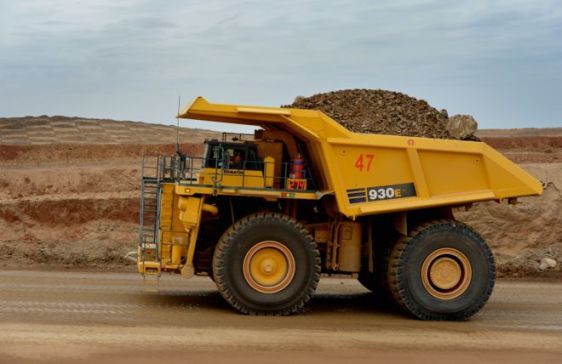
The commodity is Australia’s biggest export and was trading at $44.20 a tonne in China on Monday.

Independent economist and commodities specialist Andy Xie has predicted that iron ore prices will fall below $40 a tonne before the end of the year.

He said prices could even sink as low as $30 for much of next year as demand from China continues to decline.

Three of the biggest iron ore producers recorded falls in their Sydney-listed shares. BHP Billiton closed down 1.8%, Rio Tinto fell 1.5%, while Fortescue Metals was the biggest loser, sinking 3.2%.

Japan’s Nikkei index spent much of the day flat but made gains late in the day to close up 0.23% at 19,924.89 points.

Shares in the country’s troubled electronics maker Sharp surged more than 35% at one point on reports its lenders may waive some of its debts.

Without citing sources, Kyodo News said a state-backed fund may invest in Sharp if Japanese lenders agreed to write off an unspecified amount of its debt.

Investors seem to shrug off fresh numbers released earlier on Tuesday that showed Japan’s manufacturing activity expanded in November as new orders and output increased.

The Markit/Nikkei Japan Flash Manufacturing Purchasing Managers Index (PMI) rose from 52.4 in October to 52.8 in November. A reading above 50 indicates expansion.

The PMI figure was the highest it had been since March last year – ahead of the introduction of the country’s sales tax.

Marcel Thieliant from Capital Economics said the reading suggested Japan’s economy had returned to growth this quarter.

“Today’s survey confirms that economic activity is on the mend. But with large amounts of spare capacity dampening price pressures, we still think that the Bank of Japan may have to step up the pace of easing in coming months,” he added.

In China, losses were extended for much of the day after new rules for the mainland’s stock exchanges aimed at limiting leveraged bets on the market and reducing speculative behaviour were introduced on Monday.

Investors were concerned over available liquidity ahead of the restart of initial public offerings.

The Shanghai Composite index was down as much as 1% but recovered ground later to stand 0.16% higher at 3,616.11 in afternoon trade.

Hong Kong’s Hang Seng index was down 0.44% at 22,568.23.

South Korea’s Kospi index closed up 0.63% at 2,016.29

Source: Asia shares largely down on Tuesday hurt by iron ore – BBC News