From: The Western Call, Vancouver, B.C., October 14, 1910
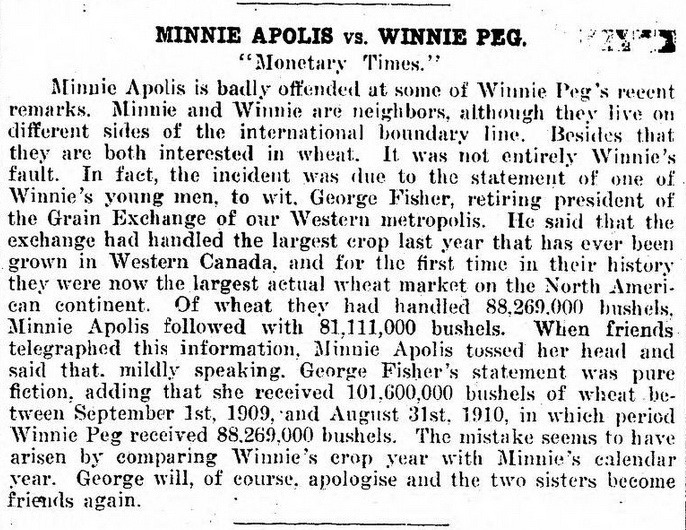

From: The Western Call, Vancouver, B.C., October 14, 1910
Aug 26, 2013 By Nik Nanos

A new report from Wilson Center Public Policy Scholar Nik Nanos, Entering the Energy & Environment Policy Frontier, explores the changing energy landscape in the United States and Canada and identifies energy policy risks and opportunities.
As part of a scholar-in-residence program at the Woodrow Wilson International Center for Scholars in Washington, DC, between January and May 2013, Nik Nanos conducted energy policy research.
Using original public opinion research, in-depth interviews with experts and advocacy groups, and analysis of secondary data, Nanos suggests that the government should not pick energy winners and losers, but encourage competition among energy sources.
Furthermore, Nanos finds that decentralized sub-national environmental policy making, gridlock in Congress, and potential uncertainty in recoverable energy resources should result in greater caution in favoring one policy over another.
Promoting investment in a variety of technologies to recover and produce energy in an environmentally responsible manner will likely best minimize the long term energy and environmental policy risks.
Canada and the US need to have a frank discussion on carbon policy and the environment, according to Nik Nanos.
Downloads
By Dylan Matthews, Published: August 19 http://www.washingtonpost.com
Minimum wage advocates love to point to Australia’s $16.88 an hour minimum as evidence that a very high wage floor needn’t stifle a country’s growth. After all, Australia hasn’t had a recession in 20 years. But Australia is hardly an outlier. Most developed countries have a higher minimum wage than we do, as this chart from Business Insider’s Matthew Boesler — using data from the ConvergEx Group — shows:

This holds up if you compare the minimums to the median wage in the country in question, as the OECD did. Here’s what they found:

The U.S., unsurprisingly, is on the bottom but it’s tied with Japan. And Australia isn’t on top; that goes to France, which has a lower average wage than Australia, which makes up for a lower minimum wage and leads to a higher ratio.
The Center for American Progress has proposed setting the minimum wage at half the average wage (mean, not median as used above) for production and non-supervisory workers; at the current level, that means a $10.07 minimum. If we were to adopt France’s 60 percent ratio, that’d put us at about $12.08.
Of course, there are all kinds of pros and cons to that kind of increase. I went through many of them here. And it’s worth noting that Australia’s minimum wage comes with all kinds of exceptions, especially for younger workers.
Update: Another point, which Guan Yang reminded me of on Twitter – a large number of countries, including Denmark, Germany, Italy, Norway, Singapore, Sweden, and Switzerland, don’t have minimum wages at all. Most of them make up for it with widespread collective bargaining, which sets de facto minimums.

 Andrew Phillip Chernoff