How forest management and deforestation are impacting climate

Two new studies reveal how altering the composition of trees in forests is influencing not only the carbon cycle, but air surface temperatures to a significant degree as well. The results highlight how human-made changes to forests hold more severe consequences than previously believed.

Worldwide, reforested areas are increasingly prominent; for example, in Europe, 85% of forests were managed by humans as of 2010. Strong favoritism of foresters to plant more commercially valuable trees – such as Scot pines, Norway spruce and beech – has resulted in reforestation of 633,000 square kilometers of conifers at the expense of broadleaved forests, which decreased by 436,000 square kilometers since 1850.

To gain more insights into the impact of this favoritism, Kim Naudts and colleagues reconstructed 250 years of forest management history using a land-cover model, but also included forest management factors such as changes in tree species.

Their analysis reveals that the conversion of broadleaved forests to coniferous forests caused significant changes in evapotranspiration and albedo, the amount of solar energy reflected from the Earth back into space. These changes, in combination with the release of carbon that is associated with managed forests, are contributing to warming rather than mitigating it. This is happening despite an overall increase in tree coverage. Thus, climate frameworks should account for land management practices in addition to land cover when trying to mitigate warming, the authors say.

A second study describes how changes in global forest cover are affecting the fluxes of energy and water between the land and the atmosphere, and how this process can vary across different forest regions. In the past, the degree to which biophysical effects of deforestation can influence climate have been debated in the scientific community, but these results shed new light on the matter, suggesting that aridness and forest type are important variables.

Such data could better inform climate treaties, the authors, Ramdane Alkama and Alessandro Cescatti, note. Their analysis, based on satellite data of surface temperature and variations in forest cover, reveals that forest clearing is causing an increase in average and maximum surface temperatures, except at the northernmost latitudes.

They note that evapotranspiration plays a key role in how forest clearing impacts temperatures, since arid areas show the strongest warming pattern, followed by the temperate, the tropical, and the boreal zones.

Together, these two studies demonstrate previously unappreciated complexities of the role that forests play in affecting the carbon cycle and air surface temperatures.

pic

Coniferous (dark green) and broadleaved (light green) trees in summer in Alsace (France) exhibit differences in surface properties. This material relates to a paper that appeared in the Feb. 5, 2016, issue of Science, published by AAAS. The paper, by K. Naudts at Institut Pierre Simon Laplace in Gif-sur-Yvette, France, and colleagues was titled, “Europe’s forest management did not mitigate climate warming.” Credit: Ernst-Detlef Schulze

source: American Association for the Advancement of Science

Source: How forest management and deforestation are impacting climate | Science Codex
Bee virus spread manmade and emanates from Europe

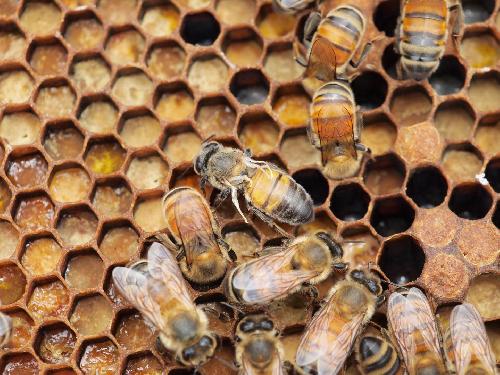
The spread of a disease that is decimating global bee populations is manmade, and driven by European honeybee populations, new research has concluded.

A study led by the University of Exeter and UC Berkeley and published in the journal Science found that the European honeybee Apis mellifera is overwhelmingly the source of cases of the Deformed Wing Virus infecting hives worldwide. The finding suggests that the pandemic is manmade rather than naturally occurring, with human trade and transportation of bees for crop pollination driving the spread.

Although separately they are not major threats to bee populations, when the Varroa mite carries the disease, the combination is deadly, and has wiped out millions of honeybees over recent decades. Varroa feed on bee larvae while the Deformed Wing Virus kills off bees, a devastating double blow to colonies. The situation is adding to fears over the future of global bee populations, with major implications for biodiversity, agricultural biosecurity, global economies, and human health.

The study was funded by the Natural Environment Research Council (NERC) and supported by a Royal Society Dorothy Hodgkin Fellowship. It involved collaborators from the universities of Sheffield, Cambridge, Salford and California, as well as ETH Zurich in Switzerland.

Lead author Dr Lena Wilfert, of the University of Exeter’s Centre for Ecology and Conservation, on the Penryn Campus in Cornwall, said: “This is the first study to conclude that Europe is the backbone of the global spread of the bee killing combination of Deformed Wing Virus and Varroa. This demonstrates that the spread of this combination is largely manmade – if the spread was naturally occurring, we would expect to see transmission between countries that are close to each other, but we found that, for example, the New Zealand virus population originated in Europe. This significantly strengthens the theory that human transportation of bees is responsible for the spread of this devastating disease. We must now maintain strict limits on the movement of bees, whether they are known to carry Varroa or not. It’s also really important that beekeepers at all levels take steps to control Varroa in their hives, as this viral disease can also affect wild pollinators.”

Researchers analysed sequence data of Deformed Wing Virus samples across the globe from honeybees and Varroa mites, as well as the occurrence of Varroa. They used the information to reconstruct the spread of Deformed Wing Virus and found that the epidemic largely spread from Europe to North America, Australia and New Zealand. They found some two-way movement between Europe and Asia, but none between Asia and Australasia, despite their closer proximity. The team also looked at samples from other species suspected of transmitting the disease, including different species of honeybee, mite and bumblebees, but concluded that the European honeybee was the key transmitter.

Professor Roger Butlin, Professor of Evolutionary Biology at the University of Sheffield, said: “Our study has found that the deformed wing virus is a major threat to honeybee populations across the world and this epidemic has been driven by the trade and movement of honeybee colonies.

“Domesticated honeybee colonies are hugely important for our agriculture systems, but this study shows the risks of moving animals and plants around the world. The consequences can be devastating, both for domestic animals and for wildlife. The risk of introducing viruses or other pathogens is just one of many potential dangers.”

Senior author Professor Mike Boots of Exeter and UC Berkeley concluded: “The key insight of our work is that the global virus pandemic in honeybees is manmade not natural. It’s therefore within our hands to mitigate this and future disease problems.”

source: University of Exeter

Source: Bee virus spread manmade and emanates from Europe | Science Codex

Sugar-sweetened drinks linked to increased visceral fat

DALLAS, Jan. 11, 2016–Drinking sugar-sweetened beverages every day was associated with an increase in a particular type of body fat that may affect diabetes and heart disease risk, according to new research in the American Heart Association’s journal Circulation.

Data from the Framingham Heart Study — federally supported, ongoing research that has advanced the understanding of cardiovascular disease — showed that among middle-aged adults, there was a direct correlation between greater sweetened beverage consumption and increased visceral fat.

Visceral fat or “deep” fat wraps around a number of important internal organs such as the liver, pancreas and intestines. Visceral fat affects how our hormones function and is thought to play a larger role in insulin resistance – which may boost Type 2 diabetes and heart disease risk.

Researchers looked at both sugar-sweetened beverage and diet soda consumption. The researchers did not observe this association with diet soda, which is often promoted as low in calories and sugar.

“There is evidence linking sugar-sweetened beverages with cardiovascular disease and type 2 diabetes,” said Caroline S. Fox, M.D., M.P.H, lead study author and a former investigator with the Framingham Heart Study of the National Heart, Lung, and Blood Institute. She is currently a special volunteer with the National Institutes of Health (NIH). “Our message to consumers is to follow the current dietary guidelines and to be mindful of how much sugar-sweetened beverages they drink. To policy makers, this study adds another piece of evidence to the growing body of research suggesting sugar-sweetened beverages may be harmful to our health.”

A total of 1,003 study participants, average age 45 and nearly half women, answered food questionnaires and underwent CT scans at the start and the end of the study to measure body fat changes.

They were ranked into four categories: non-drinkers; occasional drinkers (sugar-sweetened beverages once a month or less than once a week); frequent drinkers (once a week or less than once a day); and those who drank at least one sugar sweetened beverage daily.

Over a six-year follow-up period, independent of the participants’ age, gender, physical activity, body mass index and other factors, they found visceral fat volume increased by:


  • 658 centimeters cubed for non-drinkers;
  • 649 centimeters cubed for occasional drinkers;
  • 707 centimeters cubed for frequent drinkers; and
  • 852 centimeters cubed for those who drank one beverage daily.While the exact biological mechanism is unknown, Jiantao Ma, M.D., Ph.D., post-doctoral fellow at the NIH and co-leader of the study, said that it’s possible that added sugars may contribute to insulin resistance, a hormonal imbalance that increases the risk for Type 2 diabetes and heart disease.Sugar-sweetened beverages are the largest contributor of added sugar intake in the United States. Sucrose or high fructose corn syrup are two of the most common sugars found in these popular drinks, which include caffeinated and de-caffeinated soda, carbonated and non-carbonated drinks with added sugar, fruit juice, and lemonade.

    Daily consumption of added sugar, such as those found in sugar-sweetened beverages and processed foods, is high; in 2001 to 2004, the usual intake of added sugars for Americans was 22.2 teaspoons per day or an extra 355 calories. Growing evidence revealing the health risks associated with drinking sweetened beverages led the American Heart Association to provide added sugar recommendations in 2009; for most women, no more than 100 calories per day of added sugars, such as those found in sweetened beverages, and for most men, a limit of 150 calories per day.

    “Our findings are in line with current dietary guidelines that suggest limiting the consumption of sugar-sweetened beverages,” Ma said.

    Source: American Heart Association


Source: Sugar-sweetened drinks linked to increased visceral fat | Science Codex

Polymer puts new medical solutions within reach

The liquid crystalline hydrogel in a dry state. Credit: Patrick Mather

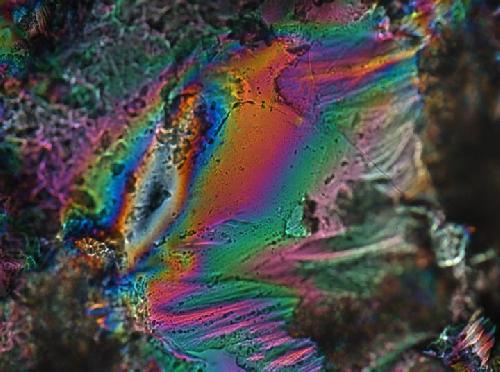
Researchers, particularly those in the medical field, have been searching for a way to combine the properties of liquid crystallinity with those of hydrogels.

Liquid crystals are characterized as having the fluidity of liquid but some of the order of a crystal so they can be oriented to have structure. They are not water-loving, in that they will dissolve in water, making them less than ideal candidates for use inside the body.

Hydrogels, however, are water-loving but they lack the order to orient them into specific shapes.

Combining the properties of liquid crystals and hydrogels in just the right proportions creates the potential for new materials that have the same mechanical properties as soft tissues in the body. A material that is water-loving and has structure opens up the door the possibility for artificial blood vessels that are mechanically stealth so they wouldn’t be viewed as a foreign body.

Professor Pat Mather has developed a process that can create this type of a polymer.

The paper “A hydrogel-forming liquid crystalline elastomer exhibiting soft shape memory” authored by Mather and graduate student Amir Torbati G’14, now a post-doc at UC Denver, was featured on the cover the Journal of Polymer Science B: Polymer Physics.

“It is a balancing act of not having too many water-loving groups in the polymer and balancing that with other chemicals in the polymer that promote structure.” said Mather.

Whatever the hydrogels do to make the liquid crystals water-loving destroys the order of crystallinity, so historically creating a material like this has been a challenge but Mather’s process opens to the door to new medical applications that were previously out of reach.

source: Syracuse University

Source: Polymer puts new medical solutions within reach | Science Codex

Researchers’ metallic glue may stick it to soldering and welding

Per­haps no startup was launched for a more intriguing reason than that of Northeastern’s Hanchen Huang. From the com­pany website:

“MesoGlue was founded by Huang and two of his PhD stu­dents: They had a dream of a better way of sticking things together.”

Those “things” are every­thing from a computer’s cen­tral pro­cessing unit and a printed cir­cuit board to the glass and metal fil­a­ment in a light bulb.

The “way” of attaching them is, aston­ish­ingly, a glue made out of metal that sets at room tem­per­a­ture and requires very little pres­sure to seal.

“It’s like welding or sol­dering but without the heat,” says Huang, who is pro­fessor and chair in the Depart­ment of Mechan­ical and Indus­trial Engineering.

In a new paper, pub­lished in the Jan­uary issue of Advanced Mate­rials & Processes, Huang and col­leagues, including North­eastern doc­toral stu­dent Paul Elliott, describe their latest advances in the glue’s devel­op­ment. Our curiosity was piqued: Sol­dering with no heat? We asked Huang to elaborate.

On new devel­op­ments in the com­po­si­tion of the metallic glue:

“Both ‘metal’ and ‘glue’ are familiar terms to most people, but their com­bi­na­tion is new and made pos­sible by unique prop­er­ties of metallic nanorods–infinitesimally small rods with metal cores that we have coated with the ele­ment indium on one side and galium on the other.

These coated rods are arranged along a sub­strate like angled teeth on a comb: There is a bottom ‘comb’ and a top ‘comb.’ We then inter­lace the ‘teeth.’ When indium and galium touch each other, they form a liquid. The metal core of the rods acts to turn that liquid into a solid.

The resulting glue pro­vides the strength and thermal/?electrical con­duc­tance of a metal bond. We recently received a new pro­vi­sional patent for this devel­op­ment through North­eastern University.”

On the spe­cial prop­er­ties of the metallic glue:

“The stan­dard polymer glue does not func­tion at high tem­per­a­tures or high pres­sures, but the metallic glue does. The stan­dard glue is not a great con­ductor of heat and/?or elec­tricity, but the metallic glue is. Fur­ther­more, the stan­dard glue is not very resis­tant to air or gas leaks, but the metallic glue is.

“‘Hot’ processes like sol­dering and welding can result in metallic con­nec­tions that are sim­ilar to those pro­duced with the metallic glue, but they cost much more.

In addi­tion, the high tem­per­a­ture nec­es­sary for these processes has dele­te­rious effects on neigh­boring com­po­nents, such as junc­tions in semi­con­ductor devices. Such effects can speed up failure and not only increase cost but also prove dan­gerous to users.”

What are some appli­ca­tions of the technology?

“The metallic glue has mul­tiple appli­ca­tions, many of them in the elec­tronics industry. As a heat con­ductor, it may replace the thermal grease cur­rently being used, and as an elec­trical con­ductor, it may replace today’s sol­ders. Par­tic­ular prod­ucts include solar cells, pipe fit­tings, and com­po­nents for com­puters and mobile devices.”

source: Northeastern University


Source: Researchers’ metallic glue may stick it to soldering and welding | Science Codex