Researchers Create Detailed ‘Semantic Atlas’ of the Mind 

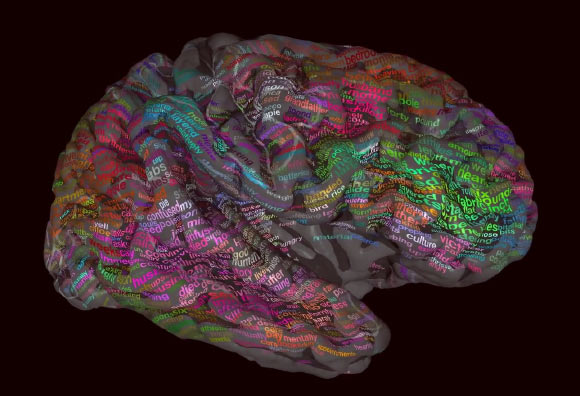
Scientists at the University of California, Berkeley, build a semantic atlas to chart how the brain responds to language. Image credit: University of California, Berkeley.

A team of neuroscientists and psychologists at the University of California, Berkeley, has created a detailed ‘semantic atlas’ showing which human brain areas respond to hearing different words. The results were published this week in the journal Nature.

“Our goal in this study was to map how the brain represents the meaning (or semantic content) of language,” explained lead author Alexander Huth, from the University of California’s Helen Wills Neuroscience Institute. “Most earlier studies of language in the brain have used isolated words or sentences.”

“We used natural, narrative story stimuli because we wanted to map the full range of semantic concepts in a single study. This made it possible for us to construct a semantic map for each individual, which shows which brain areas respond to words with similar meaning or semantic content.”

“Another aim of this study was to create a semantic atlas by combining data from multiple subjects, showing which brain areas represented similar information across subjects.”

Huth and six other native English-speakers served as subjects for the experiment.

They listened passively to several stories selected from The Moth Radio Hourwhile brain activity was monitored using functional magnetic resonance imaging (fMRI). The stories were then transcribed and annotated with the time each word was spoken.

Then the scientists used the fMRI data and story transcripts to build computational models that predict brain activity as a function of which words the subject heard. To validate these models, they were used to predict fMRI responses to a new story that had not been used before.

“We found that the models were able to predict responses relatively well throughout several broad regions of the cerebral cortex,” Huth said.

“Next, we aimed to discover what types of semantic information were represented at each point in cortex. In order to visualize the very high-dimensional semantic models, we used a dimensionality reduction technique called principal components analysis (PCA).”

PCA finds the most important dimensions in a dataset, which allowed the team to reduce the 985-dimensional models to only three dimensions, while preserving as much information as possible.

“We used these three dimensions to visualize roughly which types of semantic information were represented at every location in the cortex, revealing complex semantic maps that tile the brain,” Huth said.

“Finally, to discover which aspects of these maps are shared across subjects we developed and applied a new computational approach called PrAGMATiC. This approach finds functional areas that are shared across subjects, while also allowing for individual variability in the anatomical location of each area.”

According to Huth and co-authors, detailed maps showing how the brain organizes different words by their meanings could eventually help give voice to those who cannot speak, such as victims of stroke or brain damage, or motor neuron diseases such as ALS.

“While mind-reading technology remains far off on the horizon, charting how language is organized in the brain brings the decoding of inner dialogue a step closer to reality,” they said.

For example, clinicians could track the brain activity of patients who have difficulty communicating and then match that data to semantic language maps to determine what their patients are trying to express.

Another potential application is a decoder that translates what you say into another language as you speak.

_____

Alexander G. Huth et al. 2016. Natural speech reveals the semantic maps that tile human cerebral cortex. Nature 532, 453-458; doi: 10.1038/nature17637

Source: Researchers Create Detailed ‘Semantic Atlas’ of the Mind | Neuroscience | Sci-News.com
Study Reveals How Chinese Skullcap Makes Anti-Cancer Compounds 

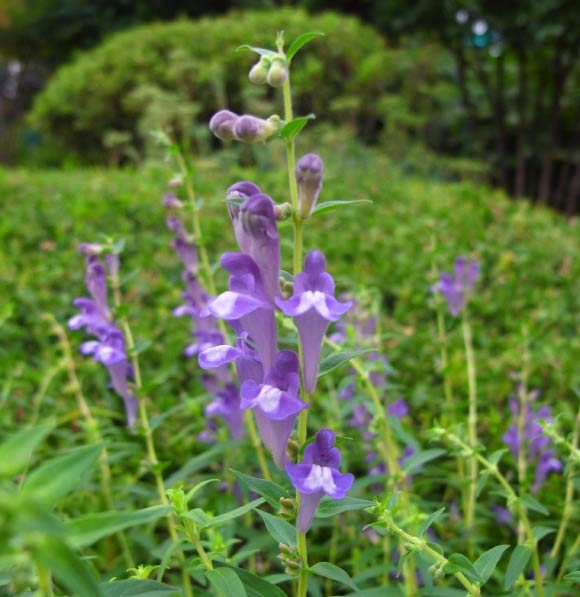
The Chinese skullcap (Scutellaria baicalensis). Image credit: Dalgial / CC BY-SA 3.0.

A new study, published in the journal Science Advances, has revealed how the popular Chinese herbal remedy Huang-Qin (Scutellaria baicalensis) — also known as the Chinese skullcap — produces compounds which may help to treat cancer and liver diseases.

Apr 11, 2016

The Chinese skullcap is cultivated in China, Siberia, Mongolia and Korea. It is an herb used in traditional Chinese medicine to treat a variety of conditions including epilepsy, hepatitis, infections, and cancer. It is often used in combination with other botanicals such as PC-SPES and sho-saiko-to.

Previous research on cells cultured in the lab has shown that certain compounds called flavones — found in the roots of the Chinese skullcap — not only have beneficial anti-viral and anti-oxidant effects, but they can also kill human cancer cells while leaving healthy cells untouched.

In live animal models, these flavones have also halted tumor growth, offering hope that they may one day lead to effective cancer treatments, or even cures.

As a group of compounds, the flavones are relatively well understood. But the beneficial flavones found in the roots of the Chinese skullcap — such aswogonin and baicalin — are different: a missing hydroxyl (-OH) group in their chemical structure left scientists scratching their heads as to how they were made in the plant.

“Many flavones are synthesized using a compound called naringenin as a building block,” said study senior author Prof. Cathie Martin, from the John Innes Centre in Norwich, UK.

“But naringenin has this -OH group attached to it, and there is no known enzyme that will remove it to produce the flavones we find in the Chinese skullcap roots.”

Chinese skullcap: root-specific flavones from this plant have a variety of reported additional beneficial effects including anti-oxidant and anti-viral properties. Image credit: John Innes Centre.

Chinese skullcap: root-specific flavones from this plant have a variety of reported additional beneficial effects including anti-oxidant and anti-viral properties. Image credit: John Innes Centre.

Prof. Cathie and her colleagues explored the possibility that Chinese skullcap’s root-specific flavones (RSFs) were made via a different biochemical pathway.

Step-by-step, they unraveled the mechanism involving new enzymes that make RSFs using a different building block called chrysin.

“We believe that this biosynthetic pathway has evolved relatively recently inScutellaria roots, diverging from the classical pathway that produces flavones in leaves and flowers, specifically to produce chrysin and its derived flavones,” Prof. Martin said.

“Understanding the pathway should help us to produce these special flavones in large quantities, which will enable further research into their potential medicinal uses.”

“It’s exciting to consider that the plants which have been used as traditional Chinese remedies for thousands of years may lead to effective modern medicines,” she added.

_____

Qing Zhao et al. 2016. A specialized flavone biosynthetic pathway has evolved in the medicinal plant, Scutellaria baicalensis. Science Advances, vol. 2, no. 4, e1501780; doi: 10.1126/sciadv.1501780

Source: Study Reveals How Chinese Skullcap Makes Anti-Cancer Compounds | Biology, Medicine | Sci-News.com

Study: Diamonds May Be More Common Than Thought | Geology | Sci-News.com

“Diamonds may not be as rare as once believed, but this finding won’t mean deep discounts at local jewelry stores,” said study authors Prof. Dimitri Sverjensky and Dr Fang Huang, both from the Johns Hopkins University.

“For one thing, the prevalence of diamonds near the Earth’s surface still depends on relatively rare volcanic magma eruptions that raise them from the depths where they form.”

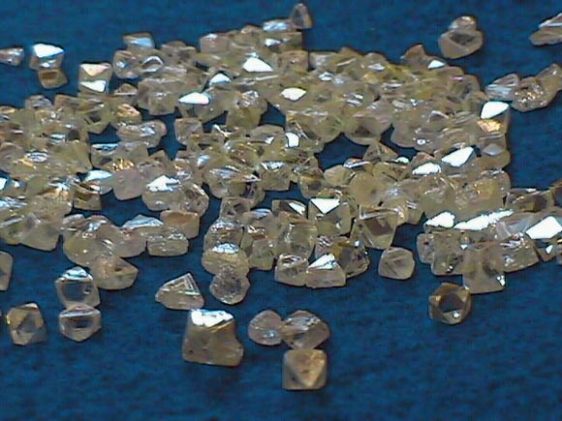
“For another, the diamonds being considered in studies are not necessarily the stuff of engagement rings, unless the recipient is equipped with a microscope. Most are only a few microns across and are not visible to the unaided eye.”

Using a chemical model, the team found that diamonds could be born in a natural chemical reaction that is simpler than the two main processes that up to now have been understood to produce diamonds.

Specifically, the model shows that diamonds can form with an increase in acidity during interaction between water and rock.

“We show that diamonds could form due to a drop in pH during water–rock interactions,” the scientists wrote in the paper. “We use a recent theoretical model of deep fluids that includes ions, to show that fluid can react irreversibly with eclogite at 1,652 degrees Fahrenheit (900 degrees Celsius) and 5.0 GPa, generating diamond and secondary minerals due to a decrease in pH at almost constant oxygen fugacity.”

The common understanding up to now has been that diamonds are formed in the movement of fluid by the oxidation of methane or the chemical reduction of carbon dioxide.

“The new study showed that water could produce diamonds as its pH falls naturally – that is, as it becomes more acidic – while moving from one type of rock to another,” Prof. Sverjensky said.

“The more people look, the more they’re finding diamonds in different rock types now. I think everybody would agree there’s more and more environments of diamond formation being discovered,” he added.

“Overall, our results constitute a new quantitative theory of diamond formation as a consequence of the reaction of deep fluids with the rock types that they encounter during migration,” the scientists concluded.

Source: Study: Diamonds May Be More Common Than Thought | Geology | Sci-News.com