The All Blacks: Team for the corporate elite 

Dylan Cleaver on sport

Sport analysis and comment from Dylan Cleaver

Wednesday Jun 8, 2016    http://www.nzherald.co.nz/

Photo / Greg Bowker

The All Blacks have only rarely had to cultivate an image of being the team for all New Zealand.

Apart from a period during and post-1981, when they were the team for half of New Zealand, they’ve slotted unchallenged into that role.

Success will do that for you.

Sure, they’re never going to please everyone. There will always be a section of society that has a disdain for organised sport, particularly rugby, and the coverage it receives, but by and large New Zealanders take enormous pride in the fact the All Blacks consistently produce a team better than any other country can muster.

Success of your flagship team is about the best anti-blemish cream on the market, but there is a boil on the back of rugby here that needs lancing: the increasing creep of elitism into the game.

It is at that tingling, barely perceptible stage at the moment, but it threatens to burst to the surface.

It can be seen most obviously in Auckland, where New Zealand Rugby and toothless college sports bodies have allowed to run unchecked the domination of a few schools with chequebooks large enough to take the best players from low-decile schools.

It’s not the fact that these kids are often sold an unrealistic vision of a life of wealth in rugby that rankles most. Most damaging is the perpetuation of the idea that they should be grateful for being given the opportunity to escape less prestigious rugby environments.

One of the stated aims of NZ Rugby according to their latest AGM was to make rugby the game of choice for wider Auckland. By their own admission they have failed, but it is these schools and their born-to-rule old boys’ networks that are actively working against that aim – making it instead the game for narrower Auckland.

This creeping elitism can be also seen in pricing, where we’re asked to accept the idea that tickets to tests will be unaffordable to a large chunk of New Zealanders as if it is the most obvious thing in the world.

Said NZR chief executive Steve Tew to Fairfax a few days ago: “There’s no question when you get to the [Lions 2017] test matches the prices will be familiar to people having had a World Cup and Lions tour in the past. But we’ve got a number of games so there’ll be opportunity certainly for kids to come cheaply to watch the Super clubs.”

Tew has confirmed the fears of many: the All Blacks are only available to those who can pay the most, but never mind, there’s always the Blues!

Anybody who dares suggest that pricing the All Blacks for maximum return is not an ethos that sits well with the idea that they are a team for everyone is dismissed as having lost their “economic realities” faculties.

And maybe they have.

It is tough to keep producing the best team in the world and bloody expensive to provide the framework and infrastructure to enable that to happen, but I don’t believe people are naïve about this.

The rugby public grudgingly accepts that daylight tests are the Hanging Gardens of Babylon – a thing of great beauty and wonder that we’ll never see again. They painstakingly acknowledge that to watch the All Blacks live from the comfort of their couches, they will have to pay the broadcasters a monthly fee (which has just increased, again).

They might cringe when the front of the shirt – “it’s not a jersey, it’s a portal through which men pass” – is sold to an American insurer, just one more piece of crass commercialism that was captured inventively here by The Spinoff’s Calum Henderson, but understood it to be inevitable.

They have long accepted that the All Blacks’ mystique is available to the highest bidder, but they will surely baulk at the idea that All Blacks tests have become the domain of the corporate elite. “The team of the boardroom” does not quite have the same ring to it.

NZ Rugby is in the midst of a gilded age. The All Blacks are back-to-back world champions. They are led by a popular coach and are sprinkled with a seemingly neverending supply of stardust.

They can host a side that has played seven tests in New Zealand and lost all seven by a combined score of 284-46 and put the “Full House” signs out. They can point at those signs and say the market has spoken.

Eden Park is not sold out because they’re seduced by the allure of Wales, or the night-time time elements, or the extortionately priced food and beverage; they’re coming because the All Blacks are the hottest ticket in town.

And NZ Rugby are milking that for all its worth. They just need to remember, from time to time, that the bedrock of the sport here and what separates it from most of the other rugby playing nations is its egalitarian appeal. The All Blacks need to remain the face of that appeal.

Lose that and only time will tell what else you might lose in the process.

Source: The All Blacks: Team for the corporate elite – Sport – NZ Herald News

Concerns over imported glass safety

Pool with glass balustrade (stock photo) Photo: 123RF

Statistics New Zealand figures show processed glass imports have risen fivefold in the 10 years to September 2015, reaching half a million square metres a year.

That’s equivalent to half the yearly output of one of the country’s two big glass makers, Viridian.

Viridian’s Auckland manager Gary Walden said his big worry was the share of imports going into small projects in the city.

“Auckland balustrades and pools have certainly been a significant cause for concern,” Mr Walden said. “There is not a lot of control over who can install the product and what sort of quality the product meets.”

Mr Walden, also chair of the Glass Association (GANZ), said all New Zealand factories were certified and completed fragmentation tests at least every two hours. If a sheet failed, all of that batch was dumped.

The same could not be said for all factories overseas.

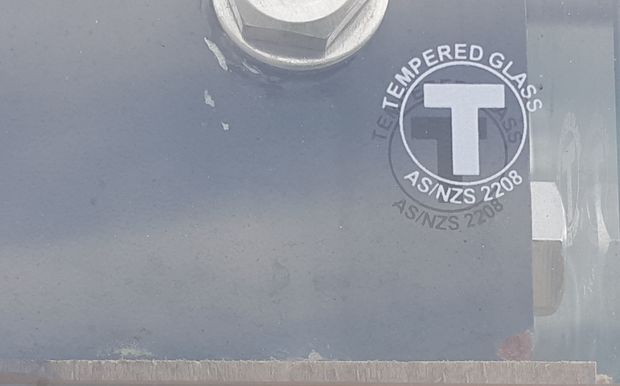
A non-compliant glass stamp sticker.

A non-compliant glass stamp sticker. Photo: SUPPLIED

Testing company Bureau Veritas’s Australasian office said the problem is that it is not mandatory for glass factories to be independently certified and audited.

Product certification manager Sam Guindi said that meant producers or importers could put a safety sticker on glass, and it was not possible to know whether it complied – other than by breaking it.

Mr Guindi said the many responsible producers concerned with safety chose to be certified – but others did not.

“If they can sell the glass without having to go through the whole process of getting it audited and certified, it’s obviously cheaper and easier for them to go down that path.”

The building standard AS/NZ 2208 requires certain safety stickers on toughened glass, but Mr Walden’s Glass Association has traced back safety sticker information that has proved bogus.

Mr Guindi’s product testing company is finding at least one foreign glass maker a year that is faking stickers.

“Glass could come in and it could be installed in someone’s house and no one would know, until it does break, so it’s really hard to check that, whether the product is compliant or not,” said Mr Guindi.

Mr Walden said if the certification system was rigorous, then generally everything would be fine.

“But if you’re not confident in your certification, the only way to test toughened glass is to break a panel. There should be some way of verifying the quality of the product on a regular basis.”

However, at present third-party certification of factories is not mandatory and certifiers themselves can choose whether their own systems get regular checks.

Bureau Veritas gets certified by the Joint Accreditation System of Australia and New Zealand (JAS-ANZ). Other certifiers do not – so the way they are certifying factories remains unclear.

The call on compliance ultimately comes down to the council building inspector on site. In Auckland, inspectors did 90,000 inspections last year, a rise of 10 percent.

Inspectors are finding a significant problem with toughened glass being substituted with inferior product, but the scale of actual failures is difficult to guage.

GANZ has carried out isolated tests of imported panes and found some did not comply.

It stressed it had found no compliance issues with New Zealand-made frameless glass balustrades fitted by its member companies.

However, it is still investigating cases where imported balustrades were not fixed properly to a building. In some cases, they had been held on using screws, rather than bolts. In one case a glass pool fence in Orewa was blown over by the wind.

Mr Walden said they had sent photos of dodgy glass and glass installations to Auckland Council and the Ministry of Business, Innovation and Employment .

“We get some response, but we don’t know what happens after that. They will look into it, basically.”

He said the association did follow up but he was not aware of any outcome yet from passing on those reports. “It is frustrating for the industry.”

Mr Walden said GANZ sent someone to a big hardware chain store in Auckland, and found the salespeople happy to sell a glass pool fence panel with pool fence fixings for use as a DIY balustrade on a balcony. MBIE was informed of the incident over a year ago.

Mr Walden also believed council inspectors frequently ignored whether glass systems were being installed in the way designers and engineers specified.

Source: Concerns over imported glass safety | Radio New Zealand News

New Zealand vulnerable to the threats of climate change – report finds

April 19, 2016

A report released today by the Royal Society of New Zealand highlights how New Zealand will be impacted by climate change.

It finds that climate change, already underway, will almost certainly accelerate this century unless drastic action is taken to reduce global emissions of greenhouse gases.

It identified six areas where global climate change could have significant implications for New Zealand’s prosperity and well-being. These are risks to:
• our coastal margins
• flooding from rivers
• availability of and competition for freshwater
• changes to our surrounding oceans
• threats to unique ecosystems
• flow-on effects from climate change impacts and responses elsewhere, which will affect New Zealand through our strong international connectivity.

Changes expected to impact New Zealand include at least 30cm and possibly more than one metre of sea-level rise this century – the report finds it likely that the sea level rise around New Zealand will exceed the global average, which will cause coastal erosion and flooding, especially when combined with storm surges.

“Many New Zealanders live on the coast and two-thirds of us live in flood-prone areas so we are vulnerable to these projected changes,” says Professor James Renwick, Chair of the Expert Panel who wrote the report.

Even small changes in average conditions can be associated with large changes in the frequency of extreme events, he says.

“With a 30cm rise in sea level, the current ‘1 in 100 year’ extreme sea event would be expected to occur once every year or so in many coastal regions. Along the Otago coast for example, the difference between a 2-year and 100-year storm surge is about 32cm of sea level.”

Changes in rainfall patterns where the ‘wet gets wetter and the dry gets drier’, together with more frequent extreme events, will put pressure on our housing, infrastructure and industry, especially if changes are rapid, the report finds.

Freshwater resources will also likely be put under pressure, with decreasing annual average rainfall in eastern and northern regions of both islands, plus higher temperatures and increased demand from urban expansion and agriculture.

Fire danger is also predicted to increase in many parts of New Zealand.

Changes in the oceans, including water temperature, acidification and currents will have impacts on New Zealand’s marine life, including aquaculture. On land, existing environmental stresses to New Zealand’s unique species will likely be exacerbated, with increased ranges for animal pests and weeds predicted.

The report also considers New Zealand’s international connections and how trade relationships and migration patterns could change.

Royal Society of New Zealand President, Emeritus Professor Richard Bedford, says the report was sought to provide a clear summary of the scientific evidence and projections of climate change and to identify the key risks these changes pose to New Zealand.

“It is critical to communicate clearly New Zealand’s sensitivities to climate change and the need for responsive systems to address them. All New Zealanders will be affected and must be involved in the discussion. We hope this report can act as a basis for a wider national conversation.”

This report will be followed up soon by another expert panel report on how New Zealand can mitigate the impacts of climate change.

Copies of the report and supporting resources can be found at www.royalsociety.org.nz/climatechange

Key findings – New Zealand’s sensitivities to climate change

Coastal Change: New Zealanders live mainly near coasts
Shoreline ecology, public infrastructure, residential and commercial assets, community values and the future use of coastal-marine resources will be severely affected by changes to coasts due to sea level rise, and storm surge, and secondary effects such as erosion and flooding.

Flooding: many New Zealanders live on floodplains
Damaging flood events will occur more often and will affect rural and urban areas differently. At and near the coast, floods will interact with rising sea levels and storm surges. Increasing frequency and severity of high intensity rainfall events will increase these risks.

Freshwater resources: New Zealanders rely on the availability of freshwater
Increased pressure on water resources is almost certain in future. Decreasing annual average rainfall in eastern and northern regions of both main islands, plus higher temperatures, are projected to increase the frequency and intensity of droughts and the risk of wild fire. At the same time, urban expansion and increased demand for water from agriculture will result in increased competition for freshwater resources.

The Ocean: New Zealand is surrounded by sea
Changes in ocean temperature, chemistry, and currents due to climate change will have impacts on New Zealand’s marine life, fishing, aquaculture and recreation use.

Ecosystem change: New Zealand has unique ecosystems
Over half of New Zealand’s more than 50,000 species are found nowhere else in the world; over three quarters of the vascular plants, raising to 93% for alpine plants, and over 80% for the more than 20,000 invertebrates. Existing environmental stresses will interact with, and in many cases be exacerbated by, shifts in mean climatic conditions and associated change in the frequency or intensity of extreme events, especially fire, drought, and floods.

International Impacts: New Zealand is affected by impacts and responses to climate change occurring overseas
The ways in which other countries are affected by and will respond to climate change, plus commitments New Zealand makes to international climate treaties, will influence New Zealand’s international trade relationships, migration patterns and specific domestic responses.

Report launch
The launch for the findings of this expert panel is at 11am on Tuesday 19 April at the Royal Society of New Zealand in Thorndon, Wellington. It will feature special international guest Professor Jean Palutikof, Director of the National Climate Change Adaptation Research Facility at Griffith University, Queensland. Professor Palutikof previously managed the production of the Intergovernmental Panel on Climate Change (IPCC) Fourth Assessment Report for Working Group II (Impacts, Adaptation and Vulnerability). Professor Palutikof will give a public talk in Wellington that evening.

Climate Change Implications for New Zealand Panel Members

Professor James Renwick (Chair): Physical Geography Professor, Victoria University, Wellington
Dr Barbara Anderson: Rutherford Discovery Fellow, Landcare Research Manaaki Whenua, Dunedin
Dr Alison Greenaway: Social Researcher, Landcare Research Manaaki Whenua, Auckland
Darren King: Environmental Scientist, National Institute of Water and Atmospheric Research (NIWA), Wellington
Dr Sara Mikaloff-Fletcher: Atmosphere-Ocean Scientist, National Institute of Water and Atmospheric Research (NIWA), Wellington
Dr Andy Reisinger: Deputy Director (International), New Zealand Agricultural Greenhouse Gas Research Centre, Wellington
Dr Helen Rouse: Resource Management Scientist, National Institute of Water and Atmospheric Research (NIWA), Christchurch

Source: Community Scoop » New Zealand vulnerable to the threats of climate change

Britain’s FBI wants ‘Five Eyes’ cosy hookups with infosec outfits

http://www.theregister.co.uk/2015/09/17/nca_colocation_security_businesses/

El Reg blows lid on NCA’s ‘colocation’ dream with IT security bods

17 Sep 2015 at 22:21, Alexander J Martin

Cloudsec The UK’s National Crime Agency – Blighty’s equivalent of the FBI – wants its staff to “colocate” with private-sector IT security companies around the world. In other words, investigators and infosec employees placed alongside each other to sniff out cyber-criminals.

This will apparently help the agency reach across jurisdictions, and bust underworld gangs around the planet. This is according to a keynote address delivered on Thursday at the Cloudsec event in London – a presentation the media was banned from attending.

Speaking at the conference, Oliver Gower, Head of Strategy, Partnerships, and Transformation for the NCA’s National Cyber Crime Unit (NCCU), said a globally scaled security threat required a globally scaled security response.

Such a response should emulate the cosy Five Eyes spy relationship between America, the UK, Australia, Canada and New Zealand, said Gower, in that agents and employees in friendly countries and businesses should work shoulder-to-shoulder to combat cyber-crime.

He is keen to get beneath the sheets with information security outfits amid this international tie-up – having already bagged memorandums of understanding with Trend Micro and Intel Security.

As well as lauding the trans-jurisdictional efforts of the Joint Cybercrime Action Taskforce and the European Cybercrime Task Force, Gower mentioned a model the NCA was especially keen to copy:

The US’s National Cyber-Forensics and Training Alliance (NCFTA), which is based in Pittsburgh, and “colocates” law enforcement agents with private sector security companies.

As the alliance states: “The NCFTA is a productive environment because we operate as one unit with our private and public sector partners. Our partners are located both on-site and off-site, and come from private industry, law enforcement, academia, and government.”


Noted in a single slide of Gower’s talk was the Five Eyes Law Enforcement Group. Known previously as the Strategic Alliance Group Principals’ Meeting, the shadowy organization was formed post-Snowden to “seek to reduce the international threat and impact of organised crime.”

Although its methodology is unclear, it is, we’re told, not a counter-terrorism intelligence partnership, though membership of the group is comprised of the anglophone Five Eyes nations.

Running a trans-jurisdictional effort to combat organized crime is more difficult than you’d imagine, Gower suggested. Police investigators struggle to accept their technical limitations, and need the help of talented information security types to keep up with progress.

Deconfliction between difference police forces is increasingly an issue for crime-busting coalitions, too. The possibility of undercover cyber-cops having their investigations blown by blue-on-blue bungling – an officer in one country interrupting and scuppering the work of another – is increasingly an issue.

Data glut

Gower also confessed that the NCA is struggling to deal with the volumes of data and intelligence it receives. The agency increasingly gets its information and evidence from “seized media” – confiscated memory cards, server hard drives, and so on, we assume.

Now these piles of data are mounting up and straining resources – putting pressure particularly on officers investigating pedophiles handling child-abuse images.

As a result of these “resource challenges,” house visits by officers are not always possible. Some miscreants – such as those launching denial-of-service attacks against websites – simply receive warning emails. These missives are shared in cybercrime forums, usually accompanied with the usual prison-rape jokes, much to the delight of the agency: it means the miscreants are spreading the cops’ message for them.


The NCA is also keeping a close eye on mobile malware and Tinba – or the Tiny Banker Trojan. Ranging from a mere 20KB to 100KB in size, the bank-account-raiding software nasty surfaced in 2012.

Interestingly, he also asked: “Can government take action to systematically remove malware from everybody’s computers without them knowing it?”

“Probably not,” came his firmly comforting reply.

The Register was told by the Cloudsec organisers that the agency wouldn’t allow journalists in its session. Which is odd given that the keynote slides were widely photographed and tweeted by attendees without issue. Of course, this vulture pulled up a pew anyway and watched on. ®