
VANCOUVER, BRITISH COLUMBIA–(Marketwired – Dec. 9, 2015)
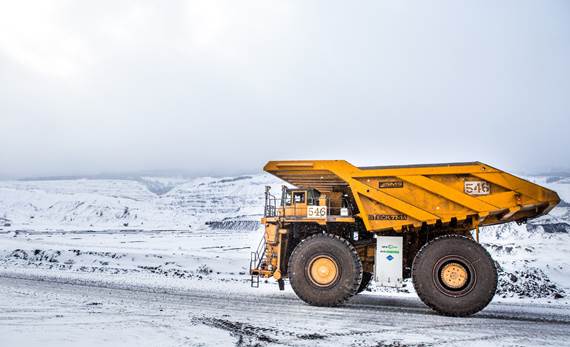
Teck Resources Limited (TSX:TCK.A) (TSX:TCK.B) (NYSE:TCK) is piloting the use of liquefied natural gas (LNG) as a fuel source in six haul trucks at its Fording River steelmaking coal operation in southeast B.C. – marking the first use of LNG as a haul truck fuel at a Canadian mine site.
The use of blended LNG/diesel fuelled haul trucks has the potential for significant environmental benefits and cost savings. LNG produces virtually no particulate or sulphur dioxide emissions and reduces Greenhouse Gas (GHG) emissions by up to 20 percent in comparison to diesel alone. There is the potential to eliminate approximately 35,000 tonnes of CO2 emissions annually at Teck’s steelmaking coal operations and potentially reduce fuel costs by more than $20 million annually by adopting LNG and diesel hybrid fuel across the operations. FortisBC is transporting and supplying LNG to the mine site and is making a financial contribution towards the pilot.
The pilot is one of the steps Teck is taking to achieve its long-term target to reduce annual GHG emissions by 450,000 tonnes at its operations by 2030. To date, Teck has reduced annual emissions by 170,000 tonnes as the result of initiatives implemented since 2011.
“LNG is a fuel source that has the potential to lower costs, significantly reduce emissions and improve environmental performance at our operations,” said Don Lindsay, President & CEO, Teck. “We are committed to minimizing our own carbon footprint while at the same time continuing to provide the mining products that are essential to building a modern, low-carbon society.”
“Like British Columbia, Teck is a global leader in finding innovative ways to reduce GHG emissions while continuing to create opportunity,” said Premier Christy Clark. “It’s a concrete example of the difference clean-burning LNG can make in the fight against climate change.”
Teck, with support from FortisBC, has upgraded the Fording River Operations truck maintenance shop, provided engine conversion kits, installed fuelling facilities and implemented a comprehensive safety program in advance of the pilot.
“Teck is demonstrating leadership by adopting natural gas as a cleaner and more cost-effective fuel solution for their operations,” said Michael Mulcahy, President and CEO, FortisBC. “LNG, as a vehicle fuel source, provides both an economic and environmental benefit to industry in our province. Today’s announcement further builds on the diversity of the more than 400 natural gas-fuelled vehicles in British Columbia.”
The pilot is expected to run until mid-year 2016 and will provide more information about the potential of using LNG more broadly across Teck’s haul truck fleet, creating the opportunity for further fleet conversions to LNG in the future.
Cautionary Statement on Forward-Looking Information
This press release contains certain forward-looking statements within the meaning of the United States Private Securities Litigation Reform Act of 1995 and forward-looking information as defined in the Securities Act (Ontario). Forward-looking statements and information can be identified by the use of words such as “potential”, “target”, “is expected”, or variations of such words and phrases or statements that certain actions, events or results “may”, “could”, “should”, “would” “might” or “will” be taken, occur or achieved. Forward-looking statements include statements regarding the potential for significant environmental benefits and cost savings, expectations regarding CO2 emission elimination, cost reductions and improved environmental performance.
Forward-looking statements involve known and unknown risks, uncertainties and other factors, which may cause the actual results, performance or achievements of Teck to be materially different from any future results, performance or achievements expressed or implied by the forward-looking statements. Factors that may cause actual results to vary include, but are not limited to, unexpected operational issues in the pilot program, unexpected efficiency or reliability issues with the blended LNG/diesel system that lead to reduced LNG usage or the increase in the cost of LNG to our sites beyond projected levels. CO2 emission reductions are based on assumptions regarding the amount of diesel consumption that will be replaced by LNG as well assumptions regarding the efficiency of LNG combustion in the process, among other assumptions. Cost reduction expectations are based on assumptions regarding the price of oil, the cost of LNG and the level at which LNG will replace diesel consumption. Certain of these risks are described in more detail in the annual information form of Teck and in its public filings with Canadian securities administrators and the U.S. Securities and Exchange Commission.
About Teck
Teck is a diversified resource company committed to responsible mining and mineral development with major business units focused on copper, steelmaking coal, zinc and energy. Headquartered in Vancouver, Canada, its shares are listed on the Toronto Stock Exchange under the symbols TCK.A and TCK.B and the New York Stock Exchange under the symbol TCK. Learn more about Teck at www.teck.com or follow @TeckResources.
 Andrew Phillip Chernoff