Understanding the CCF: Co-operative Commonwealth Federation

fromthepast

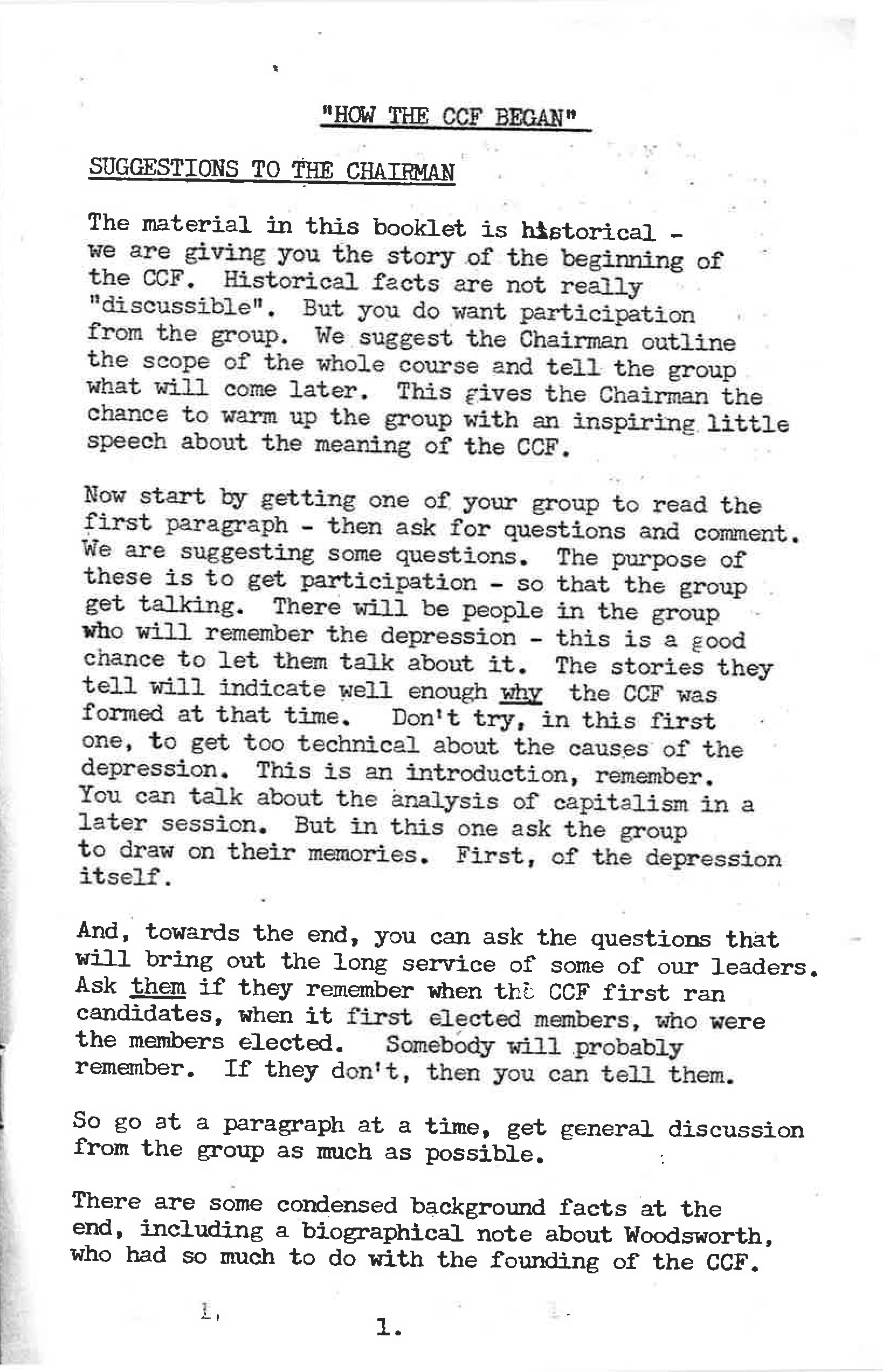
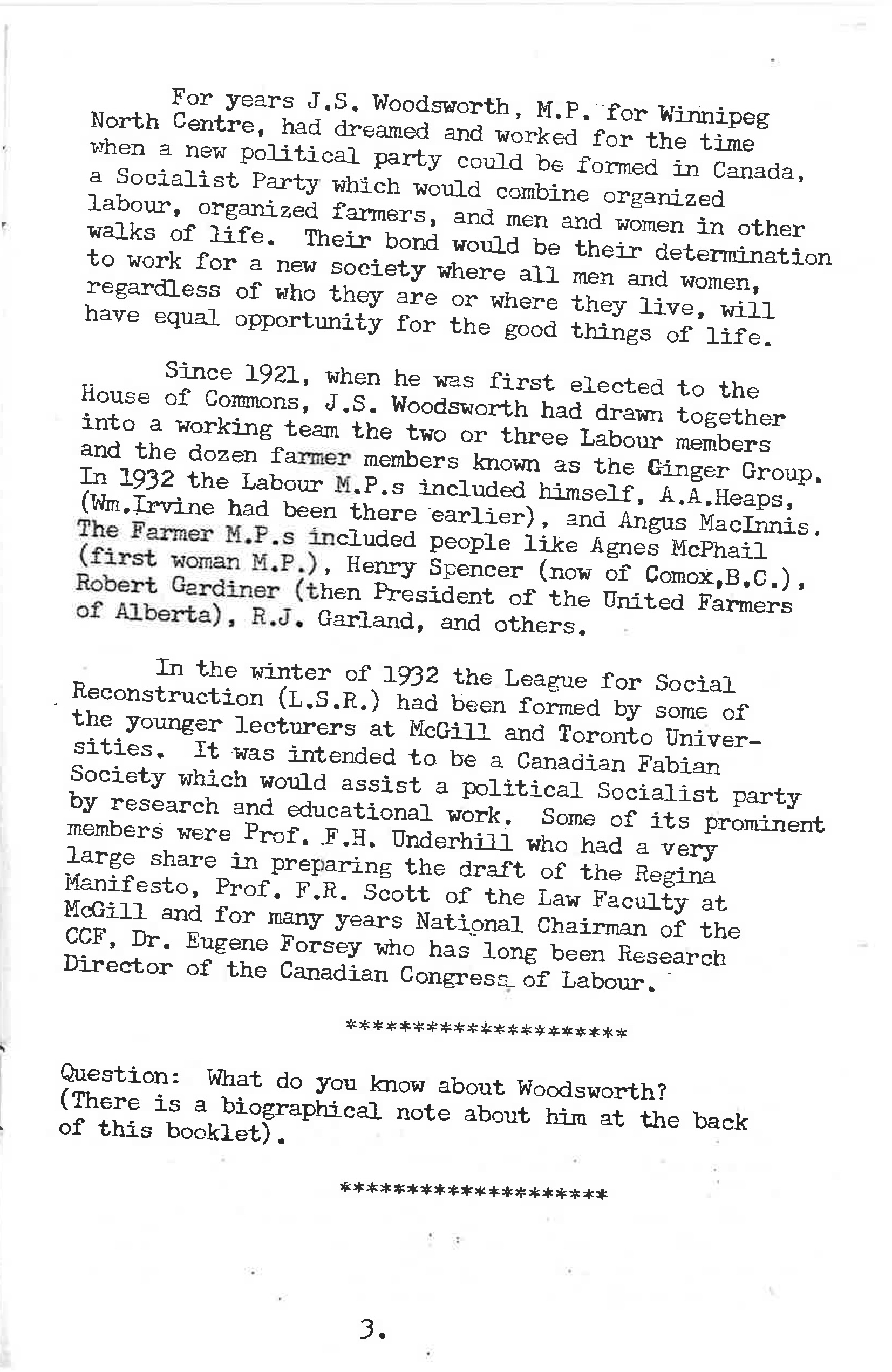
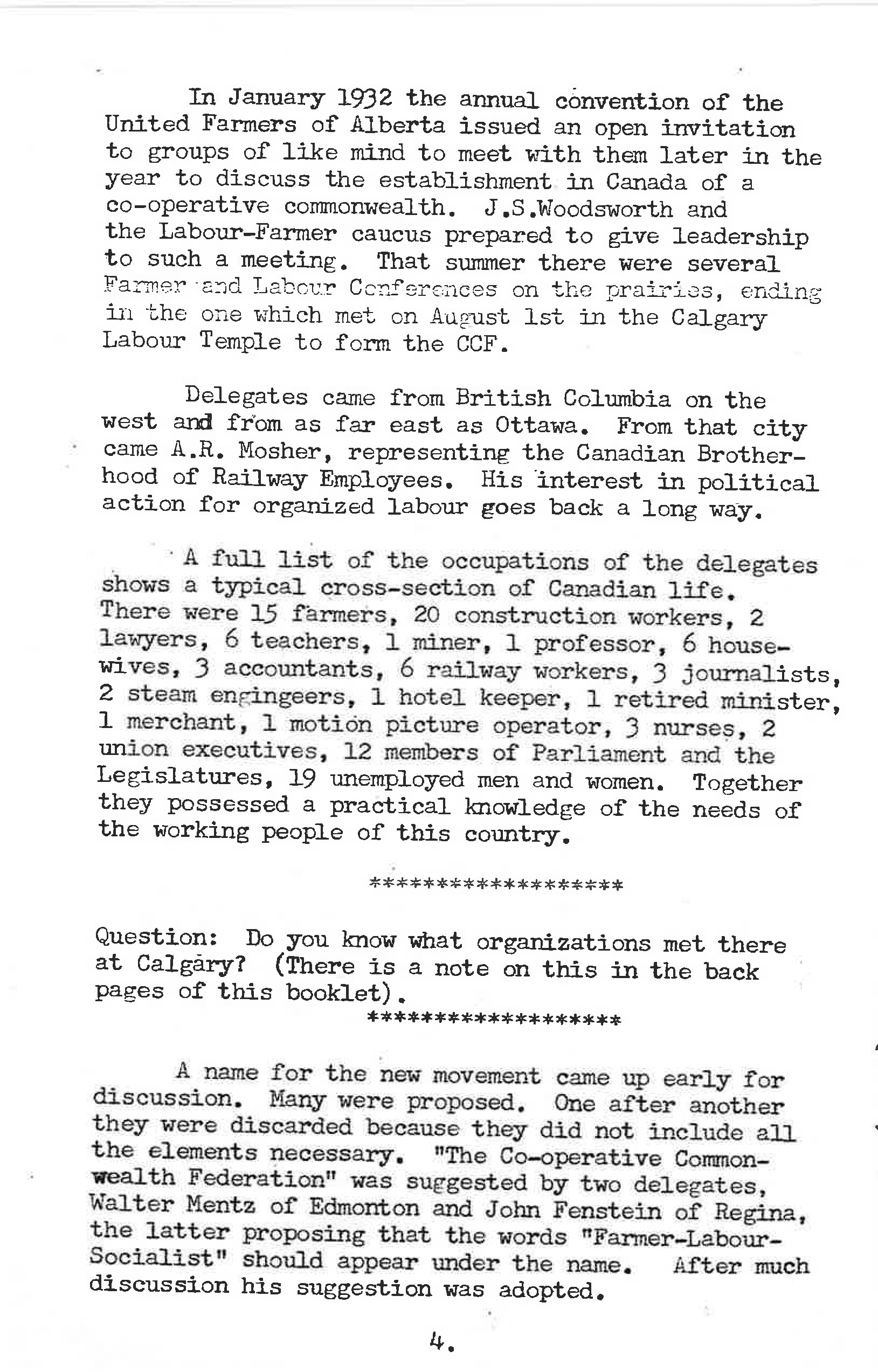
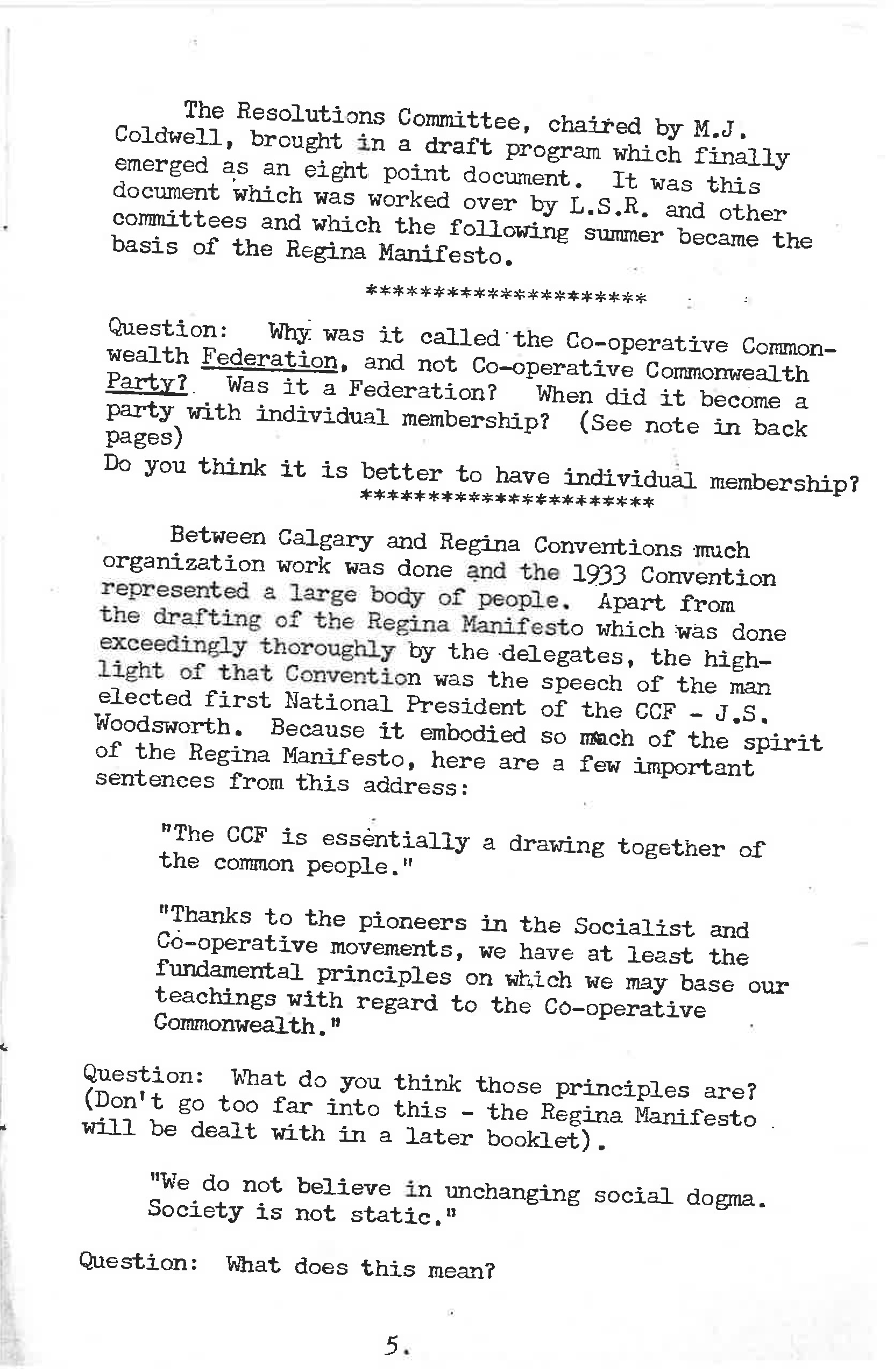
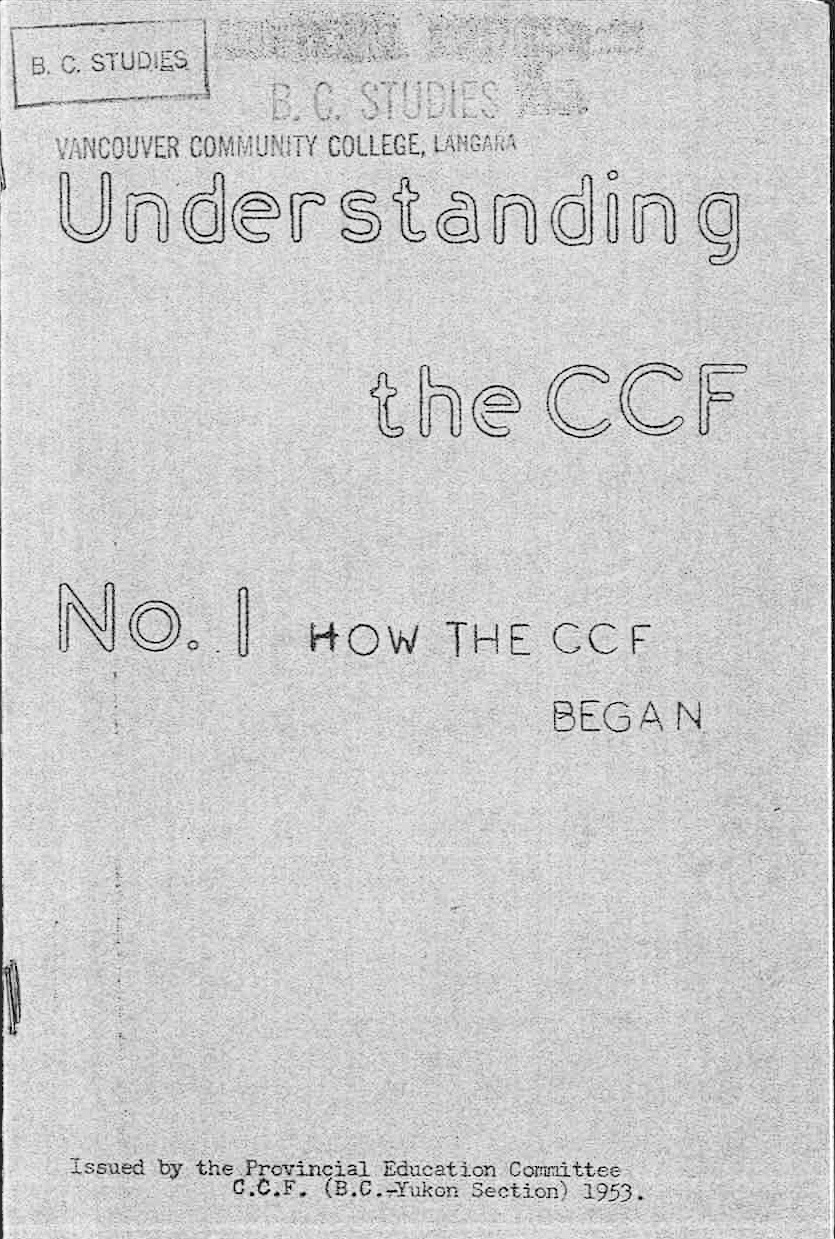
Understanding the CCF No.1: How the CCF began. Issued by the Provincial Education Committee C.C.F. (B.C.-Yukon Section) 1953.

Source: https://archive.org

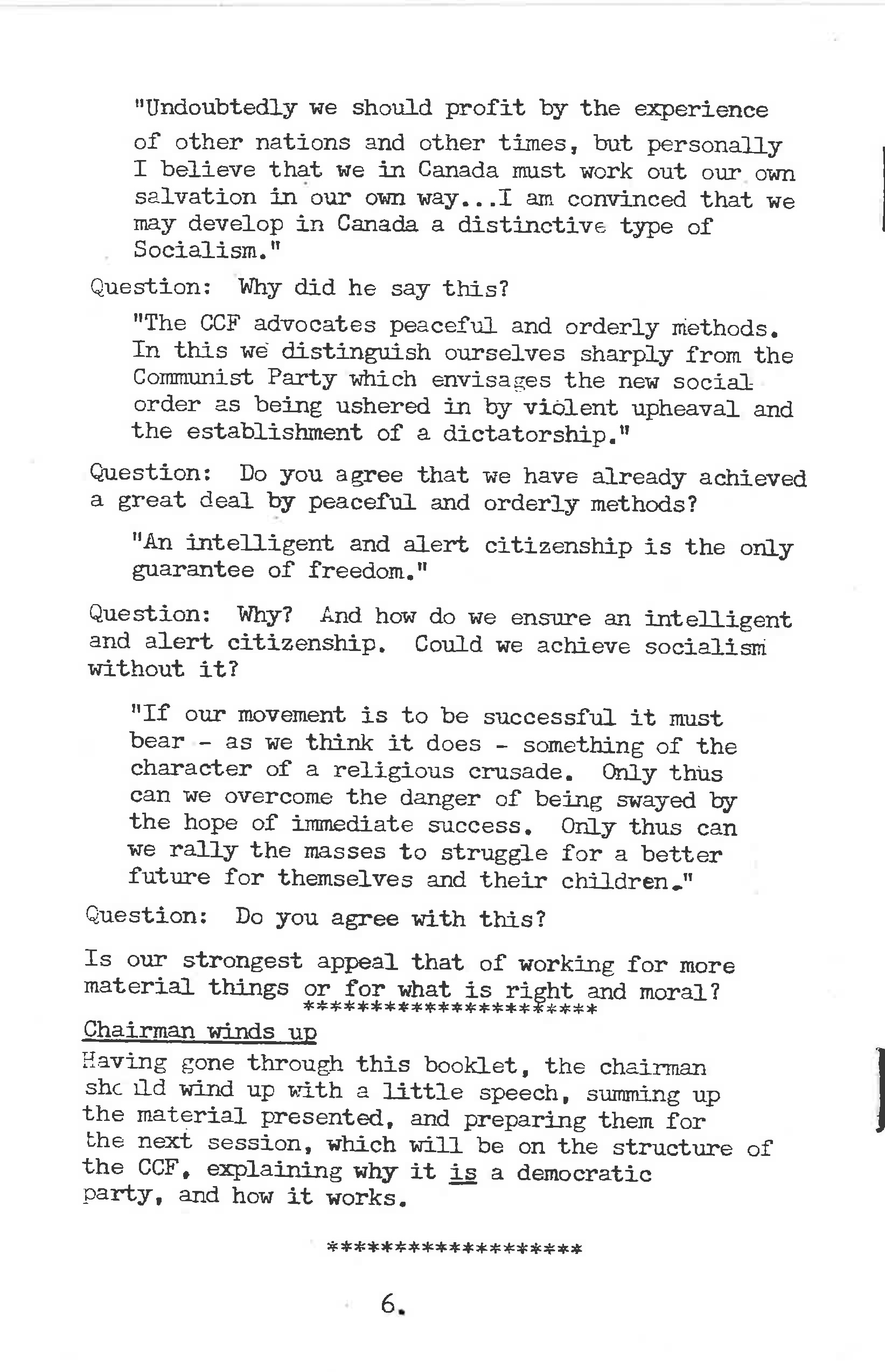
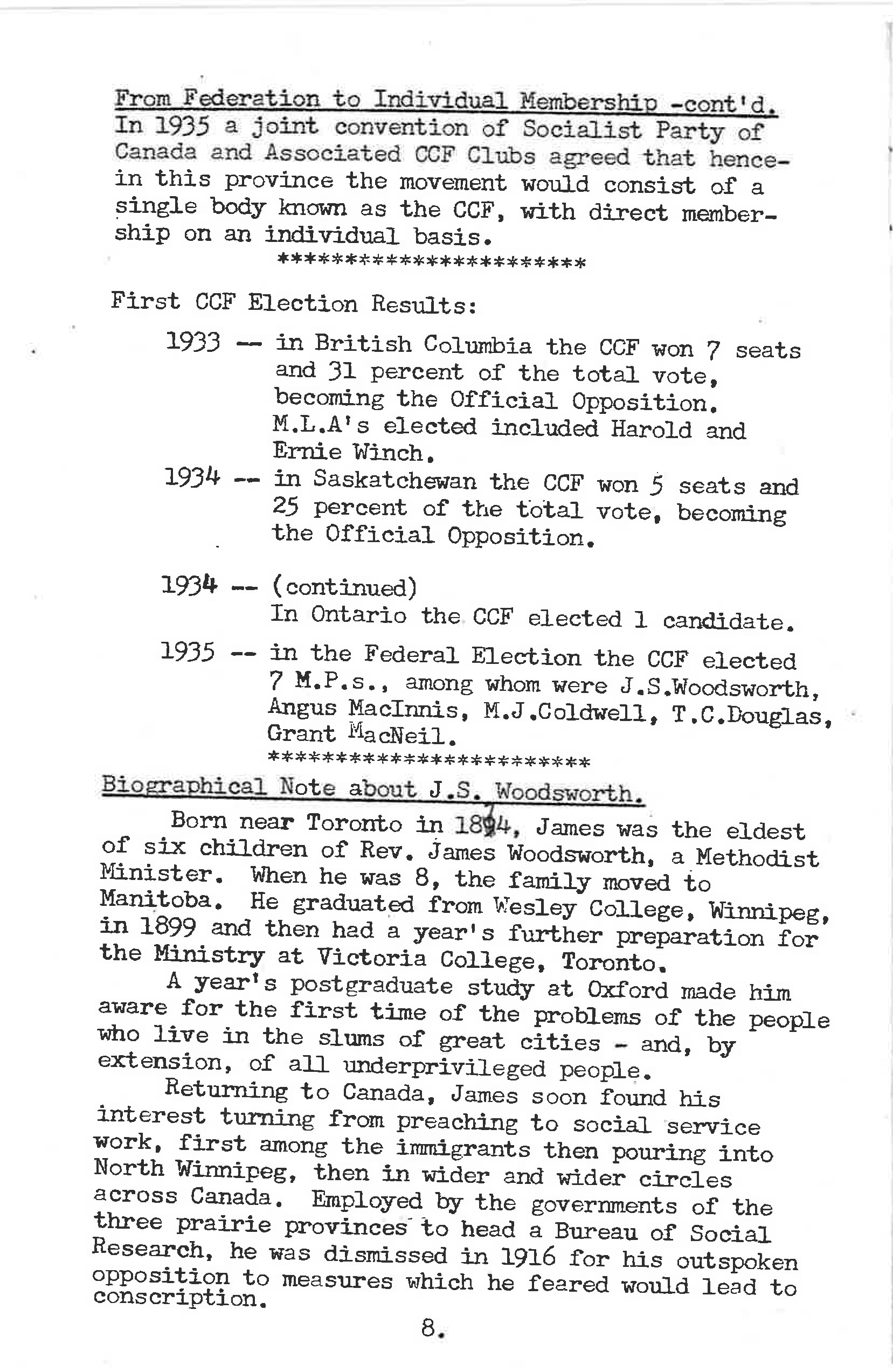
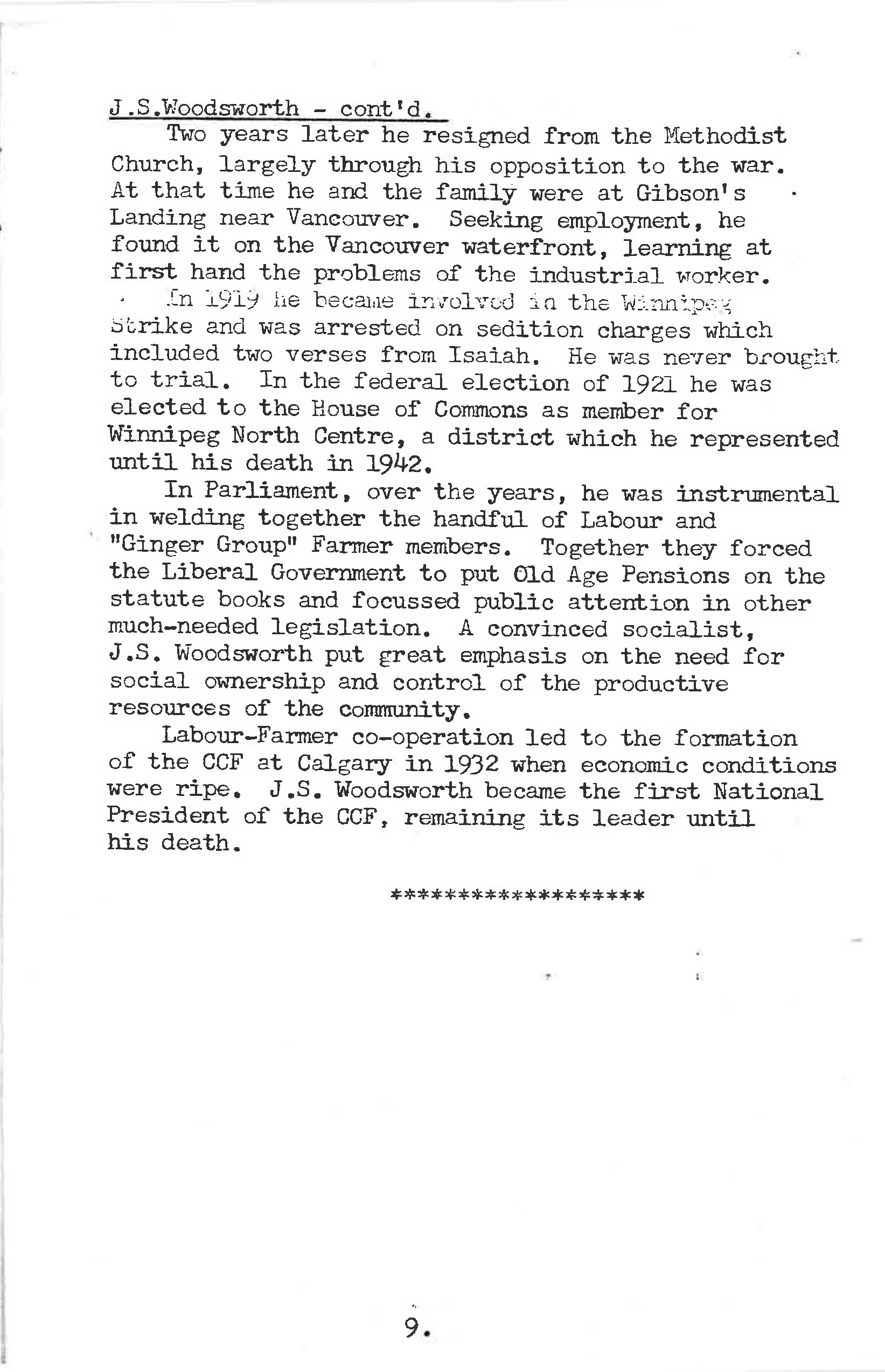
The Co-operative Commonwealth Federation (CCF) (French: Fédération du Commonwealth Coopératif, from 1955 the Parti social démocratique du Canada) was a social-democratic[2] and democratic socialist[3] political party in Canada. The CCF was founded in 1932 in Calgary, Alberta, by a number of socialist, agrarian, co-operative, and labour groups,[4] and the League for Social Reconstruction. In 1944, the CCF formed the first social-democratic government in North America when it was elected to form the provincial government in Saskatchewan.[5] In 1961, the CCF was succeeded by the New Democratic Party (NDP). The full, but little used, name of the party was Co-operative Commonwealth Federation (Farmer-Labour-Socialist).[6] 

Source: https://en.wikipedia.org/wiki/Co-operative_Commonwealth_Federation

Co-operative Commonwealth Federation 1932-1961
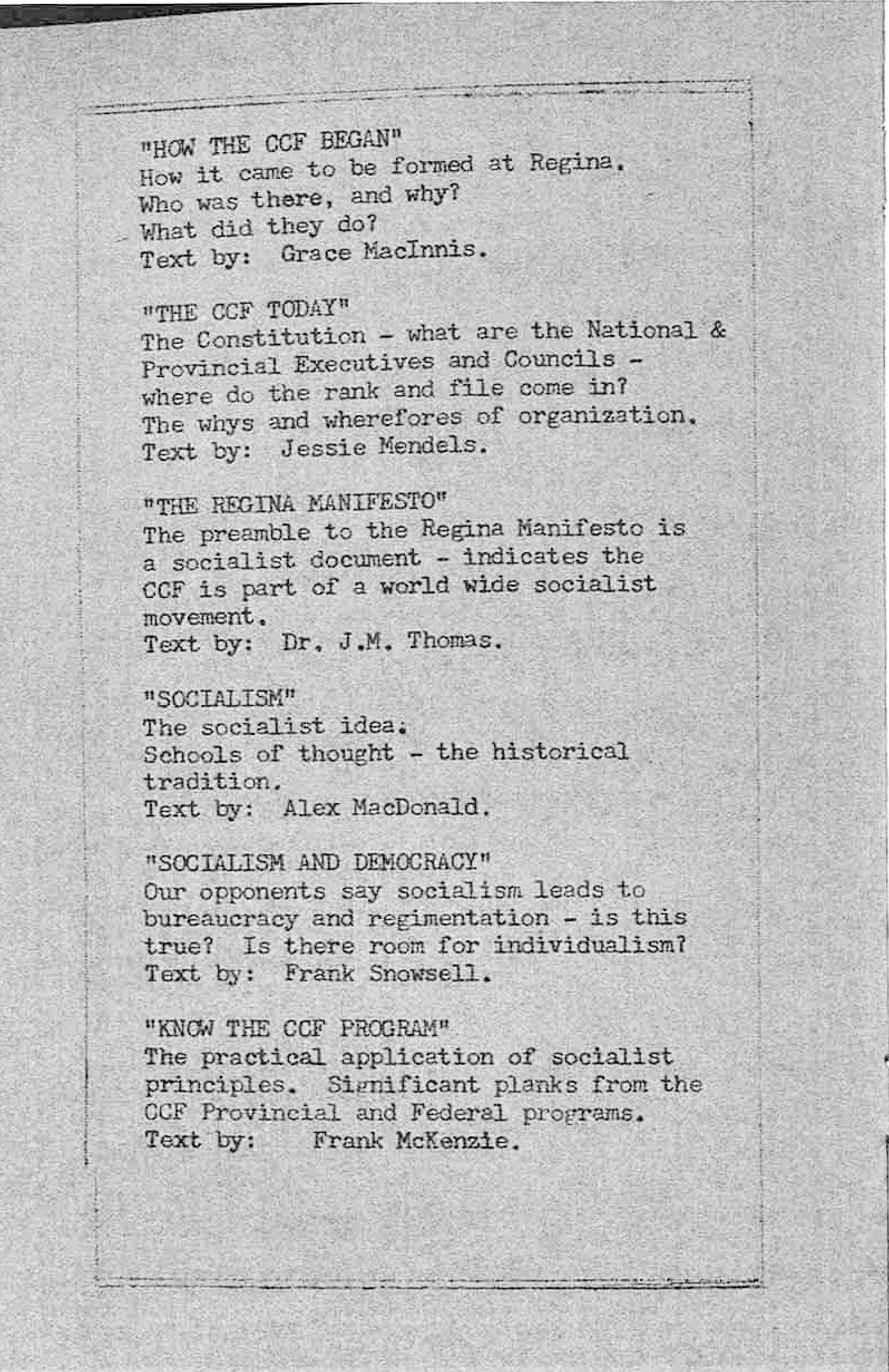
 

UnderstandingtheCCF_Page_1a UnderstandingtheCCF_Page_2a UnderstandingtheCCF_Page_2b UnderstandingtheCCF_Page_3a UnderstandingtheCCF_Page_3b UnderstandingtheCCF_Page_4a UnderstandingtheCCF_Page_4b UnderstandingtheCCF_Page_5a UnderstandingtheCCF_Page_5b UnderstandingtheCCF_Page_6a UnderstandingtheCCF_Page_6b

Supreme Court hearing arguments on Saskatchewan labour laws

Essential services legislation, changes to Trade Union Act in dispute

CBC News Posted: May 16, 2014

Labour groups squared off against the Saskatchewan government and business at the Supreme Court of Canada today in a dispute over changes to Saskatchewan’s labour laws proposed in 2008.

The Saskatchewan Federation of Labour says Bill 5, Saskatchewan’s essential services law, and Bill 6, which involves changes to the former Trade Union Act, are in violation of the Charter of Rights and Freedoms.

The essential services law restricts which public sector workers can walk off the job during a strike.

The Saskatchewan government says it’s similar to laws in effect in other provinces and will be used to ensure public safety during labour disruptions. However, unions say the law makes it possible to declare so many employees “essential” that it undercuts their ability to bargain collectively.

Unions also say the Trade Union Act changes make it tougher to form unions in the first place, by raising the threshold of voting workers required to get a certification vote and by eliminating automatic certification in cases where 50 per cent of workers sign union cards in favour of secret ballot votes in all cases where the threshold is met.

The province says the changes make the laws more democratic and ensure public safety.

The unions had a partial victory at the Court of Queen’s Bench level when a judge ruled in their favour on essential services, but the Appeal Court of Saskatchewan reversed that and dismissed both their cases.

The Supreme Court of Canada is expected to hear arguments for and against why the right to strike should be enshrined as a Charter-protected right. 

In addition to the Saskatchewan participants in the case, labour groups, provincial governments and businesses from across Canada are intervening in the challenge.