Canada set to open one of the world’s biggest diamond mines

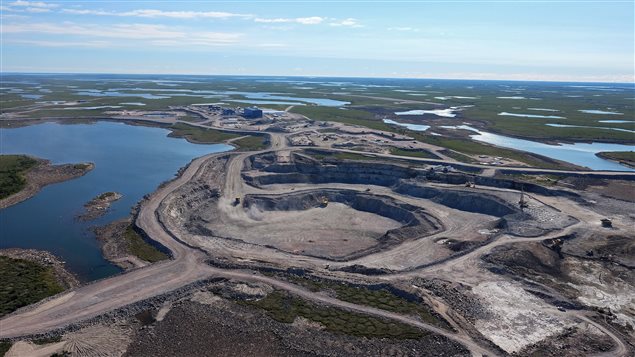
The Gahcho Kue diamond mine, located about about 280 kilometres northeast of Yellowknife in the Northwest Territories, is shown in a handout photo. Photo Credit: PC / THE CANADIAN PRESS/HO-De Beers Group of Companies

By Levon Sevunts, Radio Canada International

20 September, 2016

Canada is set to cement its position as one of the big players in the global diamond industry with the official opening of the Gahcho Kue diamond mine in the Northwest Territories today.

The mine, which sits in the tundra about 280 kilometres northeast of territorial capital of Yellowknife, is estimated to be one of the 10 biggest diamond mines in the world. It is expected to produce an average of 4.5 million carats a year over the life of the mine, according to De Beers Canada.

Gahcho Kue, a joint venture between De Beers Canada (51 per cent) and Mountain Province Diamonds (49 per cent), is the sixth diamond mine opened in Canada since BHP Billiton’s EKATI Mine in the Lac de Gras region, about 300 kilometres northeast of Yellowknife, started in 1998.

“It will be a very significant contributor to the NWT economy,” Kim Truter, CEO of De Beers Canada, told The Canadian Press.
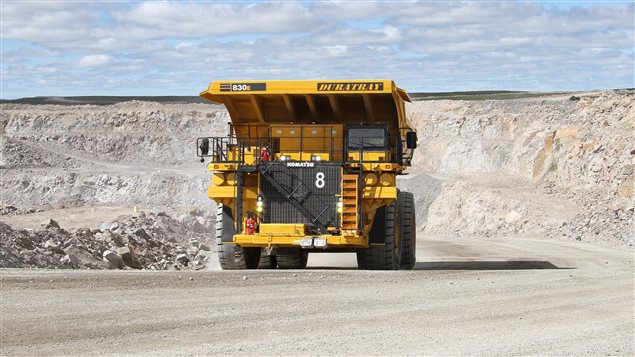
 A dump truck operates at the Gahcho Kue mine in the Northwest Territories in a handout photo. THE CANADIAN PRESS/HO-De Beers Group of Companies

A dump truck operates at the Gahcho Kue mine in the Northwest Territories in a handout photo. © PC/THE CANADIAN PRESS/HO-De Beers Group of Companies

A socio-economic impact report released by De Beers earlier this months estimated that the operation will provide $6.7 billion to the Canadian economy over its estimated life span of 12 years and has generated $440 million to the territory’s economy so far.

The mine supported more than 2,700 direct and indirect jobs in 2015, with employment at the site representing more than 10 per cent of employment in the NWT’s extractive industries, according to the report.

De Beers expects will need about 530 workers to operate.

Truter said the company has been working to share the benefits of Gahcho Kue with local First Nations and Métis, with impact benefit agreements signed with six groups in the area.

Market volatility

Canada’s diamond production is expanding at a time of growing volatility in the industry. Global sales of polished stones declined 2 per cent last year to $24.7 billion US as demand fell in emerging markets like India and China.

Lower prices and market instability meant a much bigger drop in the sales of rough diamonds, which dropped about 30 per cent to an estimated $13.7 billion US, forcing De Beers to close its Snap Lake diamond mine in December last year at a loss of more than 400 jobs.

But the company is banking on the purchasing power of the Millennial generation (those aged 15-34) who spent more than $25 billion US on diamond jewellery in 2015 in the four largest markets – the US, China, Japan and India, according to The Diamond Insight Report 2016.

“Most encouragingly, however, Millennials are still 10 years away from their most affluent life stage and the generation comprises more than 220 million potential diamond consumers in the four main markets,” said Bruce Cleaver, CEO, De Beers Group.

“The diamond industry therefore has a major opportunity on the horizon but it will only capitalise on it fully if it continues to innovate and invest across the value chain.”
pc_160920_sg30d_rci-gahcho-kue-plant_sn635

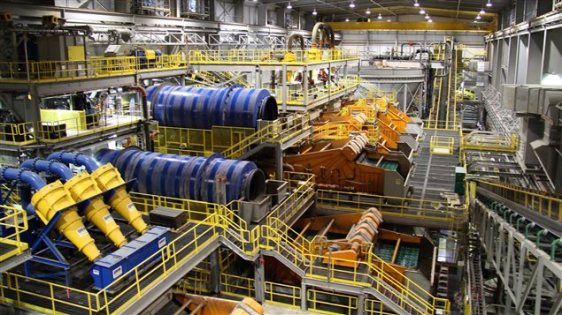
An overall view of the priocessing plant at the Gahcho Kue mine in the Northwest Territories is shown in a handout photo. © PC/THE CANADIAN PRESS/HO-De Beers Group of Companies

Diamond superpower

Canada is a relative newcomer to diamond mining.

De Beers, the world’s leading diamond company, started prospecting for diamonds in Canada in the early 1960s. In 1987, a second year geology student Brad Wood who was working for De Beers stumbled upon kimberlite rocks, volcanic rocks that sometimes contain diamonds, while fishing on Attawapiskat River, in the James Bay lowlands of Northern Ontario. The site would eventually become today’s Victor Mine.

But it wasn’t until 1991, when two enterprising geologists, Stewart Blusson and Chuck Fipke, discovered large diamond deposits in the Lac de Gras region of the Northwest Territories that the word learned of Canada’s Arctic diamonds.

Diamond production at the Anglo-Australian mining giant BHP Billiton’s EKATI Mine in the Lac de Gras region, about 300 kilometres northeast of Yellowknife, started in 1998 (Fipke and Blusson, each hold a 10 per cent share in the EKATI Mine).

In 2003, Rio Tinto, another giant British-Australian mining and metals company, opened its Diavik Mine not far from EKATI.

And in 2008, De Beers opened its first Canadian mine at Snap Lake about 220 kilometres northeast of Yellowknife.

Ontario joined Canada’s diamond club in 2008, when De Beers started commercial diamond production at its Victor mine, about 90 kilometres west of the First Nations community of Attawapiskat, in northern Ontario.

And Quebec is expected to join Canada’s diamond producing club once the Renard Mine owned by Stornoway Diamonds becomes operational by the end of 2016.

In less than a decade, Canada was propelled to the diamond mining major leagues, becoming the world’s third-largest producer, behind Botswana and Russia, producing 15 percent of the world’s diamonds by value.

With files from The Canadian Press

Source: Canada set to open one of the world’s biggest diamond mines
Site C Project Far From Clean and Green, Finds New UBC Report

By Carol Linnitt • Monday, July 18, 2016

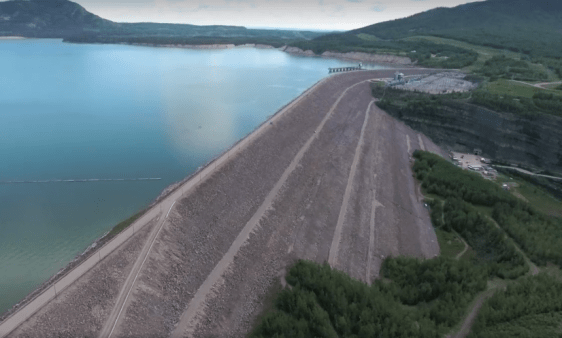
The Site C dam, advanced as the province’s showcase clean energy project by the B.C. government, according to a new report from the University of British Columbia.

Authored by Rick Hendriks from Camerado Energy Consulting, the report found Site C, a BC Hydro megadam proposed for the Peace River near Fort St. John, will not provide energy at a lower greenhouse gas (GHG) emission rate than other alternative energy projects.

The government stated that the unprecedented level of significant adverse environmental effects from Site C are justifiable, in part, because the project delivers energy and capacity at lower GHG emissions than the available alternatives,” Hendriks, an energy consultant with more than 20 years experience analyzing large-scale hydropower projects, said.

Our analysis indicates this is not the case.”

Comparing BC Hydro’s own data on Site C and alternative energy scenarios, the report found the megadam provides no substantial benefit over other renewable sources like wind and solar.

I feel like the discussion in the public has made a few assumptions about the Site C dam that merit reexamination,” Karen Bakker, professor of geography at UBC and Canada Research Chair in Political Ecology, told DeSmog Canada.

The assumption that Site C is clean and green is one that we actually need to scrutinize rather than assume,” she said.

Bakker, who oversaw the new greenhouse gas analysis, is one of several scholars who recently found the Site C project represents the largest amount of significant adverse environmental impacts ever reviewed under the Canadian Environmental Assessment Act since its introduction into law.

She said although the joint federal-provincial review panel tasked with considering the Site C project did some good work, they were limited in resources and scope when it came to a fulsome project analysis. The panel did not consider the greenhouse gas emissions associated with the project.

That’s the simple way to sum up why we’re doing what we’re doing,” she said.

Bakker said the report did not conduct an independent review of BC Hydro’s own greenhouse gas estimates for the project, but said, “even using their own numbers Site C is not cleaner or greener than other renewables.”

Our analysis suggests that other renewables like wind and solar would help Canada achieve its climate change goals more quickly and cheaply and with much lower environmental impact than Site C.”

Bakker said the new report highlights the need for more thorough analysis of Site C’s environmental impacts. She added more research, which doesn’t rely on BC Hydro’s estimates, needs to be conducted.

There’s much more to be done,” she said. “It would be great if this had been studied and geothermal had been examined as well.”

The Site C dam will power a proposed 1100-megawatt electricity facility, producing far more electricity than B.C. is projected to need for roughly two decades.

Local farmers, landowners and First Nations say the dam, which will flood 107 kilometres of the Peace River valley, will unnecessarily destroy wildlife habitat, First Nations archaeological and hunting sites and some of the province’s most productive agricultural land.

The chair of the Site C Joint Review Panel, Harry Swain, has come out against the project, saying B.C.’s domestic electricity demand has not significantly increased since 2007, meaning the province has no need for the estimated $9-billion project.

I think we’re making a big mistake, a very expensive one,” Swain recently told DeSmog Canada. “Of the $9 billion it will cost, at least $7 billion will never be returned. You and I as rate payers will end up paying $7 billion bucks for something we get nothing for.”

There is no need for Site C,” Swain said. “If there was a need, we could meet it with a variety of other renewable and smaller scale sources.”

Source: Site C Project Far From Clean and Green, Finds New UBC Report | DeSmog Canada

UN tells feds to consult before approving B.C. coast pipelines

Report by James Anaya, the UN’s special rapporteur, says there’s a ‘crisis’ in Canada

By Peter O’Neil, Vancouver Sun May 12, 2014

UN tells feds to consult before approving B.C. coast pipelines

A report by James Anaya, the UN’s special rapporteur on the rights of indigenous peoples (pictured), said there is a “crisis” in Canada and that the level of mistrust has perhaps worsened in the past decade.     Photograph by: Sean Kilpatrick , The Canadian Press

OTTAWA — The Harper government must ensure there is “free, prior and informed consent” from First Nations before giving the go-ahead to major resource projects – including two proposed pipeline megaprojects to the B.C. coast, the United Nations said Monday.

A report by James Anaya, the UN’s outgoing Special Rapporteur on the Rights of Indigenous Peoples, said there is a “crisis” in Canada and that the level of mistrust has perhaps worsened since the last visit by a UN representative just over a decade ago.

Anaya put the two oil sands pipeline megaprojects – Enbridge’s to Kitimat and Kinder Morgan Canada’s to Burnaby – at the top of a long list of economic initiatives that have drawn bitter complaints from aboriginal leaders Anaya met during a fact-finding mission last year.

Anaya, an American indigenous rights scholar and nominee for the 2014 Nobel Peace Prize, said the government doesn’t have a coherent plan to meet its Supreme Court of Canada-mandated obligations to consult and accommodate First Nations before major projects proceed.

“There appears to be a lack of a consistent framework or policy for the implementation of this duty to consult, which is contributing to an atmosphere of contentiousness and mistrust that is conducive neither to beneficial economic development nor social peace,” Anaya wrote.

One of his recommendations calls on the federal government to set a clear policy on consultation and accommodation.

“In accordance with the Canadian constitution and relevant international human rights standards, as a general rule resource extraction should not occur on lands subject to aboriginal claims without adequate consultations with, and the free, prior and informed consent of, the indigenous peoples concerned,” stated Anaya in his report that was released in Geneva Monday.

In a Vancouver Sun interview Monday Anaya said “free, prior and informed consent,” a term used in the 2007 UN Declaration on the Rights of Indigenous Peoples, doesn’t mean there should be an Aboriginal veto on resource projects.

But he said said the commitment in the declaration, which Canada endorsed 2010, does require governments to engage in genuine consultation to ensure Aboriginal rights are protected, and to consider killing projects when accommodation can’t be reached.

The report also lists the Site C hydroelectric dam project on the Peace River, gas drilling and pipeline construction in northeastern B.C. on Treaty 8 nations’ traditional territory, and the attempts by Taseko Mines and Fortune Minerals to build mines on unceded traditional First Nations territory in B.C.

The report criticized the federal environmental review panels, saying the panelists are perceived by First Nations as having “little understanding of aboriginal rights jurisprudence or concepts.”

Anaya had a number of other tough criticisms:

– He called on the Harper to reverse his position and call for a “comprehensive, nation-wide inquiry into the issue of missing and murdered aboriginal woman and girls, organized in consultation with indigenous peoples.”

– He sharply criticized the federal government over its handing of land claims across Canada and especially in B.C., where many First Nations are deeply in debt and utterly frustrated over federal negotiating tactics.

But Anaya also found some positive developments, including the agreement late last year to establish a B.C. First Nations Health Authority. He called that a potential model for other jurisdictions.

Aboriginal Affairs Minister Bernard Valcourt cited in a statement Monday the report’s complimentary references to Canada’s track record in protecting Aboriginal peoples’ rights.

“The report published by the Special Rapporteur today acknowledges that, while many challenges remain, many positive steps have been taken by the Government of Canada to improve the overall well-being and prosperity of Aboriginal people in Canada.

He also said resource projects should be seen in a positive light.

B.C. spill advisory committee dominated by industry

August 26, 2013   http://www.bcndp.ca 

herbert

VICTORIA — While briefing documents show the province’s oil spill response regime is already inadequate, the B.C. Liberal response is to stack the advisory committee tasked with fixing it with representatives from the oil industry, say B.C.’s New Democrats.

“Before the election, the Liberals claimed that diverse stakeholders would be involved in oil spill response preparedness planning, and even invited a broad range of groups to participate in a symposium on the issue,” said New Democrat environment critic Spencer Chandra Herbert. “Yet now, after the election, it’s a different story: with the exception of First Nations representation, their advisory groups are almost entirely composed of people promoting the industry they are meant to be regulating.”

Documents obtained from the environment ministry by New Democrats show that the government’s oil spill advisory committee and working groups are heavily dominated by the oil industry, with 80 per cent of the members of the advisory committee, and nearly everyone on the three working groups, representing oil industry interests.

“The government is allowing the oil industry to dominate the discussion, when a major spill would devastate not only our environment but other key industries like fishing and tourism, whose interests should be represented at the table,” said Chandra Herbert.

Chandra Herbert also raised concerns about briefing materials prepared for the new environment minister and revealed through a freedom of information request this week showing the province is ill-equipped to handle even a moderate spill. Ministry officials warn that the province “is not adequately staffed and resourced to meet the existing and emerging expectations to address spills,” and suggest that even a moderate-sized spill “would overwhelm the province’s ability to respond and could result in a significant liability for government.”

“How long has the government known that it is unable to respond to oil spills in this province? How do they square this with their continued assurances about industry safety? And what are they doing to advocate for better resources from Ottawa?” asked Chandra Herbert.

“When it comes to sustainable development, this government hasn’t delivered on its promises, and their oil spill response program is another sad example. Again and again, they have failed to stand up for our environment.”

New Democrats are calling on the government to fulfill its promise of sustainable development, starting with a strong spill response regime that protects the interests of all British Columbians.

Members of the advisory committee and the three advisory groups can be found at the link below:

spill_response_committees.pdf