
Feds Can’t Back Up Foreign Worker Program Changes, NDP’s Ashton Says | The Tyee

NDP labour critic Niki Ashton called recent federal exemptions to the Temporary Foreign Worker Program ‘very troubling.’ Photo: Twitter.

Liberals recently allowed a seasonal exemption to federal program rules.

By Jeremy J. Nuttall, Today, TheTyee.ca

The Liberal government can’t produce anything to back up its decision to ease restrictions on the Temporary Foreign Worker Program, according to the New Democratic Party critic for labour.

Niki Ashton said she asked Employment Minister MaryAnn Mihychuk to show the materials used in the government’s recent decision to approve an exemption that allows companies to bring in unlimited numbers of temporary foreign workers to fill seasonal jobs this year.

“I asked her to share the reports that guided her to the decision she’s making,” Ashton said, noting the conversation happened at a Monday committee meeting. “There are no reports. She gave this generic answer following my question.”

In February, the Liberals quietly removed a regulation that capped the number of foreign workers working below a provincial median wage at 10 per cent of a company’s workforce, but only for businesses in seasonal industries.

The removal of the cap means, for example, that employers such as fish canneries and resorts can bring in as many such workers as they want so long as the employment term is under 180 days. Under former regulations, the limit was 120 days.

The easing of restrictions applies to all seasonal workers, but Ashton said it was initially done to accommodate fish processing plants in the Maritimes.

She said she suspects the Liberals are bowing to political pressure from their MPs in the Maritimes, who are being lobbied by the seafood industry.

A spokesperson for Employment and Social Development Canada took questions from The Tyee Friday, but had not responded by late Tuesday.

A search Tuesday of the government’s job bank shows 17 available positions in fish processing plants with wages peaking at $15 an hour, while most jobs pay around $12.

Over the last decade, use of the Temporary Foreign Worker Program has skyrocketed amid allegations of employers using it to skirt Canadian wages.

There have also been reports of workers brought to Canada through the program to perform menial work with no chance of being granted permanent residency.

Critics of the program have said that businesses should be forced to increase their wages in the spirit of the free market if they can’t find local workers.

Under public pressure, the Conservatives made changes to the program in 2013 and 2014, including imposing the cap on the number of workers an employer could bring in through the program.

Trudeau once a critic

The Liberal party was among the critics of the Temporary Foreign Worker Program under the Conservatives, but now Trudeau’s government is changing its tune, Ashton said.

The Liberals have committed to a review of the program, which Ashton said she expects will be held sometime in June.

But she said lifting the cap for some industries in the meantime, without appearing to have studied if it is needed, is questionable.

“They’ve gone ahead and allowed for unlimited acceptance of TFWs in certain sectors without due diligence, without reforming the program, without tackling the major issue, which is the lack of access to citizenship that TFWs face,” she said. “Their approach on the TFW program is very troubling.”

In 2014, then third-party leader Justin Trudeau wrote a column for the Toronto Star criticizing the Temporary Foreign Worker Program, and calling for it to be “scaled back.”*

Trudeau said the program “drives down wages and displaces Canadian workers” due to loose restrictions under the Conservatives.

“First, the Temporary Foreign Worker Program needs to be scaled back dramatically over time, and refocused on its original purpose: to fill jobs on a limited basis when no Canadian workers can be found,” he wrote.

Playing with fire in Alberta: labour leader

So why then, wonders the president of the Alberta Federation of Labour, is Trudeau now allowing exemptions for a program that he once said threatened Canadian jobs?

Gil McGowan, who ran for the federal NDP last October, said he was concerned after hearing the exemptions are being used by Alberta resorts to hire temporary foreign workers.

Meanwhile, Alberta’s labour market limps on following the collapse in oil prices, with the unemployment rate increasing by 2.3 per cent since 2014.

McGowan said the Liberals are “playing with fire” by lifting the exemptions.

“It might lead to some kind of political or social explosion,” he said. “If [Albertans] get wind the Liberals are opening up the program again while unemployment rates are at levels we haven’t seen in more than a generation, I’m afraid that people will simply lose it.”

McGowan said the Liberals have not spoken to him about the matter, and called the move the “worst kind” of political bait and switch.

“The Liberals didn’t run on a promise of expanding the Temporary Foreign Worker Program,” McGowan said. “In fact, quite to the contrary: whenever they talked about it they said the program was exploitative.”

*Story corrected April 13 at 11:15 a.m. to amend a quote error.  [Tyee]

Source: Feds Can’t Back Up Foreign Worker Program Changes, NDP’s Ashton Says | The Tyee
Are there enough Canadians to really stop the Harper juggernaut on October 19?….Just Saying….

October 13, 2015       Andrew Chernoff Just-saying

The headlines have the Harper Conservatives on the ropes; the election all but over:

‘There’s a real chance that Justin’s Liberals could form government’: Conservatives warn-National Post-Oct 12, 2015

Liberals within reach of strong minority: poll-Toronto Star – ‎Oct 10, 2015‎

Conservatives On Defence In Several Urban Man. And Sask. Ridings-Huffington Post Canada-Oct 13, 2015

Harper Tries to Fend Off Trudeau in Last Week of Canada Vote-Bloomberg-Oct 11, 2015

No room for ambition or contenders in ‘party of one’ –Waterloo Record-Oct 13, 2015

“The Conservatives will have only themselves to blame when the votes are counted next Monday” says Geoffrey Stevens, an author and former Ottawa columnist and managing editor of the Globe and Mail, teaches political science at Wilfrid Laurier University and the University of Guelph.

Say it isn’t so? Gentle my heart….Proof that Santa Claus exists…..Must get that Lotto 649 ticket NOW!!!

BRITISH COLUMBIA ELECTION OF 2013

As a British Columbian, since the provincial election of 2013 (2013 B.C. election: The post-mortem), forgive me for being once bitten, twice shy. The BC NDP were to win by a landslide. The polls said so. The electorate said so. The province had enough of the Liberals and it was time to strike them down and put an end to that totalitarian government once and for all.

Yeah, right. The polls lied. British Columbians lied.

When it came to actually putting their vote where it counted, too many British Columbians committed hari kari and drank the BC Liberal juice.

Once again proving that too many British Columbians are ineffectual and timid to affecting real change. They are pussies: B.C. election: Christy Clark pulls off an upset for the ages: Defying all pre-election polling and prognostication, Liberal Leader Christy Clark retained power in British Columbia Tuesday night-Tim Harper.

MORE OF THE SAME?

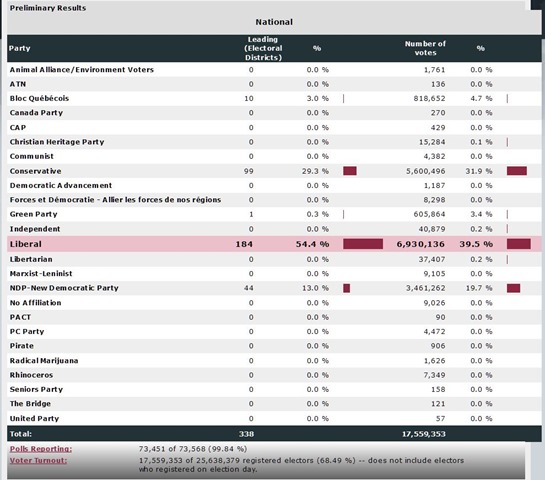
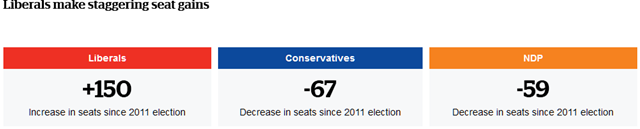
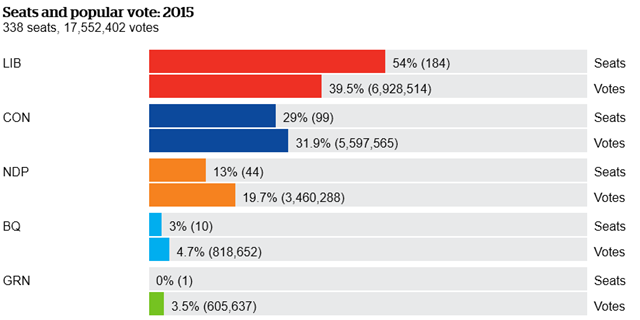
On Monday, October 19, will Canadians from coast-to-coast-to coast make the pollsters right? Will there be at least a federal Liberal minority government, if not majority government, in place on Tuesday, October 20? Or, will it be a minority NDP federal government? Or, dread the thought, more of the same?

Both Stephen Harper and his government were supposed to be regulated to the opposition last election. Remember?

“Harper finally wins majority as NDP surges into Opposition”-Globe and Mail-May 2, 2011:

Canadian voters have radically redrawn the country’s political landscape, handing the Conservative Party its long-sought majority in an election that decimated the Bloc Québécois and humbled the Liberals.

For the first time in history, the New Democratic Party will form the Official Opposition after an extraordinary breakthrough that propelled the party to more than 100 seats.

The extent of the transformation is startling. The Liberals now hold just four seats west of Guelph, Ont. The Conservatives, formerly shunned by Toronto voters, won nearly half of the seats in that city, twice as many as the Liberals. The Bloc Québécois, which defined Quebec federal politics for two decades, no longer qualifies for official party status. And Green Party Leader Elizabeth May won the party’s first seat, and the right to a place in the next election’s debates.

Bloc Leader Gilles Duceppe lost his seat and resigned. Liberal Leader Michael Ignatieff lost his riding. Both defeated leaders were squeezed, like many of their candidates, between growth in Conservative support and Jack Layton’s surging New Democrats.

The night belonged to Stephen Harper, who put his party over the top after five years of minority government and becomes just the third Conservative leader since Confederation to win triple victories.

Federal elections are much tougher to win, I must admit and the NDP did make a strong showing, to become the official opposition.

But……Canadians are like teenage girls drawn to “bad boys”……they are drawn to Harper and the rest of the Conservatives “bad boys…and girls”.  Whatever the bad boys do opposes the book of rules which they rewrite for their own needs and purpose and that’s how they succeed to trigger an adrenaline rush in the Canadian electorate and draw them in for four more years.

I mean, how else do you explain the sado masochistic tendency that occurs every time Harper leads his Conservative party into a federal election. Between elections Canadians complain about everything and swear on everything including the Bible that change must occur: we must get rid of Harper and his Conservatives and elect a different federal party to be the government of Canada.

The polls prove it…..remember 2011…..and those trusting polls…..the Conservatives on the ropes….the NDP support….the Liberals.

The lesson from the 2011 federal election….the lesson the provincial BC NDP learned the hard way in 2013, repeating the history of the 2011 federal election….is that most polls aren’t worth believing: Canadians love to hear themselves complain and do nothing about it when it counts. Talk talk. Talk talk.

10. Most polls aren’t worth more than a glance of Canada’s political future through a crystal ball.

Most polling firms underestimated the Tories’ strength and overestimated the Liberals’ influence. So what did Canadians learn from the raft of fluctuating numbers and contradictory public opinion polls?

According to Harris-Decima chairman Allan Gregg, not much. “[They learned] that sometimes it’s better to be uninformed than misinformed,” he said.

Mr. Gregg says methodological issues are skewing results of telephone and online polls, including a dwindling number of landlines and people not answering their home phones to avoid telemarketers.

“The industry is going through a transition, and as a result our work is more imperfect than it is at the best of times,” he says. “We cannot predict behaviour, predicting turnout is impossible, and answers are only reflections of the questions that are asked.”

Ipsos Reid proved to be the most accurate of the country’s data slingers, posting poll results that closely mirrored the final tally. But Ipsos Reid’s Darrell Bricker says he doesn’t count on results purely from the so-called “random sample.”

“The real issue is coverage and making sure you have an adequate representation of the population in the sample,” he said. “What it comes down to is good science and being skeptical by your own numbers. The job of good social science is you never take anything from one source.” Ten lessons to learn from the 2011 election National Post (blog)-May 3, 2011

So what will it be?  C’mon I have to know right now. What’s it gonna be? Harper’s Conservatives, Trudeau’s Liberals or Mulcair’s New Democrats?

I know….I know….the same ole tune, right. Let me guess…..

Let me sleep on it
Baby, baby, let me sleep on it
Let me sleep on it
And I’ll give you an answer in the morning
Let me sleep on it
Baby, baby, let me sleep on it
Let me sleep on it
And I’ll give you an answer in the morning
Let me sleep on it
Baby, baby, let me sleep on it
Let me sleep on it
And I’ll give you an answer in the morning

My prediction is….more of the same….the Harper Conservatives are the federal party Canadians love to hate, and the majority of Canadians are too far-gone on that Harper Conservative cocktail. It’s an obsession you just can’t quit. Defies all logic and common sense.

In the end, you disavow any personal responsibility. Harper made you do it. That bad boy.

Like the song says:

I couldn’t take it any longer
Lord I was crazed
And when the feeling came upon me
Like a tidal wave
I started swearing to my god
And on my mother’s grave
That I would love you to the end of time
I swore I would love you to the end of time

Just saying….


Fair Elections Act passes third reading, expected to become law by June

Josh Wingrove

OTTAWA — The Globe and Mail    Tuesday, May. 13 2014

An overhaul of Canadian electoral law is one step closer to being in place for the 2015 campaign after the House of Commons passed Bill C-23 despite ongoing calls for changes.

The Conservative government’s divisive Fair Elections Act passed third reading in the House on Tuesday evening by a vote of 146 to 123. It will now be sent to the Senate, where a quick approval is expected. The government hopes to make it law by June.

Bill C-23 overhauls many of the rules for election campaigns in Canada. Chiefly, it will boost ID requirements on voting day and place limits on what Elections Canada can do publicly. It creates a registry for robocall rules, albeit one some fear will be toothless, and boosts penalties for certain offences while adding an extra day of advance voting.

Critics have warned its effect could disenfranchise some voters, reduce voter turnout and tilt the electoral playing field in favour of the Conservatives.

Facing widespread calls for change, the Conservatives last month were forced to back down on certain proposals and amend the bill. The government, however, voted down more than 200 opposition amendments – all but a few minor, technical ones – aimed at further reforms.

The man spearheading the effort, Democratic Reform Minister Pierre Poilievre, brushed aside ongoing calls for changes and said it’s time to push the bill to become law.

“Now we move forward to decision day, having had all these debates [and] considered modest but fair changes. It is time for people to decide. This bill will allow Elections Canada to focus on its core mandate of running elections fairly and efficiently,” Mr. Poilievre said in the House of Commons on Tuesday.

House Leader Peter Van Loan said the bill will be in place in time for the next election and it’s not expected to be delayed in the Senate.

“All indications are the bill does have a lot of support – not only among elected officials in the House, but also in the Senate,” Mr. Poilievre said.

The bill continues to have opponents. A long list of non-partisan experts called for changes, including some that weren’t made. In return, the Conservative government attacked the motives of some critics, such as Chief Electoral Officer Marc Mayrand, before abruptly announcing amendments.

Mr. Poilievre offered no contrition Tuesday when asked if he had any regrets about the process. “I’m very happy with how it went about,” he said.

NDP Leader Thomas Mulcair has said the bill would “weaken our democracy and make voting harder across the country,” and NDP MPs continued to outline their problems with the bill in the waning hours of debate Tuesday.

The NDP had asked 19 specific Conservative MPs – those with an independent streak – to oppose the bill. They included Harold Albrecht, Jay Aspin, Maxime Bernier, Peter Braid, Michael Chong, Rob Clarke, Robert Goguen, Bal Gosal, Laurie Hawn, Bryan Hayes, Gerald Keddy, Ryan Leef, James Rajotte, Lawrence Toet, Brad Trost, Susan Truppe, Tim Uppal, David Wilks and Stephen Woodworth. In the end, none voted against it.

Liberal Leader Justin Trudeau has pledged to repeal the bill if elected prime minister, a pledge he reiterated Tuesday.

“The changes that have been made aren’t good enough, and if we form government in 2015, we will establish a much fairer principle around elections and repeal C-23,” he said.