
Feds Can’t Back Up Foreign Worker Program Changes, NDP’s Ashton Says | The Tyee
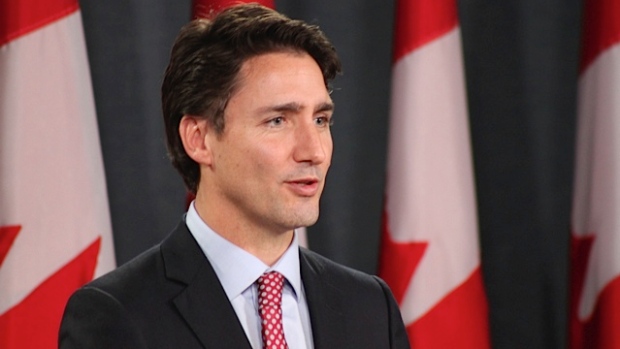
NDP labour critic Niki Ashton called recent federal exemptions to the Temporary Foreign Worker Program ‘very troubling.’ Photo: Twitter.

Liberals recently allowed a seasonal exemption to federal program rules.

By Jeremy J. Nuttall, Today, TheTyee.ca

The Liberal government can’t produce anything to back up its decision to ease restrictions on the Temporary Foreign Worker Program, according to the New Democratic Party critic for labour.

Niki Ashton said she asked Employment Minister MaryAnn Mihychuk to show the materials used in the government’s recent decision to approve an exemption that allows companies to bring in unlimited numbers of temporary foreign workers to fill seasonal jobs this year.

“I asked her to share the reports that guided her to the decision she’s making,” Ashton said, noting the conversation happened at a Monday committee meeting. “There are no reports. She gave this generic answer following my question.”

In February, the Liberals quietly removed a regulation that capped the number of foreign workers working below a provincial median wage at 10 per cent of a company’s workforce, but only for businesses in seasonal industries.

The removal of the cap means, for example, that employers such as fish canneries and resorts can bring in as many such workers as they want so long as the employment term is under 180 days. Under former regulations, the limit was 120 days.

The easing of restrictions applies to all seasonal workers, but Ashton said it was initially done to accommodate fish processing plants in the Maritimes.

She said she suspects the Liberals are bowing to political pressure from their MPs in the Maritimes, who are being lobbied by the seafood industry.

A spokesperson for Employment and Social Development Canada took questions from The Tyee Friday, but had not responded by late Tuesday.

A search Tuesday of the government’s job bank shows 17 available positions in fish processing plants with wages peaking at $15 an hour, while most jobs pay around $12.

Over the last decade, use of the Temporary Foreign Worker Program has skyrocketed amid allegations of employers using it to skirt Canadian wages.

There have also been reports of workers brought to Canada through the program to perform menial work with no chance of being granted permanent residency.

Critics of the program have said that businesses should be forced to increase their wages in the spirit of the free market if they can’t find local workers.

Under public pressure, the Conservatives made changes to the program in 2013 and 2014, including imposing the cap on the number of workers an employer could bring in through the program.

Trudeau once a critic

The Liberal party was among the critics of the Temporary Foreign Worker Program under the Conservatives, but now Trudeau’s government is changing its tune, Ashton said.

The Liberals have committed to a review of the program, which Ashton said she expects will be held sometime in June.

But she said lifting the cap for some industries in the meantime, without appearing to have studied if it is needed, is questionable.

“They’ve gone ahead and allowed for unlimited acceptance of TFWs in certain sectors without due diligence, without reforming the program, without tackling the major issue, which is the lack of access to citizenship that TFWs face,” she said. “Their approach on the TFW program is very troubling.”

In 2014, then third-party leader Justin Trudeau wrote a column for the Toronto Star criticizing the Temporary Foreign Worker Program, and calling for it to be “scaled back.”*

Trudeau said the program “drives down wages and displaces Canadian workers” due to loose restrictions under the Conservatives.

“First, the Temporary Foreign Worker Program needs to be scaled back dramatically over time, and refocused on its original purpose: to fill jobs on a limited basis when no Canadian workers can be found,” he wrote.

Playing with fire in Alberta: labour leader

So why then, wonders the president of the Alberta Federation of Labour, is Trudeau now allowing exemptions for a program that he once said threatened Canadian jobs?

Gil McGowan, who ran for the federal NDP last October, said he was concerned after hearing the exemptions are being used by Alberta resorts to hire temporary foreign workers.

Meanwhile, Alberta’s labour market limps on following the collapse in oil prices, with the unemployment rate increasing by 2.3 per cent since 2014.

McGowan said the Liberals are “playing with fire” by lifting the exemptions.

“It might lead to some kind of political or social explosion,” he said. “If [Albertans] get wind the Liberals are opening up the program again while unemployment rates are at levels we haven’t seen in more than a generation, I’m afraid that people will simply lose it.”

McGowan said the Liberals have not spoken to him about the matter, and called the move the “worst kind” of political bait and switch.

“The Liberals didn’t run on a promise of expanding the Temporary Foreign Worker Program,” McGowan said. “In fact, quite to the contrary: whenever they talked about it they said the program was exploitative.”

*Story corrected April 13 at 11:15 a.m. to amend a quote error.  [Tyee]

Source: Feds Can’t Back Up Foreign Worker Program Changes, NDP’s Ashton Says | The Tyee
Justin Trudeau to move forward with ambitious agenda by year’s end

An incoming Liberal majority government will move forward with an ambitious agenda and open Parliament with a speech from the throne before the end of the year, CBC News has learned.

Source: Justin Trudeau to move forward with ambitious agenda by year’s end

Trudeau’s Brave New Canada: The Globalist

A preview of Canada’s national and global agenda under its new government.

 https://encrypted-tbn3.gstatic.com/images?q=tbn:ANd9GcQbHUto8H4q6chkodX5WeRTvbe1oHuB6c-UN7ss9cspzgSPOU9p8A        By Beat Guldimann  October 27, 2015

In the days leading up to the Canadian federal election 2015, pundits and pollsters had gotten the basic result right when they predicted that Justin Trudeau’s Liberal Party would defeat Stephen Harper’s Conservatives.

What nobody saw coming was the landslide that got the Liberal Party 184 of a total of 340 seats in the House of Commons. That election result relegated the Conservatives to the role of Official Opposition — and it basically destroyed the leftist NDP.

Justin Trudeau, the man depicted by Conservative attack ads as not being ready to lead the country, leapt to a convincing victory. Obviously, Canadian voters didn’t share Mr. Harper’s concerns about Pierre-Elliott Trudeau’s offspring.

Trudeau ran on a message of positive change and restoring Canada’s historic values. His message resonated with voters. The next few weeks will demonstrate to Canadians and to the world what that translates into in real political action.

Here is a preview:

Fiscal Policy

One of the key promises in the Liberal campaign was to reduce the tax burden of the middle class and have the top earners in the country pay for it. Trudeau will no doubt push this through Parliament with his first budget.

Canada’s federal government will boost spending to fix public transit in the largest cities and move ahead with key infrastructure projects, for which the budget will go back into deficit for three years.

As long as this deficit is strategically used to only fund infrastructure, Canadians should not be too worried as the investment will indirectly create higher tax revenues and increase GDP in the future.

Style and Tone

Mr. Trudeau promised to run a more open Prime Minister’s Office (PMO) and to set a collaborative tone around the cabinet table. This is a welcome change to Mr. Harper’s iron fist approach and his reputation as a micro-manager.

Canadians can expect democratic debate to become more constructive and potentially a little less partisan over the next four years.

Mr. Trudeau even hinted to loosen party discipline and allow more votes in Parliament where MPs are allowed to vote their conscience rather than in fulfillment of party directives. This would be a highly welcome breath of fresh air on Parliament Hill.

Social Policy

Trudeau’s Liberals will bring the divisive debate around integration of immigrants and public phobia against all things Muslim back to the political center. They will almost certainly shut down the debate about hijabs that flared up during the election campaign.

Trudeau also promised to legalize marijuana for personal use. There is no indication yet as to when legislation to that effect will be slotted into the parliamentary process. However, it is highly probable that the term “pot roast” might be getting a new meaning in the foreseeable future.

Security

Expect Mr. Trudeau to attempt reaching a balance between public safety and civil liberties in the tradition of the Liberal Party of his father and Lester B. Pearson. Mr. Trudeau genuinely believes that keeping Canadians safe can be reconciled with freedom of expression and religion.

That notion was somewhat lost during the last legislature. The future will tell how the Liberal government will go about this balancing act.

Foreign Policy

Mr. Trudeau’s first call to a foreign leader was to President Obama, whom he advised that Canada’s CF-18s would soon be pulled from the Syrian theater of operations. This is a clear indication that Canada will take a less hawkish stance in its defense policy.

Canada will no doubt become somewhat gentler and kinder in its foreign policy and keep a distance from the United States — all while understanding that friendly relations with its big southerly neighbor are essential to Canadian interests.

Mr. Trudeau also might not necessarily keep the “best of friends” status that Mr. Harper held with Mr. Netanyahu as he takes a more balanced approach to dealing with the Middle East.

Under its new leadership, Canada will see a return to preferring diplomacy as the primary instrument in foreign policy. This said, nobody should expect Canadian diplomats to just be nice and apologize all the time.

Mr. Trudeau shares Mr. Harper’s dislike of Vladimir Putin and has promised to take an active role in opposing his intrusions and transgressions in Eastern Europe.

International Trade

Unlike his opponent Tom Mulcair, leader of the NDP, Mr. Trudeau has not criticized Mr. Harper for singing off on the Trans Pacific Partnership (TPP).

The new Canadian government will continue on the path that the Conservatives have paved and secure Canada’s place in international trade. This is wise, given that Canada’s economic future depends more on exports than is the case for most of its peers in the G7.

The next four years will be an interesting new chapter for Canada. Foreign leaders are well advised not to repeat the mistake made by Mr. Trudeau’s recent political opponents and to underestimate his skill and determination.

More on this topic:

Step Change: Federal Policy Ideas Toward A Low-Carbon Canada: Broadbent Institute & Mowat Centre

header The Mowat Centre

With the United Nations Climate Conference in Paris next month, the Broadbent Institute has published, in partnership with the Mowat Centre, Step Change: Federal Policy Ideas Toward a Low-Carbon Canada, which comes at a crucial time with a new federal government leading Canada’s delegation.

The report’s message is clear: The federal government has a critical role to play in driving down greenhouse gas emissions beyond carbon pricing alone. Getting behind the package of seven policy measures outlined in the report will signal to the international community the seriousness of Canada’s commitment to taking action to tackle the climate crisis and transition toward a low-carbon economy.

It starts with you. You can read the report here and share it with your networks.

Executive Summary

Over the last few years, Canadian governments of different levels have taken first steps in the fight against climate change. With a new federal government in power and COP21 in Paris now on the horizon, Canada must calibrate its climate policies with a view to the long term. In addition to carbon pricing — a core policy idea that is gaining ground at the provincial and, increasingly, federal level — seven preliminary policy ideas can also help the federal government steer Canada toward a low-carbon economy:

Laying the Economic Foundation

1. Green Bank of Canada

A state-sponsored financial entity that promotes greater private-sector investment in the low-carbon economy through a variety of mechanisms, such as credit enhancements, guarantees, project aggregation and securitization.

2. Tax Code Retrofit

A suite of changes to the tax code in favour of energy efficiency, renewable energy, and other sustainable technologies, supported by a phase-out of remaining fossil fuel subsidies.

Promoting Low-Carbon Solutions

3. Accelerated Coal Phase-Out

Amendment to the Reduction of Carbon Dioxide Emissions from Coal-Fired Generation of Electricity Regulations, to accelerate the phase-out of remaining coal-fired power plants.

4. Green Building Compact

A packaged suite of federal energy efficiency and renewables policies, including a revamp of codes and standards, a National Deep Retrofit Program, and a renewable heating program.

5. ‘Lead by Example’ Mandate

A suite of ambitious initiatives for federal facilities and institutions, including on heat and power, transportation, and institutional investing.

6. Clean Transportation Strategy

A packaged suite of policies pertaining to transportation, including a progressive Vehicle Emissions Tax, a Zero Emission Vehicle mandate, and a revamp of infrastructure spending and transfer criteria to include GHG goals.

7. Bio Strategy

A suite of policies promoting best practices in the agricultural and forestry sectors, from cross-compliance with existing funding programs to voluntary initiatives in farming practices.

Considerable work is still required to refine these ideas and bring them to fruition, from costing to consultation. At this stage, this document offers a blueprint for policymakers in their search for the next step changes in federal climate action.