

Smoking Permanently Damages Human DNA, Study Says

By Mary Pascaline Dharshini

September 21, 2016

A study found that smoking can damage the DNA, permanently altering nearly 7,000 genes that can contribute to the development of smoking-related illnesses. Most damage, which can be seen in clear patterns, heals over time but some remains.

The study published online Tuesday in the American Heart Association’s journal Circulation: Cardiovascular Genetics found that smoking leaves its “footprint” on the genome through DNA methylation, the process by which cells control gene expression.

Researchers believe that this process could reveal the individual’s smoking history and help identify potential targets for therapy.

They added that this study is the largest one examining the effects of smoking on DNA methylation.

“These results are important because methylation, as one of the mechanisms of the regulation of gene expression, affects what genes are turned on, which has implications for the development of smoking-related diseases,” Stephanie J. London, last author and deputy chief of the Epidemiology Branch at the National Institute of Environmental Health Sciences, said in a statement.

“Equally important is our finding that even after someone stops smoking, we still see the effects of smoking on their DNA,” she added.

Researchers used blood samples collected from 16,000 people to analyze the DNA methylation sites across the human genome. The participants belonged to 16 groups from the Cohorts for Heart and Aging Research in Genomic Epidemiology Consortium and one group from the Framingham Heart Study.

Researchers compared the methylation sites in current and former smokers to those who had never smoked and found that nearly one-third of known human genes, or 7,000 genes, were altered due to smoking.

Most of the sites in people who quit smoking returned to levels seen in non-smokers within five years of quitting. But some DNA methylation sites remained damaged even after 30 years since quitting.

Researchers added that the affected sites may mark genes that are potentially important to former smokers who are still at an increased risk of developing certain diseases.

“Our study has found compelling evidence that smoking has a long-lasting impact on our molecular machinery, an impact that can last more than 30 years,” Roby Joehanes, first author and an instructor at Harvard Medical School in Boston, said in the statement.

“The encouraging news is that once you stop smoking, the majority of DNA methylation signals return to never smoker levels after five years, which means your body is trying to heal itself of the harmful impacts of tobacco smoking.”

According to the Centers for Disease Control and Prevention, nearly 40 million adults in the country smoked cigarettes.

Cigarette smoking accounts for one in every five deaths or over 480,000 deaths every year in the United States.
Source: Smoking Permanently Damages Human DNA, Study Says

Ancient DNA Provides an Evolutionary Roadmap

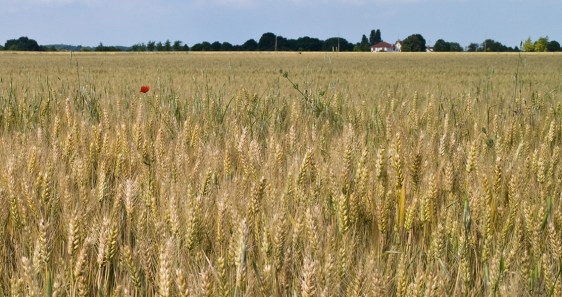
In the first study of its nature, scientists have found genetic evidence – through the analysis of ancient DNA – connecting the arrival of agriculture in Europe approximately 8,500-years ago with widespread genetic changes to the DNA of people living at the time; altering their immune system, digestion, skin color and height. The finding secures the agricultural revolution’s distinction as one of the most profound events in all of human history.

Researchers had previously found unconnected clues relating to these alterations while studying the genes of living Europeans, but the new study makes it possible to see the changes as they occurred over thousands of years. According to Rasmus Nielsen, a geneticist with the University of California, Berkeley, who was not directly involved in the recent study, scientists have been trying for decades to find out what happened in the past – and now there’s a figurative time machine.

Prior to this study of ancient DNA, scientists had to rely primarily on bones or other physical remains from early humans in order to understand European history. In Europe, researchers have determined that the earliest human bones date to approximately 45,000 years ago. Early Europeans survived as hunter-gatherers for more than 35,000 years. It was only around 8,500 years ago that farmers left their first archaeological mark in the history of the continent.

Scientists had already uncovered evidence which suggested the ancestors of living Europeans adapted to agriculture by natural selection. With DNA sequencing tools becoming more advanced and more available scientist were even able to find some of the traits’ molecular underpinnings. But what these studies couldn’t do was determine when the changes occurred with any precision, or whether they were the result of the migration of people into Europe or natural selection.

Scientists can now tackle these questions directly, thanks to the quickly growing supply of DNA supplied by ancient skeletons. It’s already been determined that the average European’s DNA comes typically from three sources.

Before agriculture took hold, Europeans were a population of hunter-gatherers; next came a wave of people with DNA similar to residents of the Near East (it was likely these people who introduced agriculture to Europe). Finally, a nomadic population from Russia known as the Yamnaya swept across Europe 4,500 years ago.

Evidence of these migrations was found after the analysis of dozens of ancient European genomes. In the new study the international team of experts analyzed the genomes of 230 people who were alive between 2,300 and 8,500 years ago. The huge sample size has given researchers the data needed to track distinct genetic variations as they became more common or less common throughout ancient Europe’s history.

By comparing the ancient and living human genes scientists have confirmed previous hypotheses founded on living Europeans, but they have also revealed the other genes that evolved as well. Earlier studies indicated that once Europeans began raising cattle they became better at digesting milk, the new study has confirmed that the presence of a gene that aids in milk digestion (LCT) became much more common. Surprisingly it was determined this change didn’t occur with the advent of farming, because this change dates back only 4,000 years.

Agriculture benefited people by providing a new source of protein; however a diet dependent on grains also created the risk of not getting enough other key nutrients. So along came the gene SLC22A4 which works on the surface of a cell to increase absorption, thereby increasing a person’s chance of survival. An indirect consequence of this genetic fix is the raised risk of digestive disorders.

Changes to the color of European skin have also been tracked. The original hunter-gatherers were descendants of people from Africa and the farmers who arrived next were lighter skinned and it’s this latter trait which spread throughout Europe – helped along by the later appearance of an additional gene variant that lightened skin even further. But why? It was a long held belief that at higher latitudes light skin would capture additional vitamin D from sunlight; but early hunter-gatherers got along fine with dark skin. The new hypothesis proposes it was the move to agriculture which caused a reduction in Vitamin D intake that led to the change.

Another puzzle the collection of ancient DNA addresses is the evolution of height in Europe. After combing through 169 height related genes they discovered that the early famers were relatively tall, and the Yamnaya were even taller. People living in northern Europe then inherited more Yamnaya DNA – making them taller. It’s not apparent why nature favored a shorter stature in the south but it’s clear this genetic history still affects the differences in height across the continent even now.

Image courtesy of Wikimedia Commons user: Myrabella

Source: Ancient DNA Provides an Evolutionary Roadmap

Tiny water bears are huge DNA thieves: study


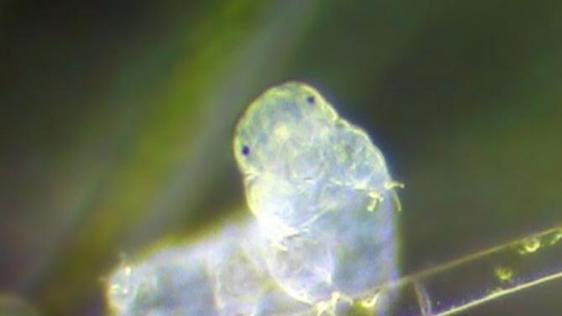
Washington (AFP) – The eight-legged water bear — a hardy, nearly microscopic animal  resembling its mammal namesake — gets a huge chunk of its DNA from foreign organisms such as bacteria and plants, scientists have revealed.

These genes, the researchers suggest, help the tiny animals, also known as moss piglets or tardigrades, survive in the harshest of environments.

Water bears, which live all over the world, are usually 0.020 inches (0.5 millimetres) long and move very slowly and clumsily on their multitude of legs.

These highly adaptable creatures can survive extreme temperatures.

Even after being stuck in a freezer at -112 degrees Fahrenheit (-80 Celsius) for 10 years, they can start moving around again about 20 minutes after thawing.

By sequencing these creatures’ genome, researchers from the University of North Carolina (UNC) at Chapel Hill were surprised to find that 17.5 percent — nearly a sixth — of the genome came from foreign organisms.

For most animals, less than one percent of their genome comes from foreign DNA.

The microscopic rotifer previously held the record, with eight percent of its genome coming from foreign DNA.

“We had no idea that an animal genome could be composed of so much foreign DNA,” said co-author Bob Goldstein of UNC’s College of Arts and Sciences.

“We knew many animals acquire foreign genes, but we had no idea that it happens to this degree.”

– New insight on evolution –

The study, published in Monday’s edition of the Proceedings of the National Academy of Sciences, also made unusual findings about how DNA is inherited.

Goldstein, first author Thomas Boothby and colleagues found that water bears obtain about 6,000 foreign genes mostly from bacteria, as well as plants, fungi and Archaea single-cell organisms.

“Animals that can survive extreme stresses may be particularly prone to acquiring foreign genes — and bacterial genes might be better able to withstand stresses than animal ones,” said Boothby, a postdoctoral fellow in Goldstein’s lab.

Indeed, bacteria have survived the most extreme environments on Earth for billions of years.

Water bears acquire foreign genes through horizontal gene transfer, a process by which species swap genetic material instead of inheriting DNA from parents.

“With horizontal gene transfer becoming more widely accepted and more well-known, at least in certain organisms, it is beginning to change the way we think about evolution and inheritance of genetic material and the stability of genomes,” said Boothby.

Researchers said the DNA likely gets inside the genome randomly but what remains allows water bears to survive in the most hostile environments.

Under intense stress, such as extreme dryness, the water bear’s DNA breaks up into small pieces, according to the research team.

Once the cell rehydrates, its membrane and nucleus housing the DNA temporarily becomes leaky and allows other large molecules to pass through easily.

They thus repair their own damaged DNA while also absorbing foreign DNA as the cell rehydrates, forming a patchworks of genes from different species.

“So instead of thinking of the tree of life, we can think about the web of life and genetic material crossing from branch to branch,” Boothby explained.

“So it’s exciting. We are beginning to adjust our understanding of how evolution works.”

Source: Tiny water bears are huge DNA thieves: study – Yahoo News