
Online therapy effective at treating depression and anxiety

HOLLYWOOD, Fla., May 12, 2016 – Doctors from the University of Pittsburgh showed that providing an online computerized cognitive behavioral therapy (CCBT) program both alone and in combination with Internet Support Groups (ISG) is a more effective treatment for anxiety and depression than doctors’ usual primary care. The preliminary findings were highlighted today at the annual meeting of the Society of General Internal Medicine (SGIM) in Hollywood, Florida.

The National Institutes of Mental Health-funded randomized trial, led by Bruce L. Rollman, M.D., M.P.H., professor of medicine and director of the Center for Behavioral Health and Smart Technology at the University of Pittsburgh, enrolled 704 depressed and anxious patients from 26 UPMC-affiliated primary care offices across western Pennsylvania.

Patients 18 to 75 years old were referred into the trial by their UPMC primary care physician between August 2012 and September 2014. Eligible and consenting patients were then randomized to one of three groups: care manager-guided access to the eight-session Beating the Blues CCBT program; care manager-guided access to both the CCBT program and a password-protected ISG patients could access 24/7 via smartphone or desktop computer; or usual behavioral health care from their primary care physician.

Over the six-month intervention, 83 percent of patients randomized to CCBT started the program, and they completed an average of 5.3 sessions. Seventy-seven percent of patients assigned to the ISG logged into the site at least once, and 46 percent provided one or more posts or comments.

Six months later, those patients randomized to CCBT reported significant improvements in their mood and anxiety symptoms and the more CCBT sessions patients completed, the greater the improvement in mood and anxiety symptoms.

Although patients randomized to both CCBT and ISG had similar overall improvements in mood and anxiety symptoms compared to patients randomized to only CCBT, secondary analysis revealed those who engaged more with the ISG tended to experience greater improvements in symptoms.

Several CCBT programs have proven as effective as face-to-face cognitive behavioral therapy at treating mood and anxiety disorders and are used by many patients outside the U.S., but CCBT remains largely unknown and underutilized within the U.S., Dr. Rollman said. ISG that enable individuals with similar conditions to access and exchange self-help information and emotional support have proliferated in recent years, but benefits have yet to be established in randomized trials.

“Our study findings have important implications for transforming the way mental health care is delivered,” Dr. Rollman said. “Providing depressed and anxious patients with access to these emerging technologies may be an ideal method to deliver effective mental health treatment, especially to those who live in areas with limited access to care resources or who have transportation difficulties or work/home obligations that make in-person counseling difficult to obtain. We hope that these findings will focus further attention on the emerging field of e-mental health by other U.S. investigators.”

Source: University of Pittsburgh Schools of the Health Sciences

Source: Online therapy effective at treating depression and anxiety | Science Codex
Newly discovered windows of brain plasticity may help stress-related disorders

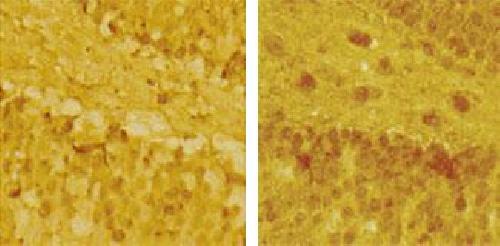
A familiar stressor (left) did not increase NMDA receptors (dark spots), a booster of potentially harmful glutamate signaling, in the brains of mice. However, when subjected to an unfamiliar stress (right), mice expressed more NMDA receptors. Credit: Laboratory of Neuroendocrinology at The Rockefeller University/PNAS

Chronic stress can lead to changes in neural circuitry that leave the brain trapped in states of anxiety and depression. But even under repeated stress, brief opportunities for recovery can open up, according to new research at The Rockefeller University.

“Even after a long period of chronic stress, the brain retains the ability to change and adapt. In experiments with mice, we discovered the mechanism that alters expression of key glutamate-controlling genes to make windows of stress-related neuroplasticity–and potential recovery–possible,” says senior author Bruce McEwen, Alfred E. Mirsky Professor, and head of the Harold and Margaret Milliken Hatch Laboratory of Neuroendocrinology. Glutamate is a chemical signal implicated in stress-related disorders, including depression.

“This sensitive window could provide an opportunity for treatment, when the brain is most responsive to efforts to restore neural circuitry in the affected areas,” he adds.

The team, including McEwen and first author Carla Nasca, wanted to know how a history of stress could alter the brain’s response to further stress. To find out, they accustomed mice to a daily experience they dislike, confinement in a small space for a short period. On the 22nd day, they introduced some of those mice to a new stressor; others received the now-familiar confinement.

Then, the researchers tested both groups for anxiety- or depression-like behaviors. A telling split emerged: Mice tested shortly after the receiving the familiar stressor showed fewer of those behaviors; meanwhile those given the unfamiliar stressor, displayed more. The difference was transitory, however; by 24 hours after the final stressor, the behavioral improvements seen in half of the mice had disappeared.

Molecular analyses revealed a parallel fluctuation in a part of the hippocampus, a brain region involved in the stress response. A key molecule, mGlu2, which tamps down the release of the neurotransmitter glutamate, increased temporarily in mice subjected to the familiar confinement stress. Meanwhile, a molecular glutamate booster, NMDA, increased in other mice that experienced the unfamiliar stressor. In stress-related disorders, excessive glutamate causes harmful structural changes in the brain.

The researchers also identified the molecule regulating the regulator, an enzyme called P300. By adding chemical groups to proteins known as histones, which give support and structure to DNA, P300 increases expression of mGlu2, they found.

In other experiments, they looked at mice genetically engineered to carry a genetic variant associated with development of depression and other stress-related disorders in humans, and present in 33 percent of the population.

“Here again, in experiments relevant to humans, we saw the same window of plasticity, with the same up-then-down fluctuations in mGlu2 and P300 in the hippocampus,” Nasca says. “This result suggests we can take advantage of these windows of plasticity through treatments, including the next generation of drugs, such as acetyl carnitine, that target mGlu2–not to ‘roll back the clock’ but rather to change the trajectory of such brain plasticity toward more positive directions.”

source: Rockefeller University

Source: Newly discovered windows of brain plasticity may help stress-related disorders | Science Codex