Justin Trudeau prepares to tackle pot politics | CTV News

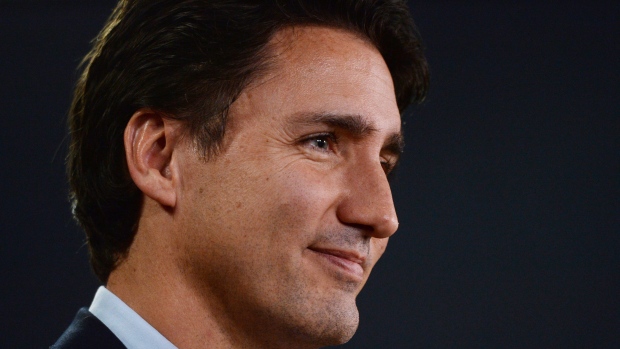
As Justin Trudeau prepares to tackle the politics of legalizing pot as part of his Liberal government’s legislative agenda, industry experts say he will have access to a world-class marijuana framework set up under the Conservative government.

Source: Justin Trudeau prepares to tackle pot politics | CTV News

It ain’t easy to spin dismal job numbers

Home

The Conservative government relied on a familiar refrain to try to spin its way out of Friday’s awful jobs report released by Statistics Canada.

First, the facts:
  • Over the past year, “one full-time job was added for every four part-time jobs.”
Second, the analysis from Bay Street:
  • Scotiabank note calls jobs numbers a shocker, weakest job growth by far since the recession.”
  • “Disappointment across the board,” said Mark Chandler, head of fixed income and currency strategy at RBC Capital Markets.
  • “That full-time employment growth is nearly flat in the past year while part-time job growth is up 2.5 per cent ‘indicates that businesses are not eager to expand payrolls,'” said Arlene Kish, senior principal economist at IHS Global Insight.
Third, a recap of past Conservative spin:

Whenever faced with bad economic news, the Conservatives claim that Canada leads the G-7 in jobs and economic growth since the recession. They make this misleading statement by using selective statistics.

When population growth and purchasing power are taken into account to get the complete picture, Canada falls behind G-7 countries Germany, Japan and the United States. That’s fourth place (out of 7!).

Fouth, the go-to spin:

Watch Industry Minister James Moore try to spin the bad news using the “Yah, but we’re still #1” discredited stat.

Andrew Coyne: There’s no spinning it — the Conservatives were spanked in Monday’s byelections

   Andrew Coyne  27/11/13  http://fullcomment.nationalpost.com

Does Stephen Harper realize that he needs to turn things around to win in 2015?   Adrian Wyld/The Canadian PressDoes Stephen Harper realize that he needs to turn things around to win in 2015?

If you were determined to be obtuse about it, you could look at the results of Monday’s byelections and say: nothing changed. The Tories held onto their two seats in the West, the Liberals held onto theirs in Ontario and Quebec. Move along folks, no story here.

Justin Trudeau would have come under less flak if he’d drawn a caricature depicting the Prophet Mohammed. Mr. Trudeau had the temerity to quote fallen NDP leader Jack Layton in his victory address, after the Liberals retained the Bourassa and Toronto Centre seats in Monday’s byelections.

Mr. Trudeau said that the NDP is “no longer the hopeful, optimistic party of Jack Layton … it is the Liberal Party that proved that hope is stronger than fear, that positive politics can, and should win out over negative.”

The invocation of Mr. Layton’s words, penned in a note to Canadians just before he died two years ago – “love is better than anger, hope is better than fear” – has incensed New Democrats, who have all but accused Mr. Trudeau of defaming the memory of their former leader.

You could do this, as I say, only if you took extravagant care to ignore everything else that happened that night: If you focused myopically on the top-line result in each riding, and paid no attention to the popular vote — the trend, the swing, across the nation and over time.

In private, I can assure you, no one in any of the parties does this. Only in the public realm do they say things like “a win’s a win” — which is what you say when a win looks a lot like a loss — and only the most programmed partisans actually mean it.

Only in the most literal sense is the Tories’ 391-vote margin in Brandon-Souris, one of the safest Conservative seats in the country, a “win.” Even the partisans found this hard to say with a straight face. Rather, they were obliged first to pretend that a Forum Research poll showing the Liberals ahead by 29 points the weekend before the election had some basis in reality, the better to conjure up a fantasy “comeback.”

To be sure, every party comes well-stocked with rationalizations on occasions like these, usually introduced by “when you consider” or some such phrase. As in: The Conservatives did pretty well, when you consider we’re in the throes of a massive national scandal. Or: the NDP collapse in Manitoba is understandable, when you consider the unpopularity of the province’s NDP government. It’s not cold, when you consider it’s February.

We would have done better, in other words, but for the fact that we did worse. Figures don’t lie, but losers can consider.

Related

But there’s just no spinning this one. The trends are too pronounced. Across all four ridings, the Tory vote was down 11 points versus the 2011 election, from 39% to 28%, almost exactly mirroring the national polls. The NDP, which might have been expected to gain the most from the Tories’ disfavour — when you consider how well Tom Mulcair has been performing in Parliament — instead dropped five points overall, while the Liberals surged 18 points.

If the drop in the Tory vote was the night’s main story, the rise in the Liberals’ was the other. In Provencher and Brandon-Souris, the Grits blew past the NDP to become the Tories’ main rivals, taking as many votes from the left as they did from the right. In Toronto Centre and Bourassa, they increased their margins of victory, even in the face of spirited challenges from the NDP. Conservative candidates in the East both lost their deposits, as NDP candidates did in the West. Only the Liberals were up across the board.

But the true significance of the result is captured, not by comparison to the last election, but set against the broad sweep of history. The 8.7% of the vote the Conservatives managed to hold onto in Toronto Centre — the riding of David Crombie and David MacDonald — is the party’s worst showing in any election in that riding since Confederation.

The Conservative candidate in Bourassa, likewise, took less than 5% of the vote. That is the second-worst showing for the Conservatives in that riding since 1968, when it was created. (Only 2000, when they split the vote with the Canadian Alliance, was worse.) By contrast, the Liberals’ 43% showing in Brandon-Souris was not only a 37% increase over 2011, it was their best ever.

NP Graphics

NP GraphicsClick to Enlarge

Nothing changed? Come on. We can argue about the reasons, we can debate what it portends, but on the night, there’s no getting away from it: The Conservatives were spanked. No doubt it would have been even worse for the Tories had they actually lost Brandon-Souris (“not unexpected, when you consider the Liberal candidate was the son of the riding’s long-time former Conservative MP”), but the results ought to prompt some deep reflection among the party’s leadership.

No, the Senate scandal is not likely to be at the top of most voters’ minds two years from now. But I rather doubt the Senate scandal, on its own, is what has driven one in four Tory voters to abandon the party: As I say, the polls have been showing the same thing for some time. It’s everything that went before it, and everything that’s happened since.

It’s the general impression that we are being governed by a gang of thugs — secretive, high-handed, unprincipled gusting to unethical, and openly contemptuous of such quaint notions as democratic accountability — an impression that grows more baked in each time the Prime Minister dodges a question in Parliament, or worse, sends in the clownish Paul Calandra to answer in his place.

At the same time, it’s clear the NDP have a lot of work to do to convince voters, not just of the Conservatives’ faults, but of their own virtues as their putative replacements. It must gall Mr. Mulcair, after all his weight and substance, to see the voters flock instead to the lighter-than-air Justin Trudeau. But he still has lots of time to turn things around.

For that matter, so does Stephen Harper. The difference is, Mr. Mulcair seems to realize he needs to.

Postmedia News

Andrew Coyne: There’s no spinning it — the Conservatives were spanked in Monday’s byelections

   Andrew Coyne  27/11/13  http://fullcomment.nationalpost.com

Does Stephen Harper realize that he needs to turn things around to win in 2015?   Adrian Wyld/The Canadian PressDoes Stephen Harper realize that he needs to turn things around to win in 2015?

If you were determined to be obtuse about it, you could look at the results of Monday’s byelections and say: nothing changed. The Tories held onto their two seats in the West, the Liberals held onto theirs in Ontario and Quebec. Move along folks, no story here.

Justin Trudeau would have come under less flak if he’d drawn a caricature depicting the Prophet Mohammed. Mr. Trudeau had the temerity to quote fallen NDP leader Jack Layton in his victory address, after the Liberals retained the Bourassa and Toronto Centre seats in Monday’s byelections.

Mr. Trudeau said that the NDP is “no longer the hopeful, optimistic party of Jack Layton … it is the Liberal Party that proved that hope is stronger than fear, that positive politics can, and should win out over negative.”

The invocation of Mr. Layton’s words, penned in a note to Canadians just before he died two years ago – “love is better than anger, hope is better than fear” – has incensed New Democrats, who have all but accused Mr. Trudeau of defaming the memory of their former leader.

You could do this, as I say, only if you took extravagant care to ignore everything else that happened that night: If you focused myopically on the top-line result in each riding, and paid no attention to the popular vote — the trend, the swing, across the nation and over time.

In private, I can assure you, no one in any of the parties does this. Only in the public realm do they say things like “a win’s a win” — which is what you say when a win looks a lot like a loss — and only the most programmed partisans actually mean it.

Only in the most literal sense is the Tories’ 391-vote margin in Brandon-Souris, one of the safest Conservative seats in the country, a “win.” Even the partisans found this hard to say with a straight face. Rather, they were obliged first to pretend that a Forum Research poll showing the Liberals ahead by 29 points the weekend before the election had some basis in reality, the better to conjure up a fantasy “comeback.”

To be sure, every party comes well-stocked with rationalizations on occasions like these, usually introduced by “when you consider” or some such phrase. As in: The Conservatives did pretty well, when you consider we’re in the throes of a massive national scandal. Or: the NDP collapse in Manitoba is understandable, when you consider the unpopularity of the province’s NDP government. It’s not cold, when you consider it’s February.

We would have done better, in other words, but for the fact that we did worse. Figures don’t lie, but losers can consider.

Related

But there’s just no spinning this one. The trends are too pronounced. Across all four ridings, the Tory vote was down 11 points versus the 2011 election, from 39% to 28%, almost exactly mirroring the national polls. The NDP, which might have been expected to gain the most from the Tories’ disfavour — when you consider how well Tom Mulcair has been performing in Parliament — instead dropped five points overall, while the Liberals surged 18 points.

If the drop in the Tory vote was the night’s main story, the rise in the Liberals’ was the other. In Provencher and Brandon-Souris, the Grits blew past the NDP to become the Tories’ main rivals, taking as many votes from the left as they did from the right. In Toronto Centre and Bourassa, they increased their margins of victory, even in the face of spirited challenges from the NDP. Conservative candidates in the East both lost their deposits, as NDP candidates did in the West. Only the Liberals were up across the board.

But the true significance of the result is captured, not by comparison to the last election, but set against the broad sweep of history. The 8.7% of the vote the Conservatives managed to hold onto in Toronto Centre — the riding of David Crombie and David MacDonald — is the party’s worst showing in any election in that riding since Confederation.

The Conservative candidate in Bourassa, likewise, took less than 5% of the vote. That is the second-worst showing for the Conservatives in that riding since 1968, when it was created. (Only 2000, when they split the vote with the Canadian Alliance, was worse.) By contrast, the Liberals’ 43% showing in Brandon-Souris was not only a 37% increase over 2011, it was their best ever.

NP Graphics

NP GraphicsClick to Enlarge

Nothing changed? Come on. We can argue about the reasons, we can debate what it portends, but on the night, there’s no getting away from it: The Conservatives were spanked. No doubt it would have been even worse for the Tories had they actually lost Brandon-Souris (“not unexpected, when you consider the Liberal candidate was the son of the riding’s long-time former Conservative MP”), but the results ought to prompt some deep reflection among the party’s leadership.

No, the Senate scandal is not likely to be at the top of most voters’ minds two years from now. But I rather doubt the Senate scandal, on its own, is what has driven one in four Tory voters to abandon the party: As I say, the polls have been showing the same thing for some time. It’s everything that went before it, and everything that’s happened since.

It’s the general impression that we are being governed by a gang of thugs — secretive, high-handed, unprincipled gusting to unethical, and openly contemptuous of such quaint notions as democratic accountability — an impression that grows more baked in each time the Prime Minister dodges a question in Parliament, or worse, sends in the clownish Paul Calandra to answer in his place.

At the same time, it’s clear the NDP have a lot of work to do to convince voters, not just of the Conservatives’ faults, but of their own virtues as their putative replacements. It must gall Mr. Mulcair, after all his weight and substance, to see the voters flock instead to the lighter-than-air Justin Trudeau. But he still has lots of time to turn things around.

For that matter, so does Stephen Harper. The difference is, Mr. Mulcair seems to realize he needs to.

Postmedia News
Who is on the Harper Government Enemies List?


Friday, 19 July 2013    http://www.canadianlabour.ca


Canadian Labour Congress launches an online contest while it waits for the Harper Government to answer Access to Information Requests about “friend” and “enemy” stakeholder lists


OTTAWA ― The Canadian Labour Congress (CLC) is quite sure its name is among the organizations and individuals on the Harper government’s list of “enemies” provided to new Cabinet Ministers earlier this week. But to confirm it, the CLC has filed formal access to information requests to key government departments, asking them to produce the lists of stakeholders deemed friends and foes by ministerial staff at the request of the Prime Minister’s Office.

Knowing that the government will try to avoid transparency and that it could take months and probably numerous appeals before the information is released, the CLC plans to bide the time with a Facebook contest in which Canadians can guess who’s on the Harper Government Top 10 Enemies List.

“It comes as no surprise to us that this government builds files and keeps lists of people they regard as threats to their own agenda,” said CLC President Ken Georgetti. “What is surprising is the PMO going so far as to refer to groups that have different opinions or have different ideas about how to make life better for Canadians as ‘enemies’ and instruct Ministers of the Crown to shut them out,” he said. “It smacks of the darkest days of McCarthyism and is a un-Canadian view of the world.”

Georgetti says there is no doubt in his mind the CLC is among the government’s list of enemies: “Our efforts to expand the Canada Pension Plan and help people save more for retirement, to expose the reckless expansion of the Temporary Foreign Worker Program and the abuse of migrant workers, and to reverse radical cuts to Employment Insurance have us in the PMO’s crosshairs.”

The CLC’s contest can be found at www.facebook.com/Harpers-Most-Unwanted and will run until all of its access to information requests have been fully answered.

The Canadian Labour Congress, the national voice of the labour movement, represents 3.3 million Canadian workers. The CLC brings together Canada’s national and international unions along with the provincial and territorial federations of labour and 130 district labour councils. Web site: www.canadianlabour.ca Follow us on Twitter @CanadianLabour