There’s an open sea at the North Pole, and it’s got experts very worried 

RAFI LETZTER, BUSINESS INSIDER

Sept 15, 2016

Writing about climate change presents an interesting challenge. It’s a slow, constant process. Global temperatures rise a little every year, bit by bit accruing disastrous consequences.

We get used to hearing that this year, like many years in recent memory, will be the hottest on record. That glaciers are melting. That food insecurity is increasing. That more and more people face climate-induced natural disasters.

As with any slow-moving (on human timescales) tragedy, it’s difficult to sustain the degree of attention and horror that each new development deserves.

But then you see something like this:

cq8eyckwgaag2ri

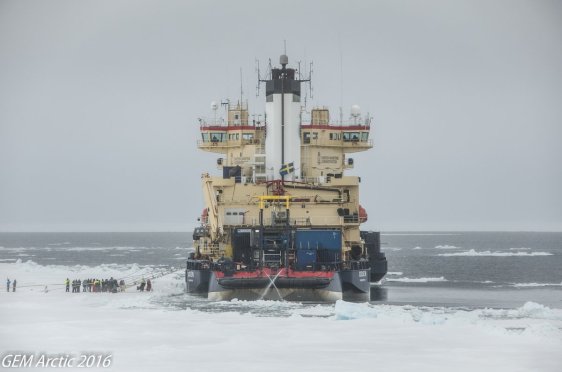
That’s a photo of a Swedish icebreaker sitting in open water at the North Pole, published about two weeks ago. (I first saw it retweeted on weather writer Eric Holthaus’s Twitter account.)

Let’s put that in context. The North Pole has been entirely covered in ice, including during the summer, for thousands of years. That was still the case when I graduated from high school, and I’m 24.

But a few years ago, predictions that our warming climate would cook the Arctic ice cap until it melted came true.

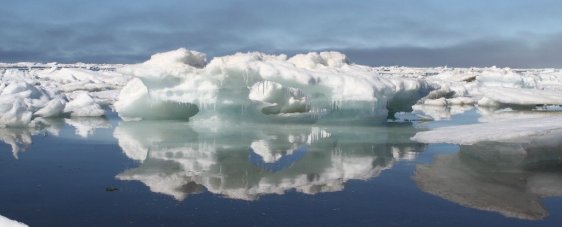
Photos of a lake near the North Pole went briefly viral, then quickly faded from view. Now, the Canadian Coast Guard can publish images of open sea at the North Pole and it can pass largely unnoticed.

(One caveat: Though the CCG describes this image as from the North Pole, we don’t know exactly where in the Arctic sea it was shot. I’ve reached out to them for comment and will update if I hear back.)

The thing is, people know that climate change is a problem. Gallup reports that 64 percent of US adults are worried “a great deal” or “a fair amount” about climate change.

It’s hard to stay energised when there’s so much else happening to worry about, though, and that often means that the conspiracists and truthers are the loudest voices.

But in a world where a major presidential candidate can offer no policy proposal at all to address climate change, without any apparent political repercussions, I still think a picture of open ocean at the North Pole is worth paying attention to.

Source: There’s an open sea at the North Pole, and it’s got experts very worried – ScienceAlert

Prime Minister to travel to Japan for an official working visit and to attend the G7 Leaders’ Summit

Fort McMurray, Alberta

13 May 2016

The Prime Minister, Justin Trudeau, today announced that he will travel to Japan to participate in the G7 Leaders’ Summit on May 26 and 27 in Ise-Shima. Prior to the Leaders’ Summit, and at the invitation of Prime Minister Shinzo Abe, Prime Minister Trudeau will participate in an official working visit from May 23-25.

While in Japan, Prime Minister Trudeau will have an audience with the Emperor and Empress of Japan, and will meet with Prime Minister Abe to reaffirm the close and growing ties between Canada and Japan across a broad range of areas of cooperation. The Prime Minister will also meet with leaders in the automotive sector to discuss ways to further promote trade and investment between Canada and Japan, all of this in an effort to create good-paying jobs for Canadians, strengthen the middle class, and work towards clean and sustainable economic growth.

During the G7 Leaders’ Summit, Canada will reaffirm its new approach to global engagement. The Prime Minister will highlight Canada’s resolve to work with its G7 partners on a number of key global issues, including the economy, trade, climate change, peace and security, development and women’s empowerment, which will all contribute to advancing the government’s priorities.

Quotes

“Japan is a long-standing and important partner for Canada. I look forward to meeting the Emperor and Empress of Japan.  During my meeting with Prime Minister Shinzo Abe, we will explore ways to deepen Canadian and Japanese ties on many levels, including trade, investment, peace and security, culture, education, environment, and science, technology and innovation.”
– Rt. Hon. Justin Trudeau, Prime Minister of Canada

“In this new era of Canada’s international engagement, I look forward to meeting my G7 counterparts to bolster collaboration on shared domestic and global priorities and challenges, including our work to build inclusive and sustainable economies and societies that support a strong middle-class.”
– Rt. Hon. Justin Trudeau, Prime Minister of Canada

Source: Prime Minister to travel to Japan for an official working visit and to attend the G7 Leaders’ Summit | Prime Minister of Canada

New Zealand vulnerable to the threats of climate change – report finds

April 19, 2016

A report released today by the Royal Society of New Zealand highlights how New Zealand will be impacted by climate change.

It finds that climate change, already underway, will almost certainly accelerate this century unless drastic action is taken to reduce global emissions of greenhouse gases.

It identified six areas where global climate change could have significant implications for New Zealand’s prosperity and well-being. These are risks to:
• our coastal margins
• flooding from rivers
• availability of and competition for freshwater
• changes to our surrounding oceans
• threats to unique ecosystems
• flow-on effects from climate change impacts and responses elsewhere, which will affect New Zealand through our strong international connectivity.

Changes expected to impact New Zealand include at least 30cm and possibly more than one metre of sea-level rise this century – the report finds it likely that the sea level rise around New Zealand will exceed the global average, which will cause coastal erosion and flooding, especially when combined with storm surges.

“Many New Zealanders live on the coast and two-thirds of us live in flood-prone areas so we are vulnerable to these projected changes,” says Professor James Renwick, Chair of the Expert Panel who wrote the report.

Even small changes in average conditions can be associated with large changes in the frequency of extreme events, he says.

“With a 30cm rise in sea level, the current ‘1 in 100 year’ extreme sea event would be expected to occur once every year or so in many coastal regions. Along the Otago coast for example, the difference between a 2-year and 100-year storm surge is about 32cm of sea level.”

Changes in rainfall patterns where the ‘wet gets wetter and the dry gets drier’, together with more frequent extreme events, will put pressure on our housing, infrastructure and industry, especially if changes are rapid, the report finds.

Freshwater resources will also likely be put under pressure, with decreasing annual average rainfall in eastern and northern regions of both islands, plus higher temperatures and increased demand from urban expansion and agriculture.

Fire danger is also predicted to increase in many parts of New Zealand.

Changes in the oceans, including water temperature, acidification and currents will have impacts on New Zealand’s marine life, including aquaculture. On land, existing environmental stresses to New Zealand’s unique species will likely be exacerbated, with increased ranges for animal pests and weeds predicted.

The report also considers New Zealand’s international connections and how trade relationships and migration patterns could change.

Royal Society of New Zealand President, Emeritus Professor Richard Bedford, says the report was sought to provide a clear summary of the scientific evidence and projections of climate change and to identify the key risks these changes pose to New Zealand.

“It is critical to communicate clearly New Zealand’s sensitivities to climate change and the need for responsive systems to address them. All New Zealanders will be affected and must be involved in the discussion. We hope this report can act as a basis for a wider national conversation.”

This report will be followed up soon by another expert panel report on how New Zealand can mitigate the impacts of climate change.

Copies of the report and supporting resources can be found at www.royalsociety.org.nz/climatechange

Key findings – New Zealand’s sensitivities to climate change

Coastal Change: New Zealanders live mainly near coasts
Shoreline ecology, public infrastructure, residential and commercial assets, community values and the future use of coastal-marine resources will be severely affected by changes to coasts due to sea level rise, and storm surge, and secondary effects such as erosion and flooding.

Flooding: many New Zealanders live on floodplains
Damaging flood events will occur more often and will affect rural and urban areas differently. At and near the coast, floods will interact with rising sea levels and storm surges. Increasing frequency and severity of high intensity rainfall events will increase these risks.

Freshwater resources: New Zealanders rely on the availability of freshwater
Increased pressure on water resources is almost certain in future. Decreasing annual average rainfall in eastern and northern regions of both main islands, plus higher temperatures, are projected to increase the frequency and intensity of droughts and the risk of wild fire. At the same time, urban expansion and increased demand for water from agriculture will result in increased competition for freshwater resources.

The Ocean: New Zealand is surrounded by sea
Changes in ocean temperature, chemistry, and currents due to climate change will have impacts on New Zealand’s marine life, fishing, aquaculture and recreation use.

Ecosystem change: New Zealand has unique ecosystems
Over half of New Zealand’s more than 50,000 species are found nowhere else in the world; over three quarters of the vascular plants, raising to 93% for alpine plants, and over 80% for the more than 20,000 invertebrates. Existing environmental stresses will interact with, and in many cases be exacerbated by, shifts in mean climatic conditions and associated change in the frequency or intensity of extreme events, especially fire, drought, and floods.

International Impacts: New Zealand is affected by impacts and responses to climate change occurring overseas
The ways in which other countries are affected by and will respond to climate change, plus commitments New Zealand makes to international climate treaties, will influence New Zealand’s international trade relationships, migration patterns and specific domestic responses.

Report launch
The launch for the findings of this expert panel is at 11am on Tuesday 19 April at the Royal Society of New Zealand in Thorndon, Wellington. It will feature special international guest Professor Jean Palutikof, Director of the National Climate Change Adaptation Research Facility at Griffith University, Queensland. Professor Palutikof previously managed the production of the Intergovernmental Panel on Climate Change (IPCC) Fourth Assessment Report for Working Group II (Impacts, Adaptation and Vulnerability). Professor Palutikof will give a public talk in Wellington that evening.

Climate Change Implications for New Zealand Panel Members

Professor James Renwick (Chair): Physical Geography Professor, Victoria University, Wellington
Dr Barbara Anderson: Rutherford Discovery Fellow, Landcare Research Manaaki Whenua, Dunedin
Dr Alison Greenaway: Social Researcher, Landcare Research Manaaki Whenua, Auckland
Darren King: Environmental Scientist, National Institute of Water and Atmospheric Research (NIWA), Wellington
Dr Sara Mikaloff-Fletcher: Atmosphere-Ocean Scientist, National Institute of Water and Atmospheric Research (NIWA), Wellington
Dr Andy Reisinger: Deputy Director (International), New Zealand Agricultural Greenhouse Gas Research Centre, Wellington
Dr Helen Rouse: Resource Management Scientist, National Institute of Water and Atmospheric Research (NIWA), Christchurch

Source: Community Scoop » New Zealand vulnerable to the threats of climate change

Canadian government should create a uniquely Canadian version of a Green Entrepreneurial State, Broadbent Institute Encourages

header

Canada’s First Ministers are meeting in Vancouver this week to develop a framework to tackle climate change. The stakes for our planet are high and the opportunities to transform our economy are immense.

A Green Entrepreneurial State as Solution to Climate Federalism, authored by one of our policy fellows, Brendan Haley, argues that market approaches like carbon pricing, though vital and necessary to reducing emissions, cannot do the job alone. Government and public investment must play an important role in shaping the direction of technological innovation towards a low carbon future.

Help us get out the message that we need strong federal leadership with a policy focus on developing specific green technologies and industries that play to this country’s regional strengths and can ensure a green transition.

Download:  A Green Entrepreneurial State as Solution to Climate Federalism

Thanks for all your help with this,

Jonathan Sas
Director of Research
Broadbent Institute


Worldwide electricity production vulnerable to climate and water resource change

Climate change impacts and associated changes in water resources could lead to reductions in electricity production capacity for more than 60% of the power plants worldwide from 2040-2069, according to a new study published today in the journal Nature Climate Change. Yet adaptation measures focused on making power plants more efficient and flexible could mitigate much of the decline.

“Hydropower plants and thermoelectric power plants–which are nuclear, fossil-, and biomass-fueled plants converting heat to electricity–both rely on freshwater from rivers and streams,” explains Michelle Van Vliet, a researcher at the International Institute for Applied Systems Analysis (IIASA) in Austria and Wageningen University in the Netherlands, who led the study. “These power-generating technologies strongly depend on water availability, and water temperature for cooling plays in addition a critical role for thermoelectric power generation.”

Together, hydropower and thermoelectric power currently contribute to 98% of electricity production worldwide.

Model projections show that climate change will impact water resources availability and will increase water temperatures in many regions of the world. A previous study by the researchers showed that reduced summer water availability and higher water temperatures associated with climate change could result in significant reductions in thermoelectric power supply in Europe and the United States.

This new study expands the research to a global level, using data from 24,515 hydropower and 1,427 thermoelectric power plants worldwide.

“This is the first study of its kind to examine the linkages between climate change, water resources, and electricity production on a global scale. We clearly show that power plants are not only causing climate change, but they might also be affected in major ways by climate,” says IIASA Energy Program Director Keywan Riahi, a study co-author.

“In particular the United States, southern South America, southern Africa, central and southern Europe, Southeast Asia and southern Australia are vulnerable regions, because declines in mean annual streamflow are projected combined with strong increases in water temperature under changing climate. This reduces the potential for both hydropower and thermoelectric power generation in these regions,” says Van Vliet.

The study also explored the potential impact of adaptation measures such as technological developments that increase power plant efficiency, switching from coal to more efficient gas-fired plants, or switching from freshwater cooling to air cooling or to seawater cooling systems for power plants on the coasts.

“We show that technological developments with increases in power plant efficiencies and changes in cooling system types would reduce the vulnerability to water constraints in most regions. Improved cross-sectoral water management during drought periods is of course also important,” says Van Vliet. “In order to sustain water and energy security in the next decades, the electricity focus will need to increase their focus on climate change adaptation in addition to mitigation.”

Source: International Institute for Applied Systems Analysis

Source: Worldwide electricity production vulnerable to climate and water resource change | Science Codex