Asbestos ban is a good start but we need a registry, says Hancock | CUPE

May 11, 2016

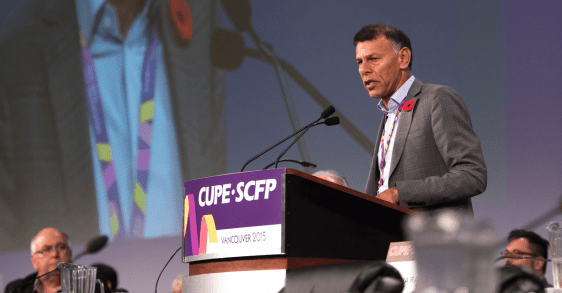
Following Prime Minister Justin Trudeau’s announcement that the federal government is “moving forward on a ban” of asbestos, CUPE National President Mark Hancock reiterated CUPE’s call for a comprehensive ban of the deadly substance.

“Asbestos is killing CUPE members. It’s been a serious hazard for decades. We’re happy to hear the government is moving on this issue, and we want to see them do the right thing by introducing a comprehensive ban,” said Hancock.

A comprehensive ban means, among other measures:

  • Banning the use, export and import of all asbestos-containing materials
  • Establishing an expert panel to make recommendations for implementation of the ban
  • Creating registries of cases of asbestos-related diseases and buildings used by the public that contain asbestos.

The Canadian Labour Congress has a detailed description of what a comprehensive ban would look like here.

“The government has to do more than just say ‘we’re banning it.’ We need to find out exactly where it is, so workers can take the appropriate actions to protect themselves from exposure. We need to prevent exposures, and support workers who have been exposed. It’s about protecting workers and protecting Canadians,” said Hancock.

Trudeau made the announcement on Tuesday at a building trades unions policy conference in Ottawa. No details or timetables for imposing a ban have been released. In April, CUPE joined the CLC in lobbying the federal government about implementing a comprehensive ban, and sent a letter to the prime ministeron the issue.

CUPE has been calling for a full ban of asbestos for decades, but successive governments have been slow to act and sometimes even worked counter to the cause, despite overwhelming evidence of the serious harm caused by exposure. Every year approximately 2,000 Canadians die from asbestos-related diseases.

Learn more about asbestos here.

Source: Asbestos ban is a good start but we need a registry, says Hancock | Canadian Union of Public Employees

CUPE marks the Day of Mourning, calls for asbestos ban | Canadian Union of Public Employees

Every year, on April 28, workers around the world mark the Day of Mourning for workers killed or injured on the job.

It’s an important day for us to remember those we’ve lost and renew our resolve to make our workplaces safer.

Approximately 1,000 workers die each year in Canada from exposure to work-related hazards.

This year we honour these CUPE members who lost their lives at work since the last Day of Mourning:

William Miller, 56, CUPE 4705, City of Greater Sudbury, Ontario

Paul Barao, 60, CUPE 2544, Peel District School Board, Ontario

Thierry Leroux, 26, CUPE 5153, Council of the Anishinabe Nation of Lac-Simon, Quebec

Claude Davidson, 48, CUPE 3333, Réseau de Transport de Longueuil, Quebec

Mike McNeil, 61, CUPE 1259, Glades Lodge Nursing Home, Nova Scotia (on leave)

Jody Taylor, 43, CUPE 1004, City of Vancouver, BC

Day of Mourning ceremonies are being held across the country. Find an event in your region.

CUPE National President Mark Hancock and National Secretary-Treasurer Charles Fleury will attend a ceremony in Victoria, BC.

“On April 28 we mourn these six CUPE members, and all the other workers who’ve been injured or killed. It’s a terrible loss that we refuse to accept as being part of the job. All workers should be able to come home healthy and safe at the end of a shift,” said Hancock.

The Strategic Directions document passed at CUPE National Convention made 2016 CUPE’s Year of Health and Safety.

“Ensuring the health and safety of workers is at the heart of the work of our union—it’s part of our core values,” Hancock continued.

“When convention delegates made 2016 the year of health and safety, they gave us a great opportunity to put renewed focus on this important issue.”

To mark the Day of Mourning this year, CUPE is renewing its call for a full ban on the use, import and export of asbestos in Canada. While the former Conservative government stood in the way of progress on the issue, Hancock says the Liberals have a chance to do things differently.

“The Harper government showed a repeated disregard for the health and safety of Canadians. This Liberal government now has an opportunity to show that they do care—that the lives of countless workers across Canada matter to them,” said CUPE National President Mark Hancock.

“It’s time to catch up with the rest of the world. On April 28, we’re calling on the Trudeau government to ban the import, export and use of asbestos in Canada.”

Hancock reiterated this demand in a letter to the prime minister. And on April 19,CUPE members participated in lobbying organized by the CLC, where a full asbestos ban was among the items up for discussion.

There are lots of other things happening as part of the Year of Health and Safety. Most CUPE divisions are holding a health and safety conference in 2016. CUPE will be providing educational materials and staff assistance to each division putting together a conference.

CUPE has also launched the new Health and Safety Learning Series. Modelled after the successful Steward Learning Series, the new Health and Safety Learning Series will include a nine-hour introductory course and a selection of three-hour modules.

Of course, important work is happening every day in our locals. That’s why each month we’re profiling aCUPE member about their health and safety activism at work. And for locals that want to recognize their own local activists, CUPE is offering a special certificate, for free, on our website. Order one and celebrate an activist in your local today.

Source: CUPE marks the Day of Mourning, calls for asbestos ban | Canadian Union of Public Employees

Job numbers highlight need for urgent EI reform

Friday, February 5, 2016

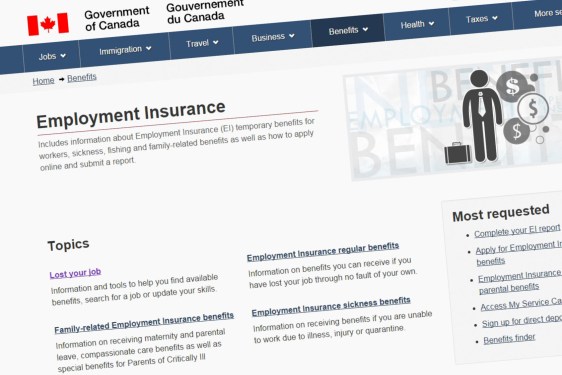
Canada’s largest labour organization says today’s job numbers from Statistics Canada highlight the need for the kind of economic stimulus that urgently needed Employment Insurance (EI) reforms would produce now.

The job market was stagnant in January and unemployment rose to 7.2 percent. In Alberta, unemployment rose to 7.4 percent, the first time it has been above the national average since 1988.

Over the past year, unemployment has risen by 123,000 workers across the country: more than half of these (69,000) are in Alberta. Most job creation has been in Ontario, while other provinces continue to struggle with slack labour markets.

Self-employment has grown twice as fast (1.3 percent) as employment (0.6 percent). Private sector job growth continues to be weak, adding only 30,000 jobs over the past 12 months — a growth rate of only 0.3 percent. Two sectors account for most job growth over the last year — health care and social assistance added 90,000 positions, and professional, scientific, and technical services added 38,000 positions.

“These job numbers and the slow economic growth we’re seeing now demonstrate the need for the kind of immediate stimulus that would come from urgently needed fixes to the employment insurance program,” said CLC president Hassan Yussuff.

The Liberal government has promised to review and improve the program, but Yussuff says there are urgently needed reforms that can be immediately implemented.

“Fewer than 40 percent of unemployed Canadians – and fewer than 37 percent of unemployed Albertans – are receiving EI,” said Yussuff. “Part of the problem is that workers run out of benefits before they can find a new job.”

The immediate reforms the CLC hopes to see include:

  • Temporarily extending EI benefits for an additional five weeks to help displaced workers who risk exhausting their benefits while hunting for hard-to-find jobs. This would be especially helpful in hardest hit regions where jobs are especially scarce.
  • Returning to the previous definition of “suitable employment” and restoring the “best 14 weeks” pilot programs that created a single national standard for determining benefit levels.
  • Eliminating the eligibility requirement of 910 hours of insured employment for new entrants and re-entrants to the labour market to make access to EI fairer, especially for young workers and new Canadians.
  • Hiring staff to make up for years of devastating cuts under the Conservatives to help eliminate unacceptable delays faced by workers trying to get benefits approved, decisions on appeals, or questions answered.
  • Implementing the election promise for an increase of $200-million in funding for provincial literacy and essential-skills training aimed at those who don’t qualify for EI. While it’s not part of EI, it would help where it’s needed most.

“It takes time for infrastructure spending to kick in and create jobs, so let’s act now to stop penalizing unemployed workers, get them the benefits they paid into and so urgently need, and help them start contributing to their local economies again,” said Yussuff.

           Labour Force Survey

Source: Job numbers highlight need for urgent EI reform | Canadian Labour Congress

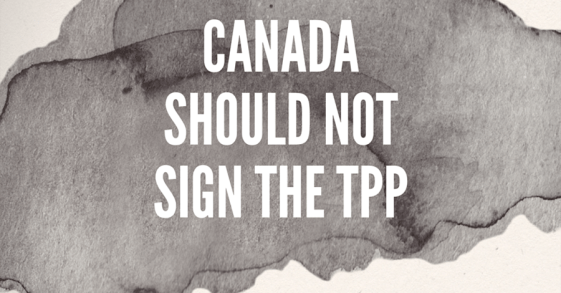
Liberals shouldn’t sign Harper’s TPP deal

The massive Trans-Pacific Partnership puts corporations, not Canadians, first and the federal Liberal government should not sign it.

Representatives of the 12 countries involved in the TPP are gathering in New Zealand Feb. 4 to sign the far-reaching treaty.

The deal was reached in the dying days of the Harper Conservative government and during a federal election. The full text was only made public in November. The new government is still analyzing the 6,000-page text and has yet to carry out an economic impact assessment. So why the rush to sign?

“You or I would never sign a contract without reading the fine print,” said CUPE National President Mark Hancock. “But that’s exactly what the Liberals are about to do. It’s a serious mistake that will have consequences for decades to come.”

What we already know about the TPP is bad news.

The TPP gives new rights to the world’s richest corporations, while workers and the environment lose ground. The deal supports privatization, will drive down wages, and increases the cost of health care and education. A recent study shows Canada will lose at least 58,000 jobs in the first decade under the TPP.

Independent analysis confirms the TPP is not about helping Canadian exports – 97 per cent of our exports to TPP countries are already duty-free.

The TPP extends the length of patents on prescription drugs – a move that could cost our health care system up to $630 million a year, and is a major roadblock to a universal national prescription drug program. The TPP’s longer and stricter copyright protections could mean higher costs for schools, universities and libraries.

The TPP’s investor-state dispute settlement (ISDS) system will let foreign corporations sue governments if a law or regulation interferes with their investments – and profits. Under these NAFTA-style rules, Canada is already the most-sued developed country.

“Governments, not corporations, should set our country’s laws and policies. The TPP stands in the way of immediate and bold action on climate change,” said CUPE National Secretary-Treasurer Charles Fleury.

The Harper government tried to buy its way around some of the deal’s consequences, promising billions in compensation for auto parts makers, as well as dairy, egg and chicken farmers. And the full social and economic costs of the TPP are only now being tallied.

“The TPP is a corporate rights deal. It rewrites laws and regulations in the interests of big business, at the expense of citizens and the environment,” said Hancock. “Canada should not sign this dangerous deal.”

Source: Liberals shouldn’t sign Harper’s TPP deal

Yussuff calls on CUPE members to hold Liberals to account | Canadian Union of Public Employees

The next four years present an opportunity to build the Canada we want, Canadian Labour Congress President Hassan Yussuff told CUPE Convention delegates.

“The work you did and our movement did across the country was absolutely stellar,” he said. “We had to defeat the Stephen Harper government and it was such a pleasure to watch his sorry ass walk off that stage.”

While the outcome of the election may not have been ideal, it did end a decade of rule by a prime minister who used racism and xenophobia as an election tool, who attacked unions and who moved human rights backward a decade.

In the next four years, we must hold Justin Trudeau to his promises to repeal Bill C-377, to begin an inquiry into missing and murdered aboriginal women and to restore card-check certification. We must convince Trudeau to repeal, not revise Bill C-51, he said, adding that we must prioritize electoral reform so everyone’s voice counts and we don’t end up with huge majority governments representing a minority of Canadians.

He closed by calling on CUPE members to leave Convention united and stronger.

“The enemies of this organization are not in this room,” he said. “When you leave, leave as 600,000-plus united, and tell the employers: You attack one of us, you attack all of us.”

Source: Yussuff calls on CUPE members to hold Liberals to account | Canadian Union of Public Employees