Canada’s Trudeau sidesteps questions after extradition talks with China are revealed 

Canada says the talks, long-sought by Beijing, are unrelated to the recent release of a Canadian held by China for two years on spying charges.

Reuters

September 21, 2016

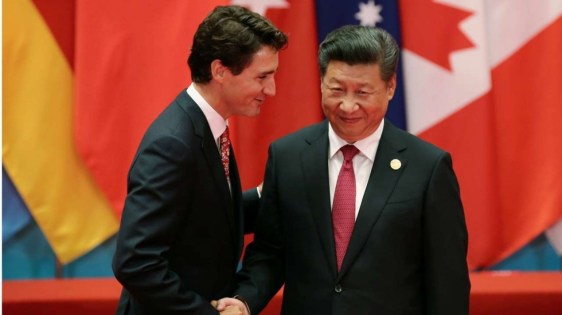
Canadian Prime Minister Justin Trudeau sidestepped questions on Tuesday on the sensitive topic of possible extraditions to China, saying Canada would stick to high standards when deciding whether to return Chinese citizens.

A statement posted on Trudeau’s website said his national security adviser went to Beijing last week and agreed to start talks about an extradition treaty as part of a security dialogue.

China, which wants the return of officials suspected of corruption who it says are hiding in Canada, has long pressed for such a treaty.

Some Western countries are reluctant to sign extradition deals with China, partly out of concern about the integrity of its judicial system and treatment of prisoners.

Some people convicted of corruption face the death penalty. Canada refuses to send people to countries without assurances they will not be executed.

“Extradition is certainly one of the things the Chinese have indicated they want to talk about,” Trudeau told a televised news conference at the United Nations.

“As everyone knows, Canada has very high standards in terms of extradition treaties in accordance with our values. But we’re happy to have a high-level security dialogue,” he said.

News of the Beijing meeting revived speculation Ottawa had made concessions to secure the return of Kevin Garratt, a Canadian citizen convicted of spying, whom China deported last week.

kevin-and-julia-garratt

Kevin Garratt, a Canadian held in China for two years on suspicion of spying, with wife after been freed and arriving in Vancouver on Thursday, September 16 in a diplomatic triumph for Prime Minister Justin Trudeau.

Canadian officials insist there was no deal, and that the Garratt release was unrelated to the extradition talks.

Garratt’s release was widely seen as a triumph for Trudeau, who visited Beijing earlier this month in a bid to seal closer economic ties. Chinese Premier Li Keqiang arrives in Canada on Wednesday for the start of a three-day trip.

The opposition Conservative Party, long suspicious of China’s human rights record, accused Trudeau of abandoning Canadian principles.

“Does the prime minister not understand that our openness to China should be about encouraging China to adopt our values for human rights, as opposed to us giving in to China’s?” interim party leader Rona Ambrose told the House of Commons.

China does not have extradition treaties with the United States, Australia or Canada, which according to state media are the most popular destinations for suspected economic criminals from China.

A number of suspects wanted by China are known to reside in Canada.

They include the Vancouver-based property developer Michael Ching Mo Yeung, who is wanted by China for alleged embezzlement and concealing stolen funds.

Ching, who is seeking refugee status in Canada, is wanted under the name Cheng Muyang. He is the son of Cheng Weigao, the former Communist Party secretary of Hebei province who was expelled from the party for corruption and died in 2010.


Source: Canada’s Trudeau sidesteps questions after extradition talks with China are revealed | South China Morning Post

Beijing Launches Ice Hockey Program for Children

Students play in a ice hockey leauge held in Beijing on May 21, 2016. 749 students from 46 primary schools and middle schools in the city participated in the games. [Photo: qianlong.com]

 2016-06-07 20:10:49   From:  CRIENGLISH.com

Pupils in Beijing now have opportunities to play ice hockey.

Over 20 primary schools in the city have joined a program that aims to promote the sport and an athletic spirit among youngsters.

Initiated by the National Committee for the Wellbeing of the Youth and Beijing Ice Star Sports Management, the Thousands of Children on the Ice program will provide students with free professional ice hockey lessons and equipment.

The company said the program will use two of its existing rinks and another five that are expected to be put into operation later this year.

The program’s organizers hope the students can start to enjoy ice hockey games after playing it firsthand.

Ice hockey, known for its intense actions, is widely popular in North America and Europe.

But in China, the sport is still quite new. Relatively high costs of equipment and training have also prevented the sport’s growth here.

Ice hockey equipment cost 3,000 yuan (460 U.S. dollars) on average, while expenses for training can be as high as 100,000 yuan a year.

Beijing, as one of the host cities of the 2022 Winter Olympics, has been actively working to promote winter sports, including ice hockey, in recent years.

Thanks to these efforts, ice hockey has seen fast development here.

A total of 15 hockey clubs and 116 minor hockey teams have been set up in the city so far.

Source: Beijing Launches Ice Hockey Program for Children

China Releasing Chemicals To Kill Fish Around Philippine Islands | The Daily Trends

May 13, 2016

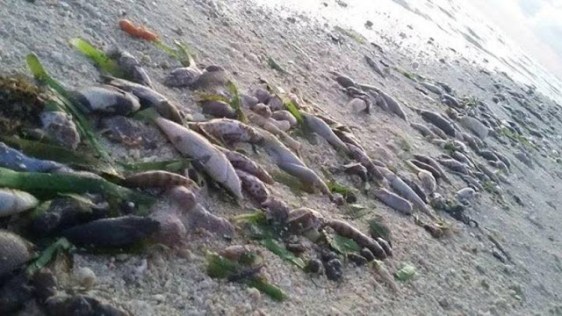
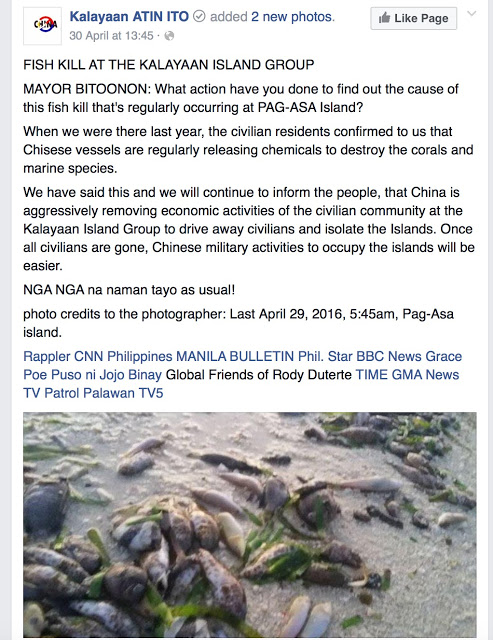
Residents of Philippine-occupied Pag-asa Island in the West Philippine Sea reportedly confirmed that Chisese vessels are regularly releasing chemicals to destroy the corals and marine species around the island.

According to Kalayaan ATIN ITO Facebook page, “China is aggressively removing economic activities of the civilian community at the Kalayaan Island Group to drive away civilians and isolate the Islands.”

Natural ecosystem and the “bahura” or coral reefs around Pag-asa Island are destroyed and the source of livelihood of Filipino fisherfolk are adversely affected.

“Once all civilians are gone, Chinese military activities to occupy the islands will be easier.” it said.

Pag-asa is surrounded by around 20 to 30 hectares of reefs that are home to aquarium and commercial fish.

It provides livelihood and food for the island’s 200 dwellers. It is often visited by rare types of turtles like the endangered leatherback.

Source: China Releasing Chemicals To Kill Fish Around Philippine Islands | The Daily Trends

Study Reveals How Chinese Skullcap Makes Anti-Cancer Compounds 

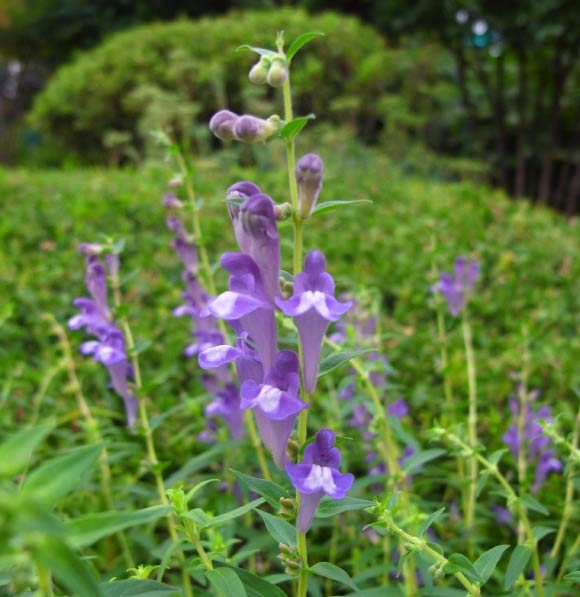
The Chinese skullcap (Scutellaria baicalensis). Image credit: Dalgial / CC BY-SA 3.0.

A new study, published in the journal Science Advances, has revealed how the popular Chinese herbal remedy Huang-Qin (Scutellaria baicalensis) — also known as the Chinese skullcap — produces compounds which may help to treat cancer and liver diseases.

Apr 11, 2016

The Chinese skullcap is cultivated in China, Siberia, Mongolia and Korea. It is an herb used in traditional Chinese medicine to treat a variety of conditions including epilepsy, hepatitis, infections, and cancer. It is often used in combination with other botanicals such as PC-SPES and sho-saiko-to.

Previous research on cells cultured in the lab has shown that certain compounds called flavones — found in the roots of the Chinese skullcap — not only have beneficial anti-viral and anti-oxidant effects, but they can also kill human cancer cells while leaving healthy cells untouched.

In live animal models, these flavones have also halted tumor growth, offering hope that they may one day lead to effective cancer treatments, or even cures.

As a group of compounds, the flavones are relatively well understood. But the beneficial flavones found in the roots of the Chinese skullcap — such aswogonin and baicalin — are different: a missing hydroxyl (-OH) group in their chemical structure left scientists scratching their heads as to how they were made in the plant.

“Many flavones are synthesized using a compound called naringenin as a building block,” said study senior author Prof. Cathie Martin, from the John Innes Centre in Norwich, UK.

“But naringenin has this -OH group attached to it, and there is no known enzyme that will remove it to produce the flavones we find in the Chinese skullcap roots.”

Chinese skullcap: root-specific flavones from this plant have a variety of reported additional beneficial effects including anti-oxidant and anti-viral properties. Image credit: John Innes Centre.

Chinese skullcap: root-specific flavones from this plant have a variety of reported additional beneficial effects including anti-oxidant and anti-viral properties. Image credit: John Innes Centre.

Prof. Cathie and her colleagues explored the possibility that Chinese skullcap’s root-specific flavones (RSFs) were made via a different biochemical pathway.

Step-by-step, they unraveled the mechanism involving new enzymes that make RSFs using a different building block called chrysin.

“We believe that this biosynthetic pathway has evolved relatively recently inScutellaria roots, diverging from the classical pathway that produces flavones in leaves and flowers, specifically to produce chrysin and its derived flavones,” Prof. Martin said.

“Understanding the pathway should help us to produce these special flavones in large quantities, which will enable further research into their potential medicinal uses.”

“It’s exciting to consider that the plants which have been used as traditional Chinese remedies for thousands of years may lead to effective modern medicines,” she added.

_____

Qing Zhao et al. 2016. A specialized flavone biosynthetic pathway has evolved in the medicinal plant, Scutellaria baicalensis. Science Advances, vol. 2, no. 4, e1501780; doi: 10.1126/sciadv.1501780

Source: Study Reveals How Chinese Skullcap Makes Anti-Cancer Compounds | Biology, Medicine | Sci-News.com