Paramount Pictures, Skydance and Bad Robot’s Star Trek Beyond spent over $69 million in British Columbia and created 3,925 jobs

CoAiyj_VMAAIWgt

VANCOUVER, BRITISH COLUMBIA – July 22, 2016 – Paramount Pictures, Skydance and Bad Robot’s Star Trek Beyond, out in theatres today, provided a significant boost to British Columbia’s economy.

New data released today shows that over the course of 78 days of filming, the production was responsible for over $69 million spent in British Columbia.

From the construction of the U.S.S. Enterprise at Vancouver Film Studios to filming at the beautiful Squamish Boulders, British Columbia continues to benefit from the economic boost of local productions like Star Trek Beyond.

Over $40 million was spent on local cast, crew, and extras hired for the period of filming. Some of the production’s other local expenditures include:

  • Over $17 million on rentals, including transportation, truck and car rentals;
  • More than $1.75 million on hotels and catering;
  • More than $1.6 million on hardware and lumber supplies; and
  • Almost $600 thousand on local wardrobe and dry cleaning services.

“The film and television industry is a creative and economic engine for British Columbia, benefiting local businesses, thousands of cast and crew, and communities across the province,” said Wendy Noss, President, Motion Picture Association-Canada.

“The data released today demonstrates the significant impact the industry continues to have both provincially and nationally.”

“Filming Star Trek Beyond in Vancouver and the surrounding areas provided us diverse filming locations and outstanding film studios, but beyond that we had access to amazing local cast and crew,” said Lee Rosenthal, President of Physical Production, Paramount Pictures.

“We are thankful for British Columbia’s hospitality and the numerous local businesses and vendors who were great to work with.”

“Vancouver Film Studios was thrilled to provide state of art production facilities for the filming of Star Trek Beyond,” said Peter Mitchell, President & Chief Operating Officer, Vancouver Film Studios and Board Member, Motion Picture Production Industry Association.

“With 12 purpose-built sound stages on 35 acres in the City of Vancouver and over $200 million invested, we have established our reputation as a leading film and television studio facility. British Columbia has become a key destination for film and television investment and we are excited to play our part in that success.”

“Congratulations to the more than 3,900 British Columbians who helped bring Star Trek Beyond to audiences around the world!” said Shirley Bond, Minister of Jobs, Tourism and Skills Training, and Minister Responsible for Labour.

“British Columbia has a talented workforce, world-class infrastructure, and stunning diverse filming locations and because of these advantages, B.C. has earned its reputation as one of North America’s busiest centres for screen entertainment production.”

Source: http://www.mpa-canada.org

 

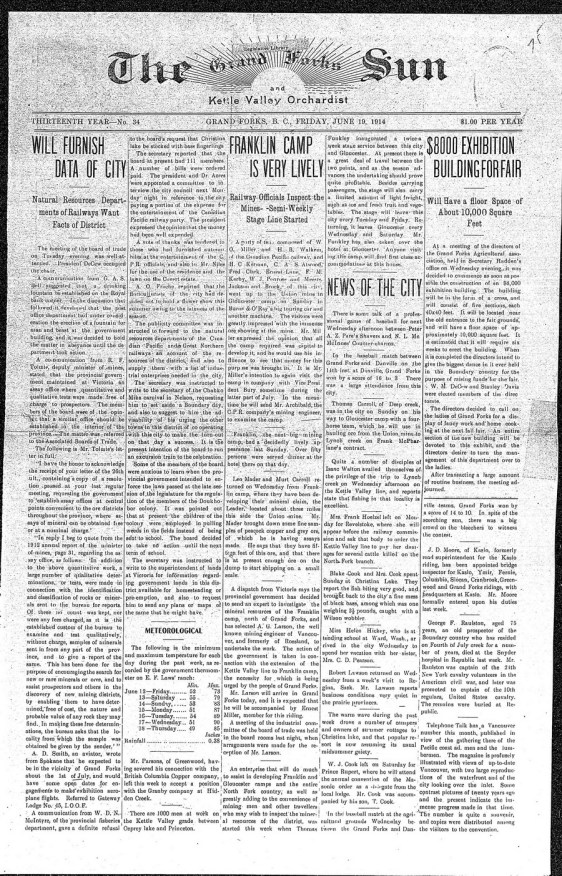
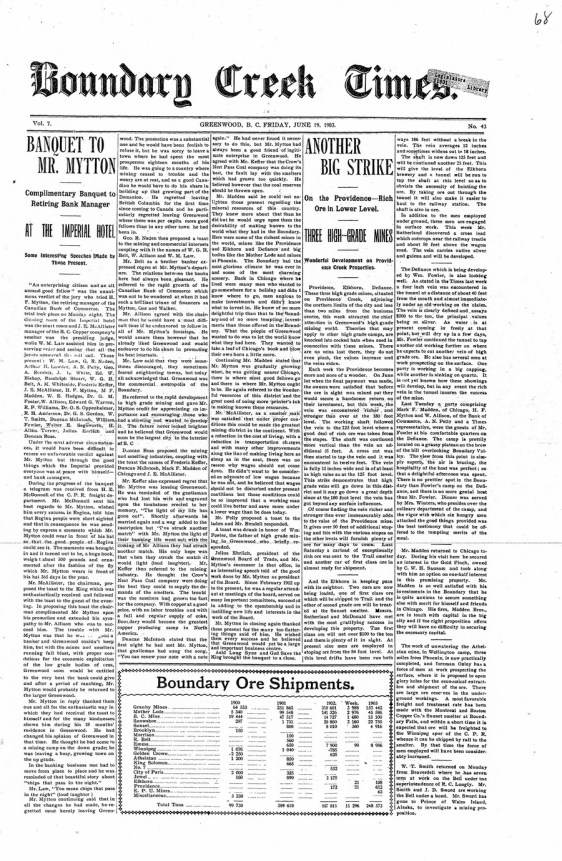
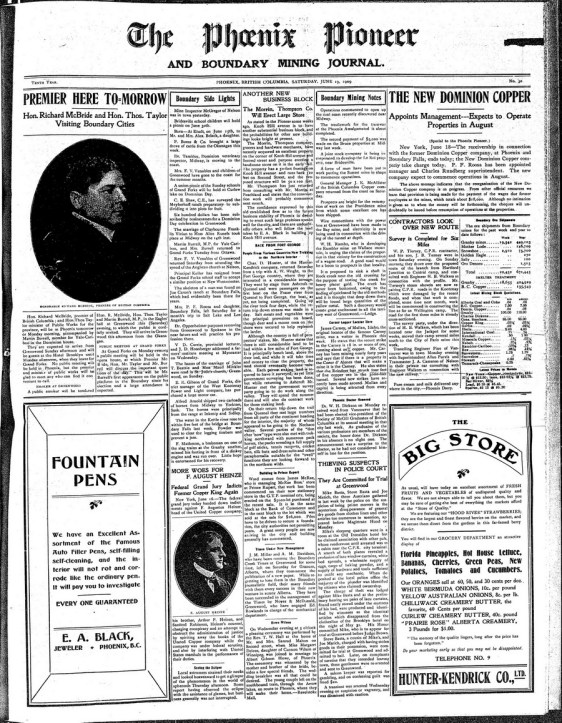
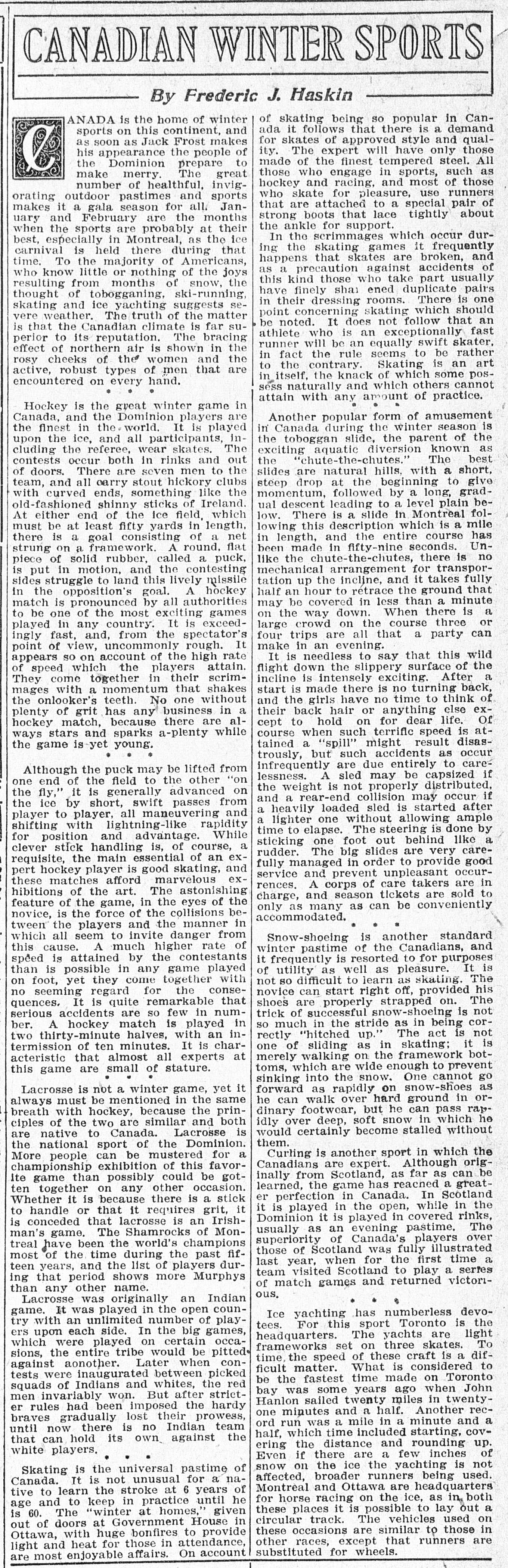
Boundary Area Historical Newspapers Published On This Date

fromthepast


The Grand Forks Sun, June 19, 1914

cdm.xgrandforks.1-0179518.0000fulla


The Boundary Creek Times, June 19, 1903

cdm.xboundarycr.1-0170888.0000fulal


The Phoenix Pioneer, June 19, 1909

cdm.xphoenix.1-0185777.0000fulal


The Boundary Creek Times, June 19, 1908

cdm.xboundarycr.1-0171203.0000fulal

Source: https://open.library.ubc.ca/collections/bcnewspapers

Canada Becomes a Full Supporter of the United Nations Declaration on the Rights of Indigenous

NEW YORK, NY, May 10, 2016 /CNW/ – The Honourable Carolyn Bennett, Minister of Indigenous and Northern Affairs, today announced that Canada is now a full supporter, without qualification, of the United Nations Declaration on the Rights of Indigenous Peoples. Today’s announcement also reaffirms Canada’s commitment to adopt and implement the Declaration in accordance with the Canadian Constitution.

This announcement confirms Canada’s commitment to a renewed, nation-to-nation relationship with Indigenous peoples – a relationship based on recognition of rights, respect, co-operation and partnership. Canada will engage with Indigenous groups on how to implement the principles of the Declaration. This engagement will include provinces and territories whose cooperation and support is essential to this work and to advancing the vital work of reconciliation with Indigenous peoples in Canada.

Quote

“Today’s announcement that Canada is now a full supporter of the Declaration, without qualification, is an important step in the vital work of reconciliation. Adopting and implementing the Declaration means that we will be breathing life into Section 35 of Canada’s Constitution, which provides a full box of rights for Indigenous peoples.”

The Honourable Carolyn Bennett, M.D., P.C., M.P.
Minister of Indigenous and Northern Affairs


Related

United Nations Declaration on the Rights of Indigenous Peoples
UNPFII Fifteenth Session 9-20 May 2016

Source: Canada Becomes a Full Supporter of the United Nations Declaration on the Rights of Indigenous

Black women in Canada have substantially higher risk of preterm birth than white women | Science Codex

A study comparing rates of preterm birth among non-Hispanic black and non-Hispanic white women in Canada found that the rates were substantially higher among black women than white women, mirroring the disparity in the United States. The research study, published in CMAJ (Canadian Medical Association Journal), is based on new cohort data from the Canadian Live Birth, Infant Death and Stillbirth Database linked with 2006 Canadian census data.

“Relative disparities in preterm birth and very preterm birth between non-Hispanic black and white women in Canada mirrored those in the US. This observation was contrary to our hypothesis, which was based on the different historical experiences of black populations in the 2 countries and evidence that socioeconomic and racial disparity in health and access to health care tend to be less extreme in Canada,” writes Dr. Britt McKinnon, Institute for Health and Social Policy, McGill University, Montréal, Quebec, with coauthors.

The study included 91 045 live singleton births in Canada and just over 5 million live births in the US between May 2004 and May 2006. In Canada, 4.2% of all births were to women who self-identified as black compared with 20.5% in the US. Overall preterm birth rates were lower in Canada (6%) than in the US (9%). Preterm birth rates among black women in Canada were 8.9%, compared with 5.9% among white women. US rates were higher, at 12.7% and 8.0% respectively.

Foreign-born black women in Canada had preterm birth rates similar to those of native-born black women, unlike in the US, where foreign-born black women had lower preterm birth rates.

Source: Black women in Canada have substantially higher risk of preterm birth than white women | Science Codex