Canada set to open one of the world’s biggest diamond mines

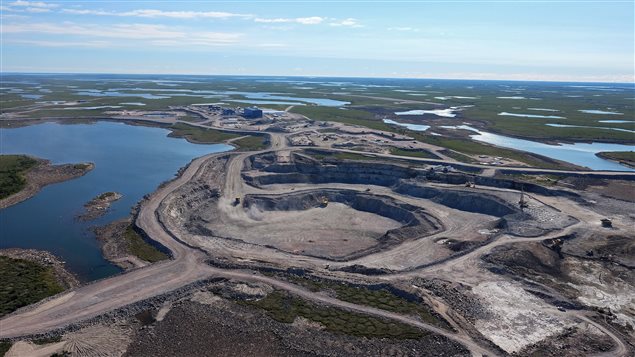
The Gahcho Kue diamond mine, located about about 280 kilometres northeast of Yellowknife in the Northwest Territories, is shown in a handout photo. Photo Credit: PC / THE CANADIAN PRESS/HO-De Beers Group of Companies

By Levon Sevunts, Radio Canada International

20 September, 2016

Canada is set to cement its position as one of the big players in the global diamond industry with the official opening of the Gahcho Kue diamond mine in the Northwest Territories today.

The mine, which sits in the tundra about 280 kilometres northeast of territorial capital of Yellowknife, is estimated to be one of the 10 biggest diamond mines in the world. It is expected to produce an average of 4.5 million carats a year over the life of the mine, according to De Beers Canada.

Gahcho Kue, a joint venture between De Beers Canada (51 per cent) and Mountain Province Diamonds (49 per cent), is the sixth diamond mine opened in Canada since BHP Billiton’s EKATI Mine in the Lac de Gras region, about 300 kilometres northeast of Yellowknife, started in 1998.

“It will be a very significant contributor to the NWT economy,” Kim Truter, CEO of De Beers Canada, told The Canadian Press.
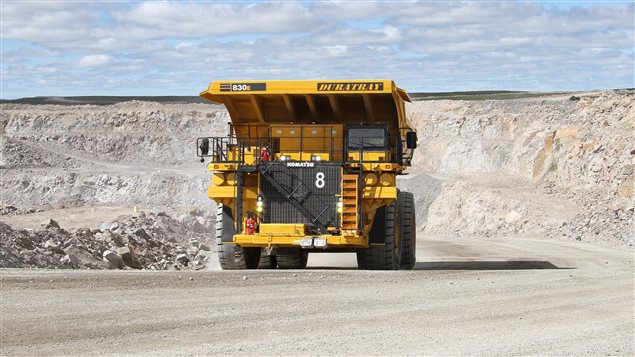
 A dump truck operates at the Gahcho Kue mine in the Northwest Territories in a handout photo. THE CANADIAN PRESS/HO-De Beers Group of Companies

A dump truck operates at the Gahcho Kue mine in the Northwest Territories in a handout photo. © PC/THE CANADIAN PRESS/HO-De Beers Group of Companies

A socio-economic impact report released by De Beers earlier this months estimated that the operation will provide $6.7 billion to the Canadian economy over its estimated life span of 12 years and has generated $440 million to the territory’s economy so far.

The mine supported more than 2,700 direct and indirect jobs in 2015, with employment at the site representing more than 10 per cent of employment in the NWT’s extractive industries, according to the report.

De Beers expects will need about 530 workers to operate.

Truter said the company has been working to share the benefits of Gahcho Kue with local First Nations and Métis, with impact benefit agreements signed with six groups in the area.

Market volatility

Canada’s diamond production is expanding at a time of growing volatility in the industry. Global sales of polished stones declined 2 per cent last year to $24.7 billion US as demand fell in emerging markets like India and China.

Lower prices and market instability meant a much bigger drop in the sales of rough diamonds, which dropped about 30 per cent to an estimated $13.7 billion US, forcing De Beers to close its Snap Lake diamond mine in December last year at a loss of more than 400 jobs.

But the company is banking on the purchasing power of the Millennial generation (those aged 15-34) who spent more than $25 billion US on diamond jewellery in 2015 in the four largest markets – the US, China, Japan and India, according to The Diamond Insight Report 2016.

“Most encouragingly, however, Millennials are still 10 years away from their most affluent life stage and the generation comprises more than 220 million potential diamond consumers in the four main markets,” said Bruce Cleaver, CEO, De Beers Group.

“The diamond industry therefore has a major opportunity on the horizon but it will only capitalise on it fully if it continues to innovate and invest across the value chain.”
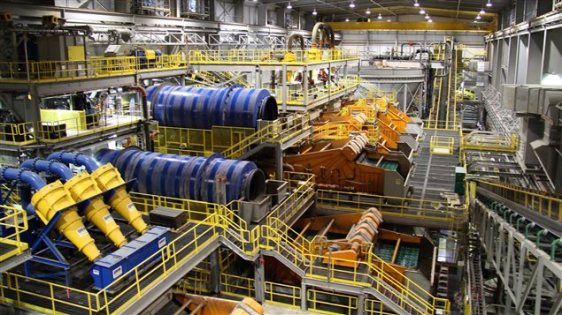
pc_160920_sg30d_rci-gahcho-kue-plant_sn635

An overall view of the priocessing plant at the Gahcho Kue mine in the Northwest Territories is shown in a handout photo. © PC/THE CANADIAN PRESS/HO-De Beers Group of Companies

Diamond superpower

Canada is a relative newcomer to diamond mining.

De Beers, the world’s leading diamond company, started prospecting for diamonds in Canada in the early 1960s. In 1987, a second year geology student Brad Wood who was working for De Beers stumbled upon kimberlite rocks, volcanic rocks that sometimes contain diamonds, while fishing on Attawapiskat River, in the James Bay lowlands of Northern Ontario. The site would eventually become today’s Victor Mine.

But it wasn’t until 1991, when two enterprising geologists, Stewart Blusson and Chuck Fipke, discovered large diamond deposits in the Lac de Gras region of the Northwest Territories that the word learned of Canada’s Arctic diamonds.

Diamond production at the Anglo-Australian mining giant BHP Billiton’s EKATI Mine in the Lac de Gras region, about 300 kilometres northeast of Yellowknife, started in 1998 (Fipke and Blusson, each hold a 10 per cent share in the EKATI Mine).

In 2003, Rio Tinto, another giant British-Australian mining and metals company, opened its Diavik Mine not far from EKATI.

And in 2008, De Beers opened its first Canadian mine at Snap Lake about 220 kilometres northeast of Yellowknife.

Ontario joined Canada’s diamond club in 2008, when De Beers started commercial diamond production at its Victor mine, about 90 kilometres west of the First Nations community of Attawapiskat, in northern Ontario.

And Quebec is expected to join Canada’s diamond producing club once the Renard Mine owned by Stornoway Diamonds becomes operational by the end of 2016.

In less than a decade, Canada was propelled to the diamond mining major leagues, becoming the world’s third-largest producer, behind Botswana and Russia, producing 15 percent of the world’s diamonds by value.

With files from The Canadian Press

Source: Canada set to open one of the world’s biggest diamond mines

Canada expects CETA to be signed in October  

The CETA free trade agreement between Canada and the EU is proving highly controversial. It was discussed with Canadian International Trade Minister Chrystia Freeland, live in the DW News studio. Canada expects CETA to be signed in October.

To watch, click on the link: Talk with Canadian International Trade Minister Chrystia Freeland | All media content | DW.COM | 20.09.2016

Canada flagged for worrying levels of credit and the threat it poses to country’s banks 

By John Shmuel | September 20, 2016

The Bank for International Settlements, a global banking body, is warning that Canada has one of the highest credit-to-GDP ratios in the developed world and that the “unusually” elevated level poses a risk to the country’s banking system.

Canada registered a gap reading of 12.1 in the first quarter of 2016, up from 11.6 during the same period last year. The figure is a comparison of current credit levels to long-run trends. Canada was among the most elevated of developed countries, though it trailed China’s record reading of 30.1.

But the level remains high enough that the BIS singled out Canada as the lone developed country where credit growth remains startlingly high relative to the economy.

“Credit growth continues to be unusually high relative to GDP in several Asian economies as well as in Canada,” the BIS wrote in its quarterly review.

There is some good news in the BIS’ report, however, as Canada’s credit-to-GDP has declined from the highs registered last year, when it reached a gap reading of 15.6 in the fourth quarter. The BIS uses credit-to-GDP as an early warning indicator for financial crises. Its data includes 43 economies, with current credit levels being compared to long-run trends.

Economists in Canada have sounded the alarm on household debt growth for a number of years now. Statistics Canada released data last week that showed the ratio of household credit market debt to disposable income rose from 165.2 per cent in the first quarter to 167.6 per cent in Q2.

Household debt has rapidly risen as housing prices have continually hit new record levels in Canada and homebuyers take out increasingly larger mortgages — as incomes remain stagnant. Toronto and Vancouver have been singled out by the Bank of Canada as two markets where this is a particular concern, as the average single detached home now sells for more than $1 million in both cities.

The BIS said that given low interest rates, countries with high debt loads such as Canada are unlikely to see any stress emerge. And its indicator is not a guarantee that stress will emerge in the future.

But the global banking body again singled out Canada as one country where trouble could emerge if interest rates move higher.

“Estimated debt service ratios, which attempt to capture principal and interest payments relative to income, appear to be at manageable levels at current interest rates for most countries, although they point to potential concerns in Brazil, Canada, China and Turkey,” the BIS wrote in its report.

Source: Canada flagged for worrying levels of credit and the threat it poses to country’s banks | Financial Post

Finland, Canada and South Korea rank highly for education – Full Fact

https://fullfact.org

By Richard Braham   Sept 16, 2015

In brief

Claim

Finland, South Korea and Canada, which all have the most comprehensive systems, have been repeatedly shown to have the best educated children in the world.

Conclusion

Finland, South Korea and Canada have done consistently well in tests that compare 15 year-olds internationally, although these tests aren’t a perfect guide to the relative performance of different education systems. We haven’t seen definitive evidence that the success of these systems is due to the fact they’re comprehensive.

“If you look at the countries that have the best educated children around the world, there are three countries that come up again and again and again… Finland, South Korea and Canada. And they have the most comprehensive systems.”

Alastair Campbell, 15 September 2016

Finland, South Korea and Canada have done consistently well in tests that compare 15-year olds in different countries.

We compared the last three rounds of rankings from 2006, 2009 and 2012. Finland, South Korea and Canada were consistently placed in the top 10 for Science and Reading globally, although Finland and Canada slipped to 12th and 13th for Maths in 2012.

They’re not the only countries that have done consistently well in these tests. Looking at 2009 and 2012, four other regions have scored consistently within the top ten in reading, five others in science and seven others in maths.

As we’ve discussed previously, these tests aren’t a perfect guide to the relative performance of different education systems.

Finland’s state schools are comprehensive and unstreamed until pupils are 16.Canada has mainly comprehensive schools to 18, since the majority of upper secondary schools offer vocational and academic streams. South Korea’s schools are comprehensive until pupils are 15, which is the end of compulsory education.

So far, we haven’t seen any definitive evidence that the success of these systems is due to the fact that their systems are largely comprehensive. We’ll be looking into this further.

Source: Finland, Canada and South Korea rank highly for education – Full Fact

Q&A with Dr. Sylvie Trottier, Canadian researcher working on Zika vaccine

[A team of Canadian researchers is working diligently to develop a vaccine to combat the Zika virus/CBS]

A team of Canadian researchers is signing up volunteers to be part of the first human clinical trial of a vaccine to combat the Zika virus.

The Université Laval’s Infectious Disease Research Centre and Centre de recherche du CHU de Québec-Université Laval will be one of a trio of research centres to conduct the trial.

There is currently no treatment or vaccine for Zika, the virus that most recently emerged in South America. While most cases of Zika are relatively mild, the virus can cause microcephaly in infants born to infected mothers.

Yahoo Canada News spoke to Dr. Sylvie Trottier, director of the Laval faculty of medicine’s department of microbiology, infectious diseases and immunology, about the study.

Q: What does the trial involve?

The trial involves the first injection of the developing Zika vaccine. This vaccine has been through all the pre-clinical studies and now it is ready to be given to human beings for the first time.

This study is being conducted in Quebec City along with in two American centres.

Q: How long will it take?

The whole study will take about one year. We will give the vaccine to the volunteers and after we will observe the response in the immune system. This means there will be three shots of the vaccine. After that, it will be blood tests for quantification of the human response.

Q: So these are healthy people and you’re studying whether it has any adverse effects?

We want to see if there are any adverse effects and we want to see if there is immune response.

Q: How was the vaccine developed?

Researchers in Pennsylvania and Canada decided nine months ago that a Zika vaccine should be developed because of the pending outbreak of Zika in Brazil.

[Laval’s involvement is linked to the arrival of Dr. Gary Kobinger, a doctor of microbiology, professor in Université Laval’s Faculty of Medicine, researcher with Centre de recherche du CHU, director of Laval’s Infectious Disease Research Centre, and a global authority on vaccine research]

Q: That’s relatively quick?

Yes. This is a high-tech vaccine, a DNA vaccine.

[A DNA vaccine is a standard development technique in which genetic material is injected into a living host in order to prompt cells to produce an immunological response.]

This kind of vaccine is already in development for other viruses or microbes.

Q: So the team nine months ago foresaw the outbreak of the Zika virus?

In fact, the thing is that there were already two outbreaks in relatively small communities. In 2007, on Yap Island, Micronesia, 70 per cent of the people were infected.

The concern at that point was Guillain-Barre [an illness of the nervous system that can cause paralysis, and has been associated with Zika]. In the 2013 outbreak, the number of cases of Guillain-Barre was 20 times more than normal.

I don’t think anyone could have foreseen the onset of neurological defects in children. It could be more severe than we ever would have expected.

Q: Has this emerging problem of microcephaly made this vaccine more urgent?

Yes. These infants that are born with microcephaly have a lifelong disability and they will need a lot of care.

This is a human tragedy.

Q: This is an early stage of a human clinical trial. If everything goes as you hope, how long before a vaccine is available?

This is why we are working so hard now. But it is still hard to tell.

With the preliminary data, if we have good human immune response, this study can move quickly into Phase II, perhaps as early as the beginning of 2017.

Q: How many volunteers do you need?

We need 40 volunteers for the whole study. We want to proceed quickly to try and vaccinate them before the end of July or at the very beginning of August.

Q: What do you want Canadians to know about this study and Zika virus?

Even if, in Canada, we don’t have the mosquito that spreads this virus, this virus is transmitted sexually. In Canada now we have 161 cases and 160 of these cases involve travelers to affected countries. As there are more people, there will be more sexual transmission.

So it is not only a problem of South America or Central America. It is going to be a problem for us here, even if we don’t have transmission by the mosquito.

This interview has been edited and condensed.

Source: Q&A with Dr. Sylvie Trottier, Canadian researcher working on Zika vaccine