
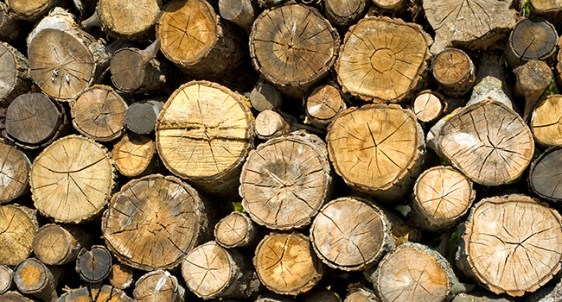
 Source: The Softwood Lumber Agreement is expiring. Here’s what you need to know
Tag Archives: andrew chernoff
Glencore slashes zinc production by third – BBC News
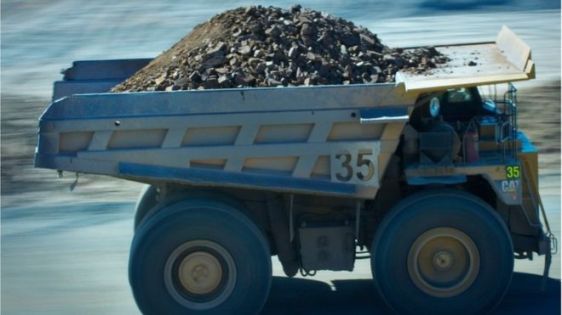 Embattled mining giant Glencore says it is slashing its zinc production in reaction to a 30% plummet in the commodity’s price in the past few months.
Source: Glencore slashes zinc production by third – BBC News
Antarctic Ozone Layer Recovery Impacted By Rising Levels Of Classes Of Ozone-Depleting Gases Attacking Earth’s Ozone Layer….Just Saying
Arctic Ozone Layer Concerns Raised After Odd Arctic Ozone ‘Hole’ Found in 2011
October 8, 2015 Andrew Chernoff 
It was this time last year that the United Nations released a report heralding the news that the the ozone hole that appears annually over Antarctica was showing it had stopped increasing and was showing signs of thickening.
The report published by the World Meteorological Organization (WMO) and the UN Environment Programme (UNEP), also indicated that it would take at least a decade before the hole over the Antarctic would start to shrink.
According to the report:
The phase-out of ozone depleting substances has had a positive spin-off for the global climate because many of these substances are also potent greenhouse gases. However, the assessment report cautions that the rapid increase in certain substitutes, which are themselves also potent greenhouse gases, has the potential to undermine these gains. The assessment also notes that there are possible approaches to avoiding the harmful climate effects of these substitutes.
“There are positive indications that the ozone layer is on track to recovery towards the middle of the century. The Montreal Protocol – one of the world’s most successful environmental treaties – has protected the stratospheric ozone layer and avoided enhanced UV radiation reaching the earth’s surface,” said UN Under-Secretary-General and UNEP Executive Director Achim Steiner.
“However, the challenges that we face are still huge. The success of the Montreal Protocol should encourage further action not only on the protection and recovery of the ozone layer but also on climate. On September 23, the UN Secretary General will host Heads of State in New York in an effort to catalyse global action on climate. The Montreal Protocol community, with its tangible achievements, is in a position to provide strong evidence that global cooperation and concerted action are the key ingredients to secure the protection of our global commons,” he added.
“International action on the ozone layer is a major environmental success story,” said WMO Secretary-General Michel Jarraud. “This should encourage us to display the same level of urgency and unity to tackle the even greater challenge of climate change. This latest assessment provides solid science to policy-makers about the intricate relationship between ozone and climate and the need for mutually-supportive measures to protect life on earth for future generations.”
“Human activities will continue to change the composition of the atmosphere. WMO’s Global Atmosphere Watch programme will therefore continue its crucial monitoring, research and assessment activities to provide scientific data needed to understand and ultimately predict environmental changes, as it has done for the past 25 years” said Mr Jarraud.
Early this year, Australian news reported that scientists discovered previously neglected class of ozone-depleting gases increasing and having an effect on the ozone layer. The study, published in the journal Nature Geoscience, looked at two decades of raw data provided by the US National Oceanic and Atmospheric Administration (NOAA).
According to the news article:
Researchers at Leeds University in northern England said two computer models highlighted the impact of so-called ‘very short-lived substances’ (VSLS) that deplete the stratospheric shield.
The damage they do to the ozone layer is significant and likely to increase, they said, as emissions of man-made chlorine gases rise.
Ironically, one of the chemicals named in the report, dichloromethane, is used in the manufacture of substitutes for ozone-depleting gases outlawed by the UN’s 1987 Montreal Protocol.
VSLS are gases that usually break down in less than six months. They are not covered by the landmark Montreal Protocol that requires the phaseout of longer-lasting chlorofluorocarbon (CFCs) and halon gases.
“Our model simulations indicate that VSLS account for a significant portion of ozone loss in the stratosphere,” lead investigator Ryan Hossaini said.
“In the Antarctic region, where the ozone hole forms each year and where ozone decreases are the most dramatic, we estimate that VSLS account for about 12.5 per cent of the total ozone loss.
“Globally averaged, the ozone loss due to VSLS in the lower stratosphere could be as much as 25 per cent, though it is much smaller at higher altitude.”
Around 90 per cent of VSLS are natural — they are bromine compounds produced by seaweed and the ocean’s phytoplankton.
The rest is man-made chlorine gases, and their contribution to the VSLS total is rising fast.
“Dichloromethane appears to be one of the most abundant man-made VSLS that we know of,” said Hossaini.
Compared with the notorious CFCs, dichloromethane’s impact today is small. The computer models suggest it reduces the ozone layer by less than one per cent, he said.
“However, our study also shows that the atmospheric concentration of dichloromethane has increased dramatically in recent years,” said Hossaini.
“At some locations its atmospheric concentration has doubled since the late 1990s.”
ARCTIC OZONE LAYER
In 2011, according to a NASA study, cold temperatures, chlorine and a stagnant atmosphere caused a thinning in the ozone layer over the Arctic in 2011.
According to the study conclusion:
Even when both poles of the planet undergo ozone losses during the winter, the Arctic’s ozone depletion tends to be milder and shorter-lived than the Antarctic’s. This is because the three key ingredients needed for ozone-destroying chemical reactions -chlorine from man-made chlorofluorocarbons (CFCs), frigid temperatures and sunlight- are not usually present in the Arctic at the same time: the northernmost latitudes are generally not cold enough when the sun reappears in the sky in early spring. Still, in 2011, ozone concentrations in the Arctic atmosphere were about 20 percent lower than its late winter average.
The new study shows that, while chlorine in the Arctic stratosphere was the ultimate culprit of the severe ozone loss of winter of 2011, unusually cold and persistent temperatures also spurred ozone destruction. Furthermore, uncommon atmospheric conditions blocked wind-driven transport of ozone from the tropics, halting the seasonal ozone resupply until April.
“You can safely say that 2011 was very atypical: In over 30 years of satellite records, we hadn’t seen any time where it was this cold for this long,” said Susan E. Strahan, an atmospheric scientist at NASA Goddard Space Flight Center in Greenbelt, Md., and main author of the new paper, which was recently published in the Journal of Geophysical Research-Atmospheres.
“Arctic ozone levels were possibly the lowest ever recorded, but they were still significantly higher than the Antarctic’s,” Strahan said. ” There was about half as much ozone loss as in the Antarctic and the ozone levels remained well above 220 Dobson units, which is the threshold for calling the ozone loss a ‘hole’ in the Antarctic – so the Arctic ozone loss of 2011 didn’t constitute an ozone hole.”
According to livescience.com, on its coverage of the study:
Strahan and her team calculate that two-thirds of the thinning was caused by a combination of chlorine pollution and extreme cold. The remaining third was caused by the oddly quiet atmosphere, which prevented ozone molecules from elsewhere from moving in to fill the gap.
The ozone layer over the Arctic returned to normal in April 2011. It’s unlikely that such thinning will become a reoccurring problem, because the meteorological conditions were so odd, Strahan said. Not only that, but CFC levels in the atmosphere are still declining.
“If 30 years from now we had the same meteorological conditions again, there would actually be less chlorine in the atmosphere, so the ozone depletion probably wouldn’t be as severe,” she said.
Ongoing scrutiny continues on the Arctic and its ozone layer, as the following video indicates:
What does all this mean?
While we are doing more to lessen the impact of human pollution on earth, more still needs to be done. In saying that though, odd weather happenings and other climate issues out of our immediate, short term control, still impact our ability to continue and advance the timetable that we set for ourselves to solve the many issues affecting our environment……Just saying….
INFORMATION ON THE OZONE LAYER:
Just Saying….Vancouver Canucks 2015-2016 Preview & Prediction
October 6, 2015 Andrew Chernoff
Young Canucks Inherit The Future Helped By Current Leaders
The second full season of the Canucks under the leadership of Trevor Linden, President of Hockey Operations; Jim Benning, General Manager; and Willie Desjardins, Head Coach, gets underway tomorrow (October 7, 2015) when they open up their 46th NHL season.
Out from last season are Kevin Bieksa, G Eddie Lack, F Zach Kassian, F Nick Bonino, D Adam Clendening, F Shawn Matthias, F Brad Richardson. In are F Brandon Sutter, F Brandon Prust and D Matt Bartkowski.
What is more significant are the young Canucks that have made the roster for Vancouver’s inaugural game of the 2015-2016 season against the Calgary Flames on Wednesday night.
Jake Virtanen, age 19; Ben Hutton, age 22; and Jared McCann, age 19, “the three Musketeers”, were rewarded for their exceptional training camps, resulting in Vancouver Canucks General Manager Jim Benning on Monday, placing forward Linden Vey and defencemen Frank Corrado, Alex Biega on waivers with the intention of assigning them to the Utica Comets.
PROJECTED DEPTH CHART
Forwards
Daniel Sedin – Henrik Sedin – Brandon Sutter
Sven Baertschi – Bo Horvat – Radim Vrbata
Alex Burrows – Jared McCann – Jannik Hansen
Brandon Prust – Adam Cracknell – Derek Dorsett
Jake Virtanen/Chris Higgins (injured)
Defensemen
Alexander Edler — Chris Tanev
Dan Hamhuis — Matt Bartkowski
Ben Hutton — Luca Sbisa
Alex Edler
Goaltenders
Ryan Miller
Jacob Markstrom
The Canucks are trying to do what the Detroit Red Wings have being doing for years and add in players into the line-up without skipping a beat, staying competitive and being among the top four teams in their conference, making the playoffs for the second straight year.
While that could be a challenge for the Canucks this season, the Canucks are steadfast in believing that the youth movement and promoting from within is the way to go, and are hoping that the young Canucks will inherit the future helped by the current veteran leadership that includes Daniel and Henrik Sedin (both 35),Ryan Miller (35), Radim Vrbata (34), Alex Burrows (34), Dan Hamhuis (32) and Brandon Prust (31).
Along with Brandon Sutter (26), Matt Bartkowski (27), sophomore Bo Horvat (20), Luca Sbsia (25), Chris Tanev (25), and Jacob Markstrom (25), Canucks management are hoping and are optimistic that they are on the right track.
The young players on the Canucks believe they definitely deserve the opportunity that they have earned and would like sufficient time to develop the chemistry with the veteran mix, to craft that future. McCann and Virtanen will both receive their 10 game look before the Canucks will have to decide whether to keep them or send them back to their respective junior teams.
This should be good news all around as the Canucks that did not make the team will provide the Canucks farm team with excellent depth should any injuries happen with the NHL team.
Head Coach Desjardins likes knowing when the Canucks go on the ice what each player will give him as it reinforces his confidence in that player and confidence that the game plan that the team was prepared to execute will result in a win and two important points in a division that missing out on too many points will result in a long summer.
On the other hand, Desjardin also knows the only way his confidence in a player can be developed and reinforced is by giving the players a chance to play, which could result in mistakes, including the possible loss of the game, and there’s the rub: without the chance, there is no experience, no mistakes, no learning, no proving you have learned your lesson and earned the confidence of your coach, your teammates and the organization.
PREDICTION
The Canucks had 101 points last season and it went down to the final few days of the season before the Canucks placing in the standings was known and they made it into the playoffs.
They will need at least that many points to make it into the playoffs in 2016 and they do not have a tested backup goaltender like Eddie Lack was when Miller got hurt late last season and the Canucks rode Lack’s coattails into the playoffs. And there will be no goalie in Utica that the Canucks can be confident in like Lack, if Miller gets hurt late in the season.
The youth movement is needed. There is no right time to start it. So, might as well go with it now. Saying that, there may be some games that the Canucks should win, that they lose.
I believe the Canucks will need at least 107 points to make the playoffs in 2016.
Most likely the Canucks will finish with 93 points, due to the youth movement and an unproven backup goaltender; and their inability to score timely goals. Also, of concern is their depth upfront to move players in and out to deal with scoring issues. You can only change lines so often during a game; and once again, you can only look to the farm team so much if you are going to make a shake up to boost an offence that is stalling. And stall it will.
Yet, I take the high road, and make this prediction:
Canucks to finish with 107 points, making the playoffs for the second straight season.
How will it be done? Hell, all they have to do is out work, out play, out shoot, out hit, and out chance their opponent’s both at home and on the road.
Unrealistic? Ye of little faith. Just Saying….
From The Lens: October 3-4, 2015



 Andrew Phillip Chernoff