By Andrew Chernoff January 1, 2014 
Back on September 11, in this column, on the Vancouver Canucks and the upcoming 2013-2014 season titled Tortorella Has To Be True To His Coaching Style, I wrote:
I am not confident that they have the speed, finesse, the toughness or the depth to match or better most of the teams in their division or in the league at this point of training camp.
I will hold my thoughts of how well the Canucks might size up against the teams in their division, and whether they will make the playoffs until they have played their first month.
My pessimistic side says to wait until the end of January, 2014 to see if the Canucks take a nosedive and their more often than not “seasonal slump” or whether they defy the odds and play at least .500 or better and make a strong playoff run to finish the season on a high note.
I will not wait that long. I will give it 15 games.
Well, I have given it more than 15 games. I have given it until the end of 2013 before making further comment on the Canucks chances and how well the team sizes up against teams in their own division and whether they are a playoff contending team.
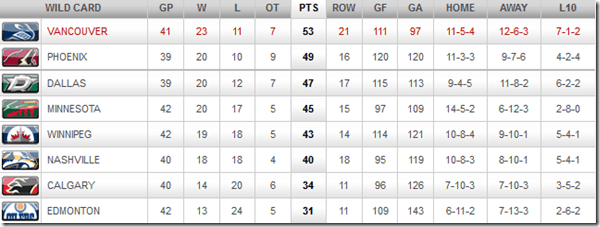
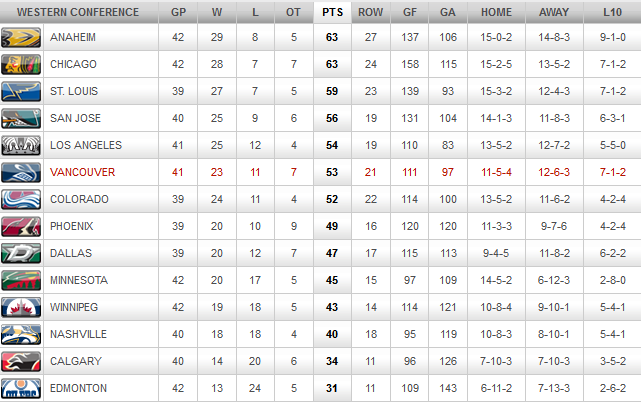
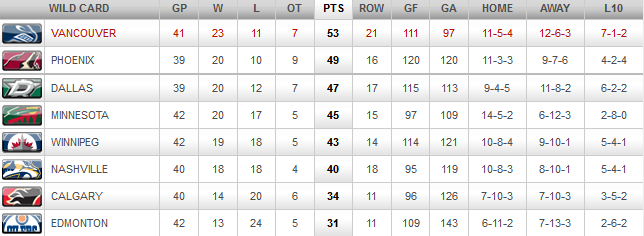
Obviously, I under estimated the Canucks, who as of this writing are twelve games above .500 and would have a playoff position today if the playoffs started, as a wildcard team.
So????? How have the Canucks faired:
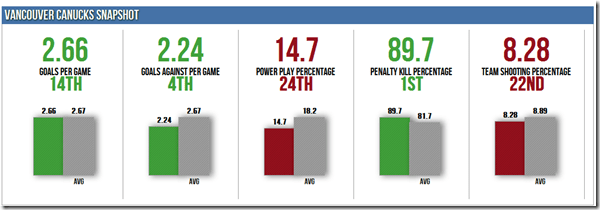
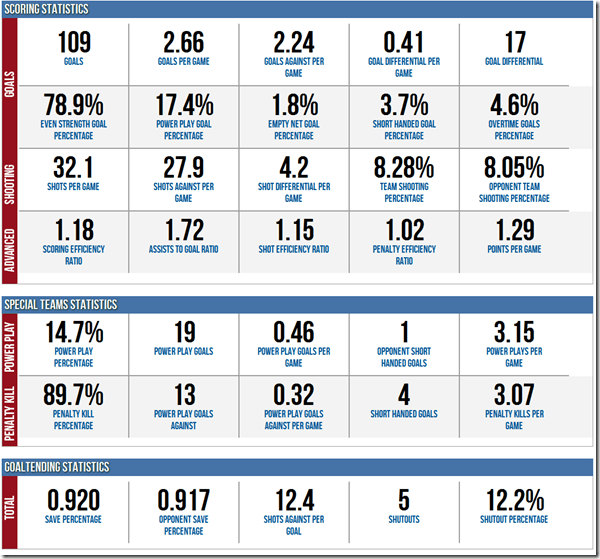
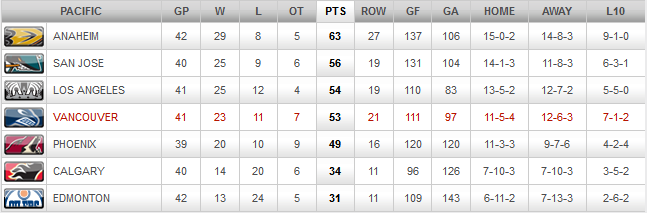
Vancouver Canucks record as of morning of January, 2014:
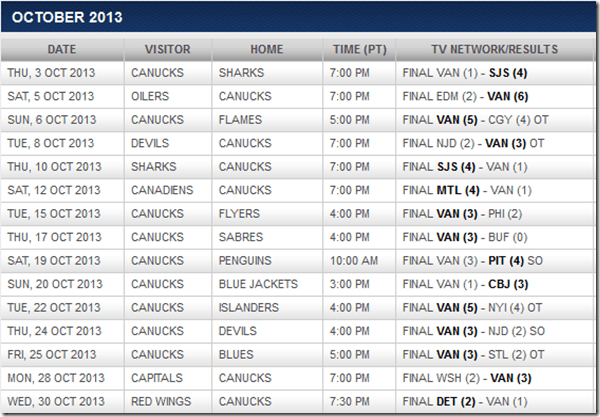
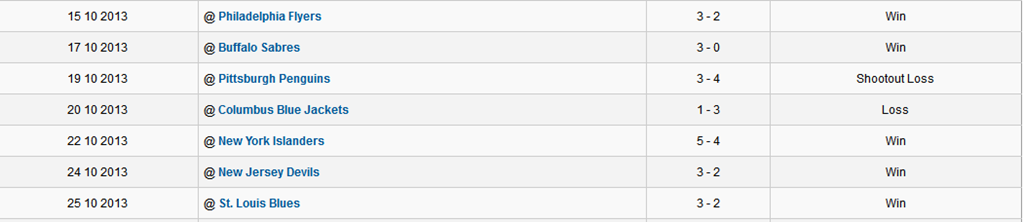
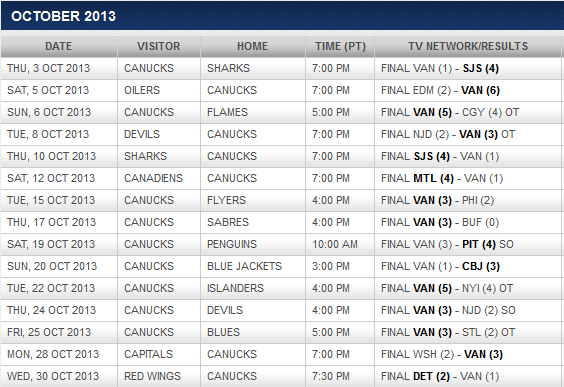
On that October 2013 road trip I said in my September 11, 2013 column:
Canucks will play seven road game stretch on the road from October 15 to October 25 which will indicate what their mettle is and how well forged they are as a competitive team and excelling at that high level of expectation or not.
So?? How’d they do? As you can see by the chart below they had 5 wins, 1 overtime loss and 1 regulation loss for 11 points out of a possible 14 points on the 7 game road trip.
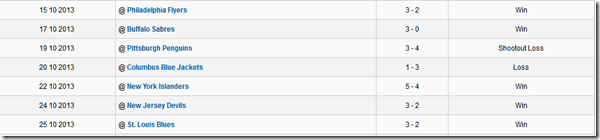
The Canucks showed that they were more than prepared for the seven game road trip, and more than impressed, and made a success of their first month of the season.
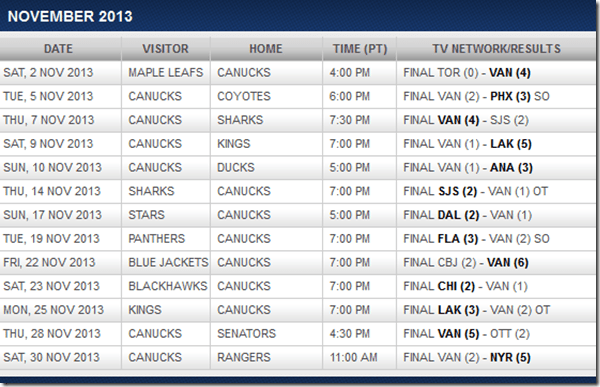
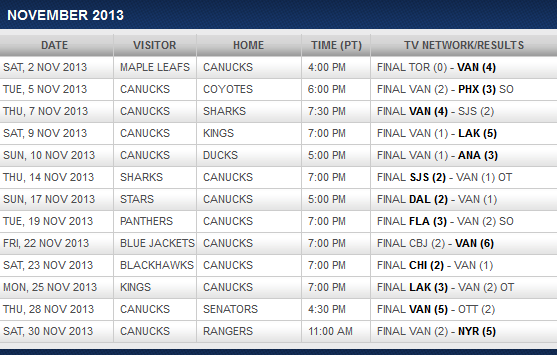
November was not so pleasant, and provided some adversity and struggles, that impacted the Canucks from having a winning month.
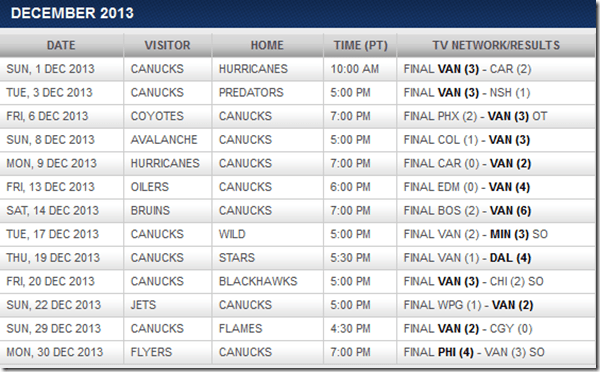
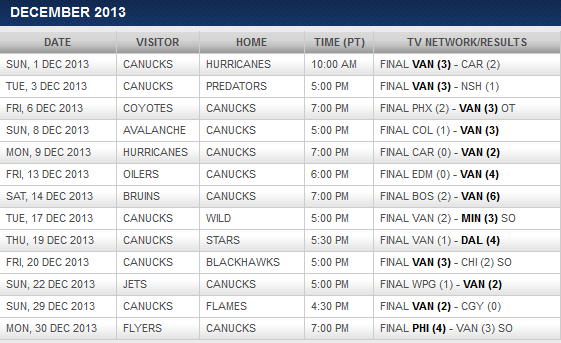
December showed the team come together under the system of their new coach and rack up 10 wins and 1 loss in 13 games for 22 points, putting Vancouver squarely in the hunt for a playoff position at the half way point of the season.
THE CANUCKS LAST HALF OF THE 2013-2014: MY THOUGHTS
So, stats aside, I am left with a three part question: what do the Canucks have to do, what does the future hold for the Canucks and how will it figure in the Canucks success the second half of the season?
Well, it won’t take long to get the answer to the first part of the question. It is simple and quickly answered.
As Iain MacIntyre, Vancouver Sun columnist, in his article Canucks second half must be equal to the first pointed out:
Despite a series of December injuries, including a broken jaw to front-line winger Alex Burrows and a strained groin suffered by starting goalie Roberto Luongo, the Canucks had a brilliant month, which gave them a good opening half of the National Hockey League season. Now, they need a second half that’s equally strong.
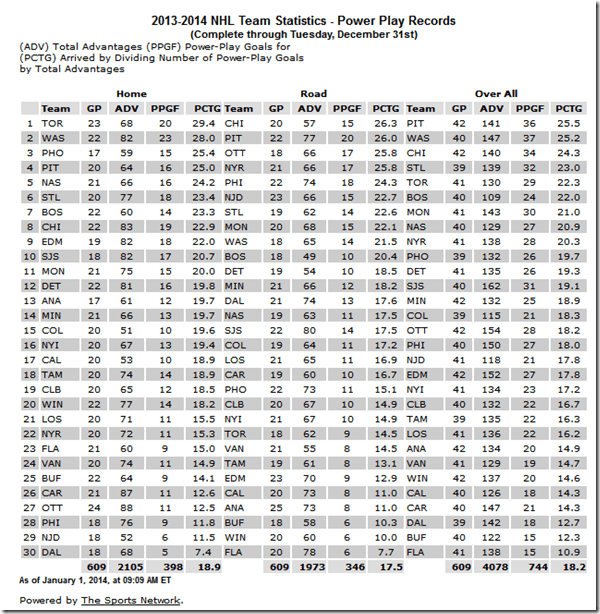
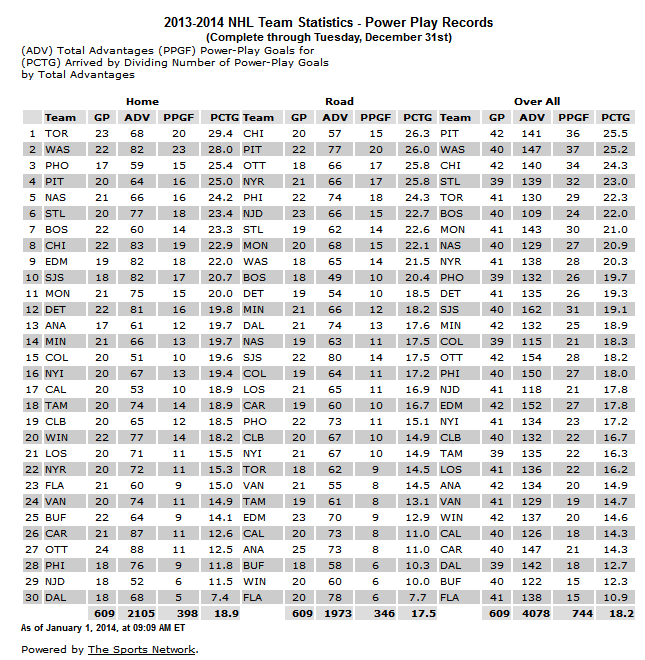
A healthy defence would help. So would a power play, which was 0-for-4 against the Flyers and, except for one three-week surge, has had awful results all season.
But, really, there is little for which to fault the Canucks through the first three months of the season, except for taking much of the fall to learn new coach John Tortorella‘s go-go-go system.
“I think we understand how we play and everybody is comfortable with that,” Tortorella said just before the game. “Some of the most important things when you get into the second half of the year and into playoffs – if we’re fortunate enough to get there – is situational play. I talk about it a lot. Everybody asks me: What’s situational play? There are a lot of things. It’s so many things.
“It’s how you win games. Understanding how to get momentum back on your side, how to keep it on your side. Third periods – down by a goal, up by a goal. All those things have to become second nature and we’ve still got a lot of work to do in that area.”
Apparently so.
I concur with Mr. MacIntyre, and that answers the first part of the question.
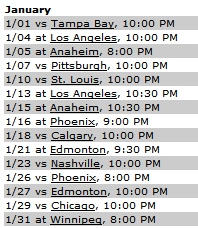
As for the second part of the question, we won’t have to wait long as January, like October, presents a big challenge for the Canucks, especially in their first eight games:
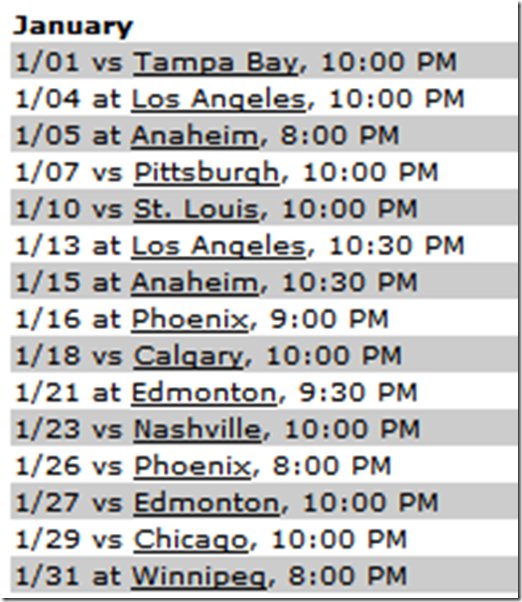
As you can see by the schedule for January, the Canucks first eight games have some strong opponents, with five games on the road and three at home.
My comments in my column on September 11, I repeat here for the first eight games of 2014, with some slight revision:
Canucks will play eight games from January 1 to January 16 which will indicate what their mettle is and how well forged they are as a competitive team and excelling at that high level of expectation or not, after a one week rest at the Christmas break and a shootout loss on December 30 against the Philadelphia Flyers at home.
I think Iain MacIntyre would agree. I quote from his article previously quoted above:
So December, 2013, with injuries and travel and four back-to-backs was pretty remarkable.
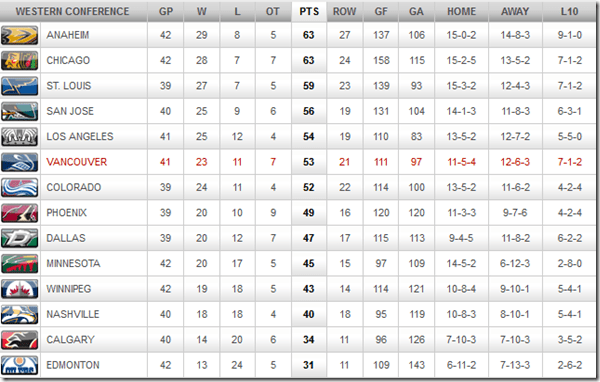
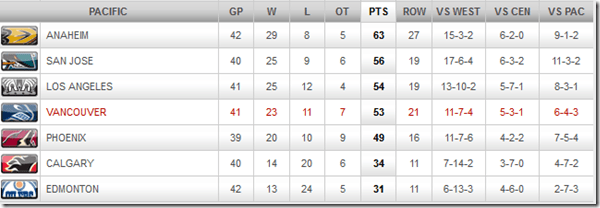
It gives the Canucks an eight-point cushion in the Western Conference playoff race.
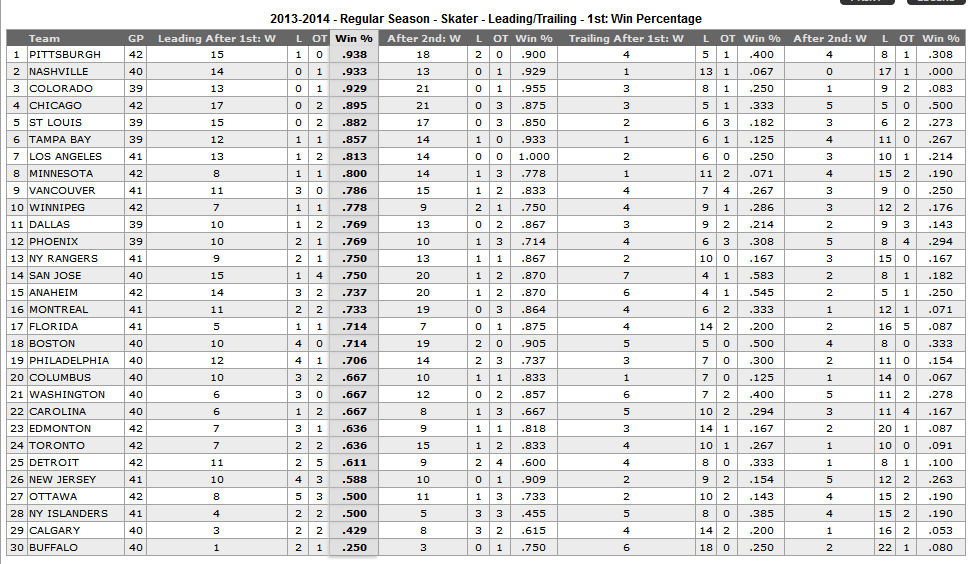
“We realized at the time, when we started winning, we had to get on a roll or we were going to be out of the playoffs,” Sedin said. “And a lot of points out of the playoffs. We climbed back in, and now we need to keep going.
“The feeling we have right now is a great feeling. We feel we’re going to win every game. For sure, we’ve won games because of this mindset.”
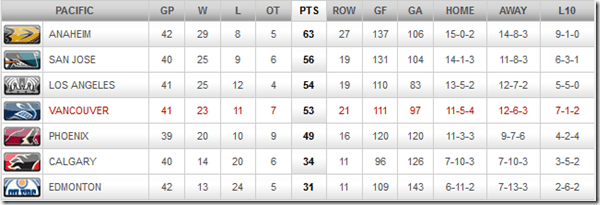
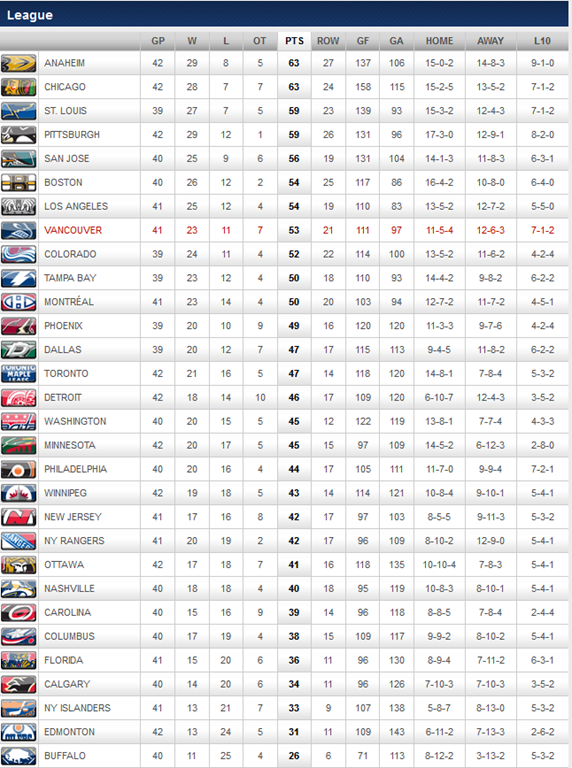
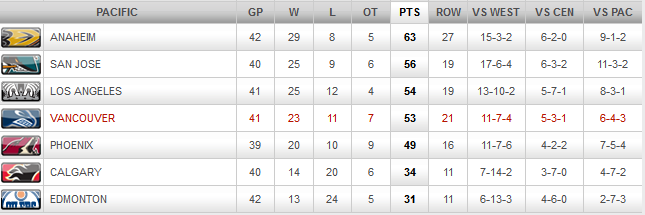
But confidence and positive energy got them only one point on Monday, giving the 23-11-7 Canucks 53 through 41 games. Their second half starts Wednesday with a New Year’s Day game against the Tampa Bay Lightning. Vancouver’s six games after that are against Stanley Cup contenders: the Los Angeles Kings (twice), Anaheim Ducks (twice), Pittsburgh Penguins and St. Louis Blues.
We’re going to know more about the Canucks two weeks from now, and they’re going to know more about themselves.
Luongo, who had a lengthy practice session Monday morning, should be the first injured player back. Edler, out since Dec. 3, may be ready by the middle of the month.
What else do the Canucks need in the second half?
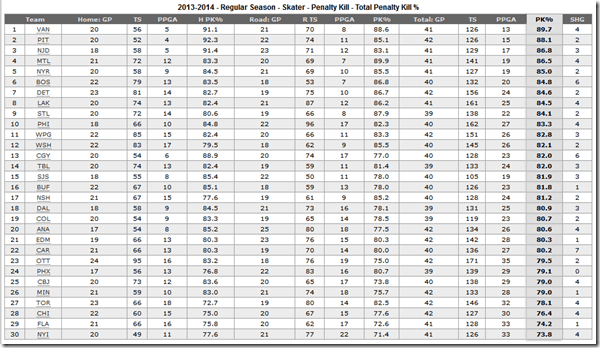
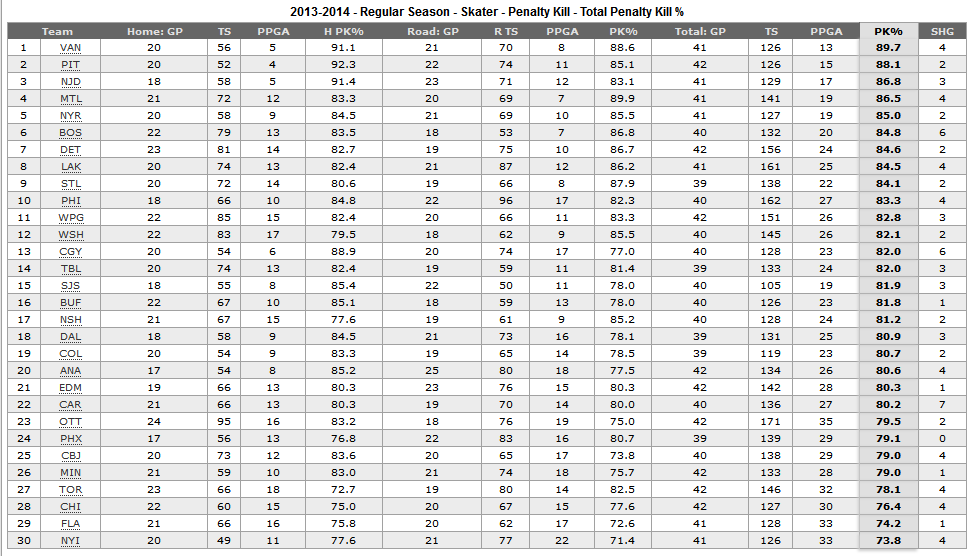
“More Decembers,” defenceman Dan Hamhuis, who played a staggering 32:30 on Monday, said. “We just have to build off what we’re doing. Our penalty kill has been great, but we’d like better results for our power play. Our goaltending has been great. We just have to continue to play good defence and find small ways to get better.
“You get a new coaching staff with new systems and new ways to play, and a run like this really solidifies everyone’s belief in our style of play and our identity.”
The third part of the question, how will the first two parts of the question figure in the Canucks success the second half of the season?
The Canucks need, as already stated, but emphasized here, need to keep playing as they are, improving as they make a playoff run. That won’t be easy, as the teams they are chasing are playing just as well as they are, and secondly, an Winters Olympic break is coming up.
The conclusion to the Olympic break will test the Canucks, coaches and players alike, to play well enough to make a last push, to not just make the playoffs, but do so with impact, excelling at a high level, being a legitimate threat to go deep into the playoffs.
The Stanley Cup challengers they face in January will give them a few answers as to where they are, what they lack and what they need to do.
In conclusion, with the Canucks game against Tampa Bay just minutes away:
John Tortorella has to do what he does best and which helped Tampa Bay to its first Stanley Cup—be the best coach he can be and get the most out of his players, letting every player know that he is boss,
The players are paid to execute the plan and perform as professionals. Tortorella must be accountable for being outcoached and for misjudgements regarding his assessments regarding each players abilities, capabilities, to execute the plan that he has developed to make the Canucks successful in all areas; and the players must be accountable for not executing that coaching plan, and playing up to that high level of expectation.
The Canucks have to do more than knock on the door of the NHL playoffs. They have to kick it in and live in it like they own it, with a passion only found on the streets, made for hockey on ice. And then the ultimate prize—–the Stanley Cup—–will be theirs.
Just saying…..
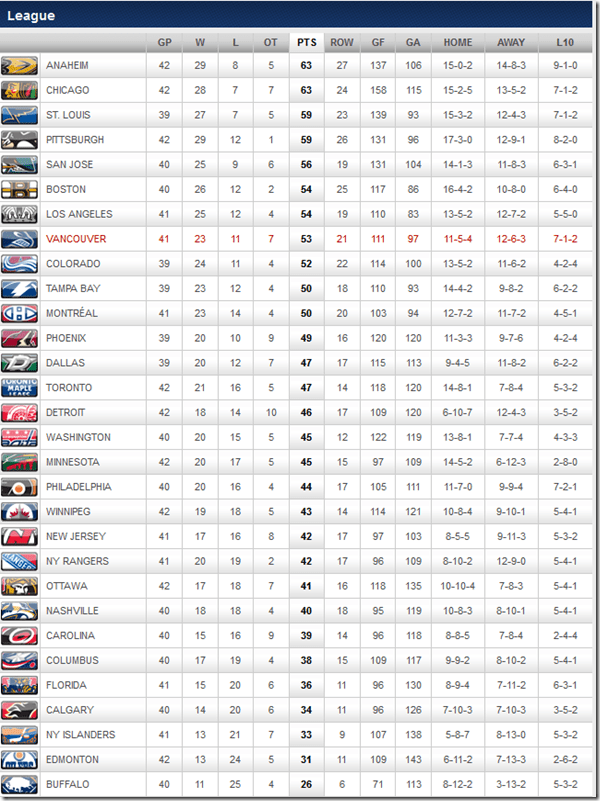
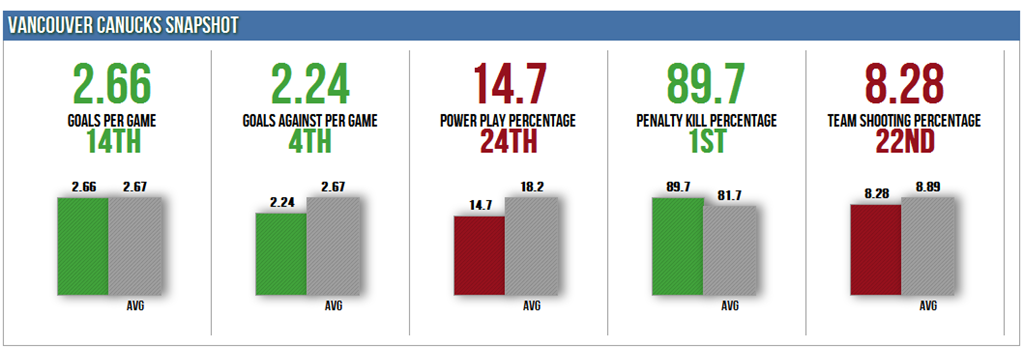
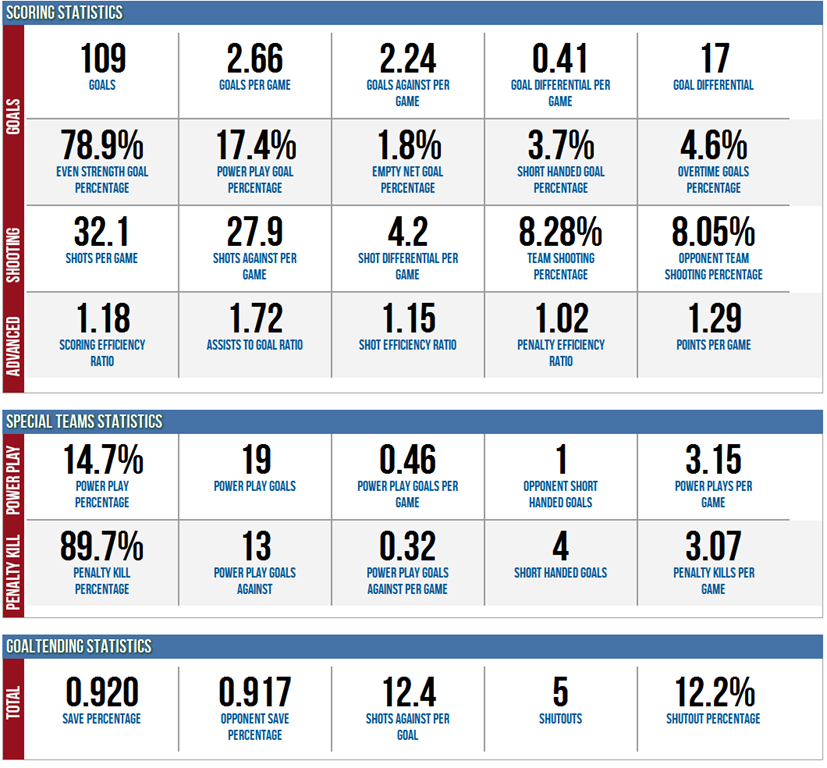
The following is a summary of where the Canucks are relative to the league, and play in the two conferences:
Canucks record in October, 2013: 9–5–1 (Home: 3–3–0 ; Road: 6–2–1)
Canucks record in November, 2013: 4–5–4 (Home: 2–2–3 ; Road: 2–3–1)
Canucks record in December, 2013: 10–1–2 (Home: 6–0–1 ; Road: 4–1–1)
Western Conference Standings: as of morning of January 1, 2014:
Western Conference-Wild Card Race: as of morning of January 1, 2014:
League Standings: as of January 1, 2014 @ 1 pm PST:
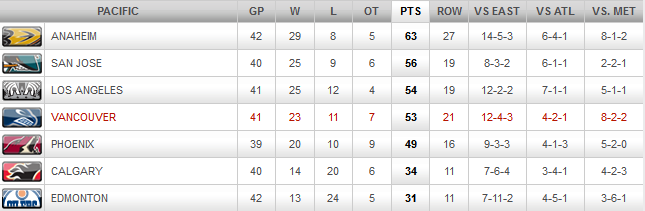
Canucks Against Eastern Conference: as of morning of January 1, 2014:
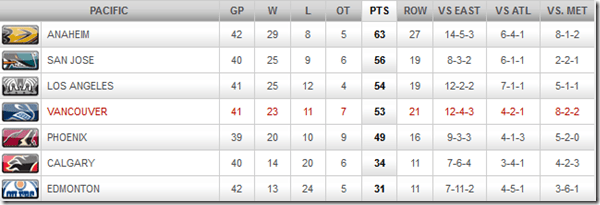
Canucks Against Western Conference: as of morning of January 1, 2014:

 Andrew Phillip Chernoff