
Sea level rise threatens larger number of people than earlier estimated

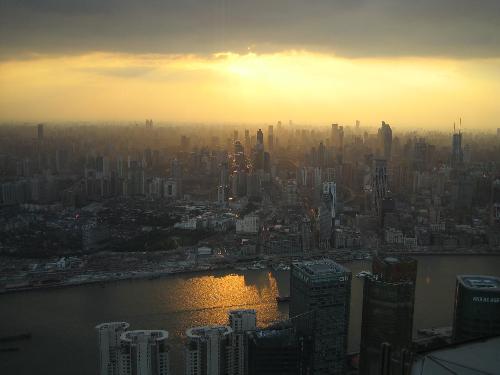
Rising sea level threatens larger number of people that earlier estimated. Shanghai with over 24 million inhabitants is one of the megacities that will suffer from the projected sea level rise and intensified storms. Credit: Olli Varis / Aalto University

More people live close to sea coast than earlier estimated, assess researchers in a new study. These people are the most vulnerable to the rise of the sea level as well as to the increased number of floods and intensified storms. By using recent increased resolution datasets, Aalto University researchers estimate that 1.9 billion inhabitants, or 28% of the world’s total population, live closer than 100 km from the coast in areas less than 100 meters above the present sea level.

By 2050 the amount of people in that zone is predicted to increase to 2.4 billion, while population living lower than 5 meters will reach 500 million people. Many of these people need to adapt their livelihoods to changing climate, say Assistant Professor Matti Kummu from Aalto University.

The study found that while population and wealth concentrate by the sea, food must be grown further and further away from where people live. Highlands and mountain areas are increasingly important from food production point of view, but also very vulnerable to changes in climate.


  • Over the past century there has been a clear tendency that cropland and pasture areas have grown most in areas outside the population hotspots, and decreased in coastal areas. This will most probably only continue in the future, summarises Professor Olli Varis from Aalto University.


Even though people and wealth continue to accumulate in coastal proximity, their growth is even faster in inland and mountainous areas, the study reveals. This contradicts the existing studies. In the future, the world will be less diverse in terms of urbanisation and economic output, when assessing it from geospatial point of view.

For the analysis, researchers used several global gridded datasets. They first created a geographic zoning in relation to the elevation and proximity to coast. This was then used to study the factors included in the study, which were grouped into five clusters: climate, population, agriculture, economy, and impact on environment. For the factors with temporal extent, the researchers also assessed their development over time period of 1900-2050.

source: Aalto University

Source: Sea level rise threatens larger number of people than earlier estimated | Science Codex
Climate change altering Greenland ice sheet & accelerating sea level rise, says York University prof

TORONTO, January 4, 2016 – The Greenland ice sheet has traditionally been pictured as a bit of a sponge for glacier meltwater, but new research has found it is rapidly losing the ability to buffer its contribution to rising sea levels, says a York University researcher.

York U Professor William Colgan, a co-author on the study published today in the journal Nature Climate Change, helped analyse data from three expeditions to the Greenland ice sheet in 2012, 2013 and 2015. The research was done in conjunction with lead researcher Horst Machguth of the Geological Survey of Denmark and Greenland, Mike MacFerrin of the University of Colorado at Boulder and Dirk van As of the Geological Survey of Denmark and Greenland Copenhagen, Denmark.

Colgan spent five weeks with the team in 2013 drilling firn cores in the interior of the Greenland ice sheet. Firn is multi-year compacted snow that is not as dense as glacier ice. Instead, it forms a porous near-surface layer over the ice sheet. Dropped off by a ski-equipped US Air National Guard C-130 Hercules in minus 40 degrees Celsius weather, with 6,000 kilos of supplies and equipment, the team set up several camps and drilled a series of shallow firn cores about 20 metres deep during their time on the ice sheet.

“We were interested in the thin porous near-surface firn layer, and how its physical structure is changing rapidly with climate change,” said Colgan of the Lassonde School of Engineering. “The study looked at very recent climate change on the ice sheet, how the last couple of years of melt have really altered the structure of the ice sheet firn and made it behave differently to future melt.”

The researchers also towed a radar unit behind their skidoos to gather profiles between core sites along a 100-kilometre path from the low elevation ice sheet margin into the high elevation ice sheet interior. They analysed the firn cores on the spot by cutting them into small sections to quantify their properties, such as their density, so they could compare them with samples collected the following year. “The year-on-year firn changes were quite dramatic,” said Colgan.

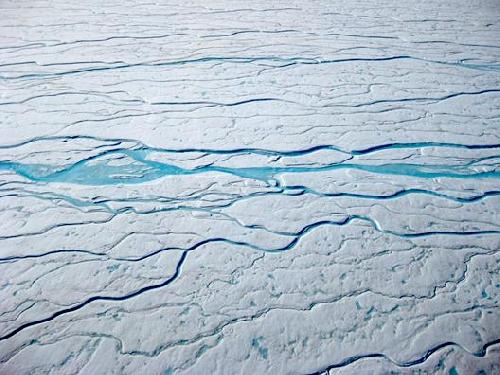
The team was surprised by what they found. An extreme melt that occurred in 2012 caused a layer of solid ice, several metres thick, to form on top of the porous firn in the low elevation areas of the ice sheet. “In subsequent years, meltwater couldn’t penetrate vertically through the solid ice layer, and instead drained along the ice sheet surface toward the ocean,” said Colgan. “It overturned the idea that firn can behave as a nearly bottomless sponge to absorb meltwater. Instead, we found that the meltwater storage capacity of the firn could be capped off relatively quickly.”

As Machguth said, “Basically our research shows that the firn reacts fast to a changing climate. Its ability to limit mass loss of the ice sheet by retaining meltwater could be smaller than previously assumed.”

Because the models scientists use to project Greenland’s sea level rise contribution do not presently take firn cap-off into consideration, it means that Greenland’s projected sea level rise due to meltwater runoff is likely higher than previously predicted. Getting this newly observed physical process into these models is an important next step for the team.

Using unmanned aerial vehicles, Colgan also plans to begin surveying the changes in ice sheet surface reflectance caused by the development of massive ice layers associated with firn cap-off. There are preliminary indications that firn cap-off is also occurring in the ice caps of the Canadian High Arctic.

source: York University

Source: Climate change altering Greenland ice sheet & accelerating sea level rise, says York University prof | Science Codex