Calgary Dominate Canucks In 4-1 Win Burying The Nail Deeper In Vancouver’s Playoff Hopes

CANUCKS BANTER     By Andrew Chernoff    FEBRUARY 6, 2016

The Vancouver Canucks (20-20-12) hosted division opponent Calgary Flames (23-25-3) tonight at Rogers Place, in a key divisional game; the final game of a three game home stand.

Calgary visited Vancouver for their second game in consecutive nights after losing 2-1 at home to the Columbus Blue Jackets on Friday night.

Vancouver was looking for a better finish against Calgary tonight and end their 3 game losing streak, and salvage a victory on their three game home stand.

Coach Willie Desjardins told reporters after the  morning skate, that the Canucks, “have to find ways to win games or we will not stay in the playoff hunt.”

Desjardins added it was time for his players “to really focus on our game”, and not the games of the teams ahead of them or behind them, in their division.

So, how would they do?

Vancouver could not find a way to win, and dealt themselves a serious blow to their playoff chances, as they lost their 4rth consecutive game; including all three games on their brief home stand, as the Calgary Flames out battled and out worked the Canucks to win 4-1.

Emerson Etem had the lone Vancouver goal; Linden Vey had an assist; Alex Burrows had a helper; Ryan Miller stopped 26 of 28 shots for a .929 Sv%.

The first 7:38 of the game had a good pace to it, as their was only been two whistles, with 5:40 between them,and both teams created scoring chances and shots on net, with Calgary having a 5 to 2 advantage.

The Flames would draw a penalty in the Canuck end, with a scoring attempt, to get the first power play of the game. Alex Edler for tripping David Jones at 10:21.

Brandon Sutter got a good scoring attempt shorthanded but was unable to finish the play to put Vancouver up by a goal. Canucks would be successful in killing the penalty.

With 6:55 left in the opening period Calgary was out shooting Vancouver 6-4; out hitting the Canucks 7-3 and leading on face-off wins, 4-2.

With 4:34 left in the period, Luca Sbisa of the Canucks and Micheal Ferland of Calgary would draw offsetting fighting majors.

The Flames were winning all the key battles in the period, as it was nearing an end. Vancouver was trying but Calgary continued to dominate shots, face-offs and the physical side of the game. Canucks were kept wide to the outside, along the boards for the most part, unable to get in front of Hiller.

Game scoreless after the opening period.

After one period:

  • Team Shots On Net: Calgary-7; Canucks-5;  Team Hits: Flames-9; Canucks-6
  • Team Face-offs: Flames-7/13; Canucks-6/13;  Team Blocked Shots: Canucks-5; Flames-3
  • Team Takeaways: Flames-1; Canucks-0;  Team Giveaways: Flames-2; Canucks-1
  • Power Play: Flames:0/1;  Penalty Kill: Canucks: 1/1
  • Individual Shots: 5 Canucks with 1 shot each;   Individual Hits: D. Dorsett: 2 hits
  • Individual Face-offs: H. Sedin: 3/5; B.Horvat: 2/5; B. Sutter: 1/2
  • Teams Corsi For:
    • EV 5v5—>Flames-13; Canucks-12
    • All Strengths—>Flames-15; Canucks-13
  • Canucks Individual Corsi For:
    • EV 5v5—>A.Edler +3; A.Burrows –1; B.Hutton -1
    • All Strengths—>A.Edler +3; B.Sutter +3; J.Virtanen +2

The second period started with more of the same of the first period, with Calgary having an edge on the play over Vancouver.

Approaching the first five minutes, Canucks were just out shooting Calgary 5-4, but Calgary continued to out hit, and dominate the face-off circle, and take their game to the Canucks.

And it would pay off.

The Flames would score the opening goal of the game to take a 1-0 lead. Michael Frolik, his 9th of the season, on a tip-in, assisted by TJ Brodie (23) and Mikael Backlund (18), at 6:25.

After the Calgary goal, Vancouver made an more aggressive effort to get puck action in front of the Calgary net,unlike the opening period, and were succeeding, but the Flames did a great job of boxing out the front of the net and the middle of the slot, frustrating the Canucks as Hiller and the Flames were able to withstand Vancouver swarming the net.

At 15:35 Sam Bennett of the Flames would receive a penalty for slashing Bo Horvat, putting the Canucks on their first power play of the game. Canucks had two shots on the power play but were unable to score.

The middle frame ended with Calgary up in the score, 1-0.

After two periods:

  • Team Shots On Net: Canucks-23; Flames-16;  Team Hits: Flames-14; Canucks-11
  • Team Face-offs: Flames: 14/23; Canucks: 9/23;  Team Blocked Shots: Canucks-9; Flames-8
  • Team Takeaways: Flames-2; Canucks-0;   Team Giveaways: Flames-7; Canucks-2
  • Power Play: Flames-0/1; Canucks-0/1;    Penalty Kill: Flames-1/1; Canucks-1/1
  • Individual Shots: J.Hansen & E.Etem-3 each;   Individual Hits: D.Dorsett-3; B.Sutter-2
  • Individual Face-offs: H.Sedin: 5/10; B.Horvat: 2/6; B.Sutter: 2/5
  • Teams Corsi For:
    • EV 5v5—> Canucks-39; Flames-27
    • All Strengths—> Canucks-44; Flames-30
  • Canucks Individual Corsi For:
    • EV 5v5—> D.Hamhuis +10; H.Sedin +6; J.Virtanen +6; B.Sutter, D.Sedin, J.Hansen: +5 each
    • All Strengths—> B.Sutter +10; D.Hamhuis, H.Sedin, D. Sedin; A.Edler: +9 each

Vancouver entered the final period of the game with a poor record trailing after two periods, and needed to finish around the Calgary net, to pull out a win to keep pace with Arizona, Anaheim and San Jose.

The Canucks needed to dig down deep and find a way to win and that was not evident the  last three previous games.

Calgary made it three periods in a row that they took the play to the Canucks off the period face-off, using their speed to get some offensive zone time and generate some shots on Ryan Miller and around the Canucks net, to give themselves an early two goal lead.

As the Canucks made it to the eight minute mark, Calgary had the edge in shots on net 5-2, while Vancouver had a number of chances that they could not get on net.

Just under 12 minutes left, Calgary scored a goal but it was ruled that their was a glove pass on the play and it was disallowed.

Henrik Sedin was due for a goal, as he came into the game, scoreless in his last 16 games played.

At 10:01, Radim Vrbata of Vancouver received a penalty for hooking Ladislav Smid, putting the Flames on the power play with a great chance to go up by two goals, with the man advantage. Vancouver would kill the penalty giving themselves a chance to work at tying the game.

Calgary was out shooting Vancouver with 6:41 left, being aggressive to keep Vancouver to the outside and keep them from penetrating in front of the net. Very similar to the Columbus and Nashville games.

With less than five minutes left in the game, the Flames would add their second goal of the game when Sean Monahan would score, giving the Canucks a tough set back to overcome to force overtime, with Calgary now leading 2-0.

Monahan, his 16th of the season, on a wrist shot, assisted by Jiri Hudler (21) and Sam Bennett(10) at 15:07.

Soon after getting the two goal lead, Calgary would almost make it 3-0, but the puck would not cross the goal line, and Alex Edler would come to the rescue.

Vancouver would pull Miller for the extra attacker in an effort to make a comeback, and get within a goal, but the Flames would score an empty net goal to disappoint Canuck fans.

Mikael Backland, his 6th, on a wrist shot, at 17:45, unassisted.

Canuck’s Emerson Etem would break Hiller’s shutout, pulling the Canucks within two goals at 3-1 at 18:26.

Etem, his 1rst goal of the season, assisted by Linden Vey (6) and Alex Burrows (8).

With the Canuck net empty a second time for an extra attacker, the Flames would score another empty net goal, at 19:24.

Sam Bennett, his 14th goal, on a wrist shot, assisted by Michael Frolik (11) and TJ Brodie (24).

Canucks on the losing end by a score of 4-1.



Vancouver Hopes To Put Out Flames Tonight In Key Division Match-Up

CANUCKS BANTER     By Andrew Chernoff    FEBRUARY 6, 2016

Canucks Need To Put Calgary Down In Their Pursuit Of A Playoff Spot

screenshot-canucks nhl com 2016-02-06 07-46-19

The Vancouver Canucks (20-19-12) host division opponent Calgary Flames (22-25-3) tonight at Rogers Place, in a key divisional game; the final game of a three game home stand.

The Canucks are 5-3-2 in their last 10 home games; and 6-4-3 overall in their last 13 games.

Vancouver is 6-3-3 against teams in their division; and undefeated against Calgary in regulation in two previous games this season.

Calgary visits Vancouver for their second game in consecutive nights after losing 2-1 at home to the Columbus Blue Jackets on Friday night.

Flames are 2-5-0 in their last 7 games and 3-7-1 in their last 11.

The Flames are one of six teams with 47 points, the fewest in the NHL. The others are Toronto, Winnipeg, Buffalo, Edmonton and Columbus.

Dan Hamhuis will play against Calgary after missing 21 games with facial fractures and will wear a modified helmet. Yannick Weber was put on waivers yesterday to make room on the roster for Hamhuis.

Jake Virtanen will also play against the Flames with Jared McCann being a healthy scratch.

“I feel like training camp is over again, and I’m excited to return”, Hamhuis said about his clearance for game action.

Source: Vancouver Canucks Twitter

VANCOUVER, BC - OCTOBER 10: Bo Horvat #53 of the Vancouver Canucks shoots the puck past goalie Jonas Hiller #1 of the Calgary Flames while Dougie Hamilton #27 and Mark Giordano #5 of the Calgary Flames battle with Alexandre Burrows #14 in front of the net in NHL action on October, 10, 2015 at Rogers Arena in Vancouver, British Columbia, Canada. (Photo by Rich Lam/Getty Images)

VANCOUVER, BC – OCTOBER 10: Bo Horvat #53 of the Vancouver Canucks shoots the puck past goalie Jonas Hiller #1 of the Calgary Flames while Dougie Hamilton #27 and Mark Giordano #5 of the Calgary Flames battle with Alexandre Burrows #14 in front of the net in NHL action on October, 10, 2015 at Rogers Arena in Vancouver, British Columbia, Canada. (Photo by Rich Lam/Getty Images)

CANUCKS PREVIOUS GAME

Linden Vey scored his 2nd goal of the season (2-3=5 in last 8 games played);  Bo Horvat had an assist (7-6=13 in last 12 games played); Sven Baertschi picked up a helper (4-3=7 in last 11 games played); and Ryan Miller stopped 27 of 28 shots for a .964 Sv%., but it was not enough as the Canucks ended the game on the short end of the score, losing 2-1 to Columbus in a shoot out; their second straight loss, by the same score, on their current 3-game home stand.

Miller is now 1-3-2 in his last 6 game starts, with a 2.27 GAA, and .934 Sv%.

In his last 8 game starts at home, Miller is 4-3-1 with a 2.01 GAA, and .930 Sv%.

CANUCKS JOTTINGS

  • Only Toronto has fewer wins (19) than Vancouver (20) in the NHL.
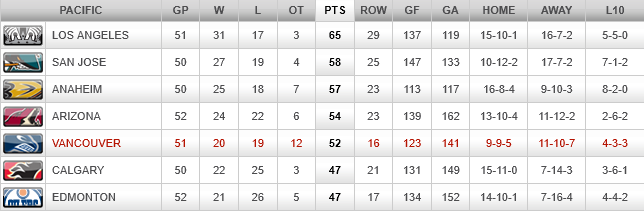
  • Canucks have the fewest wins (20) in the Pacific division, and are just 5 points ahead of Calgary and Edmonton. Calgary has 2 games; Edmonton1 game, in hand on Vancouver.
  • Canuck Point Leaders In 2016:
    • Bo Horvat: 7-6=13 in 13 games played
    • Daniel Sedin: 5-2=7 in 13 games played
    • Chris Tanev: 1-6=7 in 13 games played
    • Linden Vey: 2-5=7 in 13 games played
    • Sven Baertschi: 4-3=7 in 11 games played
  • Canuck Even Strength Goal Leaders:
    • Daniel Sedin: 15; Jannick Hansen: 14; Sven Baertschi: 8
    • Radim Vrbata: 7; Bo Horvat: 6; Jared McCann: 6
  • The Canucks have registered at least a point in 14 of 15 games (7-2-9) where Sven Baertschi has notched at least a point.
  • Power play is 1 for 11 in last 7 games.
  • Penalty kill: 24 for 27 for 88.9 percent in last 11 games.
  • Vancouver ended their consecutive streak at home of not winning the face-off battle against their opponent, at 16 games, as they won 31 of 56 face-offs for 55.4 percent, including the overtime, last game against Columbus. At even strength, in regulation play, Vancouver was only successful 48 percent of the time.
  • Canucks ended their consecutive games streak without a power play goal at 6 games last game against Columbus.
  • Vancouver ended their consecutive streak at home of opponents scoring the opening goal at 8 games, with the Linden Vey goal last game against Columbus.
  • Canucks are averaging 2.33 goals per game. For an 82 game schedule the estimate is Vancouver will finish with 191 goals. The least number of goals ever scored by a Vancouver team in a full season of 82 games are 192 by the 1998-99 Canucks. 
    • Vancouver need to average 2.387 goals per game over their last 31 games for a minimum 193 goals, to avoid 2015-16 being the season for the least number of goals ever scored by a Vancouver team.
  • Vancouver has points in 8 of its last 12 (6-4-2=14 pts) & 13 of its last 21 games (10-8-3=23 pts).

CALGARY FLAMES NOTES

  • Calgary are 4-8-3 against Pacific division opponents this season.
  • Calgary ended a three-game losing streak by defeating the Carolina Hurricanes 4-1 at home on Wednesday, in their first game after the All-Star break.
  • Karri Ramo in his last 21 game starts is 8-10-0 over that span with a 2.22 GAA and a .920 save percentage. He has held the opposition to two or fewer goals in 12 of those outings.

PACIFIC DIVISION STANDINGS

screenshot-canucks nhl com 2016-02-06 07-26-50

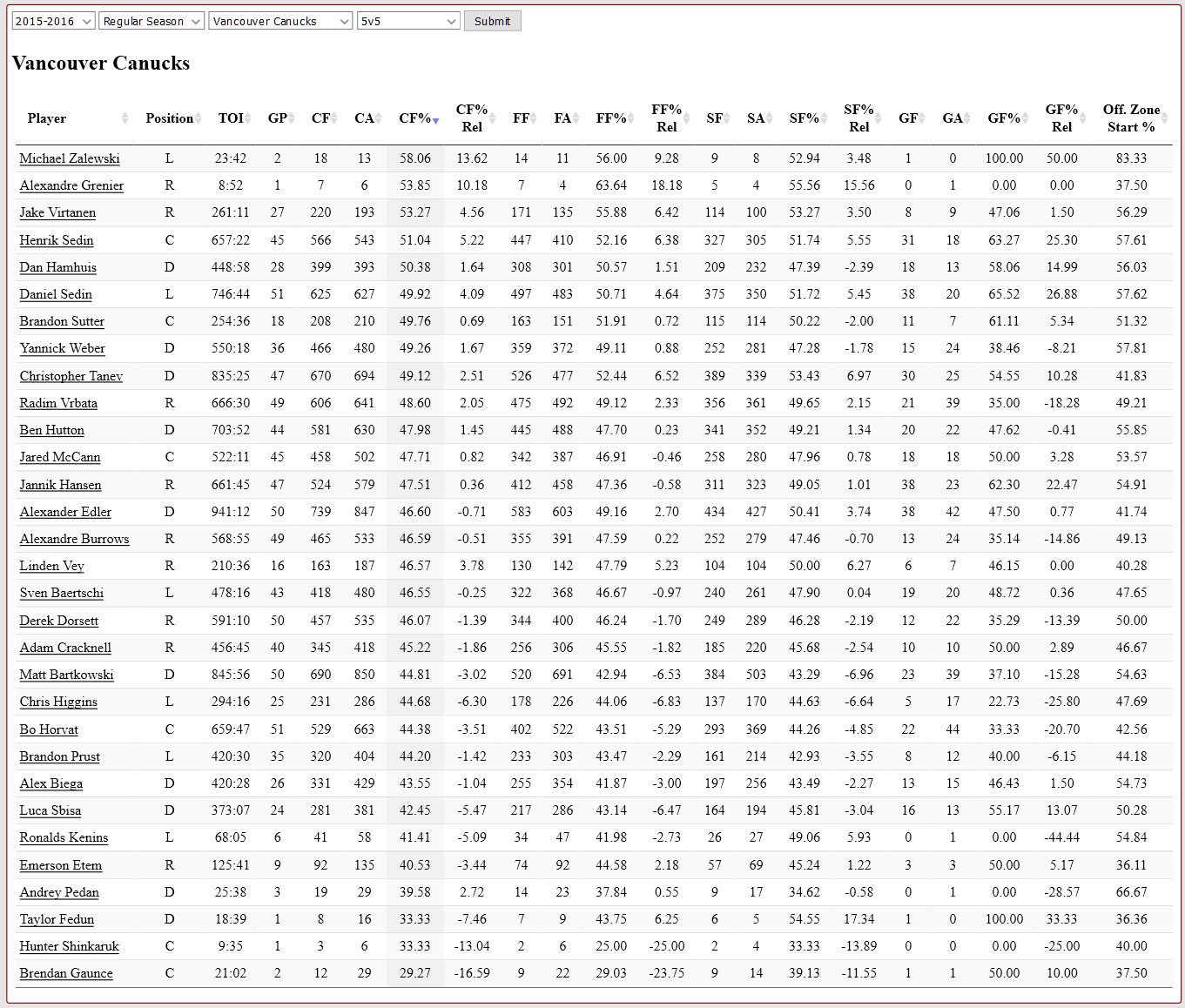
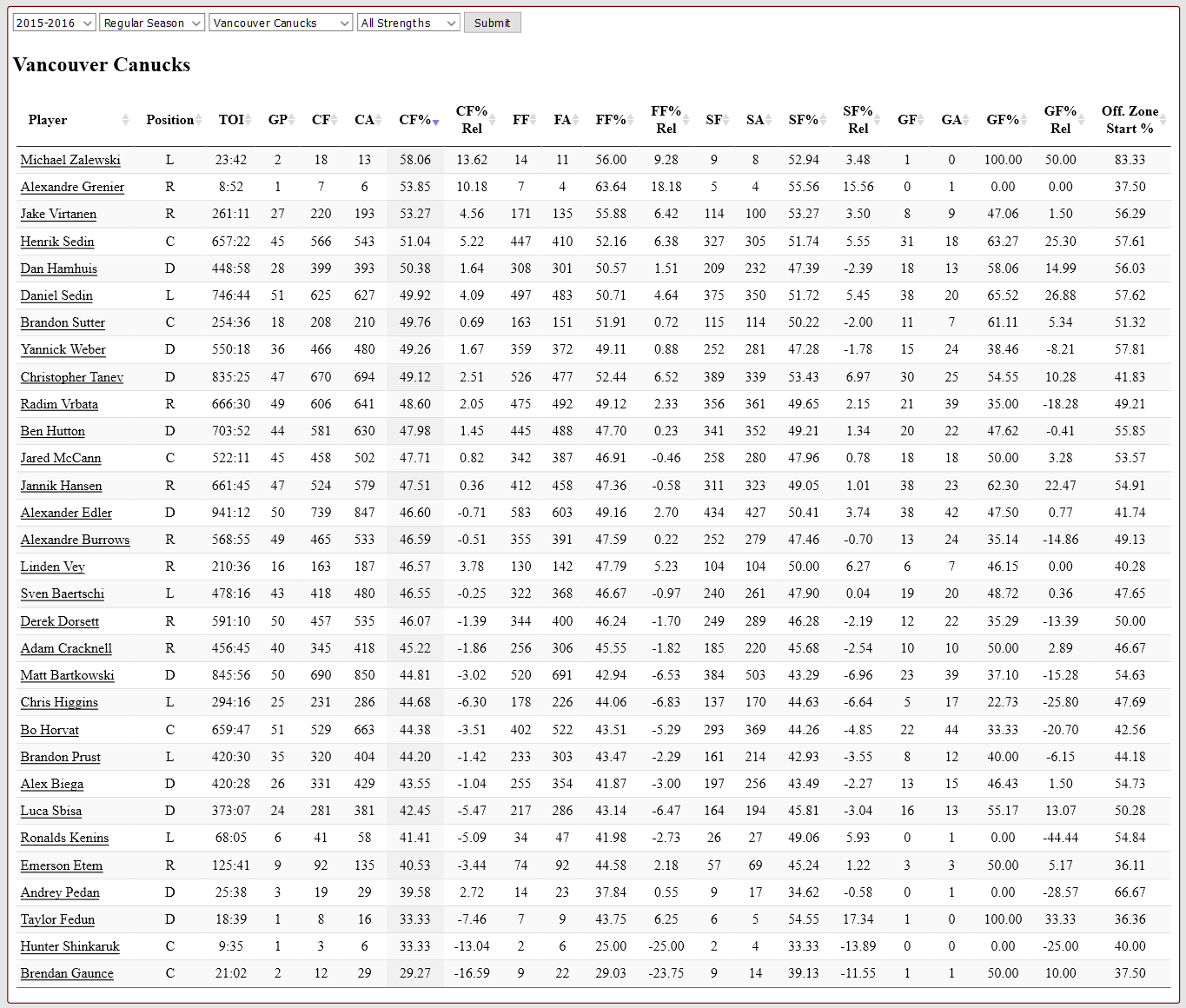
VANCOUVER CANUCKS ADVANCED STATISTICS

FEBRUARY 1, 2016  TO  FEBRUARY 5, 2016

EVEN STRENGTH 5V5

ALL TEAM STRENGTHS

CANUCKS PLAYERS ADVANCED STATS

EVEN STRENGTH 5V5

ALL STRENGTHS

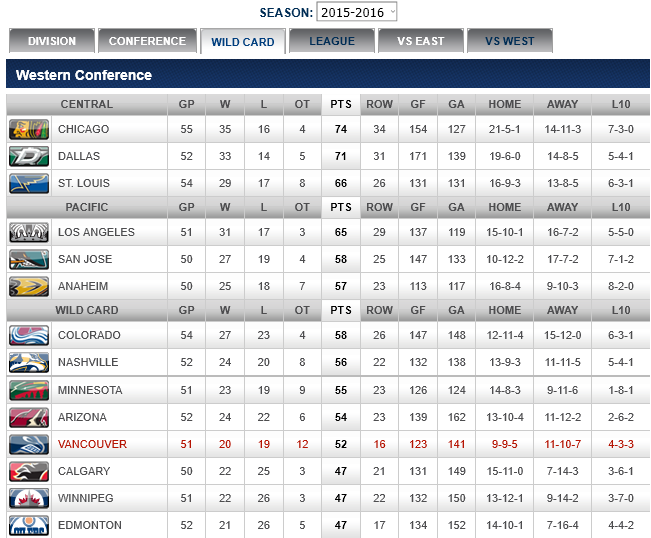
WESTERN CONFERENCE WILD CARD STANDINGS

screenshot-canucks nhl com 2016-02-06 07-28-06

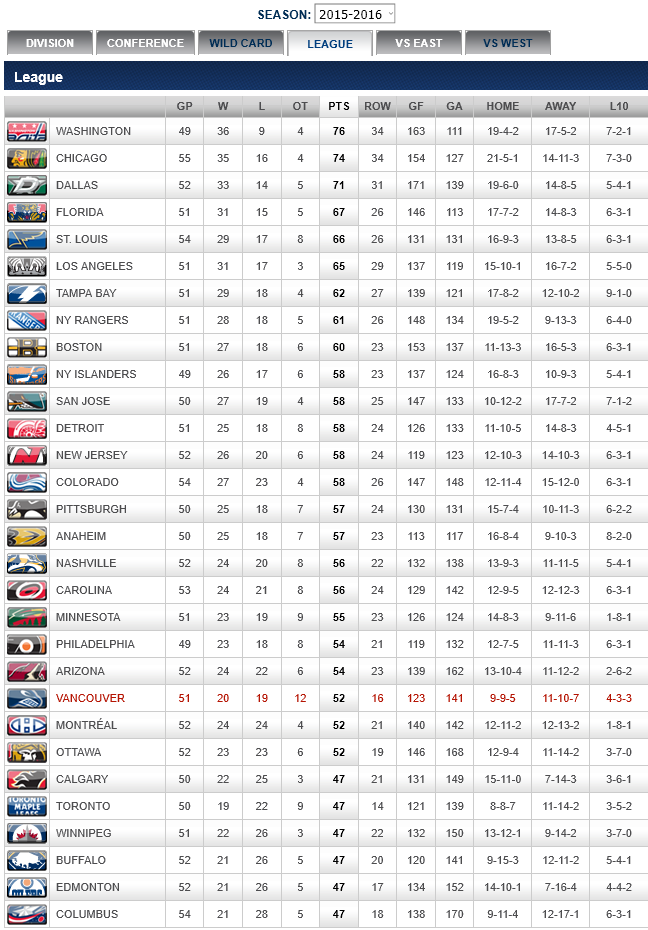
NATIONAL HOCKEY LEAGUE STANDINGS

screenshot-canucks nhl com 2016-02-06 07-28-55

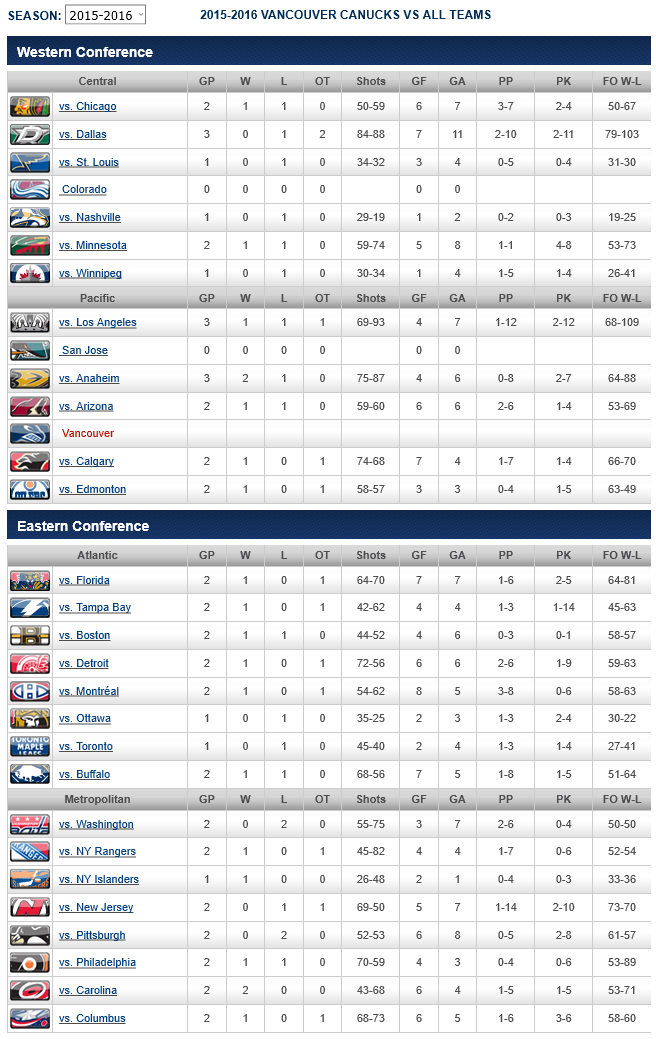
2015-2016 VANCOUVER CANUCKS VS ALL TEAMS

screenshot-canucks nhl com 2016-02-05 10-51-48

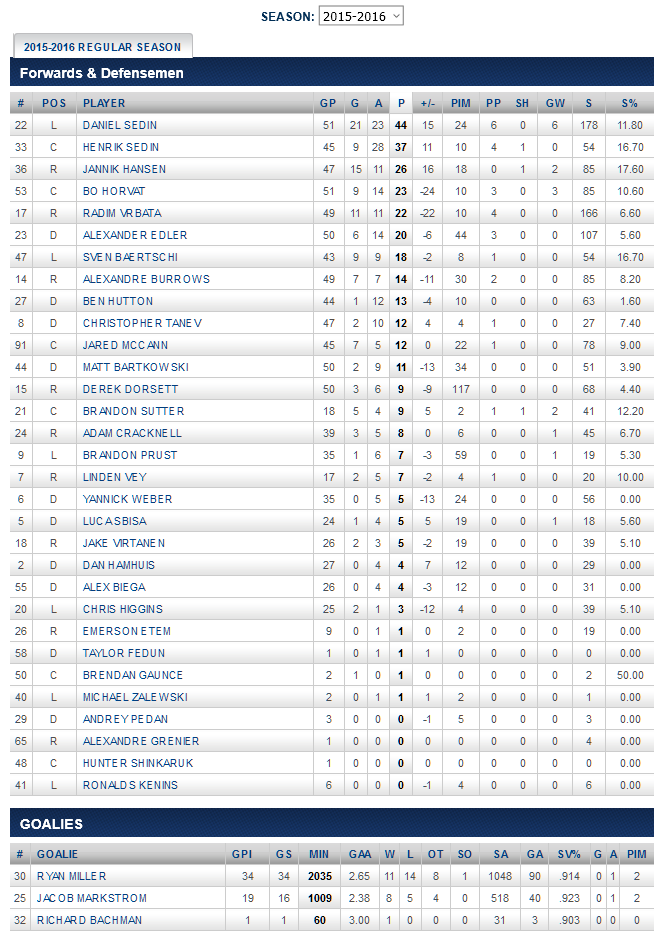
CANUCKS PLAYER STATS

screenshot-canucks nhl com 2016-02-04 22-24-30

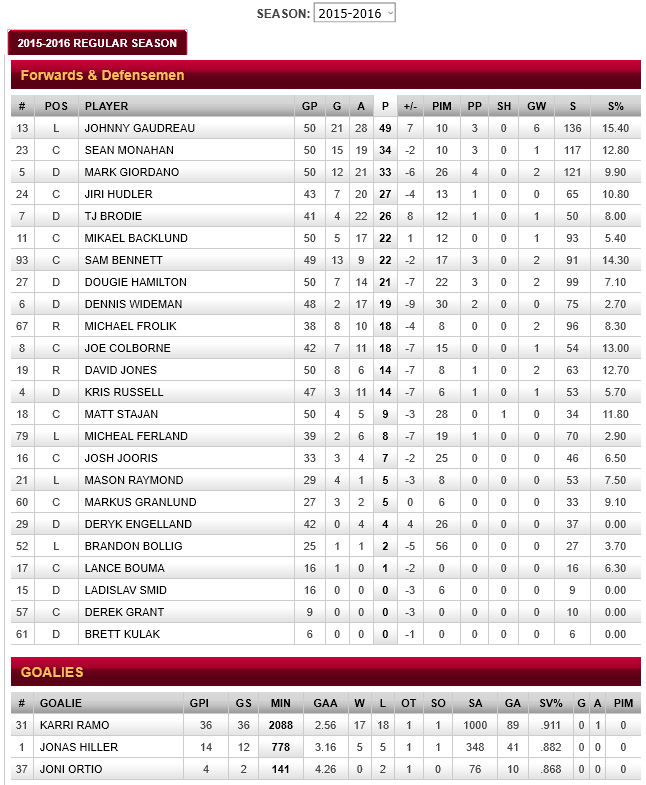
FLAMES PLAYER STATS

screenshot-flames nhl com 2016-02-06 07-35-48

STATISTICS COURTESY OF THE NHL AND VANCOUVER CANUCKS


Canucks Lack Of Scoring And Inability To Rally Defensively Hamper Playoff Chances

CANUCKS BANTER     By Andrew Chernoff    FEBRUARY 5, 2016

As the Canucks move into the last 31 games of the season, a couple of things become fact after much speculation as the season has progressed.

Vancouver has seen a drop in even strength goals, power play goals, power play opportunities; and the increased inability to compensate defensively for the lack of scoring, like the Anaheim Ducks have been able to do this season.

The Canucks goals against has been consistent though, up to this point of this season.

There is an old saying that the best defense is a good offense:

The adage is used to note that success can hinge on an effective offense that keeps the puck on the other team’s side of the field, thus not only creating scoring opportunities but preventing the opposing team from scoring.

Source: https://en.wikipedia.org

You don’t need to look at Canuck advanced statistics to get the idea that Vancouver has been sub-par offensively but it really does make it crystal clear in so many ways, besides being remarkably depressing. So I will use regular stats that most of us are familiar with.

CANUCKS POWER PLAY SCORING AND OPPORTUNITIES OVER FIRST 50 GAMES

  • Games #1 to #25:
    • Vancouver was 18 for 91, for 19.8 percent. Team Record: 9-9-7; 68 GF & 68 GA.
    • PP goals accounted for 26.5 percent of all goals scored.
  • Games #26 to #50:
    • Vancouver was 8 for 64, for 12.5 percent. Team Record: 11-10-4; 50 GF & 69 GA.
    • PP goals accounted for 16 percent of all goals scored.
  • Comparison/Contrast Between First 25 Games and Second 25 Games:
    • 10 less man advantage goals scored and 27 less man advantage opportunities.
  • Conclusion:
    • Canucks need to draw more penalties like they were the first two months of the season and improve their capitalization of their man advantage opportunities when they do so. It’s clear that power play goals contribute immensely to to the percentage of all goals scored, and Vancouver are not scoring enough as it is at even strength to compensate for any loss of goals on the power play.

CANUCKS EVEN STRENGTH SCORING OVER FIRST 50 GAMES

  • Games #1 to #25:
    • Vancouver had 48 even strength goals. Team Record: 9-9-7; 68 GF & 68 GA.
    • EVS goals accounted for 70.6 percent of all goals scored.
  • Games #26 to #50:
    • Vancouver had 41 even strength goals. Team Record: 11-10-4; 50 GF & 69 GA.
    • EVS goals accounted for 82 percent of all goals scored.
  • Comparison/Contrast Between First 25 Games and Second 25 Games:
    • 7 less man even strength goals scored and 18 less goals scored overall.
  • Conclusion:
    • While Vancouver was getting scored on at the same rate, the Canucks total goal production dropped off by 26.5 percent and their EVS goals dropped by 14.6 percent.
    • Coupled with 10 less man advantage goals scored and 27 less man advantage opportunities, as illustrated above, the Canucks scoring is being severely impacted by the lack of burying the puck in the net, especially on the power play.

CANUCKS GOALS AGAINST OVER FIRST 50 GAMES

  • Games #1 to #25:
    • Vancouver had 68 goals against. Team Record: 9-9-7.
    • Team GAA of 2.72. Team Sv% of .923.
    • Total shots against: 737
  • Games #26 to #50:
    • Vancouver had 69 goals against. Team Record: 11-10-4.
    • Team GAA of 2.76. Team Sv% of .824
    • Total shots against: 837
  • Comparison/Contrast Between First 25 Games and Second 25 Games:
    • +1 goal against and a -.099 drop in Sv%.
    • +100 shots against.
  • Conclusion:
    • Along with the appearance of, or fact of, being unable to reduce goals against and shots against, sufficiently to compensate for the lack of goal production, this has left the Canucks with a predicament.

Vancouver are running out of games to execute a timely turnaround that will result in a playoff appearance at the end of this season.

Canucks need to improve even strength goal production; get back to drawing penalties and capitalizing on them as they did early in the season; reduce their goals against; reduce their shots against; tighten up defensively as a team until the goals start to come.

On a positive note, Vancouver’s penalty killing has improved. After the initial 25 games played, they were 61 for 79 for 77.2 percent.

The next 25 games they were 67 for 80 for 83.8 percent.

Now it’s just a matter of working on the rest of the things, and the Canucks Stanley Cup Parade will be in Vancouver quicker than we might think.


OECD Study: The gap between Canada’s rich and poor is significantly bigger than previously thought

It looks like inequality in Canada is much higher than previously thought.

A recent study published by the Organisation for Economic Co-operation and Development, a major voice on global economic policy representing 34 developed countries, suggests past measures of inequality have failed to capture the true scale of the growing gap between the rich and the poor.

The study, authored by OECD economists Nicolas Ruiz and Nicolas Woloszko, explains that past measures of income inequality relied on data from household surveys that, although useful, are “well-known” to under-report top incomes, something that “can lead to [a] large bias in the measurement of inequality.”

To get a clearer picture of how rich the wealthy truly are, the OECD looked at tax data to fill in the gaps for top incomes.

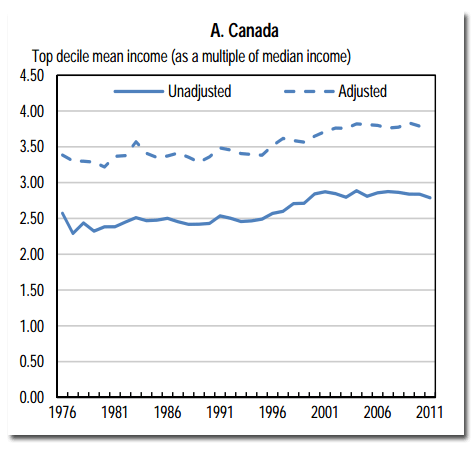
The results? Canada’s top 10% of income earners were previously thought to earn around three times more than median income earners, but the OECD’s new numbers suggest they’re actually earning closer to four times more than those in the middle:

oecd-inequality-canada.png

The same also rings true of top earners around the world.

“The results point to a significant increase of the level of inequality measured by standard statistics based on official figures,” the OECD study concludes.

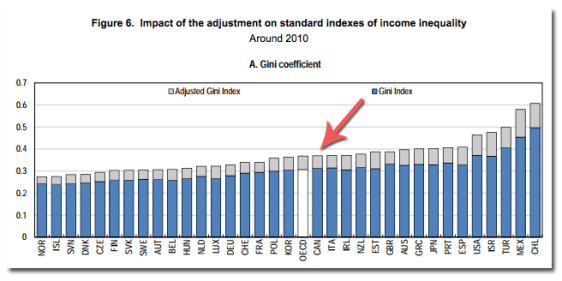
Using the Gini coefficient (a commonly used measure of inequality), the OECD finds inequality in Canada ranks slightly above the average in other OECD countries:

oecd-inequality-world-arrow.png

A 2014 survey commissioned by the Broadbent Institute found Canadians “vastly underestimate how skewed the distribution of wealth actually is.”

Apparently the income gap is bigger than previously thought too.

Photo: Pixabay. Used under Creative Commons license.

Source: OECD Study: The gap between Canada’s rich and poor is significantly bigger than previously thought

Job numbers highlight need for urgent EI reform

Friday, February 5, 2016

Canada’s largest labour organization says today’s job numbers from Statistics Canada highlight the need for the kind of economic stimulus that urgently needed Employment Insurance (EI) reforms would produce now.

The job market was stagnant in January and unemployment rose to 7.2 percent. In Alberta, unemployment rose to 7.4 percent, the first time it has been above the national average since 1988.

Over the past year, unemployment has risen by 123,000 workers across the country: more than half of these (69,000) are in Alberta. Most job creation has been in Ontario, while other provinces continue to struggle with slack labour markets.

Self-employment has grown twice as fast (1.3 percent) as employment (0.6 percent). Private sector job growth continues to be weak, adding only 30,000 jobs over the past 12 months — a growth rate of only 0.3 percent. Two sectors account for most job growth over the last year — health care and social assistance added 90,000 positions, and professional, scientific, and technical services added 38,000 positions.

“These job numbers and the slow economic growth we’re seeing now demonstrate the need for the kind of immediate stimulus that would come from urgently needed fixes to the employment insurance program,” said CLC president Hassan Yussuff.

The Liberal government has promised to review and improve the program, but Yussuff says there are urgently needed reforms that can be immediately implemented.

“Fewer than 40 percent of unemployed Canadians – and fewer than 37 percent of unemployed Albertans – are receiving EI,” said Yussuff. “Part of the problem is that workers run out of benefits before they can find a new job.”

The immediate reforms the CLC hopes to see include:

  • Temporarily extending EI benefits for an additional five weeks to help displaced workers who risk exhausting their benefits while hunting for hard-to-find jobs. This would be especially helpful in hardest hit regions where jobs are especially scarce.
  • Returning to the previous definition of “suitable employment” and restoring the “best 14 weeks” pilot programs that created a single national standard for determining benefit levels.
  • Eliminating the eligibility requirement of 910 hours of insured employment for new entrants and re-entrants to the labour market to make access to EI fairer, especially for young workers and new Canadians.
  • Hiring staff to make up for years of devastating cuts under the Conservatives to help eliminate unacceptable delays faced by workers trying to get benefits approved, decisions on appeals, or questions answered.
  • Implementing the election promise for an increase of $200-million in funding for provincial literacy and essential-skills training aimed at those who don’t qualify for EI. While it’s not part of EI, it would help where it’s needed most.

“It takes time for infrastructure spending to kick in and create jobs, so let’s act now to stop penalizing unemployed workers, get them the benefits they paid into and so urgently need, and help them start contributing to their local economies again,” said Yussuff.

           Labour Force Survey

Source: Job numbers highlight need for urgent EI reform | Canadian Labour Congress