Tata Steel jobs: David Cameron says there are ‘no guarantees’ on steel crisis

David Cameron says the government is “doing everything it can” to save thousands of steel jobs – but warned there were “no guarantees of success”.

Speaking after chairing crisis talks on Tata Steel’s decision to sell its UK business, the PM said nationalisation was not the answer but the government was “not ruling anything out”.

Ministers are under pressure to secure the future of the threatened plants.

Labour criticised their handling of the crisis, telling them to “get a grip”.

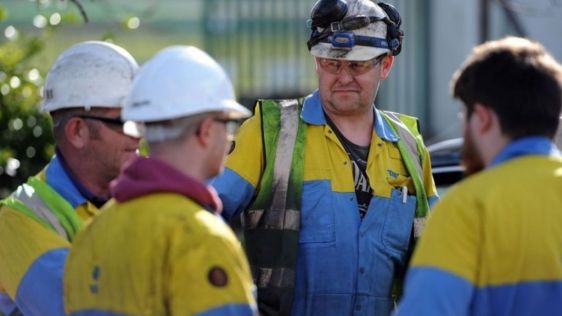
Tata Steel’s UK business – which directly employs 15,000 workers and supports thousands of others – includes plants in Port Talbot, Rotherham, Corby and Shotton.

The Port Talbot plant – which employs 5,500 people – is said to be losing £1m a day.

Tata Steel UK: What are the options?

Analysis: Warning over defence impact

What next for Tata Steel workers?

Port Talbot closure ‘could hit 15,000’

What’s going wrong with Britain’s steel industry?

Mr Cameron defended the government’s handling of the crisis after Labour said it was “missing in action”.

Shadow business secretary Angela Eagle said “the danger signs have been flashing red but have been largely ignored by the government” and accused the PM of having “failed to show any leadership”.

Mr Cameron said the situation at Port Talbot was of deep “concern” and said the steel jobs were “vital” to workers’ families and the communities.

“The government will do everything it can working with the company to try and secure the future of steelmaking in Port Talbot and across our country. It’s a vital industry,” he said.

‘All the options look difficult’

Norman Smith, BBC assistant political editor

Port Talbot steelworks

For all the bold talk, privately ministers are deeply apprehensive about saving the steel industry.

Why? Well, all the options look difficult.

Finding a buyer would be the preferred solution. But with Port Talbot losing £1m a day who would want to take it over?

A worker-management buyout is possible but their turnaround plan would require £300m of investment.

Port Talbot could be “mothballed” to secure more time to find a buyer but that would still mean laying off all but a handful of employees.

And taxpayer support – short of nationalisation – would almost certainly fall foul of EU state aid rules.

But there is perhaps an even more pressing reason ministers are sounding increasingly cautious.

They simply don’t know what Tata is up to.

Despite repeated requests ministers have been unable to secure a promise that the steel plants will not be closed within a few weeks.

Ministers insist they will need months to put a rescue plan in place.

Privately some in government fear the reason Tata won’t say is because they are not interested in finding a buyer.

Why, they ask, would Tata want to sell their steel plants to a competitor?

In other words, Tata may already have determined the fate of the British steel industry and those who work in it – whatever option the government eventually decides to pursue.

Speaking on a visit to Lebanon, Foreign Secretary Philip Hammond said a “sustainable” solution was needed.

But he added: “To be sustainable it has to be a solution that recognises the context and the reality of a world which is drowning in an oversupply of steel and we can’t simply ignore that – just continuing to produce steel for which there is not adequate demand isn’t the answer.

“So it has to be a more nuanced solution that focuses on supporting the communities who are most affected by this oversupply in the world steel market.”

Speaking on BBC Radio 4’s Today programme Unite general secretary Len McCluskey said the UK was in the grip of an “industrial crisis of enormous proportions”.

He called for the creation of a steel taskforce and for the government to intervene to save the steel industry like it did the banks during the financial crisis saying EU state aid rules had not prevented Italy or France from “protecting” their steel industries.

Mr McCluskey also warned Tata against a “fire sale” of its UK steel plants.
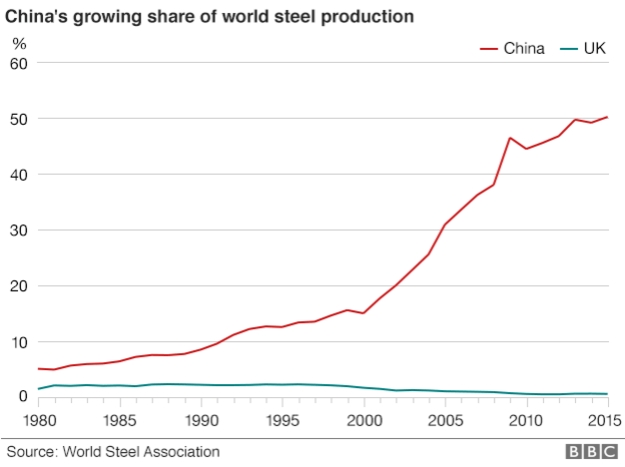
Chart showing Chinese steel production

Shadow chancellor John McDonnell said the government “should nationalise to stabilise” saying this would involve covering the plant’s costs in the short term to help a new buyer turn it around.

Mr McDonnell said the government should “bring forward the support that was expected in this budget and didn’t happen” about reducing business rates, which he said were “five to seven times” higher in the UK than Europe.

Business Secretary Sajid Javid was not at Thursday morning’s meeting. He has cut short an official visit to Australia to return to the UK.

It is understood the government is looking at offering loan guarantees to potential buyers and much tighter rules on procurement to ensure major British projects are obliged to buy British steel.

Steel production makes up 1% of Britain’s manufacturing output and 0.1% of the country’s economic output.
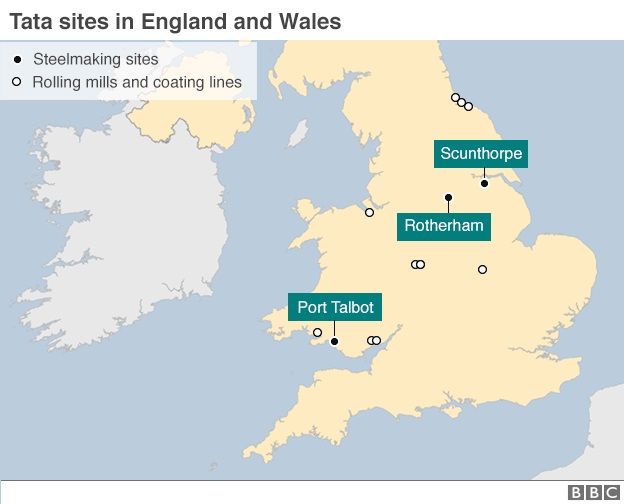
Map

Mr Cameron said ministers had been working “for months” to save the industry and said the government had taken action on energy costs.

But ministers have also been accused of opposing EU moves to impose higher tariffs on Chinese steel entering Europe.

China has been accused of “dumping” cheap steel on overseas markets which is being partly blamed for the problems facing the UK steel industry.

Labour MP Stephen Kinnock has called for an immediate injection of government money to ensure the Port Talbot plant – which is in his Aberavon constituency – keeps going while its future lies in the balance.

A number of Eurosceptic Conservative MPs have said the government should not rule out subsidising the industry. This would be in contravention of EU rules restricting so-called state aid.
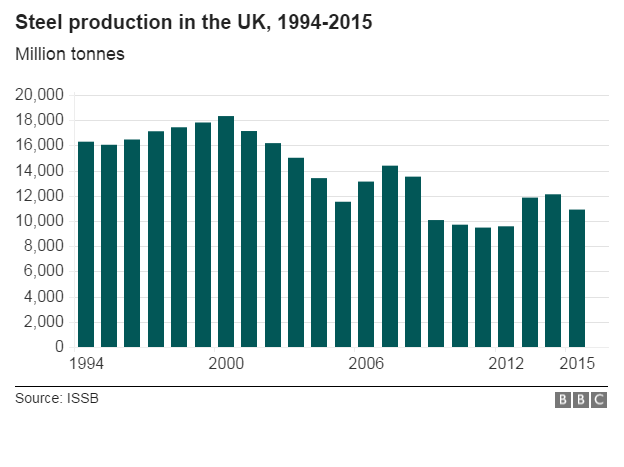
Chart showing steel production in the UK

Venture capitalist Jon Moulton, who tried to rescue MG Cars when it was put up for sale by BMW, told Today saving the plants was “probably mission impossible” as a “very, very large amount of money would need to go in to come up with any chance of a way forward”.

There are also warnings that the end of steel production in Port Talbot would severely undermine Britain’s defence capability and its status as a leading military power.

Lord West, a former First Sea Lord, has argued that all countries that are members of the UN Security Council have major steel plants to support their defence industry.

“I cannot think of another major military power that doesn’t have its own indigenous steel production capabilities,” he told the BBC.

Source: Tata Steel jobs: David Cameron says there are ‘no guarantees’ on steel crisis – BBC News

Agricultural fungicides are ‘bad news for neurons’, study suggests

Strobilurin fungicides have only been approved for use in the past 20 years, and are sprayed in increasing quantities to protect crops such as cabbages, spinach, lettuce, kale, tomatoes, apples, pears and grapes. Photograph: Ian Dagnall/Alamy

Fungicides caused mouse cells to show changes similar to those seen in autism and Alzheimer’s, although a definite link to the disorders has not been proven.

Modern fungicides that are sprayed on fruit and vegetables have come under fresh scrutiny after scientists found they caused similar genetic changes in mouse neurons to those seen in autism and Alzheimer’s disease.

Researchers exposed dishes of the brain cells to more than 300 different pesticides and fungicides and found that one class of fungicides, the strobilurins, produced patterns of genetic changes often seen in the human conditions.

Scientists at the University of North Carolina in Chapel Hill hoped the experiment might shed light on the kinds of substances in the environment that contribute to cases of autism. To their surprise, they found compounds that produced some genetic hallmarks of autism and neurodegenerative diseases at the same time.

The strobilurins have only been approved for use in the past 20 years, more than half a century after the first individual diagnosed with autism was announced in the medical literature. Since the fungicides arrived on the market, they have been sprayed in increasing quantities to protect crops such as cabbages, spinach, lettuce, kale, tomatoes, apples, pears and grapes.

While the fungicides produced autism-like and Alzheimer’s-like signatures in the way genes are expressed in mouse neurons, the relevance of the changes is unclear: the scientists have no evidence that the chemicals contribute to either condition.

“The study was designed to try and identify chemicals that could cause autism, but we in no way say these things do cause autism,” said lead scientist, Mark Zylka, whose study appears in Nature Communications.

“What this work provides is evidence that these chemicals are bad for neurons. They turn the same genes on or off that you see not only in autism brains, but also in neurodegeneration,” he added.

Strobilurins work by disrupting mitochondria, the tiny structures that live inside cells and ensure they have enough energy to function properly. Tests on the mouse neurons revealed that the compounds dampened down the activity of genes involved in synaptic transmission, the mechanism by which neurons talk to each other. Meanwhile, the activity of other genes linked to inflammation in the nervous system ramped up.

Further tests showed that exposure to the fungicides caused mouse neurons to churn out more free radicals, which are highly-reactive particles capable of damaging cellular machinery around them. The fungicides caused yet more disruption to structures called microtubules, changes that could affect the ability of mature neurons to communicate, and hamper the normal movement of neurons in the developing brain.

“We don’t know what, if anything, exposure to these new chemicals will do for autism risk or neurodegeneration. There are lots of chemicals that are bad for neurons in a dish,” Zylka said. “The question is does it get into our bodies at levels that are sufficient to get into the brain and cause some of the effects we see in these cultures? It’s definitely on our food at pretty high levels.”

Prior to starting the project, Zylka said he did not pay much attention to whether he was buying organic or conventionally grown food. But over the course of the study, his perspective changed. “These fungicides are bad news for neurons. So I now purchase organic whenever possible, and especially for my young kids. I would prefer not to be exposed to chemicals like this, especially after seeing what they do to neurons,” he said.

Far more research is needed to learn whether the fungicides pose any risk to human health, but Zylka’s screening procedure could already help environmental agencies highlight potentially harmful substances for closer study.

Jeannie Lee, a professor of genetics at Harvard Medical School, who was not involved in the work, said the study should serve as “a wake-up call to regulatory agencies and the medical community.” She added that the research had “wide-ranging implications, not only for autism and diseases such as Parkinson’s and cancer, but also for the health of future generations.”

Carol Povey, director of the Centre for Autism at the National Autistic Society, said: “This new study confirms again that the causes of autism involve many complex and interacting factors, including genetics, the environment and the development of the brain.

“We urge that the results of this study are digested thoughtfully, and that people do not worry unnecessarily. As the author has made clear, this study absolutely does not mean that chemicals cause autism, nor can we understand fully the risks that these chemicals may have for the human brain until further studies are carried out.

“What is important for the more than 1 in 100 people on the autism spectrum is to make sure that they have access to the right support from people who understand autism. That’s why the National Autistic Society is launching the biggest ever autism awareness campaign this Friday to help the public learn more about the 700,000 autistic people in the UK.”

Source: Agricultural fungicides are ‘bad news for neurons’, study suggests | Science | The Guardian

Newly-Released Documents Describe ‘Rampant’ Cannibalism at Nazi Concentration Camps

March 31, 2016 | 5:29 am

Cannibalism, drowning, and crucifixion: just some of the horrors described in first-hand accounts of British people’s experiences at the hands of the Nazis during World War Two which were released on Thursday in the UK.

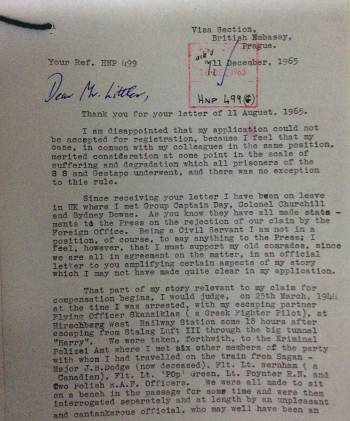
The long-sealed testimonies — contained in applications that UK nationals made to a Anglo-German Nazi Persecution Compensation scheme between 1964 and 1965 — also reveal the struggle of many of those who suffered to meet the strict criteria necessary to get renumeration.

Out of 4,206 people who applied for compensation, only 1,015 were successful. Many were subjected to months or even years of questioning about their experiences or backgrounds before being refused.

The accounts given included one from Harold Le Druillenec, who was the only British survivor of Bergen-Belsen concentration camp, where he was imprisoned for 10 months. Le Druillenec went on to give evidence at the Belsen Trials.

He wrote: “All my time here was spent in heaving dead bodies into the mass graves kindly dug for us by ‘outside workers’ for we no longer had the strength for that type of work which, fortunately, must have been observed by the camp authorities.

“Jungle law reigned among the prisoners; at night you killed or were killed; by day cannibalism was rampant.

“The bulk of Auschwitz had been transferred to Belsen when I arrived and it was here that I heard the expression: ‘There is only one way out of here — through the chimney,'” he said, referring to the crematorium and gas chambers.

He recalled different “means of putting inmates to death includ[ing] beating, drowning, crucifixion, hanging in various stances etc,” and said attempted suicide “was a major crime for the choice of means of death was not ours, and as there was no privacy at all I cannot recall a single successful suicide.” More than 70,000 people died at the Bergen-Belsen camp between 1941 and 1945.

Le Druillenec lost half his body weight during his imprisonment and suffered the after effects of dysentery, scabies, malnutrition, and septicaemia for alsmost a year after his release. He eventually awarded compensation to the value of £1,835 ($2,637, around £30,000/$43,000 today) by the Foreign Office.

One applicant, Albert Slack was a private in the 4th Royal Berkshire regiment when he was taken prisoner in May 1940 and imprisoned in various camps, including the Theresienstadt (Terezin) concentration camp where he was forced to dig graves. After being freed and returning home he was “hard to get on with” and his family did not want anything to do with him, according to his file. He was awarded £340 ($488, worth around £6,000/$8,625 today) in compensation for the loss of a finger.

Those who were refused compensation included Lieutenant Bertram James, a British officer who was involved in the celebrated “great escape” from the Luftwaffe-run prisoner-of-war campStalag Luft III. James was told by UK officials that he did not suffer “the inhuman and degrading treatment of a concentration camp proper.” His case was later picked up by the British parliament and press, and eventually he received £1,192 ($1,713, worth around £21,600/$31,000 today).

Another person refused compensation was naturalized Briton Elizabeth Spira, who was imprisoned at a Czech camp at Theresienstadt. She described horrible scenes at that camp, where she said children “could not eat for fear [of] what we will do with them, as they had seen their parents never came out any more.”

She said: “We tried to clean [the children] in the bathhouse. They refused to go in and they held on to the door handle, when we tried to carry them in. In the end, I took the smallest child, we went into the bathhouse, gave [the child] a good hot bath… soon [the children] recovered completely only to be sent back… to be gassed.”

The money was awarded from a pot of £1 million ($1.44 million) given to the UK by the German government for victims of Nazi persecution — which was defined by the UK Foreign Office as “illegal detention in a concentration camp or comparable place for the purpose of the infliction of deliberate and organised suffering, torture, or extermination in furtherance of Nazi ideology.”

Criteria used included physical disability resulting from the detention and how long the person had been held.

Many applicants were refused because they were either not British citizens at the time of the persecution or held dual nationality. Others were refused because they were soldiers and thus legally interned as prisoners of war, or because the Foreign Office deemed them to have experienced a case of suffering, but not persecution.

Source: Newly-Released Documents Describe ‘Rampant’ Cannibalism at Nazi Concentration Camps | VICE News

Vancouver Finishes Up Season Series Against Sharks Thursday Night In San Jose

VancouverCanucksCANUCKS BANTER     By Andrew Chernoff    MARCH 30, 2016

The Vancouver Canucks (27-36-13)  face the San Jose Sharks (43-28-6)  in the second of two consecutive games between the two teams, on Thursday night at the SAP Center in San Jose, to finish up their 5-game season series against the Sharks.

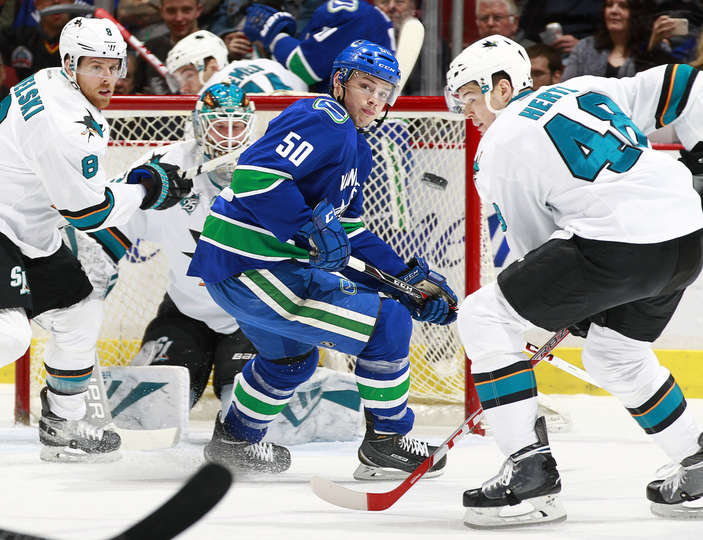
VANCOUVER, BC - MARCH 29: Joe Pavelski #8 of the San Jose Sharks and Brendan Gaunce #50 of the Vancouver Canucks watch the puck in front of Tomas Hertl #48 of the Sharks during their NHL game at Rogers Arena March 29, 2016 in Vancouver, British Columbia, Canada. (Photo by Jeff Vinnick/NHLI via Getty Images)

VANCOUVER, BC – MARCH 29: Joe Pavelski #8 of the San Jose Sharks and Brendan Gaunce #50 of the Vancouver Canucks watch the puck in front of Tomas Hertl #48 of the Sharks during their NHL game at Rogers Arena March 29, 2016 in Vancouver, British Columbia, Canada. (Photo by Jeff Vinnick/NHLI via Getty Images)

San Jose has won three of the previous four games this season between the two Pacific division rivals.

The Sharks won at Rogers Place on Tuesday night with a 4-1 victory, with Logan Couture breaking a 1-1 tie, and scoring three consecutive goals, for his first career hat trick. Joe Pavelski had the other San Jose goal and James Reimer made 23 saves.

VANCOUVER, BC - MARCH 29: Logan Couture #39 of the San Jose Sharks holds the puck representing his first NHL hat trick scored during their NHL game against the Vancouver Canucks at Rogers Arena March 29, 2016 in Vancouver, British Columbia, Canada. San Jose won 4-1. (Photo by Jeff Vinnick/NHLI via Getty Images)

VANCOUVER, BC – MARCH 29: Logan Couture #39 of the San Jose Sharks holds the puck representing his first NHL hat trick scored during their NHL game against the Vancouver Canucks at Rogers Arena March 29, 2016 in Vancouver, British Columbia, Canada. San Jose won 4-1. (Photo by Jeff Vinnick/NHLI via Getty Images)

Chris Higgins scored shorthanded and Jacob Markstrom made 27 saves for the Canucks, who have lost their last 9-games (0-8-1).

In their nine consecutive losses, Vancouver has only 8 goals for, surrendered 28 goals against, and scored only one power goal in nineteen opportunities. Their penalty kill is 6th best in the NHL in that span though, at 91.3 percent (21 for 23).

Vancouver is tied with the Edmonton Oilers and Toronto Maple Leafs for the least amount of points in the NHL.

VANCOUVER, BC - MARCH 29: Jacob Markstrom #25 of the Vancouver Canucks makes a save while Joe Pavelski #8 of the San Jose Sharks and Yannick Weber #6 of the Canucks pursue the rebound during their NHL game at Rogers Arena March 29, 2016 in Vancouver, British Columbia, Canada. San Jose won 4-1. (Photo by Jeff Vinnick/NHLI via Getty Images)

VANCOUVER, BC – MARCH 29: Jacob Markstrom #25 of the Vancouver Canucks makes a save while Joe Pavelski #8 of the San Jose Sharks and Yannick Weber #6 of the Canucks pursue the rebound during their NHL game at Rogers Arena March 29, 2016 in Vancouver, British Columbia, Canada. San Jose won 4-1. (Photo by Jeff Vinnick/NHLI via Getty Images)

Expect goalie Ryan Miller to be the starter against the Sharks. Miller is 1-5-1 in his last 7 game starts, with a 2.74 GAA and a .921 Sv%.

Miller is winless in his last four starts however, going 0-3-1 with 10 goals against, and is looking to bounce back against the Sharks, if he gets the start.

He has faced 147 shots, making 137 saves, for a .932 Sv%, while Vancouver has only supported him with 4 goals scored, in his four consecutive losses.