Tom Mulcair to Address Steelworkers’ National Conference Tuesday

MONTREAL, April 4, 2016 /CNW/ – Federal New Democratic Party Leader Tom Mulcair will address hundreds of labour activists on Tuesday as guest speaker on the opening day of the United Steelworkers (USW) National Policy Conference.

“We’re honoured to welcome Tom Mulcair to our National Policy Conference,” said USW National Director Ken Neumann.

“We are looking forward to hearing Tom address some of the most important issues for our members and all Canadians – income inequality, economic fairness, social justice, the shrinking middle class,” Neumann said.

Mulcair will address conference delegates at 4:30 p.m. on Tuesday, three days ahead of the federal NDP convention in Edmonton.

The four-day USW National Policy Conference begins Tuesday and runs until Friday at the Centre Sheraton Montreal Hotel, 1201 Boulevard René-Lévesque West.

Approximately 600 USW activists from across Canada will attend the conference, held every three years to set the national union’s policies and priorities. The USW represents 225,000 workers in virtually every sector of the Canadian economy.

Other speakers at the USW conference will include Alberta Premier Rachel Notley; United Steelworkers International President Leo W. Gerard; Canadian Labour Congress President Hassan Yussuff; former Michigan Governor Jennifer Granholm; and Stephen Lewis, former Canadian Ambassador to the United Nations and former UN Special Envoy for HIV/AIDS in Africa.

SOURCE United Steelworkers (USW)

Source: Media Advisory – Tom Mulcair to Address Steelworkers’ National Conference Tuesday

Media Advisory – Prime Minister’s Office – Itinerary for Monday, April 4, 2016

OTTAWA, April 4, 2016 /CNW/ – Itinerary for the Prime Minister, Justin Trudeau, for Monday, April 4, 2016:

Ottawa

The Prime Minister will be in private meetings.


SOURCE Prime Minister’s Office

For further information: PMO Media Relations: Media@pmo-cpm.gc.ca, 613-957-5555

Source: Media Advisory – Prime Minister’s Office – Itinerary for Monday, April 4, 2016

Half of British Columbians worry they spend too much time sitting at work

UPnGO with ParticipACTION will help BC employers create a more active workplace culture

VANCOUVER, April 4, 2016 /CNW/ – For British Columbians trying to fit more physical activity into their work days, UPnGO with ParticipACTION might just be the answer. Launched today by Jane Philpott, Minister of Health, Terry Lake, Minister of Health for British Columbia, and Elio Antunes, President and CEO of ParticipACTION, this innovative new workplace wellness program nudges and rewards Canadians for sitting less and moving more at work.

Workplace physical activity initiatives have been proven to increase productivity and job performance, boost creativity, reduce turnover and improve employee satisfaction and loyalty. However, according to a new survey from ParticipACTION, 48 percent of British Columbians worry they spend too much time sitting at work, with 46 percent saying they spend too much time sitting in meetings. These sedentary lifestyles contribute to obesity and can increase the risk of developing chronic diseases such as Type 2 diabetes, heart disease, and cancer.

UPnGO with ParticipACTION seeks to create healthier workplaces by supporting employees at all levels in making physical activity both accepted and expected in the workplace. Through an innovative digital platform and app, the program provides employees with weekly challenges and personalized goals based on their self-described level of activity and sitting time. UPnGO then rewards users’ achievements with points that can be redeemed in the online store for healthy products such as a Pilates kit, gift certificates to Mountain Equipment Co-op or donations to specific charities.

UPnGO is being piloted in five BC workplaces, including TELUS, the City of Richmond, the University of British Columbia, Providence Healthcare and AutoTRADER, and will roll out in other provinces in the fall of 2016. The program is delivered in partnership by the Public Health Agency of Canada, the BC Ministry of Health, Public Inc, ParticipACTION, the Ontario Trillium Foundation and AstraZeneca and was inspired by Dr. Mike Evans’ internet video, 23 and ½ hours.

The launch of UPnGO comes just in time for ParticipACTION’s Sneak It In Week, an annual campaign that runs from April 4-8 and encourages Canadians to ‘sneak’ some physical activity into their work day. For more information, or to inquire about introducing UPnGO with ParticipACTION to your workplace, please visit www.upngo.ca.

Quick Facts

  • For many Canadians, work involves sitting down in front of a computer for hours at a time, with only 20% of us getting enough daily exercise. 62% of Canadian adults are overweight with the average Canadian adult spending 9.8 hours a day being sedentary.
  • According to a recent survey, British Columbians are interested in changing their ways at work by standing (38%), stretching (51%) or walking outside during meetings (53%).
  • UPnGO with ParticipACTION will be implemented in additional provinces across Canada in the coming months to help more Canadians break the pattern of sedentary lifestyles in the workplace.
  • This is one of many partnerships made under the Government of Canada’s Multi-Sectoral Partnership Approach to Healthy Living and Chronic Disease Prevention, which invests $20 million per year in projects that focus on addressing common risk factors, such as unhealthy eating, physical inactivity, and smoking, to prevent chronic disease.
  • The Public Health Agency of Canada is investing $2.5 million over a three year period toward this initiative. With other partner funding this represents a total investment of $7.5 million.
  • Partner funding includes support through B.C.’s Provincial Health Services Authority—$3.8 million will be allocated over three years to support UPnGO.

Quotes

“Canadians know that being active is crucial to maintaining a healthy lifestyle – yet so many of us struggle to the find time to exercise. This is why I am excited about the creative and sustainable strategies UPnGO with ParticipACTION offers Canadians to incorporate physical activity into their everyday work lives. Through innovative partnerships like this one, we’re delivering projects across the country that create environments where the healthier choice is the easier choice.”
The Honourable Jane Philpott, P.C., M.P.
Minister of Health

“B.C. has always enjoyed the benefits of a very active population, but we know that by encouraging work place wellness, there is even more opportunity to reduce the risk of chronic disease. Through our partnerships with ParticipACTION and the Public Health Agency of Canada, we’re introducing strong programs like UPnGO that support British Columbians in getting up from their desks and moving.”
The Honourable Terry Lake
Health Minister, British Columbia

“UPnGO draws on the established credibility of ParticipACTION as the go-to source for all things physical activity since 1971, and offers employees fitness tracking, personal goal-setting, team challenges and rewards, all delivered through a mobile and web platform. Together with our partners, we are making sitting less and moving more expected and accepted in Canadian workplaces.”
Elio Antunes
President and CEO, ParticipACTION

“We’re excited to support and partner to help bring this unique and important program to life in Canadian workplaces – It’s aligned with our commitment to leadership in helping to improve the health and quality of life for Canadians with chronic disease.”
Lisa Marsden
Vice President, Patient Access & Established Brands
Astra Zeneca Canada

“Many of us spend most of our day at work and get caught up in the day to day activities forgetting to look after ourselves. UPnGO can change that by incorporating physical activity into the workplace. Staff can be more active and lead a healthy lifestyle resulting in a positive work environment. This program is the first of its kind in Canada and the Ontario Trillium Foundation is proud to collaborate on this forward-thinking initiative.”
Andrea Cohen Barrack
CEO, Ontario Trillium Foundation

Associated Links
UPnGO
ParticipACTION
Public Health Agency of Canada
British Columbia Ministry of Health


SOURCE Public Health Agency of Canada

Source: Half of British Columbians worry they spend too much time sitting at work

Mossack Fonseca: The Nazi, CIA And Nevada Connections… And Why It’s Now Rothschild’s Turn

Tyler Durden's picture

For all the media excitement about the disclosed names in the “Panama Papers” leak, in this case represented by the extensive list of Mossack Fonseca clients, this is not a story about which super wealthy individuals did everything in their power, both legal and illegal, to avoid taxes, preserve their financial anonymity, and generally preserve their wealth. After all, that’s what they do, and it should not come as a surprise that they will always do that, especially following last year’s disclosure by the same ICIJ which revealed a list of 100,000 HSBC clients who had been dutifully avoiding the payment of taxes.

What the story is about is the nebulous world of offshore tax evasion and tax havens, which based on data from the World Bank, IMF, UN, and central banks, hide between $21 and $32 trillion, where registered incorporation agents and law firms in small Caribbean countries (and not so small US states) make the laundering of money and the “disappearance” of the super wealthy, into untracable numbers hidden behind shell companies, possible.

So, in order to learn some more about the real star of this story, the Panamanian lawfirm of Mossack Fonseca, we went to Fusion which has compiled a fascinating story of the company’s history, founders, and key milestone events in its life.

These include the Nazis, the CIA, Mexican drug lords, and of course, the U.S.

First, here is the Nazi and CIA connection:

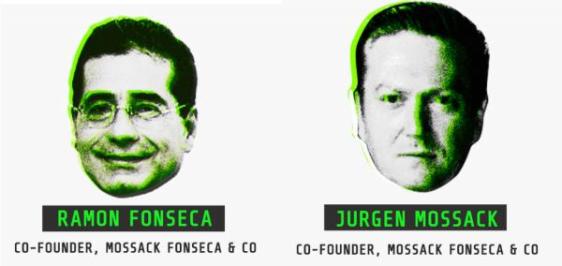
Jurgen Mossack’s family landed here in the 1960s. During World War II, his father had served in the Nazi Party’s Waffen-SS, according to U.S. Army intelligence files obtained by the ICIJ. Once in Panama, the elder Mossack offered to spy on communists in Cuba for the CIA. (Mossack Fonseca said the firm “will not answer any questions related to private information regarding our company founding partners.”)

Here is the connection to Mexican drug lord Rafael Caro Quintero, and perhaps to the DEA:

Many times Mossack Fonseca has had no clue which nefarious characters were doing what with the companies the firm created – as when Jurgen discovered in 2005, according to internal emails, that he was the registered agent and listed as the director for a company controlled by the Mexican drug lord Rafael Caro Quintero. The co-founder of the Guadalajara Cartel was convicted in Mexico in 1985 for the brutal murder of U.S. DEA agent Enrique “Kiki” Camarena. (Today, Quintero is again considered a fugitive by the US after walking out of prison in 2013 on a technicality).

Mossack Fonseca’s senior partners instructed an employee to carry out their resignation from the company upon the discovery. “Pablo Escobar was like a newborn compared to R. Caro Quintero!” Jurgen wrote in reaction to the news. “I wouldn’t want to be among those he visits after he leaves prison!”

And then there is the state of Nevada:

In 2013, an Argentine prosecutor’s report linked Nevada-incorporated shell companies involved in a major corruption scandal to Mossack Fonseca. When those shell companies became the subject of a federal court battle in Nevada, the leaked files show, Mossack Fonseca employees took steps to remove paper records and to wipe computer files and phone logs at its Las Vegas office. One employee even traveled from Central America to Nevada to bring back files. “When Andrés came to Nevada he cleaned up everything and brought all documents to Panama,” according to an email dated Sept. 24, 2014.

Mossack Fonseca said it “categorically” denies hiding or destroying documents in its statement to the ICIJ: “Let us be clear that it is not our policy to hide or destroy documentation that may be of use in any ongoing investigation or proceeding.”

The leaked records also contradict sworn testimony by Jurgen Mossack, who told the federal district court that his firm was separate from “MF Nevada,” its office in Las Vegas, and had no control over it. Mossack Fonseca “has never maintained an office, establishment or principal place of business in Nevada,” Mossack testified in July 2015. But, according to the ICIJ investigation, internal documents show the opposite, indicating that the firm’s Panama City headquarters controlled MF Nevada’s bank account, and that the firm’s co-founders and one other official with the company owned 100 percent of MF Nevada.

Why is Nevada important? Because recall that according to a recent investigation by Bloomberg, “The World’s Favorite New Tax Haven Is the United States”

… and specifically several US states such as Nevada, Wyoming and South Dakota.

After years of lambasting other countries for helping rich Americans hide their money offshore, the U.S. is emerging as a leading tax and secrecy haven for rich foreigners. By resisting new global disclosure standards, the U.S. is creating a hot new market, becoming the go-to place to stash foreign wealth. Everyone from London lawyers to Swiss trust companies is getting in on the act, helping the world’s rich move accounts from places like the Bahamas and the British Virgin Islands to Nevada, Wyoming, and South Dakota.

How ironic—no, how perverse—that the USA, which has been so sanctimonious in its condemnation of Swiss banks, has become the banking secrecy jurisdiction du jour,” wrote Peter A. Cotorceanu, a lawyer at Anaford AG, a Zurich law firm, in a recent legal journal. “That ‘giant sucking sound’ you hear? It is the sound of money rushing to the USA.”

That money is rushing for one simple reason: dirty foreign – and local – money is welcome in the U.S., no questions asked, to be shielded by the most impenetrable tax secrecy available anywhere on the planet.

One may even say that nowadays, US-based tax havens are the new Switzerland, or Bahamas or, for that matter, Panama. Indeed, for most Americans, offshore tax haven are now meaningless with the passage of the FATCA law, which makes the parking of dirty US money abroad practically impossible. So where does that money go instead – it stays in the US:

Others are also jumping in: Geneva-based Cisa Trust Co. SA, which advises wealthy Latin Americans, is applying to open in Pierre, S.D., to “serve the needs of our foreign clients,” said John J. Ryan Jr., Cisa’s president.

Trident Trust Co., one of the world’s biggest providers of offshore trusts, moved dozens of accounts out of Switzerland, Grand Cayman, and other locales and into Sioux Falls, S.D., in December, ahead of a Jan. 1 disclosure deadline.

Cayman was slammed in December, closing things that people were withdrawing,” said Alice Rokahr, the president of Trident in South Dakota, one of several states promoting low taxes and confidentiality in their trust laws. “I was surprised at how many were coming across that were formerly Swiss bank accounts, but they want out of Switzerland.”

And, to top it off, there is one specific firm which is spearheading the conversion of the U.S. into Panama: Rothschild.

Rothschild, the centuries-old European financial institution, has opened a trust company in Reno, Nev., a few blocks from the Harrah’s and Eldorado casinos. It is now moving the fortunes of wealthy foreign clients out of offshore havens such as Bermuda, subject to the new international disclosure requirements, and into Rothschild-run trusts in Nevada, which are exempt.

* * *

For financial advisers, the current state of play is simply a good business opportunity. In a draft of his San Francisco presentation, Rothschild’s Penney wrote that the U.S. “is effectively the biggest tax haven in the world.” The U.S., he added in language later excised from his prepared remarks, lacks “the resources to enforce foreign tax laws and has little appetite to do so.”

Yes, Mossack Fonseca may now be history, and its countless uberwealthy clients exposed, but none other than Rothschild is now delighted to be able to fill its rather large shoes.

Source: Mossack Fonseca: The Nazi, CIA And Nevada Connections… And Why It’s Now Rothschild’s Turn | Zero Hedge