
Should Canucks fans be worried about Thatcher Demko?

Demko’s delay to sign in Vancouver has fans fretting

Daniel Wagner / Vancouver Courier
April 19, 2016

Thatcher Demko has proven pretty much everything he possibly can in the NCAA: he put up stunning statistics, broke Cory Schneider’s single season shutout record for Boston College, was a finalist for the Hobey Baker award, and won the Mike Richter award as the best goaltender in college hockey.

The only thing he didn’t accomplish was winning the NCAA Championship, getting knocked out in the semifinal of the Frozen Four by Quinnipiac. That unfinished business, along with the idea of finishing his education, may be why he’s seemed so uncertain about signing with the Canucks this offseason.

That uncertainty has Canucks fans understandably nervous. If Demko chooses to return to Boston College, then he could become an unrestricted free agent just a few short months after his season ends next year.

Heck, just look at the comments to our post about Thatcher Demko playing in the World Championships: it’s largely comments fretting over whether Demko should even be considered a Canucks prospect.

This year’s Hobey Baker winner, Jimmy Vesey, has informed the Nashville Predators, who drafted him in the 3rd round in 2012, that he won’t be signing with them. He’s not the only one; there have been others, with Canucks fans well aware of Justin Schultz, who chose to sign with the Edmonton Oilers rather than the Anaheim Ducks

To put it simply, the Canucks have until August 15th after Demko graduates to sign him. Otherwise, he goes to free agency.

Should we be worried about this actually happening? Is it likely that Demko doesn’t sign with the Canucks?

Let’s start with the idea of Demko heading back to make another run at the NCAA Championship. The issue is that the Eagles will be missing several key players from this past season’s team.

Defenceman Steve Santini and forwards Alex Tuch, Adam Gilmour, and Miles Wood have all signed with the teams that drafted them. They might be joined by Colin White and Ian McCoshen. Add in four graduating seniors, including captain Teddy Doherty, and half the team will be gone.

Boston College will be returning their leading scorer and their top scoring defenceman and Demko is good enough that he could carry the team on his back, but it doesn’t seem like the Eagles will be a favourite for the Frozen Four next year.

But even if Demko does return to Boston College for one more year, that doesn’t mean he’s heading to free agency.

The Canucks hold several advantages to signing Demko. The first is that they alone can sign Demko before the end of the NHL season next year. As long as Demko’s season ends in time, the Canucks can ink him to a deal and play him in a game or two, getting Demko a year closer to his next contract. That can mean a difference of millions of dollars, so it’s a significant carrot to dangle, and since there are set limits to entry-level contracts, it gives the Canucks the financial advantage.

Another advantage is that the Canucks have a clear path to Demko becoming a number one goaltender. There are limited job opportunities in the NHL for a goaltender, even one as highly regarded as Demko.

With Ryan Miller’s contract up at the end of next season, it seems likely that Demko could be in the NHL as a backup to Jacob Markstrom by 2017-18. From there, Demko just has to out-battle Markstrom for the starter’s role over the next few seasons. Ideally, Demko would sign now and get a full season in the AHL before hitting the big leagues, but it’s conceivable that he could make the jump directly.

In any case, there are very few obstacles in Demko’s path. The Canucks don’t have anyone else. With Joe Cannata a UFA and, at 26, hardly even a prospect any more, the Canucks don’t have any goaltenders other than Demko in the system.

So, barring the signing of another free agent goaltender (such as, say, Quinnipiac goaltender Michael Garteig who knocked Demko out of the Frozen Four this year and attended Canucks development camp in 2014) or Benning grabbing another goaltender in this year’s draft, Demko will stand alone in the Canucks prospect pool.

So why would he sign with another team, who would just have more goaltenders with whom to compete?

Pretty much every other team in the NHL has a deeper prospect pool in net than the Canucks. According to Hockey’s Future, the Florida Panthers have the most goaltending prospects, with a whopping seven. The Stars, Oilers, Sharks, Islanders, and Sabres each have six.

The only team other than the Canucks that has just one goaltending prospect is the Ducks, but they have the 22-year-old John Gibson signed through 2019 and will likely re-sign 26-year-old RFA Frederik Andersen to a long-term deal.

The Blackhawks and Kings have just two goaltending prospects, but they have Corey Crawford and Jonathan Quick signed through 2020 and 2023, respectively.

That’s the issue for Demko: most teams either have a solid number one or tandem in net or have blue chip goaltending prospects on the rise. There really isn’t a better situation for Demko than in Vancouver.

For example, the one team that you might think has a clearer path to a number one job than the Canucks: the Toronto Maple Leafs.

The Leafs traded away their best goaltender, James Reimer, keeping Jonathan Bernier, who was awful this past season. There’s a job opening for sure, but there’s also some serious competition for it.

The Leafs already had two young goaltending prospects—Garrett Sparks and Antoine Bibeau—and signed Kasimir Kaskisuo out of the NCAA to further crowd the crease. Sparks may have posted an ugly .893 save percentage in 17 games in the NHL, but he had a strong AHL season, while Bibeau posted a .909 save percentage in the AHL, but improved immensely at the end of the season.

That’s three goaltenders vying for the starting job, not to mention Bernier, who could have a bounceback season. Why would Demko want to forego a clear succession plan in Vancouver for the uncertainty of Toronto or some other team?

The Canucks also hold one other trump card: Demko’s dad.

The patriarch of the Demko clan is a fan of Vancouver after spending some time at UBC. He even confided in our own Harrison Mooney before his son got drafted that he was hoping the Canucks would pick him.

If the elder Demko holds any sway over the younger, Thatcher won’t be signing anywhere other than Vancouver.

© 2016 Vancouver Courier

Source: Should Canucks fans be worried about Thatcher Demko?
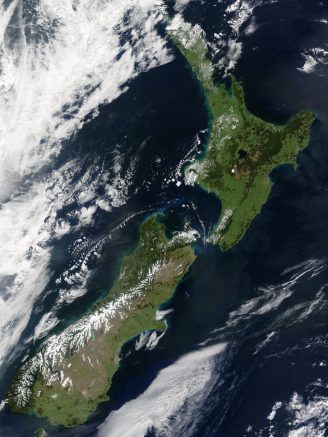
New Zealand vulnerable to the threats of climate change – report finds

April 19, 2016

A report released today by the Royal Society of New Zealand highlights how New Zealand will be impacted by climate change.

It finds that climate change, already underway, will almost certainly accelerate this century unless drastic action is taken to reduce global emissions of greenhouse gases.

It identified six areas where global climate change could have significant implications for New Zealand’s prosperity and well-being. These are risks to:
• our coastal margins
• flooding from rivers
• availability of and competition for freshwater
• changes to our surrounding oceans
• threats to unique ecosystems
• flow-on effects from climate change impacts and responses elsewhere, which will affect New Zealand through our strong international connectivity.

Changes expected to impact New Zealand include at least 30cm and possibly more than one metre of sea-level rise this century – the report finds it likely that the sea level rise around New Zealand will exceed the global average, which will cause coastal erosion and flooding, especially when combined with storm surges.

“Many New Zealanders live on the coast and two-thirds of us live in flood-prone areas so we are vulnerable to these projected changes,” says Professor James Renwick, Chair of the Expert Panel who wrote the report.

Even small changes in average conditions can be associated with large changes in the frequency of extreme events, he says.

“With a 30cm rise in sea level, the current ‘1 in 100 year’ extreme sea event would be expected to occur once every year or so in many coastal regions. Along the Otago coast for example, the difference between a 2-year and 100-year storm surge is about 32cm of sea level.”

Changes in rainfall patterns where the ‘wet gets wetter and the dry gets drier’, together with more frequent extreme events, will put pressure on our housing, infrastructure and industry, especially if changes are rapid, the report finds.

Freshwater resources will also likely be put under pressure, with decreasing annual average rainfall in eastern and northern regions of both islands, plus higher temperatures and increased demand from urban expansion and agriculture.

Fire danger is also predicted to increase in many parts of New Zealand.

Changes in the oceans, including water temperature, acidification and currents will have impacts on New Zealand’s marine life, including aquaculture. On land, existing environmental stresses to New Zealand’s unique species will likely be exacerbated, with increased ranges for animal pests and weeds predicted.

The report also considers New Zealand’s international connections and how trade relationships and migration patterns could change.

Royal Society of New Zealand President, Emeritus Professor Richard Bedford, says the report was sought to provide a clear summary of the scientific evidence and projections of climate change and to identify the key risks these changes pose to New Zealand.

“It is critical to communicate clearly New Zealand’s sensitivities to climate change and the need for responsive systems to address them. All New Zealanders will be affected and must be involved in the discussion. We hope this report can act as a basis for a wider national conversation.”

This report will be followed up soon by another expert panel report on how New Zealand can mitigate the impacts of climate change.

Copies of the report and supporting resources can be found at www.royalsociety.org.nz/climatechange

Key findings – New Zealand’s sensitivities to climate change

Coastal Change: New Zealanders live mainly near coasts
Shoreline ecology, public infrastructure, residential and commercial assets, community values and the future use of coastal-marine resources will be severely affected by changes to coasts due to sea level rise, and storm surge, and secondary effects such as erosion and flooding.

Flooding: many New Zealanders live on floodplains
Damaging flood events will occur more often and will affect rural and urban areas differently. At and near the coast, floods will interact with rising sea levels and storm surges. Increasing frequency and severity of high intensity rainfall events will increase these risks.

Freshwater resources: New Zealanders rely on the availability of freshwater
Increased pressure on water resources is almost certain in future. Decreasing annual average rainfall in eastern and northern regions of both main islands, plus higher temperatures, are projected to increase the frequency and intensity of droughts and the risk of wild fire. At the same time, urban expansion and increased demand for water from agriculture will result in increased competition for freshwater resources.

The Ocean: New Zealand is surrounded by sea
Changes in ocean temperature, chemistry, and currents due to climate change will have impacts on New Zealand’s marine life, fishing, aquaculture and recreation use.

Ecosystem change: New Zealand has unique ecosystems
Over half of New Zealand’s more than 50,000 species are found nowhere else in the world; over three quarters of the vascular plants, raising to 93% for alpine plants, and over 80% for the more than 20,000 invertebrates. Existing environmental stresses will interact with, and in many cases be exacerbated by, shifts in mean climatic conditions and associated change in the frequency or intensity of extreme events, especially fire, drought, and floods.

International Impacts: New Zealand is affected by impacts and responses to climate change occurring overseas
The ways in which other countries are affected by and will respond to climate change, plus commitments New Zealand makes to international climate treaties, will influence New Zealand’s international trade relationships, migration patterns and specific domestic responses.

Report launch
The launch for the findings of this expert panel is at 11am on Tuesday 19 April at the Royal Society of New Zealand in Thorndon, Wellington. It will feature special international guest Professor Jean Palutikof, Director of the National Climate Change Adaptation Research Facility at Griffith University, Queensland. Professor Palutikof previously managed the production of the Intergovernmental Panel on Climate Change (IPCC) Fourth Assessment Report for Working Group II (Impacts, Adaptation and Vulnerability). Professor Palutikof will give a public talk in Wellington that evening.

Climate Change Implications for New Zealand Panel Members

Professor James Renwick (Chair): Physical Geography Professor, Victoria University, Wellington
Dr Barbara Anderson: Rutherford Discovery Fellow, Landcare Research Manaaki Whenua, Dunedin
Dr Alison Greenaway: Social Researcher, Landcare Research Manaaki Whenua, Auckland
Darren King: Environmental Scientist, National Institute of Water and Atmospheric Research (NIWA), Wellington
Dr Sara Mikaloff-Fletcher: Atmosphere-Ocean Scientist, National Institute of Water and Atmospheric Research (NIWA), Wellington
Dr Andy Reisinger: Deputy Director (International), New Zealand Agricultural Greenhouse Gas Research Centre, Wellington
Dr Helen Rouse: Resource Management Scientist, National Institute of Water and Atmospheric Research (NIWA), Christchurch

Source: Community Scoop » New Zealand vulnerable to the threats of climate change

Australian Trial Begins For The Internet Of … Sewers

Image: Shutterstock

 APR 19 8:30 AM

Testing has begun on new low-powered communications technology that aims to extend the use of real-time monitoring, and help to improve the reliability, efficiency and safety of water and sewer assets.

Victoria’s South East Water is working with global information and communications technology providers to trial Narrowband-Internet of Things (NB-IoT) technology on its network infrastructure on the Mornington Peninsula, in Melbourne’s CBD, and in the Dandenong Ranges. Optus, Vodafone and Huawei are partnered in the project.

NB-IoT is a low-cost narrowband radio technology that uses less power than other communications standards, enabling the connection of thousands of physical objects, such as hand-held devices, infrastructure, wearables and vehicles.

It provides the network connectivity that enables the embedded electronics, sensors and software in these devices to collect and exchange data regardless of their location, providing operators with detailed, real-time information on which to base decisions.

Initially, existing 3G technology will be replaced with NB-IoT technology to transmit real-time data on network performance, asset condition and fault management across South East Water’s Peninsula early connection option sewer network. The data will be used control waste water flows from each property, and identify faults across the network.

To simulate different conditions and applications, testing will also be undertaken on similar sewer infrastructure in the Belgrave area of the Dandenong Ranges, and on a range of assets in Southbank. The total test area will cover approximately 1000 square kilometres.

In addition to sewer networks, the testing will see NB-IoT chipsets installed on manhole covers to alert operators to unauthorised sewer access, aiming to reduce the risk of accident, injury, damage to water assets and (presumably) murderous clowns.

The technology will also be installed in rainwater tank management systems, and used to transmit and receive data about storage levels and expected rainfall, which is used to optimise rainwater harvesting and stormwater runoff.

“The emergence of lower powered, low cost networks with increased coverage has the potential to unlock enormous value for water utilities and their customers,” said Phil Johnson, Corporate and Commercial General Manager at South East Water.

“Through this trial, we are building a platform for a more reliable and sustainable water supply, a safer place for our people to work, and more cost-effective services for our customers.”

The trial is expected to run for three months.

Source: Australian Trial Begins For The Internet Of … Sewers | Gizmodo Australia

White House – not in Saudi interest to destabilise global economy over 9/11 bill 

on April 19, 2016, 6:59 am

WASHINGTON (Reuters) – The White House expressed confidence on Monday that Saudi Arabia would not follow through on a reported threat to sell U.S. assets if Congress passed a bill that could hold the kingdom responsible for any role in al Qaeda’s Sept. 11, 2001 attacks.

The New York Times reported on Friday that Saudi foreign minister Adel al-Jubeir told U.S. lawmakers that the country would be forced to sell up to $750 billion in Treasury securities and other U.S. assets in response to the bill if it passed.

White House spokesman Josh Earnest said President Barack Obama did not support the legislation and would not sign it. The bill would allow the Saudi government to be sued in a U.S. court for any role in the Sept. 11 attacks.

“I’m confident that the Saudis recognise, just as much as we do, our shared interest in preserving the stability of the global financial system,” Earnest told reporters.

Obama is travelling to Saudi Arabia later this week.

Most of the 19 attackers on Sept. 11, 2001 were Saudi nationals who hijacked four planes and flew them into New York City’s World Trade Center, the Pentagon near Washington and into a field in Pennsylvania after passengers revolted. The attack was mounted by the al Qaeda militant group.

The debate over the congressional legislation has gained traction on the U.S. presidential campaign trail. Former Secretary of State Hillary Clinton, the front-runner for the Democratic nomination, has broken with the Democratic administration and said she supported the bill.

Her rival, U.S. Senator Bernie Sanders of Vermont, said he shared the Obama administration’s concern that the legislation could open up the United States to liability from other countries but said it was important to look into any potential Saudi role in the attacks.

“I think it’s important to have a full investigation and an understanding of the role, the possible role, of the Saudi government in 9/11,” he said on NBC’s “Today” programme.

The bill, which has 22 co-sponsors, passed the Senate Judiciary Committee in January, but it has not come up for a vote in the Republican-dominated Senate. Senate Majority Leader Mitch McConnell’s office said on Monday that no vote has been scheduled.

Family members of victims who were killed in the September 2001 attacks urged Obama to support the legislation and to bring up the issue on his trip.

“It is not acceptable … to succumb to the demands of a foreign government that we abandon principles of American justice while we pursue our diplomatic goals,” they wrote in a letter to Obama that was released to the media.

In September, a U.S. judge dismissed claims against Saudi Arabia by families of victims of the attacks, saying the kingdom had sovereign immunity from damage claims.

(Reporting by Jeff Mason, Timothy Gardner, Patricia Zengerle, Susan Heavey, Steve Holland, and Idrees Ali; Editing by Jonathan Oatis)

Source: White House – not in Saudi interest to destabilise global economy over 9/11 bill – The West Australian

Federal Budget 2016 in depth: Infrastructure | Canadian Union of Public Employees

Apr 18, 2016

Summary

As promised and expected, the 2016 federal budget focuses extensively on infrastructure. While the proposed spending falls short of the Liberals’ promise to provide an immediate injection of $5 billion into the economy, it does outline a substantial output of $11.9 billion over the next five years, much of which will be available immediately.

The infrastructure spending will come in two phases. The first phase begins in 2016 and comprises the $11.9 billion, allocated in three major areas:

  • infrastructure ($3.4 billion)
  • Water, wastewater, and green infrastructure ($5 billion)
  • Social infrastructure such as affordable housing and child care ($3.4 billion)

Phase one has been described as the “maintenance” phase, where existing infrastructure or already-planned infrastructure projects will receive a necessary influx of federal cash. To this end, a number of new funds, such as the Public Transit Infrastructure Fund, have been established to manage disbursement. The government will also leverage existing funds, such as the Gas Tax Fund, to target infrastructure priorities. Finally, the government plans to download some of the fund management to partners such as the Federation of Canadian Municipalities – which will deliver $250 million of new funding to its members for various infrastructure projects – and the Canada Mortgage and Housing Corporation – which will participate in the design of affordable housing strategies.

Phase two of the infrastructure funding will commence in two years, and will be focus on larger long-term goals such as transitioning to a clean and green economy, and facilitating a greater capacity for global trade.

The Good

There are a number of aspects of the federal budget’s infrastructure plan that appear positive. Generally speaking, the Liberal government has halted the previous government’s trend of reduced social spending and austerity budgets. Increased infrastructure spending is the right move in a stagnant economic period, when borrowing costs are relatively low.

More specifically, we are pleased to see the government:

  • Remove the public-private partnership (P3) screen on large infrastructure projects, and the P3 requirement on transit projects.
  • Commit to funding up to 50 per cent of most infrastructure projects, rather than maintain the previous 1/3 ratio. Many communities would have been unable to meet the previous financial threshold, so this is a welcome change.
  • Focus on the importance of water-related infrastructure, particularly on First Nation reserves.
  • Focus on affordable housing, including housing for seniors, for the homeless, and for those fleeing domestic violence.
  • Commit to green infrastructure, including the integration of climate resiliency into building standards. In particular, we applaud the commitment to environmentally-conscious repairs and retrofits for federal infrastructure, which includes an exploration of alternative energy sources.

The Bad

While this budget reverses the previous government’s move to shackle public infrastructure spending to the private sector, the current government’s infrastructure plan establishes an open and fertile ecosystem for privatization. Indeed, the budget specifically mentions that the government will “examine new innovative financing instruments” and “engage public pension plans and other innovative sources of funding” to get projects moving. It also states the government’s interest in so-called “asset recycling” – one of the newest terms used for the privatization of public assets to for-profit interests.

Most of the evidence suggests that when public services and public assets are privatized, costs are higher and quality suffers. The private ownership of infrastructure – even if that owner is a workers’ pension plan – represents a real diminishment in value for Canadians. It is both ironic and unfortunate that the loosening of P3 requirements by the Liberals may result in a proliferation of privatization fights over infrastructure.

In addition to its gestures toward privatization, the amounts allocated in the budget are not sufficient to close the infrastructure gap in Canada. Furthermore, we note that a financial commitment and a capacity to carry out that commitment are very different things. Already, for example, Engineers Canada has speculated publicly about the shortage of engineers prepared to carry out this work, and the Federation of Canadian Municipalities has pointed out that detailed spending requirements have not yet been established.

The Fix

While the federal budget displays an important commitment to infrastructure spending, we call on the government to bolster this commitment – in policy and/or in subsequent budgets – with the following:

  • Implement strict rules around transparency and accountability for public-private partnerships.
  • Eliminate PPP Canada Inc. and redirect the $1.25 billion P3 Canada Fund to public infrastructure projects.
  • Ensure that federal money only goes to projects with clear ethical procurement policies.
  • Maintain basic oversight over projects that receive infrastructure funding to ensure shovels in the ground as quickly as possible.

CUPE will continue to encourage our members, and other labour organizations, to:

  • Speak out against the privatization of infrastructure in your communities.
  • Resist moves by municipalities to enter into P3 arrangements for infrastructure and public services.
  • Challenge the administrators and trustees of pension plans to move away from investment in P3s for infrastructure, and support investments that renew and strengthen public ownership and control.

Source: Federal Budget 2016 in depth: Infrastructure | Canadian Union of Public Employees