Shell Cancels $4.6B in Floating LNG Contracts | OilPrice.com

By
Posted on Wed, 04 May 2016 21:30

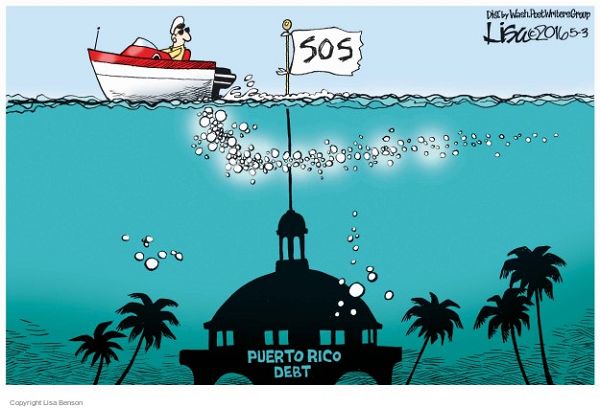
The continuing downward pressure on oil prices has led Royal Dutch Shell PLC to scrap a $4.6-billion contract with South Korean shipbuilder Samsung Heavy Industries Co. Ltd. for three floating LNG (FLNG) units that were earmarked for Australian projects.

The deal was originally signed in June last year, with each of the three FLNG platforms to have a production capacity of 3.9 million tons per year and 17,000 to 22,000 b/d of condensate.

Related: Another Major Natural Gas Pipeline Project Bites The Dust

Shell’s move to cancel this contract follows a March decision by Australian Woodside Petroleum to halt the development of the $40-billion Browse gas project off Western Australia’s Kimberley coast. The contract in question was for FLNG vessels to service this particular project, so Shell’s decision was expected.

The FLNG units were destined for the Brecknock, Torosa, and Calliance gas fields. Together, these three fields are believed to hold gross contingent resources of 15.4 tcf of dry gas and 453 million bbl of gas condensate.

Related: OPEC’s No. 2 Under Serious Threat From Political Instability

Woodside has 30.6 percent participating interest in the Browse project. Shell Australia has 27 percent, while BP Developments Australia has 17.33 percent, Japan Australia LNG 14.40 percent and PetroChina International Investment 10.67 percent.

Though development of Browne has been suspended, Woodside is still holding out for a final investment decision, which is expected to come during the second half of this year. The front-end engineering and design work has already been completed on this project.

Related: Low Oil Prices? Texas Is Doing Just Fine

Samsung, for its part, has noted in a regulatory filing that the contract from Shell was voided due to the existing tough market conditions, i.e. low oil prices.

Instead, the focus will be shifted to the Prelude FLNG vessel, which is slated for completion sometime this year.

Source: Shell Cancels $4.6B in Floating LNG Contracts | OilPrice.com

Concerns over imported glass safety

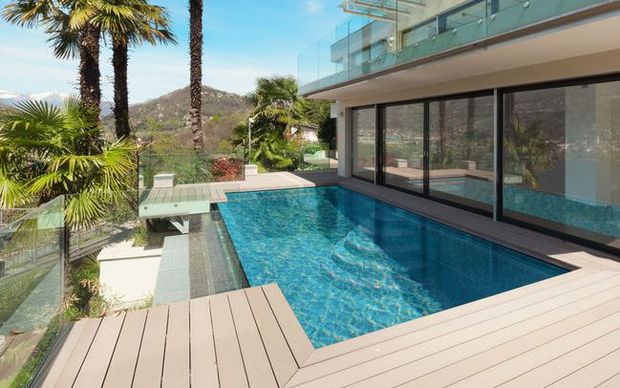
Pool with glass balustrade (stock photo) Photo: 123RF

Statistics New Zealand figures show processed glass imports have risen fivefold in the 10 years to September 2015, reaching half a million square metres a year.

That’s equivalent to half the yearly output of one of the country’s two big glass makers, Viridian.

Viridian’s Auckland manager Gary Walden said his big worry was the share of imports going into small projects in the city.

“Auckland balustrades and pools have certainly been a significant cause for concern,” Mr Walden said. “There is not a lot of control over who can install the product and what sort of quality the product meets.”

Mr Walden, also chair of the Glass Association (GANZ), said all New Zealand factories were certified and completed fragmentation tests at least every two hours. If a sheet failed, all of that batch was dumped.

The same could not be said for all factories overseas.
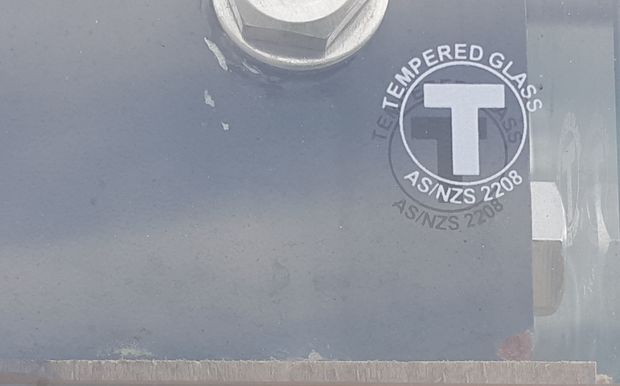
A non-compliant glass stamp sticker.

A non-compliant glass stamp sticker. Photo: SUPPLIED

Testing company Bureau Veritas’s Australasian office said the problem is that it is not mandatory for glass factories to be independently certified and audited.

Product certification manager Sam Guindi said that meant producers or importers could put a safety sticker on glass, and it was not possible to know whether it complied – other than by breaking it.

Mr Guindi said the many responsible producers concerned with safety chose to be certified – but others did not.

“If they can sell the glass without having to go through the whole process of getting it audited and certified, it’s obviously cheaper and easier for them to go down that path.”

The building standard AS/NZ 2208 requires certain safety stickers on toughened glass, but Mr Walden’s Glass Association has traced back safety sticker information that has proved bogus.

Mr Guindi’s product testing company is finding at least one foreign glass maker a year that is faking stickers.

“Glass could come in and it could be installed in someone’s house and no one would know, until it does break, so it’s really hard to check that, whether the product is compliant or not,” said Mr Guindi.

Mr Walden said if the certification system was rigorous, then generally everything would be fine.

“But if you’re not confident in your certification, the only way to test toughened glass is to break a panel. There should be some way of verifying the quality of the product on a regular basis.”

However, at present third-party certification of factories is not mandatory and certifiers themselves can choose whether their own systems get regular checks.

Bureau Veritas gets certified by the Joint Accreditation System of Australia and New Zealand (JAS-ANZ). Other certifiers do not – so the way they are certifying factories remains unclear.

The call on compliance ultimately comes down to the council building inspector on site. In Auckland, inspectors did 90,000 inspections last year, a rise of 10 percent.

Inspectors are finding a significant problem with toughened glass being substituted with inferior product, but the scale of actual failures is difficult to guage.

GANZ has carried out isolated tests of imported panes and found some did not comply.

It stressed it had found no compliance issues with New Zealand-made frameless glass balustrades fitted by its member companies.

However, it is still investigating cases where imported balustrades were not fixed properly to a building. In some cases, they had been held on using screws, rather than bolts. In one case a glass pool fence in Orewa was blown over by the wind.

Mr Walden said they had sent photos of dodgy glass and glass installations to Auckland Council and the Ministry of Business, Innovation and Employment .

“We get some response, but we don’t know what happens after that. They will look into it, basically.”

He said the association did follow up but he was not aware of any outcome yet from passing on those reports. “It is frustrating for the industry.”

Mr Walden said GANZ sent someone to a big hardware chain store in Auckland, and found the salespeople happy to sell a glass pool fence panel with pool fence fixings for use as a DIY balustrade on a balcony. MBIE was informed of the incident over a year ago.

Mr Walden also believed council inspectors frequently ignored whether glass systems were being installed in the way designers and engineers specified.

Source: Concerns over imported glass safety | Radio New Zealand News

Biologists Estimate that Earth is Inhabited by One Trillion Microbial Species

This colorized scanning electron micrograph shows Mycobacterium tuberculosis, gram-positive bacteria that cause tuberculosis. Image credit: Ray Butler / Centers for Disease Control and Prevention.

Our planet could contain roughly 1 trillion microbial species, with only 0.001% now identified, says a duo of scientists at Indiana University.

Dr. Kenneth Locey and Dr. Jay Lennon, both from the Indiana University’s Department of Biology, combined microbial, plant and animal community datasets from different sources, resulting in the largest compilation of its kind.

Altogether, these data represent over 5.6 million microscopic and nonmicroscopic species from 35,000 locations across all the world’s oceans and continents, except Antarctica.

“Our study combines the largest available datasets with ecological models and new ecological rules for how biodiversity relates to abundance,” Dr. Lennon said.

“This gave us a new and rigorous estimate for the number of microbial species on Earth.”

According to the team, older estimates were based on efforts that dramatically under-sampled the diversity of microorganisms.

“Before high-throughput sequencing, scientists would characterize diversity based on 100 individuals, when we know that a gram of soil contains up to a billion organisms, and the total number on Earth is over 20 orders of magnitude greater,” Dr. Lennon said.

The realization that microorganisms were significantly under-sampled caused an explosion in new microbial sampling efforts over the past several years.

“A massive amount of data has been collected from these new surveys. Yet few have actually tried to pull together all the data to test big questions,” Dr. Locey said. “We suspected that aspects of biodiversity, like the number of species on Earth, would scale with the abundance of individual organisms.”

“After analyzing a massive amount of data, we observed simple but powerful trends in how biodiversity changes across scales of abundance,” the scientists said.

“One of these trends is among the most expansive patterns in biology, holding across all magnitudes of abundance in nature.”

The study results, published in the Proceedings of the National Academy of Sciences, also suggest that actually identifying every microbial species on Earth is a huge challenge.

“The Earth Microbiome Project — a global multidisciplinary project to identify microscope organisms — has so far cataloged less than 10 million species. Of those cataloged species, only about 10,000 have ever been grown in a lab, and fewer than 100,000 have classified sequences,” Dr. Lennon said.

“Our results show that this leaves 100,000 times more microorganisms awaiting discovery — and 100 million to be fully explored. Microbial biodiversity, it appears, is greater than ever imagined.”

_____

Kenneth J. Locey & Jay T. Lennon. Scaling laws predict global microbial diversity. PNAS, published online May 2, 2016; doi: 10.1073/pnas.1521291113

Source: Biologists Estimate that Earth is Inhabited by One Trillion Microbial Species | Biology | Sci-News.com