Competition Bureau statement regarding the proposed acquisition by Lowe’s of RONA

OTTAWA, May 12, 2016 — On May 12, 2016, the Bureau issued a No Action Letter (NAL) to Lowe’s Companies, Inc. (Lowe’s) and RONA inc. (RONA) indicating that the Commissioner of Competition does not, at this time, intend to make an application under section 92 of the Competition Act in respect of the proposed acquisition.

This statement summarizes the approachFootnote 1 taken by the Competition Bureau in its review of Lowe’s proposed acquisition of RONA, which was announced on February 3, 2016.

In the course of its review, the Bureau conducted interviews with numerous market participants, including home improvement retailers (both corporate owned stores and independent local dealers), buying groups, and distributors; reviewed documents and information provided by the parties and third parties; and analyzed transaction level data.

Background

In Canada, Lowe’s and RONA (the Parties) are both retailers of home improvement products. Lowe’s entered the Canadian market in 2007. At the time the proposed acquisition was announced, Lowe’s had 42 corporate stores in British Columbia, Alberta, Saskatchewan, and Ontario, and RONA had 496 stores across Canada that are a mix of 236 corporate stores and 260 dealer owned stores. Although RONA has stores across Canada, its largest provincial footprint is found in Quebec, where it had 238 stores.

Unlike Lowe’s, RONA also operates a wholesale distribution business that supplies both its retail network, including dealer‑owned RONA stores, and other third party wholesale customers. As such, the Bureau considered whether the proposed acquisition raised any vertical concerns. The Bureau’s review revealed that many buying groups, alternative wholesalers and competing retail banners are, and would remain readily available to supply RONA’s wholesale customers with distribution of home improvement products and other retail support services.

Analysis

The Bureau identified a number of local markets where Lowe’s and RONA stores are likely direct competitors as a consequence of their relative proximity to each other. In assessing the competitive impact of the proposed transaction, the Bureau considered various possible local geographic markets by adjusting for the presence or absence of different competitors, including the Parties, other big box retailers and specialty stores.

The Parties compete for the sale of items across many product categories, including lumber and building materials, paint, fashion fixtures, electrical and plumbing supplies. At any one time, some proportion of consumers only require the purchase of items from a single product category, while consumers engaged in more extensive projects may require, for example, a mix of paint, fashion fixtures, and plumbing supplies. Apart from price‑based comparisons, market participants indicated that box stores that sell items from multiple product categories offer consumers the convenience of a one‑stop shop, whereas specialty stores which focus on the sale of only a single product category, may offer a higher level of customer service. The competitive impact of excluding and including specialty stores as direct competitors to box stores was tested to assess the competitive effects of the transaction.

Under the various possible market definitions tested by the Bureau, it was determined that there were sufficient effective remaining competitors in each local market, including national retailers such as Home Depot, Home Hardware, and Canadian Tire, such that the proposed acquisition is unlikely to result in a substantial lessening or prevention of competition.

The Bureau also examined to what extent the proposed transaction could prevent the development of future competition between the Parties due to Lowe’s future entry. The Bureau determined that such entry did not satisfy the timely, likely and sufficient threshold set out in the Merger Enforcement Guidelines. In any event, the examination also found that effective competition from Home Depot, Canadian Tire and strong regional big box operators would remain in all local markets in which competition between Lowe’s and RONA could have likely developed in the future.

Conclusion

Based on the presence of a sufficient number of effective remaining competitors in each local market, the Bureau concluded that the proposed transaction is unlikely to result in a substantial lessening or prevention of competition in retail home improvement in any local market in Canada.

This publication is not a legal document. The Bureau’s findings, as reflected in this Position Statement, are not findings of fact or law that have been tested before a tribunal or court. Further, the contents of this Position Statement do not indicate findings of unlawful conduct by any party.

However, in an effort to further enhance its communication and transparency with stakeholders, the Bureau may publicly communicate the results of certain investigations, inquiries and merger reviews by way of a Position Statement. In the case of a merger review, Position Statements briefly describe the Bureau’s analysis of a particular proposed transaction and summarize its main findings. The Bureau also publishes Position Statements summarizing the results of certain investigations, inquiries and reviews conducted under the Competition Act. Readers should exercise caution in interpreting the Bureau’s assessment. Enforcement decisions are made on a case-by-case basis and the conclusions discussed in the Position Statement are specific to the present matter and are not binding on the Commissioner of Competition.


For media enquiries, please contact:
Media Relations
Telephone: 819-994-5945
Email: ic.media-cb-bc.ic@canada.ca

For general enquiries, please contact:
Information Centre
Competition Bureau
Telephone: 819-997-4282
Toll free: 1-800-348-5358
TTY (hearing impaired): 1-800-642-3844
www.competitionbureau.gc.ca
Enquiries/Complaints
Stay connected

The Competition Bureau, as an independent law enforcement agency, ensures that Canadian businesses and consumers prosper in a competitive and innovative marketplace.

Source: Competition Bureau statement regarding the proposed acquisition by Lowe’s of RONA – Competition Bureau

Asbestos ban is a good start but we need a registry, says Hancock | CUPE

May 11, 2016

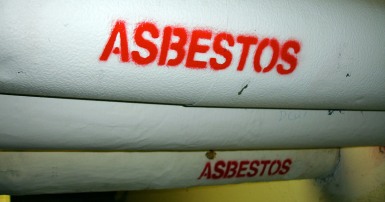
Following Prime Minister Justin Trudeau’s announcement that the federal government is “moving forward on a ban” of asbestos, CUPE National President Mark Hancock reiterated CUPE’s call for a comprehensive ban of the deadly substance.

“Asbestos is killing CUPE members. It’s been a serious hazard for decades. We’re happy to hear the government is moving on this issue, and we want to see them do the right thing by introducing a comprehensive ban,” said Hancock.

A comprehensive ban means, among other measures:

  • Banning the use, export and import of all asbestos-containing materials
  • Establishing an expert panel to make recommendations for implementation of the ban
  • Creating registries of cases of asbestos-related diseases and buildings used by the public that contain asbestos.

The Canadian Labour Congress has a detailed description of what a comprehensive ban would look like here.

“The government has to do more than just say ‘we’re banning it.’ We need to find out exactly where it is, so workers can take the appropriate actions to protect themselves from exposure. We need to prevent exposures, and support workers who have been exposed. It’s about protecting workers and protecting Canadians,” said Hancock.

Trudeau made the announcement on Tuesday at a building trades unions policy conference in Ottawa. No details or timetables for imposing a ban have been released. In April, CUPE joined the CLC in lobbying the federal government about implementing a comprehensive ban, and sent a letter to the prime ministeron the issue.

CUPE has been calling for a full ban of asbestos for decades, but successive governments have been slow to act and sometimes even worked counter to the cause, despite overwhelming evidence of the serious harm caused by exposure. Every year approximately 2,000 Canadians die from asbestos-related diseases.

Learn more about asbestos here.

Source: Asbestos ban is a good start but we need a registry, says Hancock | Canadian Union of Public Employees

Lyme Disease: Learn The Basics, What It’s All About

Lyme disease, and Lyme-carrying ticks are of serious concern with each passing year.

Lyme Basics

Lyme disease (often misspelled as “Lime” or “Lymes”) is an inflammatory infection that spreads to humans through tick bites.

Lyme is a borreliosis caused by borrelia bacteria, which commonly infects woodland animals like mice or deer. Ticks pick up the bacteria by biting infected animals, and then pass it on to their human hosts. The are many strains or genospecies of borrelia that cause Lyme disease (borreliosis) in humans just as there are many strains of the flu virus that cause flu symptoms in humans, with some strains more virulent than others.

3 stages of Lyme (often blurred together quite rapidly)

Stage 1: Early infection (first few days after infection)
Stage 2: Infection spreads (days to weeks following infection)
Stage 3: Chronic Lyme (days to weeks after infection if left untreated, or not properly treated, for months/years after infection)

Lyme disease is most treatable during Stage 1. As time passes, both treatment and diagnosis become more difficult. Symptoms worsen during each stage of infection, ranging from flu-like symptoms to neurological illnesses, including paralysis. With chronic Lyme disease there is not one system of the body that can be unaffected… this includes various hormone production as well.

Lyme disease is on the rise in Canada. Decrease your risk of infection by taking preventative action and learning more about Lyme.

Tick ID & Removal

Canada is home to many species of ticks, but the Ixodes Tick – more often known as the “black-legged” or “deer” tick – is the most common Lyme-carrier.

Ixodes ticks…

  • Have hard-shelled brown and black bodies, but appear greyish when engorged and some times are confused with a skin tag
  • Have 8 legs as adults, but baby ticks have only 6
  • Are 1–5 mm long, but adults can grow up to 20 mm when feeding

Protect your family from Lyme. Learn how to identify various tick species and how to properly remove them if bitten.

Identifying ticks  Safe tick removal

Symptoms

Early treatment of Lyme disease is critical, however Lyme is very difficult to diagnose because symptoms vary from person to person. There are over 100 known symptoms of Lyme disease.

Common symptoms include:

  • Developing a rash, sometimes shaped like a “bull’s eye” mark.
  • Initial flu-like symptoms, such as: fever, headache, nausea, jaw pain, light sensitivity, red eyes, muscle aches and neck stiffness.

While some Lyme victims experience immediate symptoms after infection, others may have none for many months.

Learn the symptoms

Source: Lyme Basics | CanLyme – Canadian Lyme Disease Foundation

Obesity less dangerous than 40 years ago

May 11, 2016

New research from Denmark involving more than 100,000 individuals suggests that the excess risk of premature death associated with obesity has decreased over the past 40 years. All-cause mortality was higher in obese individuals than in normal weight individuals in 1976-78, but not in 2003-13.

Many try to lose weight to avoid diabetes and cardiovascular disease and hopefully live longer. This is often driven by recommendations from health care authorities and is further supported by the media and not least, by commercials often presenting normal weight or even thin people as ideal humans.

“The increased risk of all-cause mortality associated with obesity compared to normal weight decreased from 30% 1976-78 to 0% in 2003-13,” says principal investigator Dr. Shoaib Afzal, Herlev Hospital, Copenhagen University Hospital, Denmark.

This research has just been published in the Journal of the American Medical Association (JAMA).

What is the optimal BMI for lowest mortality?

The study also revealed changes in the BMI associated with the lowest all-cause mortality in three cohorts from Copenhagen, examined respectively in 1976-78, 1991-1994, and in 2003-2013 (all individuals were followed until 2014).

“The optimal BMI for the lowest mortality increased from 23.7 in 1976-78, through 24.6 in 1991-94, to 27 in 2003-13, while individuals with a BMI below or above the optimal value had higher mortality,” adds Shoaib Afzal.

“Compared to the 1970’s, today’s overweight individuals have lower mortality than so-called normal weight individuals. The reason for this change is unknown. However, these results would indicate a need to revise the categories presently used to define overweight, which are based on data from before the 1990’s” says senior author Clinical Professor Borge G. Nordestgaard, University of Copenhagen and Copenhagen University Hospital.

“Importantly, our results should not be interpreted as suggesting that now people can eat as much as they like, or that so-called normal weight individuals should eat more to become overweight. That said, maybe overweight people need not be quite as worried about their weight as before”, adds Nordestgaard.

Obesity and overweight are classified using Body Mass Index (BMI), calculated as weight in kilograms divided by height in meters squared. A BMI of 25-29.9 represents overweight, a BMI of 30 or greater represents obesity, while a BMI of 18.5-24.9 is considered normal weight. These categories are often used for recommendations on optimum weight.

Source: University of Copenhagen The Faculty of Health and Medical Sciences

Source: Obesity less dangerous than 40 years ago | Science Codex