Neurotensin: Scientists Identify New Biomarker for High-Fat-Diet-Induced Obesity

Researchers have identified a potential new biological marker for the development of obesity, according to a study published online May 11, 2016 in the journal Nature.
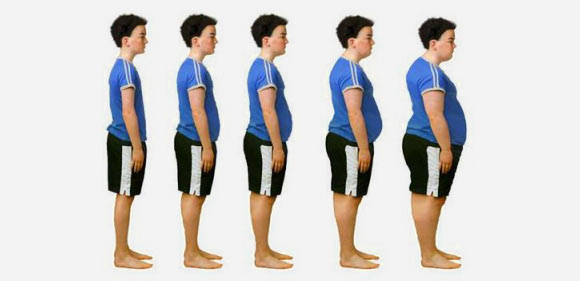
The new findings directly link neurotensin (NT) with increased fat absorption and obesity and suggest that NT may provide a prognostic marker of future obesity and a potential target for prevention and treatment. Image credit: University of Massachusetts Lowell.

May 13, 2016

Neurotensin, also known as NT or NTS, is a 13-amino-acid neuropeptide produced mainly in the gastrointestinal tract and central nervous system. It is released with fat ingestion and facilitates fatty acid absorption in the intestine.

Previous research has shown that NT can also stimulate the growth of various cancers and increased fasting levels of pro-NT (an NT precursor hormone) are associated with development of cardiovascular disease and breast cancer.

The new study, led by Dr. Mark Evers from the University of Kentucky, examined data from the Malmö Diet and Cancer Study, a population-based, prospective epidemiologic cohort of 28,449 men and women who were followed for an average of 16.5±1.5 years.

The analysis showed that obese and insulin-resistant subjects have significantly elevated levels of fasting pro-NT, and the risk of developing obesity was doubled in non-obese subjects who had fasting pro-NT at the highest concentrations compared to subjects with the lowest concentrations.

The study further used animal models to show that a deficiency in NT protects against obesity, insulin resistance and fatty liver disease associated with high fat consumption, thus identifying NT as a potential early marker of future obesity and a novel therapeutic target for this disease.

“Our findings have redefined how we view the role of NT,” Dr. Evers said.

“NT appears to be a metabolically ‘thrifty’ peptide which increases the absorption of ingested fats; however, with the abundance of fats in typical Western diets, NT can have a detrimental effect by contributing to increased obesity and related metabolic disorders.”

“Additionally, because NT can contribute to the growth of certain cancers and is now linked with obesity, increased NT may contribute to the higher incidence of certain cancers associated with obesity,” he added.

_____

Jing Li et al. An obligatory role for neurotensin in high-fat-diet-induced obesity. Nature, published online May 11, 2016; doi: 10.1038/nature17662
Source: Neurotensin: Scientists Identify New Biomarker for High-Fat-Diet-Induced Obesity | Medicine | Sci-News.com

Conference to Develop a National Framework on Lyme Disease

OTTAWA, May 15, 2016 /CNW/ – The Honourable Jane Philpott, Minister of Health, will be providing opening remarks at the Conference to Develop a National Framework on Lyme Disease.

More information on the Lyme Disease Conference can be found online.

Date
May 16, 2016

Time
Registration: 8:00 am ET9:00 am ET
Opening Remarks: 9:05 am ET
Media Availability: 9:30 am ET

Location
Government of Canada Conference Centre
111 Sussex Drive, Ottawa ON
Terrace Level – Algonquin Room

RELATED LINKS
http://www.phac-aspc.gc.ca

This conference is mandated by the Federal Framework on Lyme Disease Act.The conference’s aim is to develop a framework that will help prevent and reduce Lyme disease-related health risks to Canadians. It will focus on:

  • medical surveillance for tracking:
    • incidence rates
    • associated economic costs
  • standardized educational materials:
    • for use by Canadian public health providers
    • to increase national awareness
  • guidelines and best practices regarding:
    • treatment
    • prevention
    • identification
    • management

On behalf of the Minister of Health, the Public Health Agency of Canada will open the conference. Participants will include:

  • provincial and territorial health ministers
  • stakeholders, including representatives of:
    • patient groups
    • the medical community

Planning activities

We started a number of planning activities to help us develop the framework and to support the conference.

Online consultation

A 30-day online consultation was launched on June 1, 2015. Its purpose was to collect feedback from Canadians who expressed an interest in contributing to the framework.

A summary report from the consultation will be made available online after the conference.

Best Brains Exchange workshop

In late June 2015, a Best Brains Exchange 1-day workshop was held. Workshop participants included:

  • clinicians
  • academics
  • researchers
  • policy makers

These experts reviewed the effectiveness of current Lyme disease testing to identify needed changes.

The workshop outcomes will be posted when they become available.

Planning committee

A planning committee was formed to organize the conference with help from the:

  • Canadian Lyme Disease Foundation
  • Association of Medical Microbiology and Infectious Disease Canada

Members include:

  • Gregory W. Taylor
    Chief Public Health Officer, Public Health Agency of Canada
  • Daniel Gregson
    Past-President, Association of Medical Microbiology and Infectious Disease Canada
  • Jim Wilson
    President and Founder, Canadian Lyme Disease Foundation
  • George Chaconas
    Canada Research Chair, Molecular Biology of Lyme Borreliosis
  • Gwen Barlee
    National Policy Director, Spokesperson for the Wilderness Committee
  • Marguerite Glazer
    Association Québécoise de la maladie de Lyme
  • Vett Lloyd
    Professor of Biology, Mount Allison University
  • Ralph Hawkins
    Associate Professor of Medicine, University of Calgary
  • Richard Rusk
    Central Medical Officer of Health Services, Communicable Disease Control, Manitoba Health
  • Marc Ouellette
    Scientific Director, Canadian Institutes of Health Research
  • Joel Kettner
    Professor, University of Manitoba
  • Gerald Evans
    Chair of the Division of Infectious Diseases, Professor in the Departments of Medicine, Biomedical and Molecular Sciences, and Pathology and Molecular Medicine, Queen’s University

Planning committee updates are posted here when they become available.

Conference overview and agenda

The conference will take place May 15 to 17, 2016, at the Government Conference Centre in Ottawa (111 Sussex Drive). It is open to the public.

The agenda is now available online.

To follow the conversation on social media, be sure to use #LymeConference. You can also follow us on Twitter at:

Source: Public Health Agency of Canada – Notice to the media – Conference to Develop a National Framework

Prime Minister announces changes to employment insurance for three additional EI economic regions

Edmonton, Alberta

13 May 2016

Canada is a great country because we work hard – and we take care of each other. Whether it is recovering from a disaster like a wildfire, or helping our neighbours get back on their feet after a job loss, we lend a hand in tough times.

The Prime Minister, Justin Trudeau, today announced changes to provide extended Employment Insurance (EI) benefits in three other EI economic regions.

In Budget 2016, twelve EI economic regions were listed as qualifying for extended benefits due to the downturn in the commodities sector. The Government of Canada promised to monitor the economic situation following the budget, and today fulfilled that commitment by announcing three final additions to this list: Edmonton; Southern Interior British Columbia; and Southern Saskatchewan. This completes the assessment, and no more regions will be added.

This extension will mean that those who are eligible for EI can claim an additional five weeks of benefits for regular claimants, and a further 20 weeks of benefits for long-tenured workers. These benefits will be available for one year – beginning July 3, 2016 – and will apply retroactively to anyone who started a claim on or after January 4, 2015, and is still unemployed.

Quote

“Today’s announcement is about helping three other EI regions facing tough economic times. The commodities downturn has been particularly difficult for many Canadian communities, and the EI provisions announced today will make it easier for claimants who are eligible for EI to collect the benefits they need. We lend a hand in tough times. It is who we are, and what we do.”

The Rt. Hon. Justin Trudeau, Prime Minister of Canada

Associated Link

Source: Prime Minister announces changes to employment insurance for three additional EI economic regions | Prime Minister of Canada