Obesity gene FTO no barrier to weight loss, study shows

Photo: John Slater/Getty Images

By Susan Rinkunas

September 21, 2016

This awful week just got worse: New research suggests that the so-called obesity gene is not to blame for your inability to lose weight.

There are almost 100 genes linked to obesity, but one in particular, FTO, has the strongest connection to weight in white and black people. (It’s involved in regulating how the body either turns calories into fat or burns them for heat.) For a paper in BMJ, researchers at Newcastle University looked at genetic data from more than 9,000 people enrolled in eight studies to see how the FTO gene affected weight loss.

The participants were randomly assigned to different weight-loss methods (including diet, exercise, and weight-loss drug) and in studies that ranged in length from eight weeks to three years. The researchers were surprised to find that having the mutation didn’t matter: There was no significant difference in changes in weight, BMI, or waist circumference.

Lead author John Mathers told Time, “We think this is good news — carrying the high risk [form of the gene] makes you more likely to be a bit heavier but it shouldn’t prevent you from losing weight. That should encourage people.” Oh yes, a lifetime of careful eating is super encouraging.

Source: Obesity Gene Can’t Be Blamed for Difficulty Losing Weight

Smoking Permanently Damages Human DNA, Study Says

By Mary Pascaline Dharshini

September 21, 2016

A study found that smoking can damage the DNA, permanently altering nearly 7,000 genes that can contribute to the development of smoking-related illnesses. Most damage, which can be seen in clear patterns, heals over time but some remains.

The study published online Tuesday in the American Heart Association’s journal Circulation: Cardiovascular Genetics found that smoking leaves its “footprint” on the genome through DNA methylation, the process by which cells control gene expression.

Researchers believe that this process could reveal the individual’s smoking history and help identify potential targets for therapy.

They added that this study is the largest one examining the effects of smoking on DNA methylation.

“These results are important because methylation, as one of the mechanisms of the regulation of gene expression, affects what genes are turned on, which has implications for the development of smoking-related diseases,” Stephanie J. London, last author and deputy chief of the Epidemiology Branch at the National Institute of Environmental Health Sciences, said in a statement.

“Equally important is our finding that even after someone stops smoking, we still see the effects of smoking on their DNA,” she added.

Researchers used blood samples collected from 16,000 people to analyze the DNA methylation sites across the human genome. The participants belonged to 16 groups from the Cohorts for Heart and Aging Research in Genomic Epidemiology Consortium and one group from the Framingham Heart Study.

Researchers compared the methylation sites in current and former smokers to those who had never smoked and found that nearly one-third of known human genes, or 7,000 genes, were altered due to smoking.

Most of the sites in people who quit smoking returned to levels seen in non-smokers within five years of quitting. But some DNA methylation sites remained damaged even after 30 years since quitting.

Researchers added that the affected sites may mark genes that are potentially important to former smokers who are still at an increased risk of developing certain diseases.

“Our study has found compelling evidence that smoking has a long-lasting impact on our molecular machinery, an impact that can last more than 30 years,” Roby Joehanes, first author and an instructor at Harvard Medical School in Boston, said in the statement.

“The encouraging news is that once you stop smoking, the majority of DNA methylation signals return to never smoker levels after five years, which means your body is trying to heal itself of the harmful impacts of tobacco smoking.”

According to the Centers for Disease Control and Prevention, nearly 40 million adults in the country smoked cigarettes.

Cigarette smoking accounts for one in every five deaths or over 480,000 deaths every year in the United States.

Source: Smoking Permanently Damages Human DNA, Study Says

Federal campaign in 2015 caused headaches for Elections Canada: report

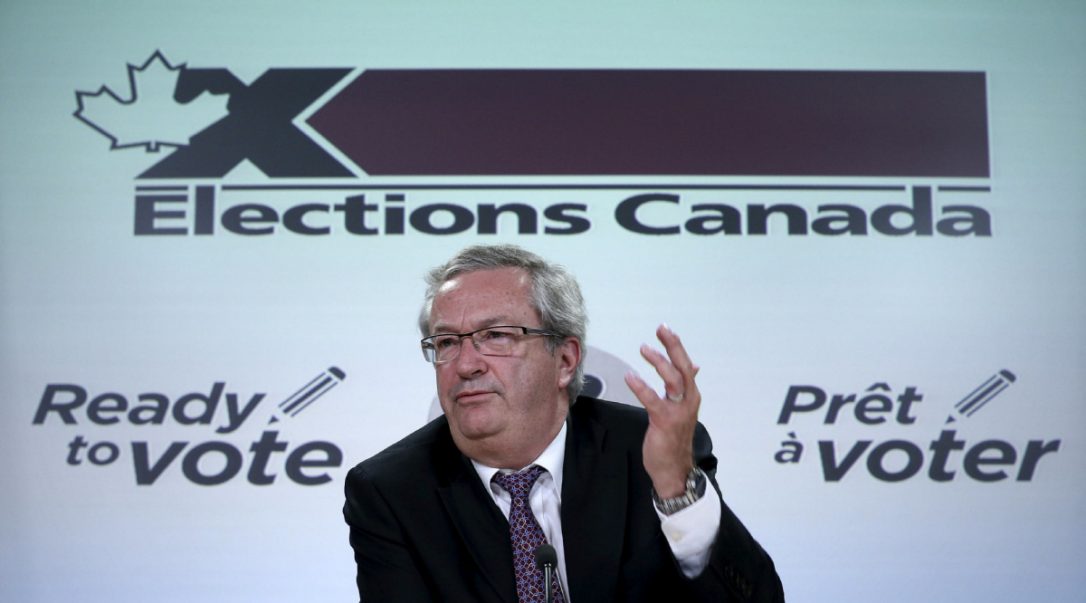
Canada’s Chief Electoral Officer Marc Mayrand says Elections Canada had hoped last year’s fixed election date would bring some predictability to their planning for the 2015 vote. But after then-prime minister Stephen Harper asked Gov. Gen. David Johnston to dissolve Parliament, Elections Canada had to deploy its field operations immediately, causing challenges.(CHRIS WATTIE / REUTERS)

By  

September 21, 2016

OTTAWA—Elections Canada experienced some headaches dealing with the longest federal campaign in modern Canadian history, says a new report from the chief electoral officer.

Chief electoral officer Marc Mayrand said Elections Canada had hoped last year’s fixed election date would bring some predictability to their planning for the 2015 vote.

That went out the window, however, when then-prime minister Stephen Harper asked Gov. Gen. David Johnston to dissolve Parliament on Aug. 2, kicking the campaign into gear more than a month earlier than expected.

“The absence of a fixed start date, or a specified time range within which to conduct the election, resulted in significant deployment challenges and delays,” said the report released Wednesday.

Elections Canada plans to make recommendations on how to better define the duration of an election period in its upcoming report to Parliament, expected within the next two weeks.

The report said Elections Canada had been anticipating that the campaign period for the Oct. 19 election would be officially launched in mid-September.

The plan was to begin deploying field operations Sept. 1, which included finalizing temporary office leases, arranging for computer and telephone services, ordering election materials and hiring local office staff.

When the campaign got underway a full month earlier than expected, Elections Canada had to review its planning and deploy its field operations immediately.

That meant many returning officers had to renegotiate new leases for the 78-day writ period, with 107 of them having to find new office locations entirely.

The report said about 95 per cent of the returning offices were open within eight days of the election call, with the last one opened Aug. 18 and the last satellite office opened the next day.

For the 2011 election, all offices were up and running within three days of the start of the writ period, the report noted.

“There is no doubt that, for the first few days of the election campaign, some electors and political entities did not get the level of service they had been accustomed to in previous elections,” said the report.

It also said moving more of their services online might have eased the impact.

The report also outlines issues with voting on First Nations reserves, where 14 polling places in nine ridings ran low on ballots on election day.

A total of 13 voters, all from the same polling place, were unable to cast a ballot when election officers were uncomfortable with photocopied ballots and refused to give them to voters, contrary to instructions issued by Mayrand.

“Elections Canada sincerely regrets that these electors could not exercise their franchise,” said the report.

The report said a contributing factor was the low rate of voter registration, which caused officers to underestimate the turnout on election day.

“Returning officers will take this into account to improve their planning for the next general election.”

Mayrand said his upcoming report to Parliament will include suggested changes to the Canada Elections Act that would give the independent agency the flexibility it needs to modernize the voting process, including by increasing the use of technology.

“Electors increasingly want to vote when and where it suits them — no longer just on election day at a designated polling station,” Mayrand wrote.

It is unlikely, however, that Mayrand will recommend a wholesale move to online voting.

He expressed concerns about its risks when he appeared before the House of Commons committee studying electoral reform in July, saying that Elections Canada was not currently planning to introduce it for 2019 and asked the committee to consider limiting its scope, at least at first, to Canadian living abroad or with mobility issues.

Source: Federal campaign in 2015 caused headaches for Elections Canada: report | Toronto Star

TSX jumps 1.3 pct as Fed holds steady, gold miners surge

tsx-stock-exchange-building

reuters.com

September 21, 2016 

* TSX ends up 188.84 points, or 1.30 percent, at 14,710.82

* All of the TSX’s 10 main groups move higher

By Alastair Sharp

TORONTO, Sept 21 (Reuters) – Canada’s main stock index notched its highest close in almost two weeks on Wednesday as gold miners surged after the U.S. Federal Reserve held interest rates steady, which also boosted shares of dividend-paying utility companies.

Adding to the upward momentum, energy companies gained as oil prices rose sharply after a third surprise weekly drop in U.S. crude stockpiles.

The Toronto Stock Exchange’s S&P/TSX composite index ended up 188.84 points, or 1.30 percent, at 14,710.82, its highest finish since Sept. 8. All of the index’s 10 main groups gained.

The Fed strongly signaled it could still tighten monetary policy by the end of this year, while three dissenters said they favored raising rates this week.

“The market will see this as a continuation of the standard operating procedure thus far, namely that rates are lower for longer, that this is a very cautious Fed,” said John Stephenson, president at Stephenson & Company Capital Management.

“I think the reality is this is a Fed that is more market-dependant than it is data-dependant,” he added.

The materials group, which includes precious and base metals miners and fertilizer companies, jumped 4.6 percent, as the Fed news helped extend gold’s gains after the Bank of Japan earlier adopted a target for long-term interest rates. Barrick Gold Corp surged 7.9 percent higher to C$24.51 and Goldcorp Inc advanced 6.2 percent to C$22.06.

The energy group rose 1.8 percent, with Canadian Natural Resources Ltd up 1.7 percent at C$39.33 and Suncor Energy Inc adding 1 percent to C$34.40.

Industrials rose 1.2 percent, including gains for railroad stocks, while financials advanced 0.6 percent.

Utilities gained 1 percent as the Fed hold pushed investors back towards stocks that offer yield.

“There are no bargains out there. The yield plays in general have been picked over, so it’s very hard to find something that’s attractive for a yield perspective that’s also attractive from a valuation perspective,” Stephenson said.

BlackBerry Ltd shares rose 2.2 percent to C$10.20. The company has agreed to offer anti-hacking software from a startup that last year discovered a major Android bug, it said, as the once-dominant smartphone company seeks to leverage ties to corporate and government clients to boost its software revenue.

The value of Canadian wholesale trade rose in July for the fourth consecutive month, posting a 0.3 percent gain on strength in the motor vehicle and parts subsector, Statistics Canada said.

(Reporting by Fergal Smith; Editing by Chris Reese and Meredith Mazzilli)

Source: CANADA STOCKS-TSX jumps 1.3 pct as Fed holds steady, gold miners surge | Kitco News

CETA trade deal: Canada refuses to budge over terms thrashed out with EU

Canada’s Trade Minister Chrystia Freeland/EU flags

By SIMON OSBORNE AND MONIKA PALLENBERG

September 21, 2016

The Comprehensive Economic and Trade Agreement (CETA) will eliminate 98 of trade tariffs between Canada and EU countries if it is finally accepted next month.

But critics of CETA fear it is stacked to heavily in Canada’s favour and could harm social standards across the EU.

Canada’s Trade Minister Chrystia Freeland is in the Austria capital Vienna  pressing for the agreement to be signed before the end of October.

Canadian Trade Minister Chrystia Freeland with Austrian Vice-Chancellor Reinhold Mitterlehner

She said: “Let me be very clear in this regard: We will not renegotiate the Ceta Treaty. That would be like opening Pandora’s box.

“Nevertheless, we will find a solution that is mutually satisfactory for the protection of public services, for example.

“We have very similar views and share the same values – which isn’t the case for all of our trading partners by the way.

“The Canadian society thinks it is important that there are effective public services.”

CETA negotiations were concluded in August 2014 with the agreement to be approved by the Council of the European Union, the European Parliament and all EU member states.

Some within the EU are unhappy with CETA

One diplomat in Brussels, who is in favour of completing CETA by the end of the year, said it would have “a disastrous effect on the credibility of the EU’s trade policies” if CETA fell through.

He added: “No one would ever again engage in years of negotiations with us to see it all go south the last minute.”

Ms Freeland said: “As soon as I came into office, I let a team investigate how we can advance our trade policy. They found the solution in CETA, therefore we have in fact reformed investment protection with the EU.

“We can go on as before. That would not be good enough, neither for me personally, nor for Canada.”

She continued: “You can think the agreements are completely wrong, cancel them and build walls: that is what the right in most industrialised countries want.

“If now even the progressive forces think only the perfect solution is acceptable – what can we concretely offer to the people who want to build walls as an alternative?

“We Canadians want more advanced solutions for open societies now, with the Europeans or with other partners.”

Germany’s Social Democrats have finally given their backing the trade deal paving the way for the bloc to give its approval.

Source: CETA trade deal: Canada refuses to budge over terms thrashed out with EU | World | News | Daily Express