China’s Manufacturing PMI Weakens to Lowest in Three Years

China’s manufacturing conditions slipped to the weakest level in more than three years as sluggishness in the nation’s old growth drivers adds to risks facing the government’s growth target.

The official purchasing managers index fell to 49.6 in November, the National Bureau of Statistics said Tuesday — the weakest level since August 2012. That compared with a median estimate of 49.8 in a Bloomberg survey of economists, which was also the level for September and October. The non-manufacturing PMI rose to 53.6 from 53.1 a month earlier. Numbers below 50 indicate deterioration.

Six central bank interest rate cuts in a year haven’t been enough to spur a recovery in manufacturing as a property downturn and industrial overcapacity weigh on the sector. Premier Li Keqiang’s goal of about 7 percent expansion for 2015 is at risk, even as employment has held up thanks to resilience in services industries.

 “China’s manufacturing sector remains sluggish due to the property slowdown,” said Zhou Hao, a Singapore-based economist at Commerzbank AG. “While property prices are turning around led by first-tier cities, housing investment continues to moderate, reflecting a significant property inventory overhang.”

The Shanghai Composite Index was 0.2 percent lower at 9:35 a.m. local time. The onshore yuan — which won approval Monday for addition to the IMF’s list of reserve currencies — was little changed after the data.

Readings of output, new orders, inventories and employment all weakened from October, the manufacturing PMI report showed.

A range of private indicators for November had suggested conditions remained weak for China’s industrial sector. A privately compiled PMI and a gauge based on search engine interest in small and medium-sized businesses deteriorated last month, while a sentiment indicator dropped sharply from October.

 A PMI reading for the steel industry slumped to 37 in November.

“The steel sector in China continues to come under overcapacity pressures as well as declining demand on the back of slumping property investment,” according to a recent report by Liu Li-Gang, head of China economics at Australia & New Zealand Banking Group Ltd. in Hong Kong.

To combat the downturn, the People’s Bank of China has cut benchmark borrowing costs to a record low and is adding funds to the banking system as it moves to a new monetary framework.

“Substantial policy support has yet to make the economy any better, though it has at least stopped it from getting worse,” Bloomberg Intelligence economists Tom Orlik and Fielding Chen wrote in a note. “Policy will remain supportive, including further rate cuts in 2016 and amped up fiscal spending. Accelerated easing is not yet called for.”

Source: China’s Manufacturing PMI Weakens to Lowest in Three Years – Bloomberg Business

Electric buses too costly and complex, Metro Tasmania says

State-owned public transport operator Metro Tasmania has ruled out investing in electric buses until the technology improves and becomes cheaper.

Metro chairwoman Lynn Mason told a Government business enterprise scrutiny hearing that it was preparing a long-term carbon reduction plan, but could not afford to buy any electric buses.

The business, which operates at least 218 public buses across the state, is instead considering replacing some of its diesel-fuelled fleet with hybrid buses.

Ms Mason told the hearing an Adelaide bus company had paid about $1 million for an electric bus as part of a trial, double the amount the average bus costs Metro Tasmania.

“We simply could not afford to embark on that kind of experimental technology until it’s far more reliable, we’re confident that it’s suitable to our particular terrain, and the price comes down,” she said.

The State Opposition promised to invest $10 million in electric vehicles, if it wins the next election, including retro-fitting public buses to run on electricity.

Infrastructure Minister Rene Hidding described the policy during today’s hearings as “voodoo economics”.

Metro Tasmania has recently purchased 11 second-hand buses from Melbourne airport to service routes in Burnie.

Payments to government defended

Earlier, the Motor Accidents Insurance Board (MIAB) fronted the parliamentary scrutiny hearings.

The State Opposition and the Greens questioned how the business could afford to pay more to the State Government when profits had decreased.

The board upped its contribution to the Government from half of its average after-tax profits over the last four years to 60 per cent, as well as providing a one-off special dividend of $100 million during the last financial year.

MAIB chairman Don Challen told the committee the board was confident it would be able to meet all claims from people injured on Tasmania’s roads after paying increased dividends to the Government.

“I’ve got total confidence we will be able to meet our liabilities with no concern,” he said.

“We would not have recommended these dividends unless we were totally comfortable.”

Source: Electric buses too costly and complex, Metro Tasmania says – ABC News (Australian Broadcasting Corporation)

Chinese medicine trial for dementia patients

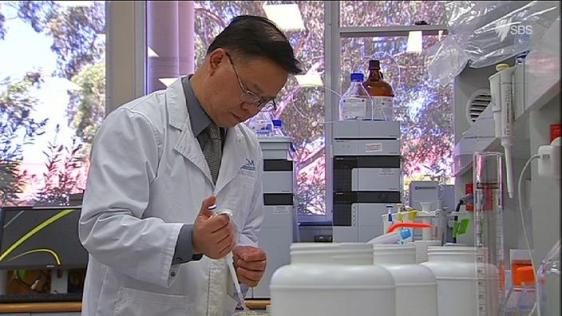
Researchers from the National Institute of Complementary Medicine at the University of Western Sydney, today launched the final phase of a clinical trial into a herbal remedy known as Sailuotong (SLT), after pilot studies found the product could improve the memory and cognitive function of dementia patients.

“It’s very exciting…it’s taken us 10 years to get here,” Chief Investigator from the National Institute of Complementary Medicine (NICM), Associate Professor Dennis Chang said.

“We are looking at some medication which can slow down the progression and improve the quality of life of patients.”

More than 340,000 Australians are living with dementia, with a new case diagnosed every six minutes.

Behind Alzheimers, vascular dementia is the second most common form of dementia, often characterised by mini strokes, however there is no cure or any approved medication for patients to take.

“We are looking into potentially, one of the early  approved medications for vascular dementia,” Associate Professor Chang said.

Sailuotong is a pill made up of a complex combination of ginko, ginseng and saffron.

“We are not simply throwing those three herbs into a pot and boil and drinking them,” Chang said.

“There is lots of science behind that… We use different methods to bring out the so called bioactive components of them,” he added.

The $3-million study is a joint project with the Xiyuan Hospital and the China Academy of Chinese Medical Sciences in Beijing.

The Australian study will be followed by a second major trial in China.

“If the two trials prove to be successful or to be effective then the next phase would be to look into registration (of the product) with a regulatory body such as the Therapeutic Goods Administration,” Associate Professor Chang said.

Today’s launch of the clinical trial, involving 230 patients at the University of Western Sydney’s Campbelltown campus, was attended by Chinese Government delegates.

The director of the National Institute of Complementary Medicine, Professor Alan Bensoussan, said the recognition from the Chinese authorities was extraordinary, and showed the importance of the trial.

“What you’ve got is a recognition at state level of the kind of research that we’re doing,” Professor Bensoussan said.

He said the pilot studies had been promising.

“All the signs are very positive in terms of the potential [of the herbal remedy] to impact on a number of areas including improving blood flow to the brain which is one of the contributors to vascular dementia,” Professor Bensoussan said.

Burt Lancaster, 70, who suffers from vascular dementia, welcomed news of the trial.

“It would be great to be able to remember things…I’d love it,  I would, as far as my memory goes, I really would love it,” Mr Lancaster said.

Mr Lancaster’s wife Margaret noticed his memory was failing him two years ago, and said her husband is now completely reliant on her.

“The other morning he got up and said he didn’t know where he was…every day it’s getting worse,” Mrs Lancaster said.

Mrs Lancaster said while the physical strain was one thing, the social impact of the disease could also be devastating.

“People avoid you, they avoid you with this complaint,” she said.

Vascular dementia patients will first be recruited for the trial from five hospitals in New South Wales, and later in Melbourne, Brisbane, Adelaide and Perth.

The group will be separated into two trial groups, with one receiving the active ingredients and the other put on a placebo for a period of one year.

Trial results are expected in four years.

Source: Chinese medicine trial for dementia patients | SBS News

Stanford researchers find sleep gene linked to heart failure

Researchers at the Stanford University School of Medicine have identified a gene that, when working properly, appears to reduce the risk of heart failure and improve treatment outcomes, highlighting a possible target for the development of new drugs.

The gene codes for a protein that was first identified when a mutated form was shown to cause narcolepsy.

Caring for patients with heart failure costs the United States $40 billion a year, according to Euan Ashley, MRCP, DPhil, associate professor of cardiovascular medicine at Stanford. Despite the condition’s enormous impact, few new treatments have been developed, and those that exist produce varied responses among patients. One major challenge to the development of new treatments has been the lack of genes that can be confidently associated with heart failure. Ashley is hopeful that the new finding will open doors to evaluating possible treatments.

The research is described in a paper to be published online Nov. 30 in the Journal of the American College of Cardiology. Ashley is the senior author. The lead author is Marco Perez, MD, assistant professor of cardiovascular medicine, who said the study was motivated by the observation that individual patients with heart failure often respond differently to the same types of medical interventions.

“We have noticed some patients with heart failure who get medical therapy respond really nicely,” Perez said. “Their heart function improves dramatically with medications. Whereas other patients, despite medical therapy, continue to worsen and require transplant.”

Perez wondered if there were genetic reasons for the discrepancies in treatment outcomes observed in the study. He suspected genetic variation in the study’s patient group might point toward a link.

From men to mice

The team genotyped heart-failure patients at the extremes of responses — those who had the best and worst responses to therapy. They combined these results with gene expression data from human cardiac tissue available from a large, publicly accessible data set. By combining a variety of approaches including network modeling, which looks at the relationship between genes, the team searched for genetic variants associated with heart health.

Intrigued that their analyses spotlighted a gene near the region coding for the orexin receptor protein, which is known to be involved in the control of sleep, appetite and blood pressure, the team investigated further. Through a series of experiments, the researchers concluded that the gene likely regulates how much of the receptor is made in a cell. They then looked for evidence that the orexin receptor could be involved in heart function and found that its expression was increased in diseased human heart tissue. The researchers wondered whether this could mean that the receptor and its binding partner, orexin, have a protective function in the heart.

“We found this new receptor that looked very promising,” said Ashley. “But what I’m most proud of is that the team didn’t stop there; they went on to validate it in another data set, explore its mechanism in cellular models and then test the effect in several different mouse models.”

Using a mouse model that mimics heart failure through artificially elevated levels of adrenaline, the researchers examined the role of the receptor and orexin. They found that if they gave orexin to the mice with failing hearts, those mice showed better systolic heart function — relating to the contraction phase of a heartbeat — than did mice that did not receive orexin.

Ultrasounds of the hearts in a different group of mice, which were missing the orexin receptor, showed that these mice had greater diastolic heart dysfunction — relating to the relaxation phase of a heartbeat — another hint suggesting that the receptor is important for healthy hearts.

“The exciting thing is that this gene is in a completely different neurohormonal axis — a completely different pathway than what has been looked at previously,” Perez said. “Nobody had ever studied heart function in relation to this gene.”

The project was selected to receive funding from Stanford’s SPARK program, a drug and diagnostic development program that supports promising research with the potential to move from the laboratory to the bedside.

Perez, whose work won him recognition as a finalist for the 2013 American Heart Association Young Investigator’s Award, said he is optimistic that exploring the role of this receptor in the heart could inform new research, possibly leading to the development of novel therapies.

Sleep and hearts

The orexin receptor’s link to narcolepsy was identified in 2000 by a research group that included Emmanuel Mignot, MD, PhD, professor of psychiatry and behavioral sciences, but the new study marks the first time the gene and receptor have been associated with heart failure. Perez, Ashley and their team are eager to do further studies to explore this link.

“The connection between sleep and the heart is fascinating,” said Ashley, who has recently been spending more time interacting with his sleep-expert colleagues in an effort to explore possible associations.

In fact, the finding has raised the question of whether insomnia medications that work by blocking the function of the orexin receptor could harm the heart, although this has not yet been studied, Perez said.

“We already know that sleep apnea is bad for the heart,” said Ashley. “One of the things we are now hoping to do is look at heart function in patients with narcolepsy.”

Source: Stanford University Medical Center

Source: Stanford researchers find sleep gene linked to heart failure | Science Codex

Vote on UK airstrikes in Syria to take place on Wednesday

A Commons debate and vote on whether to launch UK airstrikes against Islamic State in Syria will take place on Wednesday, David Cameron has said.

It comes after Labour leader Jeremy Corbyn offered his MPs a free vote on the PM’s proposal to begin strikes.

Mr Corbyn opposes the strikes but has decided not to force his MPs to also vote against the proposal.

Source: Vote on UK airstrikes in Syria to take place on Wednesday