Oil down again; glut forces biggest weekly loss in eight months

Oil slumped again on Friday, extending the week’s loss to the largest in eight months, as swelling storage of crude on both land and sea pressured prices.

Brent, the global benchmark for oil, settled down 1 percent and less than $2 from a new 6-1/2-year low.

U.S. crude fell 2 percent, barely holding above $40 a barrel.

Both benchmarks lost 8 percent on the week, the most since mid-March.

Oil prices have fallen in seven of the last eight sessions, with losses accelerating after U.S. government data on Thursday affirmed a seventh weekly rise in U.S. crude inventories that took stockpiles near April’s record highs.

Adding more pressure to prices, data on Friday showed the first rise in the U.S. oil rig count in 11 weeks.

The International Energy Agency (IEA) said there was a record 3 billion barrels of crude and oil products in tanks worldwide.

“The evolving bearish global balances that we alluded to all year are acquiring increased transparency,” said Jim Ritterbusch of Chicago-based oil consultancy Ritterbusch & Associates.

Brent settled down 45 cents at $43.61 a barrel, as the December contract which served as the front-month expired. It lost nearly $4 on the week.

U.S. crude finished down $1.01 at $40.74, losing $3.65 on the week.

The slump extended to oil products as well, with U.S. gasoline futures closing near 10-month lows.

While the downturn was triggered by weak fundamentals across the petroleum complex, oil was also caught in a broader commodities selloff. The Thomson Reuters/Core Commodity CRB Index, a global gauge for the asset class, was near its lowest since 2002.

An estimated oversupply of 0.7 million to 2.5 million barrels per day has pushed crude prices down by almost two-thirds since June 2014.

Tens of millions of barrels are sitting on tankers at sea, looking for buyers.

The IEA said a mild winter could further swell the global glut.

The premium for storing U.S. crude for one year over crude for delivery in December hit record highs on Friday as traders deferred shipments in the hope of getting higher prices later.

The entire strip of futures prices for the next six months has also weakened over the past four weeks. [KEMP/]

Options trading has, meanwhile, spiked with a soaring number of options taken to sell crude if prices fall to $40 or even $25.

(Additional reporting by Libby George in London and Henning Gloystein in Singapore; Editing by David Gregorio Editing by Nick Zieminski)


Source: Oil down again; glut forces biggest weekly loss in eight months | Reuters
Unsold oil stuck on tankers threatens world market gridlock

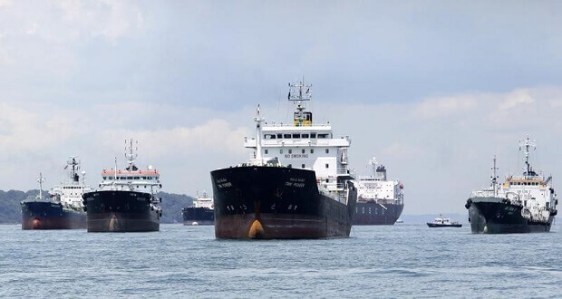
LONDON – As land storage sites worldwide reach brimming point due to a supply glut, tens of millions of barrels of oil are sitting on tankers looking for homes – threatening logistical paralysis.

The International Energy Agency on Friday said stored oil has hit 3 billion barrels. Traders say the excess of crude is leaving tankers queuing at major ports worldwide, lengthening waiting times to days, weeks and even months.

The lack of space to unload oil is tying up the tankers needed to keep oil moving, and wells running. The bottlenecks could force oil suppliers into quick, cut-priced sales just to free space, adding more pressure to oil prices already close to six-year lows.

The cost to hire a supertanker – each capable of carrying 2 million barrels of oil – recently hit its highest level since 2008 at over $100,000 a day last month and currently remains at over $70,000 a day.

“We’re alarmed,” said Eugene Lindell, senior crude market analyst with JBC Energy. “There are growing indicators that it’s getting harder to digest this crude.”

In related news, Oil tankers queueing in U.S. Gulf seen as new symbol of glut.

FROM TEXAS TO CHINA

In the U.S. Gulf, more than 50 commercial vessels were anchored outside ports near Houston at the end of last week, of which 41 were tankers.

Trade sources said there were seven aframax tankers – each capable of carrying up to 700,000 barrels of oil – sitting outside Rotterdam waiting to unload. There was also nearly 15 million barrels of unsold West African crude oil either loaded on tankers or waiting to be loaded in the next two weeks.

Shipping and port sources, pointing to full onshore storage, said up to 20 supertankers were held up in Iraq’s Basrah terminal, with vessels experiencing loading delays of up to 12 days.

One port source said at China’s Qingdao port, one supertanker was stuck at anchorage since August and another since last month.

“There are delays across the board as a lot of cargo is being put through the system. Port delays in Basrah and China in particular but also in many other areas. This is tying up capacity,” said one tanker source.

Shipping consultants MSI said the near-term outlook for crude tankers was positive.

“Storage space in China and Europe is dwindling, leading to extended discharge times. Couple this with ongoing high load waiting times in Iraq and Turkish Straits delays and (tanker) availability is tight,” MSI said.

A problem for oil players is that tankers have not been booked on long-term charters. This is in contrast to the floating storage play seen earlier this year, when ships were parked at sea until prices recovered and were then sold by oil traders for a profit.

Sources said the current build up was parked on vessels hired for shorter journeys, meaning oil suppliers will have to unload soon or face more freight expenses.

“Those holding stocks will either have to dump their cargoes at cheaper prices or pay those higher freight costs,” a trade source said.

Another added: “Each minute the clock is ticking, they’re losing money.”

(Additional reporting by Amanda Cooper, editing by William Hardy)

Source: Unsold oil stuck on tankers threatens world market gridlock | marcellus.com

What The Oil And Gas Industry Is Not Telling Investors | OilPrice.com

Oil prices crashed because of too much supply, but will rebound as production shrinks and demand rises. But what if long-term demand for oil ends up being sharply lower than what the oil industry believes?

That is the subject of a new report from The Carbon Tracker Initiative, which looks at a range of scenarios that could blow up oil industry projections for long-term oil demand.

Source: What The Oil And Gas Industry Is Not Telling Investors | OilPrice.com

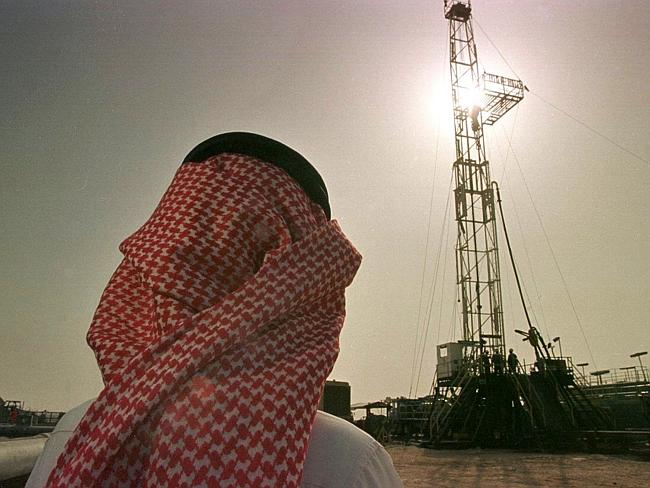
Saudi Arabia could run out of cash due to low oil prices | Business News | Business and Finance News | | The Courier-Mail

WATCHING your bank account dwindle by $930 billion in five years is a scary prospect. But that’s the reality facing one of the world’s richest countries, which could run out of cash by 2020.

Source: Saudi Arabia could run out of cash due to low oil prices | Business News | Business and Finance News | | The Courier-Mail