
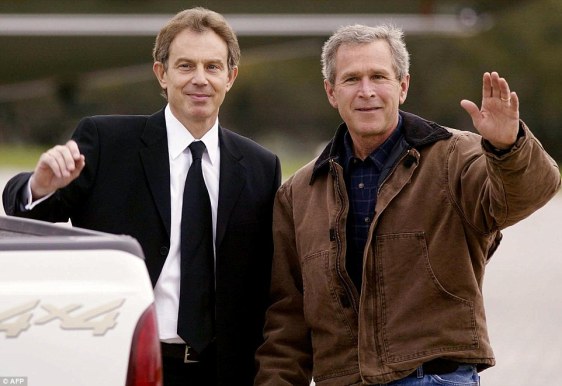
 A sensational leaked White House memo shows that Blair had given an unqualified pledge to sign up to the conflict a year before the 2003 invasion started – despite public statements to the contrary.
Category Archives: usa politics
Baseball striking out on player pay equity
Is it so much to ask of an organization to pay its employees a fair wage? Trials and tribulations are part of the journey to the show, but it shouldn’t be at the expense of living a decent life. As fans, we should demand the very best athletes that our dollars can buy. It doesn’t seem that those with two or more jobs get to focus solely on baseball.

By Bret Thixton May 18, 2014 http://www.myjournalcourier.com
Under the federal minimum wage, an individual working full-time can expect to earn around $15,080. Most Minor League Baseball players earn between $3,000 and $7,500 in a five month season. The average Major League Baseball player will make $3.39 million in a year.
When thinking of income inequality, the discussion has rarely focused on the professional sports world. While there exist income differences among the major sports, a glaring issue exists in the world of baseball. The numbers above point to a huge gap in the salaries for the athletes in our national pastime.
There can be a number of Minor League affiliates associated with a Major League organization. From AAA to rookie leagues, this system is designed to prepare players to make the leap to the MLB. The development of these players is important to Major League clubs as they work toward the ultimate goal of winning the World Series. However, only a very select few of these players will ever make it to the show. The players who don’t make it to the big leagues serve simply as agents of making sure the ones who do are ready.
The importance of these players can’t be understated. Because of them, the players that eventually make the big leap are prepared for the competition at the highest level.
The MLB has been able to get away with these low wages due to a historical exemption from antitrust laws. They are allowed to set salaries and working conditions without players suing under the Sherman Act. This, combined with the inability to unionize, has led to low wages and no major lawsuits.
A new lawsuit, Senne v. MLB, sparked discussion over the payment of these minor leaguers. This lawsuit, brought on by three former Minor Leaguers, claims that wages were unlawfully low. It is currently in the U.S. District Court for the Northern District of California for violations of wage and overtime laws.
The usage of contracts is what the MLB will rely on as they prepare to face legal action. Because players voluntarily agreed to these contracts of their pay, they aren’t guaranteed any more pay. The Fair Labor Standards Act classifies players as professional employees, making players exempt. The players either deal with these terms or do not play.
However, the other side is arguing that the MLB is violating the Fair Labor Standards Act and other laws that guarantee minimum wage and overtime pay. In a sport where you must constantly train and perform, it’s easy to put in more than 40 hours in a week. The players who are suing the league claim to put in 60 or 70 hours in a typical work week.
The MLB and MiLB enjoy the low wages for the players and the low cost of attendance for the games, as they are quite popular in the cities they play in. They state that an increase in wages would be passed onto fans. That is not fair, nor the right answer to the issue.
When Alex Rodriguez gets paid $29 million per year, it’s hard to justify not paying the Minor Leaguers a fair wage. By subtracting just $1 million off the top contract in each organization, an organization could pass around $5,000 to each and every player in their MiLB affiliated clubs.
It may not be fair to take money away from those who pull in the top contracts. But at some point, the MLB needs to understand the true value of its Minor League systems. Minor Leaguers playing today make less than those in 1976, while mega deals seem to break records every year.
These minor leaguers often get jobs in the off-season to make ends meet. This doesn’t allow them to focus on baseball in the off-season or play in other winter leagues.
Is it so much to ask of an organization to pay its employees a fair wage? Trials and tribulations are part of the journey to the show, but it shouldn’t be at the expense of living a decent life. As fans, we should demand the very best athletes that our dollars can buy. It doesn’t seem that those with two or more jobs get to focus solely on baseball.
In a culture that worships veterans and the journey to the majors, baseball has lost sight of the importance that these young men bring to the game itself.
Jocks on strike? Congress looks at unions organizing athletes
By Eric Schulzke, Deseret News National Edition
Monday, May 19 2014
With the National Labor Relations Board deliberating whether to clear the way for Northwestern’s football team to unionize, a congressional panel met last week to debate how to respond to charges that college atheletes are exploited labor.
Whatever comes of the current dispute at Northwestern, the controversy puts pressure on the NCAA to change how it treats atheletes. Some changes appear to be in the likely result, whichever way the unionization fight goes.
“For its part,” the Chronicle of Higher Education notes, “the NCAA has stepped up efforts to help athletes. Last month its Division I Board of Directors approved a measure allowing colleges to provide more meals for players. The board also endorsed changes in the Division I governance structure that are expected to provide wealthy colleges with more autonomy, setting the stage for big-time athletics programs to increase the value of scholarships and to provide new health and welfare benefits.”
Many of the lawmakers at the hearing doubted that unionization was a real answer. “Can the NCAA and institutions do more to protect students? Absolutely,” said Rep. John P. Kline Jr., a Minnesota Republican and chairman of the House Education and the Workforce Committee in prepared remarks.
“They could start by giving students a greater role in shaping policies that govern college athletics. They could also work to help ensure a sports injury doesn’t end a student’s academic career and find a responsible solution that will deliver the health care injured players may need. While promoting change is often difficult, student athletes deserve a determined effort to address these concerns,” Kline added.
Prior to the hearing, union organizers, including a former UCLA linebacker, expressed fears that Congress would consider legislation that would head off the unionization effort.
“CAPA is concerned that this hearing has been called in an attempt to legitimize the NCAA’s illegitimate effort to eliminate college athletes’ rights,” Ramogi Huma, president of the College Athletes Players Association, told the Associated Press.
Northwestern’s football players voted last month on whether to unionize, but the results of the vote will not be made known until after the National Labor Relations Board makes a final determination on whether they are allowed to do so.
ESPN noted that “the ballots will not be opened until after the national NLRB body rules on whether to accept the ruling of its regional director in Chicago that players are employees. But the 76 eligible voters — those scholarship players with remaining NCAA eligibility — are under significant pressure to vote no.”
“Head football coach Pat Fitzgerald has led the defensive effort,” Slate noted, “which seems befitting for a former linebacker. A generally beloved figure in the locker room and on campus, he has been meeting with players to ‘educate’ them about the apparently dreadful repercussions of bringing union reps onto campus. Publicly, he’s simply argued that the school can address athletes’ concerns, like better medical care, without collective bargaining.”
Editorial: Labor, Then and Now
By THE EDITORIAL BOARD http://www.nytimes.com
August 31, 2013
On Thursday, the day after the 50th anniversary of the March on Washington, thousands of fast-food workers in 60 cities walked off their jobs, the latest in an escalating series of walkouts by low-wage workers demanding higher pay and the right to organize without retaliation.
The parallels, though inexact, are compelling. A half-century ago, the marchers called on Congress to increase the minimum wage from $1.15 an hour to $2 “so that men may live in dignity,” in the words of Bayard Rustin, one of the chief organizers of the march. Today, the fast-food workers also seek a raise, from the $9 an hour that most of them make to $15.00 an hour. That’s not much different from what the marchers wanted in 1963; adjusted for inflation, $2 then is $13.39 an hour today.
The strikers are targeting their employers — profitable companies like McDonald’s, Yum Brands (which includes Taco Bell, Pizza Hut and KFC) and Wendy’s. But Congress could help. Today’s minimum wage is a miserly $7.25 an hour — which is actually lower, adjusted for inflation, than it was 50 long years ago. Raising it would support the legitimate demands of the strikers and underscore the pressing needs of the country’s growing ranks of low-wage workers.
President Obama has noted, correctly, that increases in labor productivity have long failed to translate into higher wages for most Americans, even while income for the richest households has skyrocketed. His proposed remedies, however, leave much to be desired — a pathetic increase in the minimum wage, to $9 an hour by 2016, plus hopeful assertions that revolutions in energy, technology, manufacturing and health care will create good-paying jobs.
On its own, however, growth will not raise wages. What’s missing are policies to ensure that a large and growing share of rising labor productivity flows to workers in the form of wages and salaries, rather than to executives and shareholders. Start with an adequate minimum wage. Provide increased protections for workers to unionize, in order to strengthen their bargaining power. Provide protections for undocumented workers that would limit exploitation. Add to the mix regulations to prevent financial bubbles, thereby protecting jobs and wages from ruinous busts. Adopt expansionary fiscal and monetary policies in troubled times to sustain jobs and wages.
Low-wage workers would also benefit from executive-branch orders to ensure fair pay for employees of federal contractors. All workers need stronger enforcement of labor law so they are not routinely misclassified in ways that deny wages, overtime and benefits. They also need a tax system that is more progressive to shield wage earners from unduly burdensome tax increases or government cutbacks.
They need, in brief, pro-labor policies that have been overlooked for decades, with devastating results: from 1979 to 2012, typical workers saw wage increases of just 5 percent, despite productivity growth of nearly 75 percent, while wage gains for low-wage workers were flat or declined.
Recent experience has been even worse. In the decade from 2002 to 2012, wages have stagnated or declined for the entire bottom 70 percent of the wage ladder. The marchers had it right 50 years ago. The fast-food strikers have it right today. Washington has it wrong.
Fast Food Workers Try To Super-Size Their Wages
August 29, 2013 6:36 PM http://minnesota.cbslocal.com

ROSEVILLE, Minn. (WCCO) — Heading into the Labor Day weekend, a growing labor movement is gaining traction across the United States.
It’s a union-backed effort known as “Fight for 15″ and it involves fast food employees who believe they should make $15 an hour.
Workers in more than 50 cities picketed outside restaurants Thursday. There were no organized protests in the Twin Cities, but some other low-wage earners did turn out to show their support.
Centro de Trabajadores Unidos en la Lucha (CTUL) organized a rally across from the Roseville Super Target among store cleaners who say their own wages are too low.
“The average wage of a cleaning worker is $8.50 an hour which is not enough to raise a family and without benefits,” said CTUL organizer Veronica Mendez.
“These are the kind of jobs that are available nowadays so all of us are fighting together to be able to change the standards in this new economy.”
The fast food protests started last November with a single rally in New York and they have since spread across the country.
Restaurant industry leaders say a significant wage increase would force franchise owners to either raise prices or reduce the number of workers.
“A doubling of the minimum wage would significantly impact the ability of the industry to create jobs,” said Scott DeFife, spokesperson for the National Restaurant Association.
“According to the Bureau of Labor & Statistics data, restaurant industry workers that are earning the starting wage are not typically the primary breadwinner in their family. And they’re usually supplementing an income that has an average household income of over $62,000 a year.”
The Employment Policies Institute, a Washington-based think tank, bought an ad in the Wall Street Journal claiming more restaurants would have to automate some tasks currently done by humans.
Many diners we spoke with at Rosedale Center said they sympathize with workers, but they also have their own budgets.
“I usually like to get more food for the dollar since it’s fast food or whatnot,” said Jeff Ruschen of Fridley.
“I would eat fast food less,” said Dana Schultz of St. Francis. “It was pretty expensive today.”
Joseph Brown Thunder, of Falcon Heights, said workers do deserve a wage increase.
“Will it affect me going out with my family?” he asked, “Of course it will. But at the same time, who’s going to be doing those kind of jobs and if you don’t give them a liveable wage, how are they going to feed their family?”
This movement among service workers is unusual in that it’s not targeting a single employer, but rather an entire industry.
 Andrew Phillip Chernoff