No negotiation with terror groups: Assad

“Everyone who carries a machinegun is a terrorist,” says Syrian President Bashar al-Assad, adding he will not negotiate with armed groups.

In an interview with the Spanish news agency EFE on Friday Assad said he would not hold political talks with any armed groups, and accused Washington and its ally, Saudi Arabia, of wanting “terrorist groups” to join negotiations.

He said Syria had had contact with armed groups for one reason only: “To reach a situation where they give up their armaments and either join the government or go back to their normal life … This is the only way to deal with the militants in Syria.

“There’s no point in meeting in New York or anywhere else without defining terrorist groups,” he said. “For us, in Syria, everyone who holds a machinegun is a terrorist.”

His comments come after an agreement was reached on Thursday by more than 100 members of Syria’s opposition parties and more than a dozen rebel fighting groups to send a joint team to meet the government next month.

Foreign ministers of countries opposed to Assad are due to meet in Paris on Monday to prepare for talks with Russia and Middle Eastern countries in New York on Thursday with a specific focus on trying to form the opposition delegation for the peace talks.

A list of 34 members of a secretariat designated to select the opposition’s negotiating team contained 11 representatives of rebel fighting groups, nine members of the exiled political opposition, six from Syria’s internal opposition and eight independents.

The powerful Islamist insurgent group Ahrar al-Sham was represented, along with several Free Syrian Army (FSA) groups that have received military support from states opposed to Assad, such as Saudi Arabia and the United States.

At one point on Friday Putin appeared to hold out an olive branch to the West, making what appeared to be Russia’s first explicit statement of support for rebels opposed to Assad in the fight against Islamic State.

At an annual meeting at the Defence Ministry, he said the FSA was engaged in “offensive actions against terrorists, alongside regular forces, in the provinces of Homs, Hama, Aleppo and Raqqa”.

“We support it from the air, as well as the Syrian army, we assist them with weapons, ammunition and provide material support.” he said.

But FSA groups dismissed any suggestion of Russian support.

Reuters

– See more at: http://www.skynews.com.au/news/top-stories/2015/12/12/assad–syria-prepared-to-negotiate.html#sthash.WTMGe6Qa.dpuf
Source: No negotiation with terror groups: Assad

Big Losses for Stocks At Week’s End

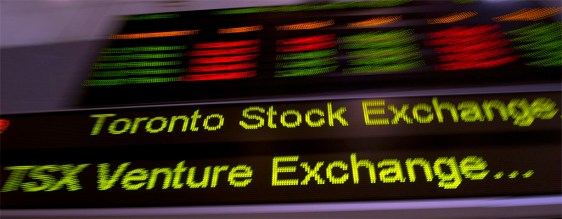
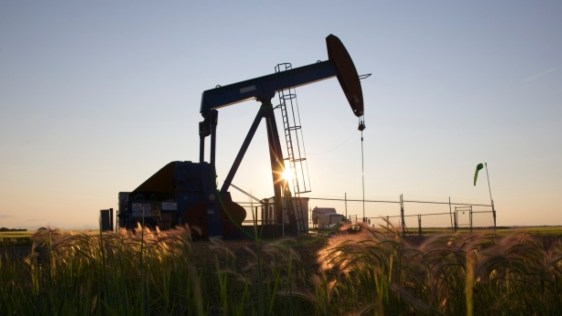
Canada’s main stock index fell hard on Friday, including deep losses for financial and energy stocks after crude oil prices lurched near 11-year lows.

The S&P/TSX composite index plunged 226.64 points, or 1.7%, to close the day and a turbulent week at 12,789.95, its lowest level in two years. On the week, the index was down close to 4%

The Canadian dollar slid 0.6 cents to 72.80 cents U.S.

Energy-related companies dragged the benchmark down Friday, falling sharply Friday and reversing an earlier weekly gain. The group suffered worst weekly slide in a month.

Canadian Natural Resources was down 97 cents, or 3.2%, to $28.99, while Suncor Energy was off 45 cents, or 1.3% to $35.22.

Financials were also punished after Finance Minister Bill Morneau announced that the federal government would raise minimum down payments on some government-insured mortgages.

Mortgage-lenders Home Capital Group Inc. docked 88 cents, or 3.2%, to $26.83, and Canadian Western Bank fell 79 cents, or 3.4%, to $22.38, to its lowest level since September.

Canaccord Genuity Group Inc. dropped 19 cents, or 3.9%, to $4.67.

Canadian Pacific Railway Ltd. sank $2.03, or 1.2%, to $169.77, before paring the losses after the railroad controlled by Warren Buffett’s Berkshire Hathaway Inc. said it is open to making a competing bid for Norfolk Southern Corp. The company had been the target of a $27-billion takeover effort by Canadian Pacific Railway.

Hudson’s Bay Co slumped $2.50, or 12.6%, to $17.40, after cutting its sales forecast for this year and next in an earnings report late on Thursday.

On the positive side, the maker of Ski-Doo snowmobiles and See-Doo watercraft, BRP Inc., advanced $1.92, or 9.5%, to $22.10, after reporting soaring profit helped by favourable exchange rates.

ON BAYSTREET

The TSX Venture Exchange retreated 2.19 points to 502.09.

All but one of the 13 TSX subgroups were lower on the day, as metals and mining moved lower 3.6%, energy settled 3.4%, and health-care tottered 2.6%.

The lone holdout against the negative tide was gold, up 1.5%.

ON WALLSTREET

U.S. stocks closed out a volatile week with sharp losses Friday, as oil hit near-seven-year lows and news of another corporate merger weighed ahead of the Federal Reserve’s highly anticipated decision on rates next week.

The Dow Jones industrial average plunged 309.54 points, or 1.8%, to close out the week at 17,265.21. DuPont and Goldman Sachs were the greatest weights on the index as nearly all member stocks declined.

The S&P 500 stumbled 41.44 points, or 2%, to 2,010.79, as energy lost more than 3% to lead all sectors lower.

The NASDAQ index deducted 111.71 points, or 2.2%, to 4,933.47, as Apple traded more than 2.5% lower.

U.S. chemical giants DuPont and Dow Chemical officially agreed to merge in an all-stock deal to form a combined company valued at $130 billion U.S. The new firm, to be called DowDuPont, is expected to eventually separate into three entities.

Despite declines of about 5% Friday, DuPont is still up about 4% for the week so far. Dow Chemical traded more than 2% lower Friday, on track for slight gains for the week.

BlackRock traded more than 6% lower, while Legg Mason and Charles Schwab were off more than 4.5% in afternoon trade.

In economic news, October U.S. business inventories were unchanged, while September’s figure was revised to 0.1% from 0.3%

The preliminary read on December U.S. Michigan Consumer Sentiment was 91.8.

November retail sales rose 0.2%. Ex-autos, retail sales rose 0.4%.

The U.S. Labor Department said on Friday its producer price index advanced 0.3% after falling 0.4% in October.

Prices for the 10-year Treasury gained sharply, lowering yields to 2.14% from Thursday’s 2.23%. Treasury prices and yields move in opposite directions.

Oil prices slid $1.22 a barrel to $35.54 U.S.

Gold prices gained $5.16 to $1,076.74 U.S. an ounce.

Source: Baystreet.ca – Big Losses for Stocks At Week’s End

Dow Sheds 300 to End Week

U.S. stocks closed out a volatile week with sharp losses Friday, as oil hit near-seven-year lows and news of another corporate merger weighed ahead of the Federal Reserve’s highly anticipated decision on rates next week.

The Dow Jones industrial average plunged 309.54 points, or 1.8%, to close out the week at 17,265.21. DuPont and Goldman Sachs were the greatest weights on the index as nearly all member stocks declined.

The S&P 500 stumbled 41.44 points, or 2%, to 2,010.79, as energy lost more than 3% to lead all sectors lower.

The NASDAQ index deducted 111.71 points, or 2.2%, to 4,933.47, as Apple traded more than 2.5% lower.

U.S. chemical giants DuPont and Dow Chemical officially agreed to merge in an all-stock deal to form a combined company valued at $130 billion U.S. The new firm, to be called DowDuPont, is expected to eventually separate into three entities.

Despite declines of about 5% Friday, DuPont is still up about 4% for the week so far. Dow Chemical traded more than 2% lower Friday, on track for slight gains for the week.

BlackRock traded more than 6% lower, while Legg Mason and Charles Schwab were off more than 4.5% in afternoon trade.

In economic news, October U.S. business inventories were unchanged, while September’s figure was revised to 0.1% from 0.3%

The preliminary read on December U.S. Michigan Consumer Sentiment was 91.8.

November retail sales rose 0.2%. Ex-autos, retail sales rose 0.4%.

The U.S. Labor Department said on Friday its producer price index advanced 0.3% after falling 0.4% in October.

Prices for the 10-year Treasury gained sharply, lowering yields to 2.14% from Thursday’s 2.23%. Treasury prices and yields move in opposite directions.

Oil prices slid $1.22 a barrel to $35.54 U.S.

Gold prices gained $5.16 to $1,076.74 U.S. an ounce.


Source: WallSt Money US Market Commentary (December 11, 2015 – 5:53 PM EST)

News by QuoteMedia
www.quotemedia.com

Oil, stock markets slide after IEA predicts even lower crude prices

Oil and markets continued to slide on Wednesday after the head of the International Energy Agency predicted a decline in crude prices and weaker oil investment in 2016.

Oil is at its lowest level since early 2009, with the West Texas Intermediate contract falling below $37 US a barrel today before recovering to $37.11 in mid-afternoon.

Brent oil for international delivery was down 21 cents to $40.

Fatih Birol, executive director of the Paris-based IEA, said oil prices could fall in 2016.

“When we look at 2016, I don’t see many reasons why we can see upward pressure on the prices… Demand is weaker and we may well see Iran come back [to the market] and there will be a lot of oil,” Birol said from the sidelines of the COP21 climate conference in Paris

The IEA monitors demand and supply of energy worldwide. He said falling oil prices could affect many oil-consuming countries’ resolve to switch away from fossil fuels.

Oil investment down 20%

Birol said that IEA estimates indicated that investment in the oil industry fell by more by 20 per cent in 2015 – the steepest decline in history. A further decline is seen in 2016.

The Canadian oilpatch has been hoping for higher prices, because much Canadian production is not economically viable at current price levels.

However, OPEC’s decision to leave output at current levels makes it less likely that the worldwide oversupply of oil will ease.

The Canadian dollar came down with the price of crude, falling to below 73.50 cents US in the morning before bouncing higher to 73.61.

Markets were down in Asia and Europe overnight after most commodities continued to fall in price because of fresh signs that the Chinese economy is slowing. Chinese exports fell by 6.5 per cent last month.

The TSX, which has fallen with energy stocks, was down six points to 12,916, its lowest level in two years.

New York’s Dow index fell 98 points to 17,467, while the broader S&P index was down four points to 2,043.

Source: Oil, stock markets slide after IEA predicts even lower crude prices – Business – CBC News

Teck Announces LNG Haul Truck Pilot Project

a008lnga2


VANCOUVER, BRITISH COLUMBIA–(Marketwired – Dec. 9, 2015)

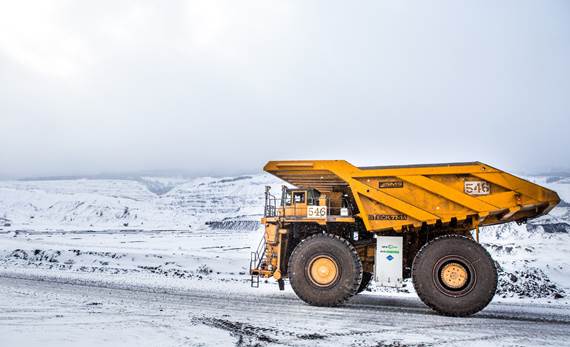
Teck Resources Limited (TSX:TCK.A) (TSX:TCK.B) (NYSE:TCK) is piloting the use of liquefied natural gas (LNG) as a fuel source in six haul trucks at its Fording River steelmaking coal operation in southeast B.C. – marking the first use of LNG as a haul truck fuel at a Canadian mine site.

The use of blended LNG/diesel fuelled haul trucks has the potential for significant environmental benefits and cost savings. LNG produces virtually no particulate or sulphur dioxide emissions and reduces Greenhouse Gas (GHG) emissions by up to 20 percent in comparison to diesel alone. There is the potential to eliminate approximately 35,000 tonnes of CO2 emissions annually at Teck’s steelmaking coal operations and potentially reduce fuel costs by more than $20 million annually by adopting LNG and diesel hybrid fuel across the operations. FortisBC is transporting and supplying LNG to the mine site and is making a financial contribution towards the pilot.

The pilot is one of the steps Teck is taking to achieve its long-term target to reduce annual GHG emissions by 450,000 tonnes at its operations by 2030. To date, Teck has reduced annual emissions by 170,000 tonnes as the result of initiatives implemented since 2011.

“LNG is a fuel source that has the potential to lower costs, significantly reduce emissions and improve environmental performance at our operations,” said Don Lindsay, President & CEO, Teck. “We are committed to minimizing our own carbon footprint while at the same time continuing to provide the mining products that are essential to building a modern, low-carbon society.”

“Like British Columbia, Teck is a global leader in finding innovative ways to reduce GHG emissions while continuing to create opportunity,” said Premier Christy Clark. “It’s a concrete example of the difference clean-burning LNG can make in the fight against climate change.”

Teck, with support from FortisBC, has upgraded the Fording River Operations truck maintenance shop, provided engine conversion kits, installed fuelling facilities and implemented a comprehensive safety program in advance of the pilot.

“Teck is demonstrating leadership by adopting natural gas as a cleaner and more cost-effective fuel solution for their operations,” said Michael Mulcahy, President and CEO, FortisBC. “LNG, as a vehicle fuel source, provides both an economic and environmental benefit to industry in our province. Today’s announcement further builds on the diversity of the more than 400 natural gas-fuelled vehicles in British Columbia.”

The pilot is expected to run until mid-year 2016 and will provide more information about the potential of using LNG more broadly across Teck’s haul truck fleet, creating the opportunity for further fleet conversions to LNG in the future.

Cautionary Statement on Forward-Looking Information

This press release contains certain forward-looking statements within the meaning of the United States Private Securities Litigation Reform Act of 1995 and forward-looking information as defined in the Securities Act (Ontario). Forward-looking statements and information can be identified by the use of words such as “potential”, “target”, “is expected”, or variations of such words and phrases or statements that certain actions, events or results “may”, “could”, “should”, “would” “might” or “will” be taken, occur or achieved. Forward-looking statements include statements regarding the potential for significant environmental benefits and cost savings, expectations regarding CO2 emission elimination, cost reductions and improved environmental performance.

Forward-looking statements involve known and unknown risks, uncertainties and other factors, which may cause the actual results, performance or achievements of Teck to be materially different from any future results, performance or achievements expressed or implied by the forward-looking statements. Factors that may cause actual results to vary include, but are not limited to, unexpected operational issues in the pilot program, unexpected efficiency or reliability issues with the blended LNG/diesel system that lead to reduced LNG usage or the increase in the cost of LNG to our sites beyond projected levels. CO2 emission reductions are based on assumptions regarding the amount of diesel consumption that will be replaced by LNG as well assumptions regarding the efficiency of LNG combustion in the process, among other assumptions. Cost reduction expectations are based on assumptions regarding the price of oil, the cost of LNG and the level at which LNG will replace diesel consumption. Certain of these risks are described in more detail in the annual information form of Teck and in its public filings with Canadian securities administrators and the U.S. Securities and Exchange Commission.

About Teck

Teck is a diversified resource company committed to responsible mining and mineral development with major business units focused on copper, steelmaking coal, zinc and energy. Headquartered in Vancouver, Canada, its shares are listed on the Toronto Stock Exchange under the symbols TCK.A and TCK.B and the New York Stock Exchange under the symbol TCK. Learn more about Teck at www.teck.com or follow @TeckResources.