Walmart to close 269 stores in U.S., South America

Walmart is closing 269 stores, more than half of them in the U.S. and another big chunk in its challenging Brazilian market.

The stores being shuttered account for a fraction of the company’s 11,000 stores worldwide and less than one per cent of its global revenue.

More than 95 per cent of the stores set to be closed in the U.S. are within 16 kilometres of another Walmart. The Bentonville, Ark., company said it is working to ensure that workers are placed in nearby locations.

Walmart Canada told CBC it’s not planning to close any of its Canadian stores.

The store closures will start at the end of the month.

The announcement comes three months after Walmart Stores Inc. CEO Doug McMillon told investors that the world’s largest retailer would review its fleet of stores with the goal of becoming more nimble in the face of increased competition from all fronts, including from online rival Amazon.com.

“Actively managing our portfolio of assets is essential to maintaining a healthy business,” McMillon said in a statement. “Closing stores is never an easy decision. But it is necessary to keep the company strong and positioned for the future.”
Profit warning

Walmart operates 4,500 stores in the U.S. Its global workforce is 2.2 million, 1.4 million in the U.S. alone.

Walmart has warned that its earnings for the fiscal year starting next month will be down as much as 12 per cent as it invests further in online operations and pours money into improving customers’ experience.

Of the closures announced Friday, 154 locations will be in the U.S., including the company’s 102 smallest-format stores called Walmart Express, which were opened as a test in 2011.

Walmart Express marked the retailer’s first entry into the convenience store arena. The stores are about 12,000 square feet and sell essentials like toothpaste. But the concept never caught on as the stores served the same purpose as Walmart’s larger Neighborhood Markets: fill-in trips and prescription pickups.

Also covered in the closures are 23 Neighborhood Markets, 12 supercentres, seven stores in Puerto Rico, six discount stores and four Sam’s Clubs.

Walmart will now focus in the U.S. on supercentres, Neighborhood Markets, the e-commerce business and pickup services for shoppers.

The retailer is closing 60 loss-making locations in Brazil, which account for five per cent of sales in that market. Walmart, which operated 558 stores in Brazil before the closures, has struggled as the economy there has soured. Its Every Day Low price strategy has also not been able to break against heavy promotions from key rivals.

The remaining 55 stores are spread elsewhere in Latin America.

Walmart said that it’s still sticking to its plan announced last year to open 50 to 60 supercentres, 85 to 95 Neighborhood Markets and seven to 10 Sam’s Clubs in the U.S. during the fiscal year that begins Feb. 1. Outside the U.S., Walmart plans to open 200 to 240 stores.

Chris Higgins To Be Put On Waivers Tuesday Morning

CANUCKS BANTER     By Andrew Chernoff    January 11, 2016
Trevor Linden, president of hockey operations  for the Vancouver Canucks, announced during the first period intermission on CBC, that Chris Higgins would be put on waivers on Tuesday morning, due to little action involving moving Higgins at this time.


Satellites dissect Nepal quake

The deep anatomy of last year’s devastating quake in Nepal is revealed in a new analysis by scientists.

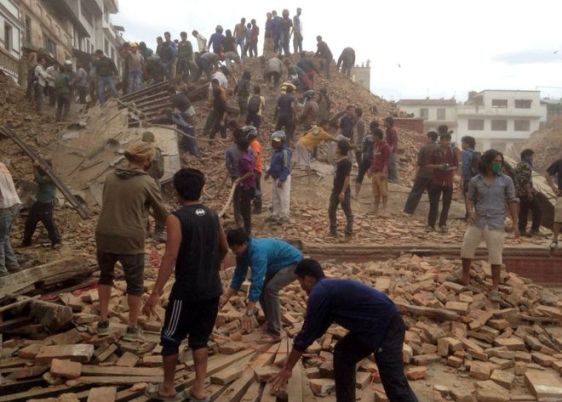
Satellite data is used to show where and how the rocks ruptured under the country, leading to the loss of more 8,800 lives.

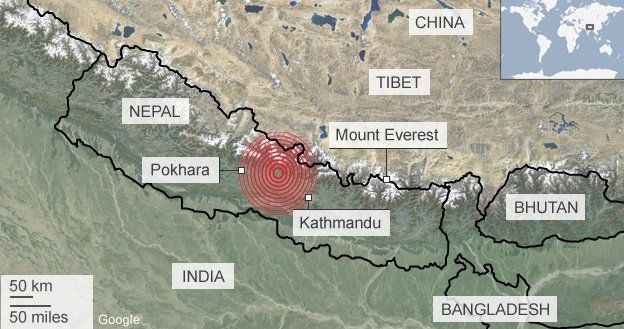
The Magnitude 7.8 tremor occurred at a point where the main fault takes a deep dip just south of the high Himalayas.

This “ramp” structure, as the group calls it, probably also plays a key role in building the famous peaks.

As tectonic forces drive the Indian subcontinent under Central Asia, rocks ride up the ramp, adding a few millimetres a year to the height of the snow and ice-capped mountains.

John Elliott from Oxford University, UK, and colleagues report their assessment of the 25 April quake in the journal Nature Geoscience.

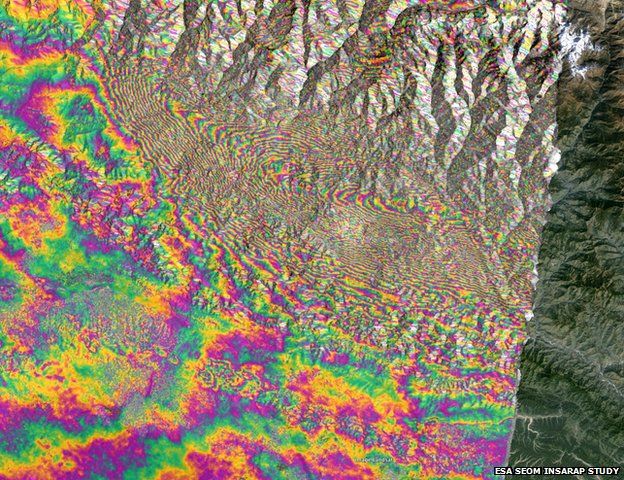
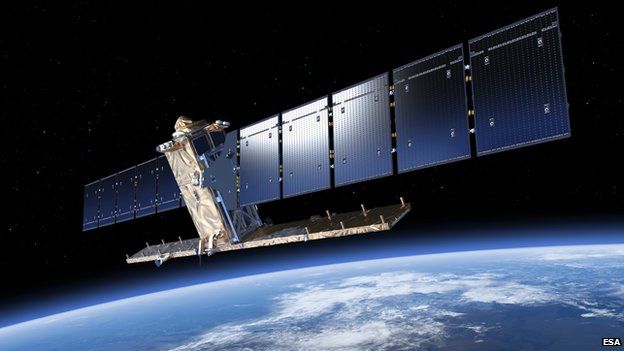
They examined images from Europe’s Sentinel-1a radar satellite and other spacecraft to map the buckling of the ground.

These pictures enabled the team to infer what was going on deep beneath the surface.


Sentinel-1a

Sentinel-1a is among a fleet of new orbiting sensors being launched by the European Union.

The researchers trace the quake activity to a locality some 10-15km down.

It was spread across what they term a “hinge point”, where the main fault in the region transitions from being relatively horizontal to being sharply angled into the Earth.

This geometry has a number of consequences, the scientists say.

First, it neatly explains why the surface surrounding the capital Kathmandu rose up by about a metre during the quake, and dropped by roughly 60cm in the more mountainous terrain to the north.

And, secondly, it also provides a good model for how the Himalayas gain height over time.

The team proposes a cycle of slumping on the occasion of major quakes and mountain-building in quiescent periods, with the increase in elevation dominating over the long term. The high Himalayas currently gain on average about 4mm per annum.

Nepal earthquake map

The quake initiated beneath the Gorkha region of central Nepal

Last April’s tremor occurred in what scientists refer to as a seismic gap – a segment of the fault that has not experienced any significant strain-releasing activity in a long while.

The 2015 shock brought relief only to the far eastern sector of this gap, meaning the potential for future large quakes is still present to the west.

And there is potential also to the south.

The latest analysis demonstrates that the main fault did not rupture all the way to the surface on 25 April. It stopped abruptly some 11km under Kathmandu.

“There is still half of the fault – that’s going south of Kathmandu, from a depth of 11km up to the surface – that hasn’t yet broken,” Dr Elliott told BBC News.

“Our hypothesis is that the abrupt stop is because the main fault has been damaged and it was held up where it intersected with other, smaller faults. But this will only be temporary.

“These earthquakes tend to happen on the century timescale, but this barrier could be pushed through on a shorter timescale. Of course, our problem is that we are not able to predict when; we can never give a date.”

The Oxford scientist felt that if the remaining portion did break all the way to the surface in one go, it would likely produce a quake of similar magnitude to the 25 April event; but being much shallower could have more damaging effects.


How Europe’s Sentinel radar satellite viewed the Nepal quake

Interferogram
  • S-1a practises something called Synthetic Aperture Radar Interferometry
  • This finds differences in “before” and “after” radar pictures taken from orbit
  • It enables quake scientists to detect even quite subtle ground movements
  • The amount of deformation is depicted in coloured contours, or “fringes”
  • Each contour shows 2.8cm of ground movement with respect to S-1a
  • 34 fringes in this image equate to a peak ground deformation of about 1m
  • Quake ruptured east from its epicentre; fault did not break the surface

Jonathan.Amos-INTERNET@bbc.co.uk and follow me on Twitter: @BBCAmos

Source: Satellites dissect Nepal quake – BBC News

Falling oil drives down Toronto stock market

TORONTO — The Toronto stock market ended its ninth consecutive session in the red, as lingering concerns about the Chinese economy dragged down the price of oil.

The S&P/TSX composite index lost 126.20 points, closing at 12,319.25.

The Canadian dollar, which has been on a steep slide since the start of the year, fell 0.37 of a U.S. cent to 70.31 cents US.

In New York, markets were mixed, with the Dow Jones up 52.12 points at 16,398.57, while the S&P500 gained 1.64 points to 1,923.67. Meanwhile, the Nasdaq slipped 5.64 points to 4,637.99.

The February contract for benchmark crude oil fell $1.75 to US$31.41 a barrel, while February natural gas lost 7.6 cents to US$2.396 per mmBtu.

February gold fell $1.70 to US$1,096.20 an ounce, while March copper lost five cents to US$1.97 a pound.

Follow @alexposadzki on Twitter.

By The Canadian Press

Source: Falling oil drives down Toronto stock market

Canucks trade Nicklas Jensen, pick to Rangers for Emerson Etem

The Vancouver Canucks have acquired forward Emerson Etem from the New York Rangers in exchange for Nicklas Jensen and a draft pick, according to Sportsnet’s Elliotte Friedman.

Source: Canucks trade Nicklas Jensen, pick to Rangers for Emerson Etem – Sportsnet.ca