
IAAF provisionally suspends Russian Member Federation ARAF

The Council of the International Association of Athletics Federations (IAAF) has provisionally suspended the All-Russia Athletic Federation (ARAF) as an IAAF Member with immediate effect.

The decision was taken at today’s 201st IAAF Council Meeting which was held by teleconference and chaired from London by IAAF President Sebastian Coe.

A total of 24 Members of Council took part in the meeting: 22 voted in favour of the sanction against ARAF, who have been officially informed of the Council’s decision, 1 voted against. The Council Member from Russia was not eligible to participate in the vote.

Commenting on the decision, IAAF President Sebastian Coe said: “Today we have been dealing with the failure of ARAF and made the decision to provisionally suspend them, the toughest sanction we can apply at this time. But we discussed and agreed that the whole system has failed the athletes, not just in Russia, but around the world.

“This has been a shameful wake up call and we are clear that cheating at any level will not be tolerated. To this end, the IAAF, WADA, the member federations and athletes need to look closely at ourselves, our cultures and our processes to identify where failures exist and be tough in our determination to fix them and rebuild trust in our sport. There can be no more important focus for our sport”

Frankie Fredericks read a statement on behalf of the IAAF Athletes Commission: “The IAAF Athletes’ Commission is extremely disappointed and concerned regarding the recent developments and allegations directed at our sport.”

“We are angry at the damage being caused to the reputation and credibility of athletics and are united alongside our President to not shy away from the major challenges that face our sport. The athletes will work together to continue the process of cleaning up athletics to ensure those athletes training and competing cleanly are not tainted by the minority.

“We send a clear message to clean athletes in a dirty system to report any doping or cheating that they see or hear about.  We are 100% in support of President Coe and believe that he is the leader that our sport needs to instigate the necessary actions swiftly and strongly.”

Using its powers under the IAAF Constitution Article 6.11(b) and Article 14.7 the members of the IAAF Council provisionally suspended ARAF on charges of breach of the Objects of the IAAF.

The IAAF’s Objects include amongst others developing and maintaining programmes aimed at eradicating doping from the sport and safeguarding the authenticity and integrity of Athletics.

CONSEQUENCES OF PROVISIONAL SUSPENSION

– athletes, and athlete support personnel from Russia may not compete in International Competitions including World Athletics Series competitions and the Olympic Games

– Russia will not be entitled to host the 2016 World Race Walking Team Championships (Cheboksary) and 2016 World Junior Championships (Kazan)*

that ARAF delegates the conduct of all outstanding doping cases to CAS

The provisional suspension does not:

– prevent athletes in Russia from participating in domestic competitions

– remove or waive the obligations on international level athletes in Russia to comply with the IAAF Anti-Doping Rules, including continuing to be subject to out of competition testing

* IAAF will announce the reallocation or cancellation of these two IAAF World Athletics Series events as soon as possible.

NEXT STEPS

– Unless ARAF voluntarily accepts a full suspension, the IAAF is entitled to proceed to a full hearing on whether the provisional suspension should be made a full suspension.

– To regain membership to the IAAF the new federation would have to fulfil a list of criteria. An inspection team led by Independent Chair Rune Andersen, an independent international anti-doping expert (Norwegian) and three members of the IAAF Council who will be appointed in the next few days.

Other business

IAAF GOVERNANCE

President Sebastian Coe also took the Council through his reform programme.

He has asked Paul Deighton, former CEO of LOCOG and UK Government Minister, to oversee the programme which will be carried out by Deloitte.

Forensic accountants from Deloitte and the leading legal firm Freshfields began work at the IAAF HQ yesterday. He also told the Council that he will create an integrity unit for athletics consisting of an independent integrity board and review panels.

The unit will cover all areas of integrity for international level athletes and athlete support personnel (anti-doping, illegal betting, anti-corruption, transfers of allegiance and age manipulation).

Source: IAAF provisionally suspends Russian Member Federation ARAF | iaaf.org
Preventable Colon Cancer Deaths Cost The Economy $6.4 Billion : NPR

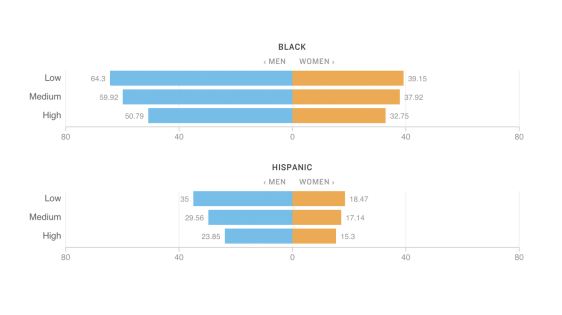
Almost 20 percent of the people in low-income communities who die of colon cancer could have been saved with early screening. And those premature deaths take a toll on communities that can least bear it.

Lower-income communities in the United States loses $6.4 billion in lost wages and productivity because of premature deaths due to colon cancer, according to researchers at the Centers for Disease Control and Prevention.

“It’s tragic not only for the lives lost, but it’s tragic for the communities,” says Hannah Weir, a senior epidemiologist at CDC who led the study. “That’s money that’s not being diffused back into these already disadvantaged communities.”

The researchers looked at colon cancer deaths from 2008 though 2012 for people between 50 and 74 years of age. They figured out the preventable deaths by comparing the death rates in high-income counties compared to those with lower incomes. The higher-income areas were defined as those in which at least 85 percent of the population had graduated from high school.

Colon cancer used to be more common in white people with higher incomes, but over the past few decades screening has reduced their risk to the point that African-Americans now have higher rates.

“We know that colorectal cancer screening saves lives, and we know that people in these communities are less likely to be screened for cancer, so it’s detected at a later stage,” Weir says. “They’re more likely to die from cancer.”

Screening options include fecal occult blood tests, which are not invasive, as well as sigmoidoscopy and colonoscopy.

The researchers came up with the $6.4 billion number by comparing the differences in potential years of life lost due to premature death: 194,927 years in lower-income communities compared to 128,812 in higher-income communities.

The data was presented Friday at the American Association For Cancer Research conference in Atlanta.

Source: Preventable Colon Cancer Deaths Cost The Economy $6.4 Billion : Shots – Health News : NPR

Grain lower, livestock lower

CHICAGO – Grain futures were lower Friday in early trading on the Chicago Board of Trade.

Wheat for December delivery was 3.25 cents lower at $4.9460 a bushel; December corn was 2 cents lower at $3.60 a bushel; December oats were unchanged at $2.30 a bushel; while January soybeans were 6.25 cents lower at 8.5660 a bushel.

Beef lower and pork lower the Chicago Mercantile Exchange.

December live cattle was 1.38 cents lower at $1.3178 a pound; January feeder cattle was 1.85 cents lower at $1.6505 a pound; December lean hogs lost 1.10 cents to $.5500 a pound.

Source: Grain lower, livestock lower

The Scary Thing Your Chapped Lips Could Be Telling You

Lip balms, glosses, lipsticks—as a certified lip-color fiend, I’m fanatical about keeping my lips covered at all times (seriously, I could open a drugstore with all of the lip products at my desk). You’d think that would mean perpetually soft, moisturized lips, and yet at least once every winter I can count on developing a lip spot.

Not a cold sore, or a blocked hair follicle, or a fungal infection—all of which are suggestions that inevitably turn up when I Google the problem.

The spots aren’t sore or itchy; they don’t get red or puff up or crack. They’re just little patches, usually right along the outline of my lower lip, where the skin stays rough, and dry, and frankly desiccated feeling no matter what I do.

They turn up seemingly out of nowhere, and after I spend a week or so obsessively applying lip balm and fighting the urge to pick, they disappear. Until the next time.

So what are these annoying little spots? According to the Internet, they could be bacteria from the mouth of my refillable water bottle (gross), or signs that I desperately need to eat even more kale, or an omen of my imminent demise (thanks, alarmists out there!).

According to Joshua Zeichner, the director of cosmetic and clinical research in dermatology at Mount Sinai Hospital in New York City (a.k.a. someone who actually knows what he’s talking about), it’s most likely a sign of sun damage. “Just as you can get a precancerous spot on other parts of your skin, you can get a precancerous spot on your lips,” he says. “Particularly older patients, or patients who are fair-skinned.”

As anyone who’s ever embarked on the quest for a lipstick that will last through lunch can tell you, being a human who consumes food and beverages causes lip products to wear off faster than the rest of your makeup. Throw in the fact that some of the things we eat and drink can break down sunscreen, making sun exposure around the mouth even worse—and that many of us skimp on sunscreen coverage as we get close to our lips because zinc oxide is no one’s favorite flavor—and you’ve got a domino effect that leaves the outer edges of our mouths especially vulnerable.

Help prevent future damage by incorporating SPF-infused lipsticks, glosses, and balms (here are a few of our faves) into your daily routine, reapplying often (even in the winter, duh), and making sure your daily facial sunscreen is covering all the way up to your lips.

Not convinced that your dry spot is anything more than just dry? You can try out low-key exfoliation (Zeichner recommends a gentle sugar scrub for mild chemical exfoliation), but no hard-core peels and definitely no picking! After gently buffing away any flakes, slather on a thick, hydrating lip balm with petrolatum (we like Aquaphor Advanced Therapy Healing Ointment (it’s a classic for a reason) to help boost the skin’s barrier function. If you pass the two-week mark and the dryness is still lingering, make an appointment with a dermatologist.

While Zeichner notes that there are a variety of things that can cause changes in your lips (allergies, vitamin deficiencies, even Crohn’s disease) the bottom line is this: “If you have a rough, scaly spot that’s not improving with typical lip products, get it checked out.”

Source: The Scary Thing Your Chapped Lips Could Be Telling You: Beauty Blog: Daily Beauty Reporter: allure.com

‘Shadow banking’ hit $80 trillion in 2014: FSB

The value of unregulated “shadow banking” rose to some $80 trillion (74 trillion euros) last year, according to a report Thursday by the Financial Stability Board (FSB), which advises G20 states on banking reform and oversees regulation of the global financial system.

The report, issued ahead of the upcoming G20s summit in Antalya, said shadow banking transactions not subject to regulatory oversight grew by $2 trillion across 2014 on a broad measure covering 26 jurisdictions and the euro area as a whole, representing some 80 percent of global GDP and 90 percent of global financial system assets.

The FSB, which advises G20 countries on banking reform and was set up six years ago after the implosion of Lehman Brothers, publishes annual reports into the parallel banking system under its remit to promote internationally transparent financial stability.

Shadow banking involves transactions outside traditional banking, including hedge and investment funds.

The Switzerland-based body, chaired by Mark Carney, governor of the Bank of England, is also tasked with identifying potential weak points in the global financial system.

The FSB said it has devised a monitoring framework to track shadow banking developments to enable the identification of systemic risks, “initiating corrective actions where necessary.”

The organization said this year it has added a more narrowly-focused “economic function” overview of shadow banking for its annual monitoring of the non-bank financial sector in order to devise policy responses aimed at risk mitigation.

The FSB, which works in conjunction with national and international financial regulators, estimated that under the new, activity-based, narrow measure of shadow banking, the sector was worth $36 trillion in 2014, from $35 trillion in 2013 — equivalent to some 30 percent of overall non-bank financial sector assets and 60 percent of the GDP of the 26 participating jurisdictions

– ‘Facilitate growth’ –

By comparison, the traditional banking sector was last year worth $135 trillion, 6.4 percent up on 2013.

For Carney, “non-bank financing is a welcome additional source of credit to the real economy. The FSB’s efforts to transform shadow banking into resilient market-based finance, through enhanced vigilance and mitigating financial stability risks, will help facilitate sustainable economic growth”.

But at the same time he stressed the FSB needed to be vigilant in looking to transform shadow banking into a robust source of market finance and at a level of risk which would not destabilize the financial system.

Glenn Stevens, chairman of the FSB Standing Committee on Assessment of Vulnerabilities said: “The annual shadow banking monitoring exercise is an important mechanism for identifying potential financial system vulnerabilities in the non-bank sector.

“The activities-based approach in this year’s report enhances our understanding of the evolving composition of this sector and potential risks.”

Source: ‘Shadow banking’ hit $80 trillion in 2014: regulator – Yahoo Maktoob News