More bad news for bees: This is going to be a rough winter

While you’re complaining about sub-zero temperatures this winter, just be happy you’re not a bee.

Despite recent efforts by the White House, the forecast for bee health this winter is not a good one, reports Agri-Pulse. In a blog post, Dick Rogers, the head scientist at the Bayer Bee Care Center in North Carolina, writes that his hive evaluations this year revealed “the vast majority of hives contained mite infestations well above the threshold level of concern.”

Rogers is referring to the Varroa mite, one of several causes of a recent massive decline in honeybee populations. Mites are like bee vampires, sucking bees’ bloodlike fluid hemoplymph from their bodies and weakening their immune systems. While manmade problems like pesticide use and the loss of bee habitat are also linked to the pollinators’ falling numbers, Varroa mites are “public enemy number one,” as Keith Delaplane, director of the University of Georgia Honey Bee Program told Quartz in June.

Though winters are always challenging for beekeepers, this year will be even worse. Through his 30 years of experience, Rogers says he has identified a threshold level of three mites per 100 bees as a sign that “the colony is in trouble.” (A colony can easily have 40,000 bees, making that a lot of parasites.)

The US Department of Agriculture and the Bee Informed Partnership, he says, has confirmed his own recent findings, seeing a national infestation average of seven to eight mites per 100 bees, this year.

In the US, pollinators like bees and monarchs are responsible for an estimated $15 billion in crop value annually—a mite infestation could have devastating consequences on beekeepers, who need to restock their dying hives so they can continue pollinating.

While Rogers says that the commonly used treatment for mites isn’t quite working like it once did, he says scientists are working hard to bring new varroacides to market, while other researchers are trying to breed hardier bees that will tolerate the mites better. Those solutions, though, will not be immediately helpful.

“For now,” he writes, “there is little beekeepers can do to change the hand they’ve been dealt.”

Source: More bad news for bees: This is going to be a rough winter – Quartz

Extreme weather continues for South Australia, total fire bans declared

South Australia is set for another day of extreme pre-summer heat, with temperatures again expected to exceed 40 degrees Celsius in some parts and a top of 39C expected in Adelaide.

Total fire bans have been imposed for 12 districts across the state and a cool change is not expected to arrive until late in the week.

“On Thursday, temperatures will exceed 40C in the north and east of South Australia ahead of a cool change,” meteorologist Matt Collopy said.

“Cooler conditions will spread across western and southern parts of the state on Thursday then extend to remaining parts on Friday.”

Overnight temperatures are expected to remain in the low to mid 20s for many parts of SA.

Mr Collopy warned of continuing high fire danger, after crews tackled a number of scrub and stubble blazes on Tuesday.

Country Fire Service crews are working to contain a fire at Kyeema, east of Hope Forest, south of Adelaide.

The fire has burnt through about 75 hectares of scrub with strike teams working overnight to try to gain the upper hand before temperatures soar again.

The CFS said the fire was not threatening any homes, but it is causing smoke at Willunga, Aldinga Beach, Sellicks Beach and surrounding areas.

“The combination of the very hot conditions and fresh north-westerly winds will result in severe to extreme fire weather conditions across much of the state on Wednesday and Thursday,” he said.

Adelaide hit a top temperature of 36C on Tuesday, which was 10C above the mid-November average, and the Bureau of Meteorology warned parts of South Australia could expect maximum temperatures about 12C above their averages today.

“Similar temperatures are expected on Thursday ahead of a cool change extending across western and southern parts of the state during the day,” Mr Collopy said.

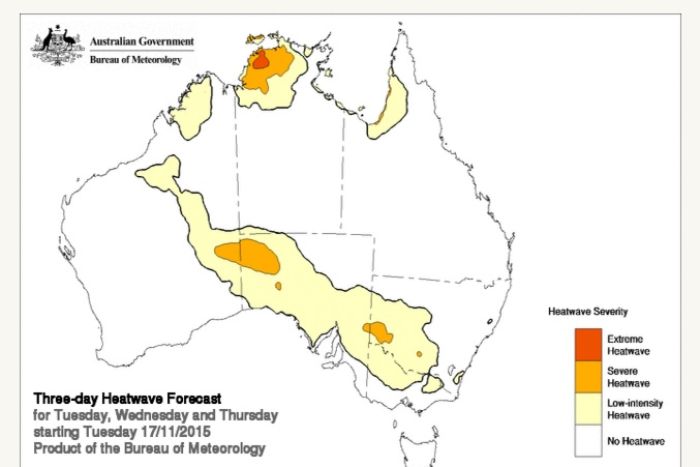
Heatwave forecast map for Tuesday 17-Thu 19 November 2015

Photo: Heatwave forecast map for Tuesday 17-Thu 19 November 2015 (Bureau of Meteorology)

Source: Extreme weather continues for South Australia, total fire bans declared – ABC News (Australian Broadcasting Corporation)

‘No place’ for genetic testing to spot young sporting talent or boost performance

No child or young athlete should be subjected to genetic testing to spot sporting talent or boost performance, concludes an international panel of experts in a consensus statement published in the British Journal of Sports Medicine.

The scientific evidence on the effectiveness of these commercial tests is simply far too weak to back their use, says the panel of 22 experts in the fields of genomics, exercise, sports performance, disease, injury, and anti-doping.

While the science of genomics has advanced rapidly over the past decade, the ability to interpret the meaning of genetic test results is still at a relatively early stage, says the statement.

But that has not hindered the growth of DIY ‘direct to consumer’ genetic tests, which claim to be able to talent spot children’s athletic prowess or tailor training to maximise performance, it says. Anyone willing to stump up the cost and send a sample of spit or a mouth smear for lab analysis can request one of these tests.

This burgeoning market has prompted fears that the current limited level of knowledge on the genetics of sports performance is being misrepresented for commercial gain, it says.

To inform the consensus statement, the panel looked at the availability of DIY genetic tests. It found 39 companies marketing tests associated with sport or exercise performance or injury–almost twice as many as in 2013, when a similar review found 22.

Since 2013, 14 of the original 22 companies have ceased trading, meaning that 25 companies have entered the market within the past two years.

Claims included: ‘Personalise your training based on your sports genetics,’ ‘Gives parents and coaches early information on their child’s genetic predisposition for success in team or individual speed/power or endurance sports,’ and ‘We use your DNA results to help you lose fat, get lean, build muscle, get fitter.’

For over half (54%) of the 39 companies, it was impossible to find out which gene sequences and variants would be tested, because this information wasn’t provided. For the remainder, the average number of variants tested was 6, but ranged from 1 to 27.

But the absence of any good scientific data to guide selection of which variants to test undermines the value of multiple testing, says the statement.

The most popular genetic variants tested were ACTN3 R577X and ACE I/D, both of which have been relatively well studied. While there is some evidence to suggest a link with enhanced physical performance, it is very weak, rendering the predictive value of these tests “virtually zero,” says the statement.

Of further concern is that several companies use the results to market additional products, such as training advice and nutritional supplements, for which the evidence is again limited, it says.

The statement emphasises that the speed of change in gene sequencing technology has far outpaced regulation, or universally accepted guidelines. And legislation varies widely among countries–the UK has none, for example.

And it points out the importance of counselling before any genetic test is taken, particularly as this may have implications for health or life insurance–but which is not part of the package offered with these tests.

Furthermore, the sensitive nature of an individual’s genetic information should be subject to the highest level of security and confidentiality, says the statement. But it is not at all clear what happens to these data when one of these companies goes under.

“While further evidence will undoubtedly emerge around the genetics of sport performance in the future, the data are currently very limited,” says the consensus statement.

“Consequently, in the current state of knowledge, no child or young athlete should be exposed to [direct to consumer] genetic testing to define or alter training or for talent identification aimed at selecting gifted children or adolescents,” it concludes.

Source: BMJ

Source: ‘No place’ for genetic testing to spot young sporting talent or boost performance | Science Codex

Putin would back moderate Syrian opposition in Isis fight

Russian president Vladimir Putin said on Monday that he would back parts of the Syrian opposition with air support in a joint fight against Islamic State in northern Syria, in the first concrete sign that Russia and the west can set aside their differences over the political future of President Bashar al-Assad in order to defeat Isis.

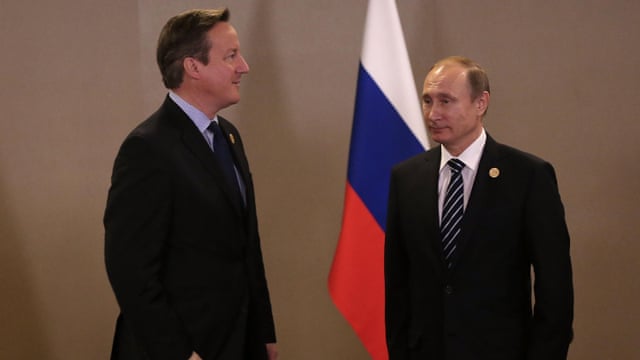
Hinting at the Russian change of policy, David Cameron said there were “some signs” during talks with Putin on the margins of the G20 summit that Russia would no longer focus bombing raids on moderate Syrian forces.

Putin’s offer, if it turns into reality, is potentially the biggest military breakthrough in Syria for some months, and allied with the pressure being applied to Isis in Iraq, could start to change the military equation in Syria.

The quest for an end to the four-year civil war in Syria – which has prompted a mass migration and terror crisis in Europe – has been stymied by the Russian and Iranian refusal to abandon Assad.

Since September, Putin has stepped up his support for Assad by bombing anti-Assad forces – including the more moderate opposition groups supported by the west.

Speaking at the close of the G20 summit in Antalya in southern Turkey, Putin said: “A part of the Syrian opposition considers it possible to begin military actions against Isil [Isis] with the assistance of the Russian air forces, and we are ready to provide that assistance.”

If this happens, Assad’s army and the opposition will fight a common enemy, he outlined.

“It’s not the time to debate who is more effective in the fight against Isil, what we need to do is consolidate our efforts,” added Putin.

The formal agenda of the two-day G20 summit rapidly became swamped by the issue of how the world leaders should respond to the murder of at least 129 people in Paris on Friday, for which Isis has claimed responsibility.

Both Cameron and Barack Obama met Putin to urge him to shift his focus to an attack on Isis, as well as to agree a political process that might lead to the removal of Assad in 18 months, after elections.

Cameron hinted at possible flexibility in Putin’s position, saying: “We think bombing the Syrian Free Army – that can play a part and should play a part in the future of Syria – is a mistake. I made that view absolutely clear to President Putin; there are some signs, some signs, that they are focusing on Isil and we need to see if that continues.

“Everyone recognises there is a need for compromise. The gap has been enormous between those, like us, who say President Assad must go immediately and those who continue to support him.

“It is not as if there has been a British pride or stubbornness, an American stubbornness or a Saudi stubbornness. This is for the Syrian people. If you barrel-bomb your own nation and rain down destruction on your own people, it’s obvious that they won’t accept him as their leader.

“That is the gap we have and it has been reduced. I hope we can close the gap still further but it will need compromise on both sides.

“I have said Assad should go immediately and we have come to recognise there is a transition. We have never argued that the right answer is take away all the elements of the Syrian state.”

Cameron added: “Some elements of the state need to continue. We need to find elements in the government – Christians, Kurds and Alawites – so that government represents all of Syria and that is the process that needs to be gone through.”

Under political and media pressure to come up with a new, faster strategy to defeat Isis in the wake of the Paris attacks, Obama again insisted the current strategy was ultimately going to work, but will be intensified.

He said the key was reduce the size of territory over which Isis holds sway, and to intensify intelligence co-operation with the French.

He said he had ruled out the idea of putting as many as 50,000 troops on the ground or setting up safe havens. He said: “That would be a mistake, not because our military could not march into Mosul or Raqqa or Ramadi and temporarily clear out Isil, but because we would see a repetition of what we’ve seen before, which is if you do not have local populations that are committed to inclusive governance and who are pushing back against ideological extremes, that they resurface unless we’re prepared to have a permanent occupation of these countries.

“One of the challenges we have in this situation is that if you have a handful of people who don’t mind dying, they can kill a lot of people. That’s one of the challenges of terrorism. It’s not their sophistication or the particular weaponry that they possess, but it is the ideology they carry with them and their willingness to die.”

Source: Putin would back moderate Syrian opposition in Isis fight | World news | The Guardian

Asian shares rally as positive US close boosts confidence – BBC News

Asian shares opened higher on Tuesday, recovering from Monday’s losses, as Wall Street’s positive close boosts investor confidence.

US stocks ended three days of losses overnight as investors moved past concerns that the terrorists attacks in Paris could create instability for the global economy.

Energy shares were among the winners as the price of crude oil rebounded.

Japan’s benchmark Nikkei 225 index was up 1.3% to 19,641.67 on a weaker yen.

The US dollar was also stronger on the expectations of an interest rate increase by the Federal Reserve in December.

The dollar stood near a one-week high of 123.33 yen.

Australia’s S&P/ASX 200 index was up 1% to 5,056.50, while South Korea’s Kospi index was higher by 1.3% to 1,968.82 in early trade.

Source: Asian shares rally as positive US close boosts confidence – BBC News