 Tyson Fury defeated Wladimir Klitschko by unanimous decision to end the Ukrainian’s 9 1/2-year reign as heavyweight champion on Sunday and take his WBA, IBF, and WBO heavyweight titles.
Source: Tyson Fury stuns boxing world – Sport – NZ Herald News

Tyson Fury defeated Wladimir Klitschko by unanimous decision to end the Ukrainian’s 9 1/2-year reign as heavyweight champion on Sunday and take his WBA, IBF, and WBO heavyweight titles.
Source: Tyson Fury stuns boxing world – Sport – NZ Herald News
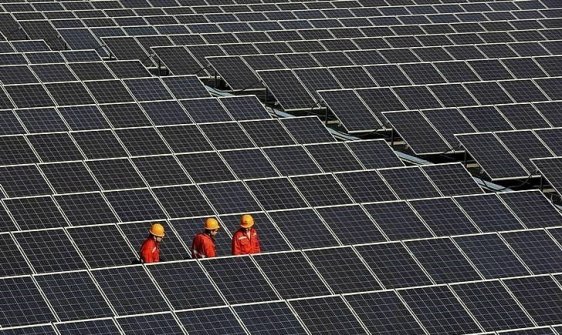 Workers walk among newly installed solar panels at a solar power plant in Zhouquan township of Tongxiang, Zhejiang province in China on December 18, 2014. Credit: REUTERS/Stringer
A new study claims to leave little room for doubt that the world can run 100 percent on renewable energy, and it even maps how individual countries should best make this transition—by mid-century.
The main barriers to overhauling the global energy system “are social and political,” said Mark Z. Jacobson, lead study author. “They aren’t technical or economic,” added Jacobson, a professor of civil and environmental engineering at Stanford University.
Jacobson and his Stanford colleagues published the analysis in a draft paper online to coincide with the start of global climate talks in Paris on Nov. 30. In those vastly complicated negotiations, most of the world’s nations have agreed on at least one thing: keeping the earth’s warming to within 2-degrees Celsius compared to pre-industrial levels—a target that scientists agree is relatively safe for the planet––will require a wholesale transformation of the world’s energy economy.
The paper, which will likely be submitted to scientific journals for publication next year, offers detailed roadmaps showing how most countries can make the switch to run entirely on clean energy across all sectors, from electricity to transportation to agriculture, as early as 2050.
Focusing on the 139 countries with available 2015 energy data, researchers first used computer models to calculate how each nation’s energy demand and mix would change by 2050. This so-called “business-as-usual” scenario was based on the assumption that the countries would continue to rely on conventional fossil fuels such as coal, oil and natural gas.
Next, the researchers determined how each country could meet its future energy demands using only renewable sources. Under this “wind, water and solar” scenario, every country’s ideal renewable energy mix was calculated based on its existing energy infrastructure and available clean energy resources, such as sunlight and wind. The researchers concluded that making this switch would lower a country’s total energy demands because clean energy sources are more efficient than fossil fuels. They also concluded the transition would curb global warming, create jobs, and reduce air pollution, which, in turn, would boost public health.
Take the United States, for example. By pursuing business as usual, the U.S. would require a total power load of 2,310 gigawatts by 2050. Under a clean energy scenario, however, the country would need only 1,296 gigawatts of power, the study said. Most of the energy would come from onshore and offshore wind (48 percent), utility-scale and rooftop solar (40 percent), and a mix of other sources, including hydropower, geothermal and wave energy. The estimated total electricity, health and climate cost savings of this transition would amount to about $8,000 per American per year (in 2013 dollars).
Jacobson’s team has also conducted a parallel study, recently published in the journal Proceedings of the National Academy of Sciences. That study dives deeper into the United States’ clean energy transition, offering energy roadmaps for all 50 states, using the same modeling approach applied in the global study.
If all the 139 countries succeed in getting 80 percent of their energy from renewables by 2030 and 100 percent by 2050, the Stanford researchers said, the world’s warming would stay below the 2-degrees Celsius warming threshold. They also predict about 22 million net jobs would be created.
Getting there won’t be easy or cheap, Jacobson explained. The price tag of greening the world’s energy system is $100 trillion, or $2 million per megawatt, over the next 35 years. Even without overhauling the energy system, the International Energy Association expects about $60 trillion should be invested during that same period to maintain electric grids and power plants and improve energy efficiency.
The analysis doesn’t say where the trillions should come from—or prescribe policies—but it shows “the burden of proof is now on the people who want to grow fossil fuels in any shape or form to explain to [the public] why they are doing something that we know is worse for the planet,” Jacobson said.
As of 2014, only 3.8 percent of the power capacity needed for 100 percent clean energy worldwide had been installed. Norway, Paraguay and Iceland lead the transition because they have successfully tapped their vast hydropower or geothermal resources. On the opposite end of the spectrum, there’s a mix of developing nations such as Trinidad and Tobago and oil-rich countries such as Saudi Arabia and Qatar. The United States is in the middle, ranking 56th out of 139 countries in terms of its progress toward 100 percent renewables by 2050.
Jacobson’s study is not the only recent report drumming up support for renewables. Earlier this month, the International Energy Agency released its World Energy Outlook 2015 report, which demonstrated renewable energy is increasing. Despite that trend, the agency expects growth in coal and other fossil fuels unless other countries––notably India––change their policies.
In addition, the International Renewable Energy Agency released a recent study suggesting renewables could make up 36 percent of the world’s energy mix by 2030. Both reports said furthering the growth of clean energy is an essential piece in addressing climate change.
“With the climate challenge in front of us, this can easily lead people to worry about our ability to meet that challenge,” said Rachel Cleetus, lead economist and a climate policy specialist at the Union of Concerned Scientists. “The bottom line from all these studies is the challenge here is political will.”
“Mark’s findings are not extreme,” said Karl Rabago, executive director of the Pace Energy and Climate Center at Pace Law School, in White Plains, N.Y. “They are well established,” said Rabago, reflecting the latest science and experience in the lab and on the ground with how efficient and productive different clean energy sources can be.
According to Rabago, “The real question now is: are we finally ready to get started?”
Source: Clean Energy Could Fuel Most Countries by 2050, Study Shows | InsideClimate News
 Complex bridges constructed by Eciton army ants with their own bodies can move from original building point, changing position as required.
Source: Army Ants Build Moving Bridges, Entomologists Say | Biology | Sci-News.com
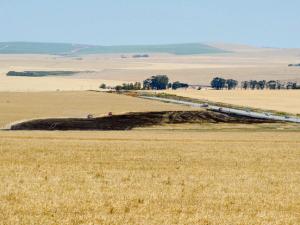
Johannesburg – South Africa’s Western Cape province will ask the national government to classify the region’s water shortages as a disaster, enabling farmers to apply for financial assistance, it said.
“Our assessments of the provincial water situation found more than one region or district municipality in the province is experiencing very dry and water-stressed conditions,” Anton Bredell, the minister of local government, environmental affairs and development planning, said in an emailed statement.
“This led to the request to the provincial cabinet for a disaster classification.”
Part of the request will be for funding to be made available for relief in the province, whose Disaster Management Centre is updating its preparation plans in case the situation worsens, it said. Farmers who haven’t adopted conservation agriculture are reporting a possible 50 percent decline in yields, it said.
Agri Western Cape, a farmer lobby in the province, said it’s in the process of determining where the need for feed in the region is and where feed is available.
“Conditions in especially the West Coast District Municipality and the Central Karoo are extremely worrying and the rural economies that were affected by the drought will need a long period of time to recover,” it said in an emailed statement.
South Africa’s worst drought since 1992 is damaging crops and livestock, with the nation’s weather service predicting below-normal rain for the next four months.
The government has already declared disaster areas in several provinces of the country that’s the continent’s biggest corn and sugar grower.
The Western Cape produces the bulk of the country’s wheat and wine grapes.
BLOOMBERG
Source: Cape to declare water disaster – Business News | IOL Business
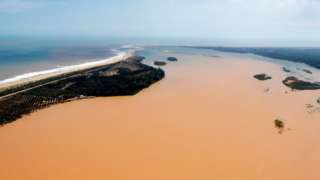
Australian mining giant BHP says mud spilled by the devastating collapse of a dam at a Brazilian mine is not toxic.
On Thursday the UN said the dam burst at the Samarco mine unleashed a flood equivalent to “20,000 Olympic swimming pools of toxic mud”.
The incident earlier this month in Minas Gerais state left 13 people dead, devastating several villages. Eleven people are still missing.
The noxious river has trailed 500km from the mine into the Atlantic Ocean.
The mining giant said in a statement the waste water in the dam, a by-product of iron ore extraction known as tailings, did not pose any threat to humans.
BHP said: “The tailings that entered the Rio Doce were comprised of clay and silt material from the washing and processing of earth containing iron ore, which is naturally abundant in the region.”
He said the waste would “behave in the environment like normal soils in the catchment”.
The dam at the Samarco mine, which is jointly owned with Brazil’s own mining giant Vale, burst on 5 November.
The UN and Brazil’s environment agency have both tested the red-looking sludge, and say it it contains toxic chemicals.
The state water agency said it found arsenic levels at 10 times above the legal limit and other harmful metals.
The UN human rights agency also said that BHP and Vale had not taken steps to prevent the harm caused by the mine waste.
The country’s environmental agency Ibama has fined the iron-ore mine owners over Brazil’s “worst mining accident”.
Residents said there was no warning. They had to run for their lives as they realised the Fundao dam had collapsed.
Samarco has tried to protect plants and animals by building barriers along the banks of the river.
The company agreed last week to pay the Brazilian government 1bn reais (£170m; $260m) in compensation.
The money will be used to cover the initial clean-up and to offer some compensation to the victims and their families.
Source: BHP rebuts UN ‘toxic waste’ claim at Brazil dam – BBC News
 Andrew Phillip Chernoff