Andrew Phillip Chernoff

The Outer Limits To The Inner Depths

The dawn of the dragon

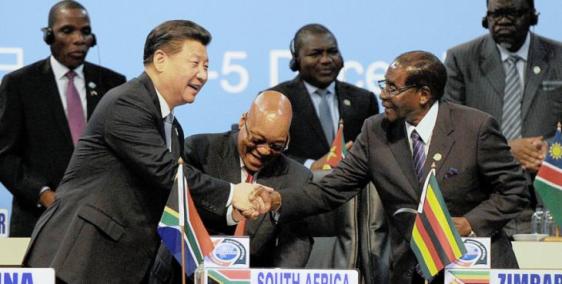
Johannesburg – Chinese President Xi Jinping announced $60 billion (about R860bn) in investment and development aid for Africa on Friday, an amount and scale unprecedented in the history of Africa’s development partnerships.

“China-Africa relations have today reached a stage of growth unmatched in history. We should scale the heights, look afar, and take bold steps,” Xi told African leaders at the Focac summit in Sandton, Joburg.

The announcement was met with rapturous applause from more than 40 African heads of state and their delegations at the Sandton Convention Centre.

The development financing includes $5bn in grants and zero-interest loans, $35bn in concessional loans, and an increase of $5bn to the China-Africa Development Fund, and an initial contribution of $10bn to the China-Africa fund for production capacity co-operation.

Zimbabwe’s President Robert Mugabe, responding as the current chair of the AU, said: “Here is a man, representing a country once called poor, which was never our coloniser. He is doing for us what we had expected those who colonised us to do.

“If they have ears to hear, let them hear, he is a God-sent person.”

Xi unveiled a blueprint for China’s development partnership with Africa which directly addresses the key challenges facing the continent, with innovative projects and solutions for poverty eradication and economic growth.

It was a slap in the face for those who have argued the People’s Republic of China (PRC) is interested only in commodity extraction from its partnership with Africa.

“To build a China-Africa comprehensive strategic and co-operative partnership, China will implement 10 co-operation plans with Africa in the next three years.

“These plans aim at addressing three bottleneck issues holding back Africa’s development, namely inadequate infrastructure, lack of professional and skilled personnel, and funding shortage.”

AU Commission chair Nkosazana Dlamini-Zuma praised the fact that the PRC has made industrialisation a centrepiece of the win-win co-operation, particularly the beneficiation of the continent’s natural resources.

Dlamini-Zuma lamented the fact that Africa spends $80bn a year on food imports and suggested that efforts to modernise agriculture and enhance agro-processing and business are needed urgently.

Dlamini-Zuma also emphasised that Africa spends $5bn a year importing skills, and needs to improve education in science, engineering and maths.

Source: The dawn of the dragon | Independent Online

Ship carrying nuclear waste arrives in Australia

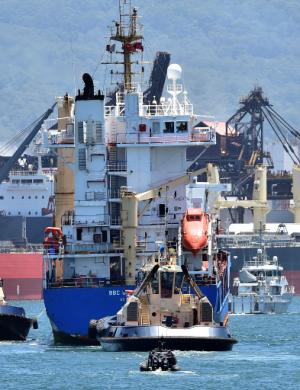
Sydney (AFP) – A ship carrying 25 tonnes of radioactive waste arrived back in Australia on Saturday, met by activists who warned against the vast nation becoming a nuclear dumping ground.

About a dozen Greenpeace protesters, some carrying signs such as “Don’t waste Australia”, stood near the entrance to Port Kembla south of Sydney as the BBC Shanghai arrived in a well-policed operation.

Environmentalists have raised concerns about the safety of the ship, which left the northern French port of Cherbourg in October, with one French lawmaker describing it as a “dustbin ship”.

“This is not the kind of ship you would want to see transporting nuclear waste,” Greenpeace campaigner Emma Gibson, who was on board a boat following the BBC Shanghai on Saturday, told AFP.

But the Australian Nuclear Science and Technology Organisation (ANSTO), which has previously stressed that the ship’s seaworthiness had been certified by French officials, said there was no credible chance of an incident during the transport.

“This container is so well shielded that you could sit on it for five hours and receive no more of a radiation dose than you would on a flight to Singapore,” said general manager for nuclear security Paul Jones in a statement.

“It is a feat of engineering that is made from forged steel, and could withstand a drop of 9 metres, temperatures of 800 degrees Celsius or even a jet plane strike.”

ANSTO would not comment on the transport operation while it was underway but there was a strong police presence at Port Kembla as the bulk carrier arrived.

Australia sent spent nuclear fuel to France for reprocessing in the 1990s and early 2000s over four shipments, and it has now been returned for long-term storage.

Reprocessing involves the removal of uranium and plutonium, stabilising the remaining substances in glass, and placing it all in a container suitable for transport and storage.

The waste will initially be housed at the Lucas Heights reactor in southern Sydney, which is used for science and research, until a nuclear waste dump site is selected and built. It is expected to be trucked there from Port Kembla overnight.

The government has said the nuclear waste dump site would only be used to store Australia’s radioactive waste but Greenpeace has warned that creating a new waste facility is an invitation to other countries to use Australia as a dumping ground.

The group said a poll of 3,144 people last month that it had commissioned from ReachTEL suggested that most Australians opposed plans to store nuclear waste for other countries.

Asked about Australia accepting nuclear waste from overseas, 18.3 percent supported it, 72.1 percent opposed it and 9.6 percent were undecided.

“Most Australians rightly don’t want their country to become a nuclear waste dump for the rest of the world,” Gibson said in a statement.

“Nobody has yet worked out a safe way to manage long-term nuclear waste, which can remain dangerous for hundreds of thousands of years.”

Six sites, all hundreds of kilometres from major cities and including some Outback locations, have been shortlisted for Australia’s first nuclear waste dump.

All the land owners are willing to house low to intermediate waste — mostly by-products of nuclear medicine — which is currently stored at about 100 different sites around the country.

Source: Ship carrying nuclear waste arrives in Australia – Yahoo News

BYD now biggest electric vehicle maker | mb.com.ph | Philippine News

In a just released global EV ranking, BYD Company Ltd., ranked first in accumulated sales throughout the year with a total of 43,069 EV units sold, representing a 222% surge compared with the same period last year, overcoming all American, Japanese and European manufacturers. And with a total of 6,099 EV units sold in October, BYD again topped sales rankings for the sixth consecutive month since May.

EVBYD’s outstanding performance is 2015—in which the company climbed from 7th position in late 2014 to the first position in just 10 months—is the result of a carefully studied and planned strategy combined with savvy market perception, the company said.

After the successful launch of its first “dynastic” electric vehicle model—the Qin sedan—that placed the company on the passenger EV vehicle map and featured increased sales month-on-month since late 2013, BYD went on to launch yet another electric vehicle model, this time the streamlined SUV Tang in June 2015, as part of a complete EV lineup.  Next in line are the SUVs Song and Yuan, which will most definitely add to the company’s mushrooming numbers.

The rise of EVs comes together with the rise of the Chinese auto industry and that of BYD.  The company’s EV strategy is not limited to mere passenger vehicles, in spite of its outstanding performance in this category.  Its 7+4 strategy epitomizes its ambitions for the future of what is called in China “new energy vehicles”, where passenger cars would be just part of a much bigger picture.

Source: BYD now biggest electric vehicle maker | mb.com.ph | Philippine News

Bomb Squad Inspects UPS Package Shipped to San Bernardino Shooters’ Home – NBC News

San Bernardino police officials inspected a package at a Southern California UPS facility early Saturday morning after a driver recognized the address on the package was that of the suspected San Bernardino shooters.

The county sheriff’s department bomb squad was able to determine that the item “posed no threat,” after inspecting the package at the facility, San Bernardino Police Chief Jarrod Burguan tweeted.

Burguan said the package was shipped from a “reputable vendor,” but authorities had isolated it to be safe.

A UPS driver had left the shipping facility to make deliveries, but later returned after realizing the address on a package was the Redlands, California, home of Syed Rizwan Farook and wife Tashfeed Malik, accused of killing 14 people and injuring 21 others Wednesday at a holiday party at San Bernardino’s Inland Regional Center.

UPS temporarily suspended operations at its San Bernardino facility while the investigation took place, UPS spokesman Dan Cardillo said in a statement.

Source: Bomb Squad Inspects UPS Package Shipped to San Bernardino Shooters’ Home – NBC News

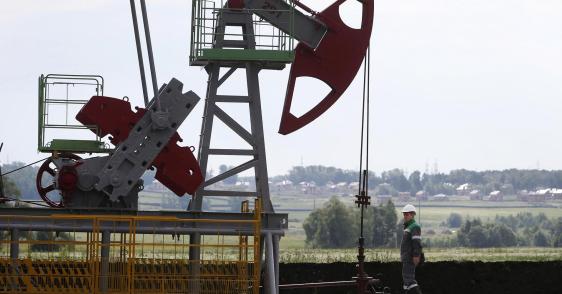
Oil ends below $40 a barrel for first time since Aug. 26

Oil prices fell 4.6 percent on Wednesday after U.S. government data showed a 10th straight week in crude builds, but traders cautioned of volatility ahead of this week’s OPEC meeting from suggestions of any production cuts.

Crude also hit session lows, breaking below $40 a barrel, after the release of the Fed’s Beige Book.

The dollar’s surge to 12½-year highs after pro-rate hike comments by U.S. Federal Reserve Chairperson Janet Yellen also weighed on oil and other dollar-denominated commodities, as it makes them less affordable to those holding the euro and other currencies.

U.S. crude oil inventories rose 1.2 million barrels last week, for a tenth straight week on higher imports and in spite of a jump in refining rates that also boosted stocks of gasoline and distillates, data from the Energy Information Administration (EIA) showed.

“It is another data point pointing to a continued glut in the U.S. markets for oil as production declines remain stubborn even with oil prices hovering at current levels for a significant amount of time now,” Chris Jarvis, analyst at Caprock Risk Management in Frederick, Maryland said.

Inventories at the Cushing, Oklahoma, delivery hub for U.S. crude futures accounted for a third of the build, rising 428,000 barrels, the EIA reported.

Brent crude was down $1.85, or 4.16 percent, at $42.58 a barrel by 2:36 p.m. EDT, falling for a fifth consecutive session.

U.S. crude settled $1.91 lower, or 4.6 percent, at $39.94 a barrel.

Both benchmarks had raced into positive territory earlier on Wednesday, reacting to a headline from Tehran’s oil ministry news agency Shana that a majority of OPEC members agree on output cuts.

But prices fell back rapidly as the report also said Saudi Arabia, the kingpin in the Organization of the Petroleum Exporting Countries, and other Persian Gulf Arab member countries of OPEC were not agreeable to the reductions.

In spite a global supply glut, most traders expect OPEC at its Friday meeting in Vienna to endorse its decision from last year to pump oil vigorously to protect its market share from non-members like United States and Russia.

Only a few OPEC members, such as Venezuela and Iran, are hoping for output cuts to stabilize crude prices which have tumbled from highs above $100 a barrel in June 2014.

“The market is vulnerable to short covering spikes if anything unexpected on OPEC comes out,” said Peter Donovan, broker at Liquidity Energy in New York.

Beyond OPEC’s meeting, oil traders remained focused on growing stockpiles and high production.

Russia continued extracting oil at a post-Soviet record of 10.78 million barrels a day (bpd) in November despite low oil prices, Energy Ministry data showed on Wednesday.

Low oil prices in combination with high debt levels are putting heavy pressure on corporate energy earnings.

“The global oil and gas sector is heavily indebted, with upstream companies holding about $1.1 trillion in dollar-denominated corporate bonds and loans,” BMI Research said.

“While the current debt load does not pose a systemic threat to the industry, a pullback in low-cost financing will be a necessary precursor to the broader rebalancing of the physical oil market.”

Many analysts are skeptical of oil prices recovering into 2016.

“We maintain our bearish or sideway move in oil prices in the next 2-3 months as things haven’t really changed fundamentally, despite data showing a decline in stocks builds by end of next year,” Natixis oil analyst Abhishek Deshpande told the Reuters Global Oil Forum.

Source: Oil ends below $40 a barrel for first time since Aug. 26