
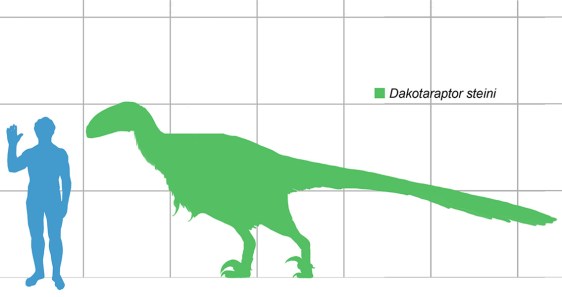
 One of the largest raptors ever discovered has been unearthed by paleontologists working in the fossil graveyards of North America – Hell Creek Formation in Harding County, South Dakota. The research team who found the partial skeleton have named the 66 million year old, Late Cretaceous dinosaur “Dakotaraptor”.
Category Archives: Science News
Paleontologists Find 278-Million-Year-Old Amphibian, Reptile Fossils in Brazil
With the help of ancient fossils unearthed in northeastern Brazil, an international team of paleontologists has identified several amphibian species and a reptile that lived 278 million years ago (middle Permian epoch) in tropical lakes of the western part of the supercontinent Gondwana.
“Almost all of our knowledge about land animals from this time, comes from a handful of regions in North America and western Europe, which were located near the equator. Now we finally have information about what kinds of animals were present in areas farther to the south, and their similarities and differences to the animals living near the equator,” said Dr Kenneth Angielczyk from the Field Museum of Natural History, a team member and a co-author of a paper in the journal Nature Communications.
Significant Link between Cancer and Height – Study | Medicine | Sci-News.com

Scientists from the Karolinska Institutet and the University of Stockholm examined 5.5 million men and women in Sweden, born between 1938 and 1991 and with adult heights ranging between 3.3 feet and 7.4 feet (1 – 2.25 m).
They followed the group of individuals from 1958 (or from the age of 20) until the end of 2011, and found that for every 3.94 inches (10 cm) of height, the risk of developing cancer increased by 18 percent in women and 11 percent in men.
Additionally, taller women had a 20 percent greater risk of developing breast cancer, whilst the risk of developing melanoma increased by approximately 30 percent per 3.94 inches of height in both men and women.
Previous studies have shown the same association between height and cancer. That is to say, taller individuals have a higher risk of developing different types of cancer, including breast cancer and melanoma. However, this association has never been studied in men and women on such a large scale before.
“To our knowledge, this is the largest study performed on linkage between height and cancer including both women and men,” said study lead author Dr Emelie Benyi of Karolinska Institutet.
“The data on adult heights was collected from the Swedish Medical Birth, the Swedish Conscription, and the Swedish Passport Registers, whereas the cancer data was retrieved from the Swedish Cancer Register.”
“It should be emphasized that our results reflect cancer incidence on a population level.”
“As the cause of cancer is multifactorial, it is difficult to predict what impact our results have on cancer risk at the individual level.”
Dr Benyi and co-authors are now planning on investigating how mortality from cancer and other causes of death are associated with height within the Swedish population.
“Our studies show that taller individuals are more likely to develop cancer but it is unclear so far if they also have a higher risk of dying from cancer or have an increased mortality overall,” Dr Benyi said.
Dr Benyi and her team reported their results today at the ESPE 2015: 54th Annual European Society for Paediatric Endocrinology Meeting in Barcelona, Spain.
Source: Significant Link between Cancer and Height – Study | Medicine | Sci-News.com
Study: Diamonds May Be More Common Than Thought | Geology | Sci-News.com
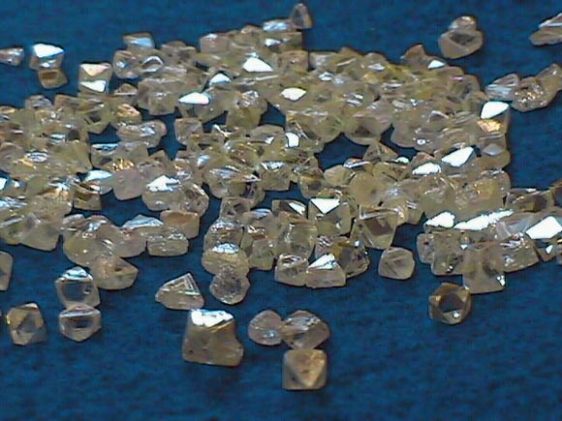
“Diamonds may not be as rare as once believed, but this finding won’t mean deep discounts at local jewelry stores,” said study authors Prof. Dimitri Sverjensky and Dr Fang Huang, both from the Johns Hopkins University.
“For one thing, the prevalence of diamonds near the Earth’s surface still depends on relatively rare volcanic magma eruptions that raise them from the depths where they form.”
“For another, the diamonds being considered in studies are not necessarily the stuff of engagement rings, unless the recipient is equipped with a microscope. Most are only a few microns across and are not visible to the unaided eye.”
Using a chemical model, the team found that diamonds could be born in a natural chemical reaction that is simpler than the two main processes that up to now have been understood to produce diamonds.
Specifically, the model shows that diamonds can form with an increase in acidity during interaction between water and rock.
“We show that diamonds could form due to a drop in pH during water–rock interactions,” the scientists wrote in the paper. “We use a recent theoretical model of deep fluids that includes ions, to show that fluid can react irreversibly with eclogite at 1,652 degrees Fahrenheit (900 degrees Celsius) and 5.0 GPa, generating diamond and secondary minerals due to a decrease in pH at almost constant oxygen fugacity.”
The common understanding up to now has been that diamonds are formed in the movement of fluid by the oxidation of methane or the chemical reduction of carbon dioxide.
“The new study showed that water could produce diamonds as its pH falls naturally – that is, as it becomes more acidic – while moving from one type of rock to another,” Prof. Sverjensky said.
“The more people look, the more they’re finding diamonds in different rock types now. I think everybody would agree there’s more and more environments of diamond formation being discovered,” he added.
“Overall, our results constitute a new quantitative theory of diamond formation as a consequence of the reaction of deep fluids with the rock types that they encounter during migration,” the scientists concluded.
Source: Study: Diamonds May Be More Common Than Thought | Geology | Sci-News.com
Genetic modification shows promise for preventing hereditary hearing loss | Science Codex
Philadelphia, PA, November 6, 2015 – A mitochondrial defect is responsible for a type of human hereditary deafness that worsens over time and can lead to profound hearing loss. Using a genetically-modified mice model with a mitochondrial dysfunction that results in a similar premature hearing loss, researchers showed that precise genetic reduction of an enzyme, AMP kinase (AMPK), can rescue the hearing loss. Their results are reported in the American Journal of Pathology.
Source: Genetic modification shows promise for preventing hereditary hearing loss | Science Codex
 Andrew Phillip Chernoff