Tiny water bears are huge DNA thieves: study


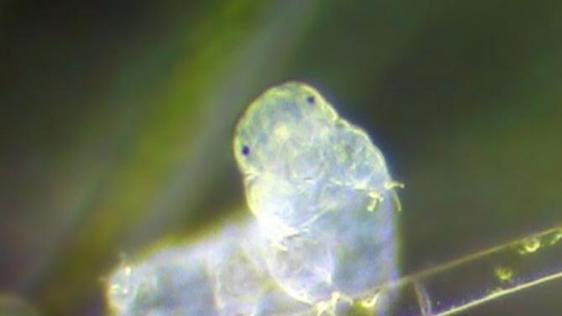
Washington (AFP) – The eight-legged water bear — a hardy, nearly microscopic animal  resembling its mammal namesake — gets a huge chunk of its DNA from foreign organisms such as bacteria and plants, scientists have revealed.

These genes, the researchers suggest, help the tiny animals, also known as moss piglets or tardigrades, survive in the harshest of environments.

Water bears, which live all over the world, are usually 0.020 inches (0.5 millimetres) long and move very slowly and clumsily on their multitude of legs.

These highly adaptable creatures can survive extreme temperatures.

Even after being stuck in a freezer at -112 degrees Fahrenheit (-80 Celsius) for 10 years, they can start moving around again about 20 minutes after thawing.

By sequencing these creatures’ genome, researchers from the University of North Carolina (UNC) at Chapel Hill were surprised to find that 17.5 percent — nearly a sixth — of the genome came from foreign organisms.

For most animals, less than one percent of their genome comes from foreign DNA.

The microscopic rotifer previously held the record, with eight percent of its genome coming from foreign DNA.

“We had no idea that an animal genome could be composed of so much foreign DNA,” said co-author Bob Goldstein of UNC’s College of Arts and Sciences.

“We knew many animals acquire foreign genes, but we had no idea that it happens to this degree.”

– New insight on evolution –

The study, published in Monday’s edition of the Proceedings of the National Academy of Sciences, also made unusual findings about how DNA is inherited.

Goldstein, first author Thomas Boothby and colleagues found that water bears obtain about 6,000 foreign genes mostly from bacteria, as well as plants, fungi and Archaea single-cell organisms.

“Animals that can survive extreme stresses may be particularly prone to acquiring foreign genes — and bacterial genes might be better able to withstand stresses than animal ones,” said Boothby, a postdoctoral fellow in Goldstein’s lab.

Indeed, bacteria have survived the most extreme environments on Earth for billions of years.

Water bears acquire foreign genes through horizontal gene transfer, a process by which species swap genetic material instead of inheriting DNA from parents.

“With horizontal gene transfer becoming more widely accepted and more well-known, at least in certain organisms, it is beginning to change the way we think about evolution and inheritance of genetic material and the stability of genomes,” said Boothby.

Researchers said the DNA likely gets inside the genome randomly but what remains allows water bears to survive in the most hostile environments.

Under intense stress, such as extreme dryness, the water bear’s DNA breaks up into small pieces, according to the research team.

Once the cell rehydrates, its membrane and nucleus housing the DNA temporarily becomes leaky and allows other large molecules to pass through easily.

They thus repair their own damaged DNA while also absorbing foreign DNA as the cell rehydrates, forming a patchworks of genes from different species.

“So instead of thinking of the tree of life, we can think about the web of life and genetic material crossing from branch to branch,” Boothby explained.

“So it’s exciting. We are beginning to adjust our understanding of how evolution works.”

Source: Tiny water bears are huge DNA thieves: study – Yahoo News
A tick that feeds on birds may increase the range of Lyme disease

89V+1316790532

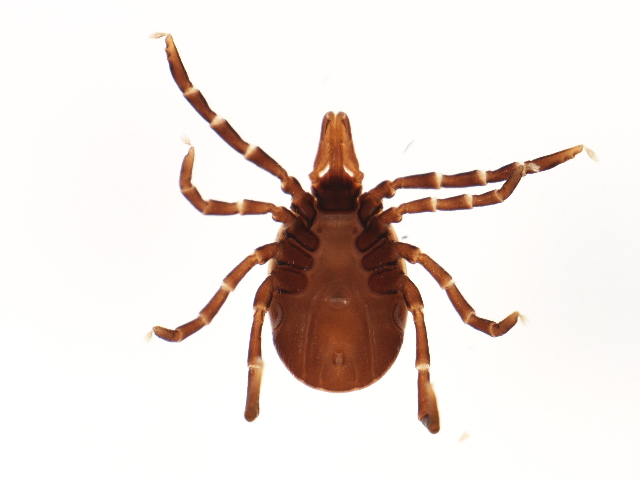
Ixodes affinis

Blacklegged ticks (Ixodes scapularis) are the primary vector of Lyme disease to humans, but researchers at Old Dominion University in Virginia are focusing on another tick, Ixodes affinis, even though it doesn’t bite people.

In their paper published in the Journal of Medical Entomology, “New records of Ixodes affinis parasitizing avian hosts in southeastern Virginia,” Erin Heller and co-authors document Ixodes affinis parasitizing five songbird species on which it had not previously been recorded. This is important because birds are able to travel long distances, and bring tick hitchhikers with them.

As the range of Ixodes affinis expands northwards and overlaps more with that of the human-biting blacklegged tick, the authors predict that having two competent tick vectors may increase transmission of the pathogen throughout the system and lead to an increase in the number of Lyme disease cases in humans.

This study adds to a growing body of evidence that indicates that in order to understand the spread of Lyme disease, researchers must consider the ecology of all of its various hosts and vectors. Ixodes affinis and its various feathered hosts may prove to play a significant part in the story of this potentially debilitating disease.

Source: Entomological Society of America

Source: A tick that feeds on birds may increase the range of Lyme disease | Science Codex

Employees who work long hours have a higher risk of stroke than those working standard hours

Employees who work long hours have a higher risk of stroke than those working standard hours; the association with coronary heart disease is weaker. These findings suggest that more attention should be paid to the management of vascular risk factors in individuals who work long hours.

Summary

Background

Long working hours might increase the risk of cardiovascular disease, but prospective evidence is scarce, imprecise, and mostly limited to coronary heart disease. We aimed to assess long working hours as a risk factor for incident coronary heart disease and stroke.

Methods

We identified published studies through a systematic review of PubMed and Embase from inception to Aug 20, 2014. We obtained unpublished data for 20 cohort studies from the Individual-Participant-Data Meta-analysis in Working Populations (IPD-Work) Consortium and open-access data archives. We used cumulative random-effects meta-analysis to combine effect estimates from published and unpublished data.

Findings

We included 25 studies from 24 cohorts in Europe, the USA, and Australia. The meta-analysis of coronary heart disease comprised data for 603 838 men and women who were free from coronary heart disease at baseline; the meta-analysis of stroke comprised data for 528 908 men and women who were free from stroke at baseline. Follow-up for coronary heart disease was 5·1 million person-years (mean 8·5 years), in which 4768 events were recorded, and for stroke was 3·8 million person-years (mean 7·2 years), in which 1722 events were recorded. In cumulative meta-analysis adjusted for age, sex, and socioeconomic status, compared with standard hours (35–40 h per week), working long hours (≥55 h per week) was associated with an increase in risk of incident coronary heart disease (relative risk [RR] 1·13, 95% CI 1·02–1·26; p=0·02) and incident stroke (1·33, 1·11–1·61; p=0·002). The excess risk of stroke remained unchanged in analyses that addressed reverse causation, multivariable adjustments for other risk factors, and different methods of stroke ascertainment (range of RR estimates 1·30–1·42). We recorded a dose–response association for stroke, with RR estimates of 1·10 (95% CI 0·94–1·28; p=0·24) for 41–48 working hours, 1·27 (1·03–1·56; p=0·03) for 49–54 working hours, and 1·33 (1·11–1·61; p=0·002) for 55 working hours or more per week compared with standard working hours (ptrend<0·0001).

Interpretation

Employees who work long hours have a higher risk of stroke than those working standard hours; the association with coronary heart disease is weaker. These findings suggest that more attention should be paid to the management of vascular risk factors in individuals who work long hours.

Funding

Medical Research Council, Economic and Social Research Council, European Union New and Emerging Risks in Occupational Safety and Health research programme, Finnish Work Environment Fund, Swedish Research Council for Working Life and Social Research, German Social Accident Insurance, Danish National Research Centre for the Working Environment, Academy of Finland, Ministry of Social Affairs and Employment (Netherlands), US National Institutes of Health, British Heart Foundation.

Source: Long working hours and risk of coronary heart disease and stroke: a systematic review and meta-analysis of published and unpublished data for 603 838 individuals – The Lancet

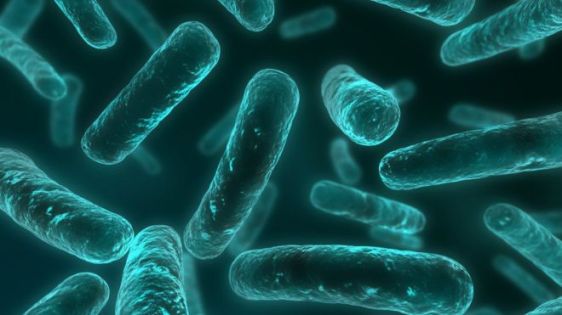
Antibiotic resistance: World on cusp of ‘post-antibiotic era’

The world is on the cusp of a “post-antibiotic era”, scientists have warned after finding bacteria resistant to drugs used when all other treatments have failed.

Their report, in the Lancet, identifies bacteria able to shrug off colistin in patients and livestock in China.

They said that resistance would spread around the world and raised the spectre of untreatable infections.

Experts said the worrying development needed to act as a global wake-up call.

Bacteria becoming completely resistant to treatment – also known as the antibiotic apocalypse – could plunge medicine back into the dark ages.

Common infections would kill once again, while surgery and cancer therapies, which are reliant on antibiotics, would be under threat.

Key players

Chinese scientists identified a new mutation, dubbed the MCR-1 gene, that prevented colistin from killing bacteria.

It was found in a fifth of animals tested, 15% of raw meat samples and in 16 patients.

And the resistance had spread between a range of bacterial strains and species, including E. coli, Klebsiella pneumoniae and Pseudomonas aeruginosa.

There is also evidence that it has spread to Laos and Malaysia.

Prof Timothy Walsh, who collaborated on the study, from the University of Cardiff, told the BBC News website: “All the key players are now in place to make the post-antibiotic world a reality.

“If MRC-1 becomes global, which is a case of when not if, and the gene aligns itself with other antibiotic resistance genes, which is inevitable, then we will have very likely reached the start of the post-antibiotic era.

“At that point if a patient is seriously ill, say with E. coli, then there is virtually nothing you can do.”

Resistance to colistin has emerged before.

However, the crucial difference this time is the mutation has arisen in a way that is very easily shared between bacteria.

“The transfer rate of this resistance gene is ridiculously high, that doesn’t look good,” said Prof Mark Wilcox, from Leeds Teaching Hospitals NHS Trust.

His hospital is now dealing with multiple cases “where we’re struggling to find an antibiotic” every month – an event he describes as being as “rare as hens’ teeth” five years ago.

He said there was no single event that would mark the start of the antibiotic apocalypse, but it was clear “we’re losing the battle”.

‘Untreatable’

The concern is that the new resistance gene will hook up with others plaguing hospitals, leading to bacteria resistant to all treatment – what is known as pan-resistance.

Prof Wilcox told the BBC News website: “Do I fear we’ll get to an untreatable organism situation? Ultimately yes.

“Whether that happens this year, or next year, or the year after, it’s very hard to say.”

Early indications suggest the Chinese government is moving swiftly to address the problem.

Prof Walsh is meeting both the agricultural and health ministries this weekend to discuss whether colistin should be banned for agricultural use.

Prof Laura Piddock, from the campaign group Antibiotic Action, said the same antibiotics “should not be used in veterinary and human medicine”.

She told the BBC News website: “Hopefully the post-antibiotic era is not upon us yet. However, this is a wake-up call to the world.”

She argued the dawning of the post-antibiotic era “really depends on the infection, the patient and whether there are alternative treatment options available” as combinations of antibiotics may still be effective.

A commentary in the Lancet concluded the “implications [of this study] are enormous” and unless something significant changes, doctors would “face increasing numbers of patients for whom we will need to say, ‘Sorry, there is nothing I can do to cure your infection.'”

Source: Antibiotic resistance: World on cusp of ‘post-antibiotic era’ – BBC News

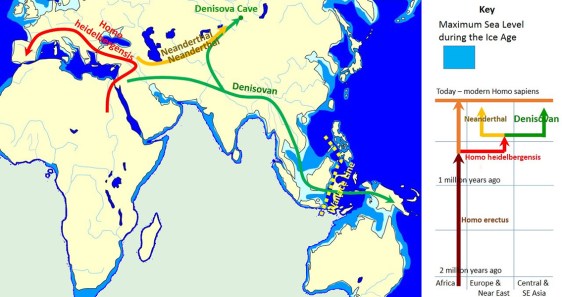
Denisovans More Genetically Diverse Than Neanderthals

A recent DNA sequencing of Denisovans has determined that the now extinct human species were more genetically diverse than their relatives on the human family tree, the Neanderthals.

In addition, the new study published in the journal Proceedings of the National Academy of Sciences has pushed back the dates of the Denisovans’ origins and clarified the length of time that they inhabited the area around Siberia.

Until now, the human relatives have been shrouded in mystery, with some scientists debating whether Denisovans can actually be considered a separate species.

Scientists first discovered evidence of Densiovans’ existence in 2008 when a finger bone was unearthed from Denisova cave in Siberia’s Altai mountains. Initial DNA sequencing suggested that the Denisovans shared a common origin with Neanderthals, but were as distinct from them as Neanderthals were from humans.

Prior to this latest study, only two Denisovan specimens had been described, the finger bone (Denisova 3) which underwent nuclear genome sequencing to identify Denisovans in the first place, and a molar (labelled Denisova 4) from the same site. For the study the team, an international group including scientists from the Max Planck Institute for Evolutionary Anthropology, sequenced the mitochondrial and nuclear DNA on the Denisova 4 molar and another labelled Denisova 8 which had been unearthed from the same cave. The team’s work has extended the number of known Denisovans to three.

The DNA from Denisova 8 accumulated fewer mutations than the Denisova 3 and 4 samples, which would mean it came from an individual in the range of 60,000 years older than the other two. The initial Denisovan discovery was determined to have lived 50,000 years ago.

According to the study, the finding suggests “Denisovans were present in the region over several millennia.” This in turn gives the impression that they were particularly hardy, capable of surviving in the extremely harsh conditions of Siberia. However, with so few remains to study, scientists can only speculate as to what the mysterious creatures were really like.

Physically, the Denisovan teeth are distinct from those of modern humans and Neanderthals. They are significantly larger and lack certain traits, such as some raised points on the crowns of molars, that are found in both modern humans and Neanderthals.

In terms of diversity, even though the Denisovan remains were all found in a single cave they exhibited almost as much as found in modern humans. Dr. Bence Viola, a co-author of the study from the University of Toronto, explained the diversity in an interview with the New York Times. “You actually see more diversity in the Denisovans than you’ve seen in Neanderthals from Spain to the Altais, and that, I think, is pretty astonishing,”

Dr. Viola went on to speculate that whereas Neanderthals started to inbreed after ice age glaciers forced them into isolated regions of southern Europe, the Denisovans were able to move freely through regions of Asia which had not been buried under ice.

It has previously been established that Denisovan DNA is present in that of modern humans, with chunks of it found in the DNA of Polynesians, New Guineans and Australian aborigines. It could even explain the development of certain human characteristics. One of the co-authors, Svante Pääbo, told Livescience “In Tibet, an adaptation to live at high altitudes where there is little oxygen in the air has been shown to come from Denisovans.”

The DNA extracted from the Denisova 8 tooth largely bears a close relationship with Neanderthals, although some of it seems only distantly connected to either Neanderthal or human DNA. This has led to suggestions that the Denisovans may have bred with hitherto undiscovered hominin species.

Source: Denisovans More Genetically Diverse Than Neanderthals