Worldwide electricity production vulnerable to climate and water resource change

Climate change impacts and associated changes in water resources could lead to reductions in electricity production capacity for more than 60% of the power plants worldwide from 2040-2069, according to a new study published today in the journal Nature Climate Change. Yet adaptation measures focused on making power plants more efficient and flexible could mitigate much of the decline.

“Hydropower plants and thermoelectric power plants–which are nuclear, fossil-, and biomass-fueled plants converting heat to electricity–both rely on freshwater from rivers and streams,” explains Michelle Van Vliet, a researcher at the International Institute for Applied Systems Analysis (IIASA) in Austria and Wageningen University in the Netherlands, who led the study. “These power-generating technologies strongly depend on water availability, and water temperature for cooling plays in addition a critical role for thermoelectric power generation.”

Together, hydropower and thermoelectric power currently contribute to 98% of electricity production worldwide.

Model projections show that climate change will impact water resources availability and will increase water temperatures in many regions of the world. A previous study by the researchers showed that reduced summer water availability and higher water temperatures associated with climate change could result in significant reductions in thermoelectric power supply in Europe and the United States.

This new study expands the research to a global level, using data from 24,515 hydropower and 1,427 thermoelectric power plants worldwide.

“This is the first study of its kind to examine the linkages between climate change, water resources, and electricity production on a global scale. We clearly show that power plants are not only causing climate change, but they might also be affected in major ways by climate,” says IIASA Energy Program Director Keywan Riahi, a study co-author.

“In particular the United States, southern South America, southern Africa, central and southern Europe, Southeast Asia and southern Australia are vulnerable regions, because declines in mean annual streamflow are projected combined with strong increases in water temperature under changing climate. This reduces the potential for both hydropower and thermoelectric power generation in these regions,” says Van Vliet.

The study also explored the potential impact of adaptation measures such as technological developments that increase power plant efficiency, switching from coal to more efficient gas-fired plants, or switching from freshwater cooling to air cooling or to seawater cooling systems for power plants on the coasts.

“We show that technological developments with increases in power plant efficiencies and changes in cooling system types would reduce the vulnerability to water constraints in most regions. Improved cross-sectoral water management during drought periods is of course also important,” says Van Vliet. “In order to sustain water and energy security in the next decades, the electricity focus will need to increase their focus on climate change adaptation in addition to mitigation.”

Source: International Institute for Applied Systems Analysis

Source: Worldwide electricity production vulnerable to climate and water resource change | Science Codex
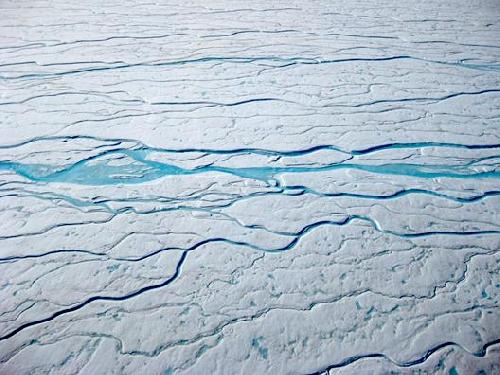

Climate change altering Greenland ice sheet & accelerating sea level rise, says York University prof

TORONTO, January 4, 2016 – The Greenland ice sheet has traditionally been pictured as a bit of a sponge for glacier meltwater, but new research has found it is rapidly losing the ability to buffer its contribution to rising sea levels, says a York University researcher.

York U Professor William Colgan, a co-author on the study published today in the journal Nature Climate Change, helped analyse data from three expeditions to the Greenland ice sheet in 2012, 2013 and 2015. The research was done in conjunction with lead researcher Horst Machguth of the Geological Survey of Denmark and Greenland, Mike MacFerrin of the University of Colorado at Boulder and Dirk van As of the Geological Survey of Denmark and Greenland Copenhagen, Denmark.

Colgan spent five weeks with the team in 2013 drilling firn cores in the interior of the Greenland ice sheet. Firn is multi-year compacted snow that is not as dense as glacier ice. Instead, it forms a porous near-surface layer over the ice sheet. Dropped off by a ski-equipped US Air National Guard C-130 Hercules in minus 40 degrees Celsius weather, with 6,000 kilos of supplies and equipment, the team set up several camps and drilled a series of shallow firn cores about 20 metres deep during their time on the ice sheet.

“We were interested in the thin porous near-surface firn layer, and how its physical structure is changing rapidly with climate change,” said Colgan of the Lassonde School of Engineering. “The study looked at very recent climate change on the ice sheet, how the last couple of years of melt have really altered the structure of the ice sheet firn and made it behave differently to future melt.”

The researchers also towed a radar unit behind their skidoos to gather profiles between core sites along a 100-kilometre path from the low elevation ice sheet margin into the high elevation ice sheet interior. They analysed the firn cores on the spot by cutting them into small sections to quantify their properties, such as their density, so they could compare them with samples collected the following year. “The year-on-year firn changes were quite dramatic,” said Colgan.

The team was surprised by what they found. An extreme melt that occurred in 2012 caused a layer of solid ice, several metres thick, to form on top of the porous firn in the low elevation areas of the ice sheet. “In subsequent years, meltwater couldn’t penetrate vertically through the solid ice layer, and instead drained along the ice sheet surface toward the ocean,” said Colgan. “It overturned the idea that firn can behave as a nearly bottomless sponge to absorb meltwater. Instead, we found that the meltwater storage capacity of the firn could be capped off relatively quickly.”

As Machguth said, “Basically our research shows that the firn reacts fast to a changing climate. Its ability to limit mass loss of the ice sheet by retaining meltwater could be smaller than previously assumed.”

Because the models scientists use to project Greenland’s sea level rise contribution do not presently take firn cap-off into consideration, it means that Greenland’s projected sea level rise due to meltwater runoff is likely higher than previously predicted. Getting this newly observed physical process into these models is an important next step for the team.

Using unmanned aerial vehicles, Colgan also plans to begin surveying the changes in ice sheet surface reflectance caused by the development of massive ice layers associated with firn cap-off. There are preliminary indications that firn cap-off is also occurring in the ice caps of the Canadian High Arctic.

source: York University

Source: Climate change altering Greenland ice sheet & accelerating sea level rise, says York University prof | Science Codex

BU study: Effects of obesity on death rates understated in prior research

(BOSTON) — Researchers from the Boston University School of Public Health and the University of Pennsylvania have found that prior studies of the link between obesity and mortality are flawed because they rely on one-time measures of body mass index (BMI) that obscure the health impacts of weight change over time.

The study, published online in the journal Proceedings of the National Academy of Sciences, maintains that most obesity research, which gauges weight at only a single point in time, has underestimated the effects of excess weight on mortality. Studies that fail to distinguish between people who never exceeded normal weight and people of normal weight who were formerly overweight or obese are misleading because they neglect the enduring effects of past obesity and fail to account for the fact that weight loss is often associated with illness, the researchers said.

When such a distinction is made, the study found, adverse health effects grow larger in weight categories above the normal range, and no protective effect of being overweight is observed.

“The risks of obesity are obscured in prior research because most of the studies only incorporate information on weight at a single point in time,” said lead author Andrew Stokes, assistant professor of global health at BUSPH. “The simple step of incorporating weight history clarifies the risks of obesity and shows that they are much higher than appreciated.”

Stokes and co-author Samuel Preston, professor of sociology at the University of Pennsylvania, tested a model that gauged obesity status through individuals’ reporting of their lifetime maximum weight, rather than just a ‘snapshot’ survey weight. They found that the death rate for people who were normal weight at the time of survey was 27 percent higher than the rate for people whose weight never exceeded that category.

They also found a higher prevalence of both diabetes and cardiovascular disease among people who had reached a higher-than-normal BMI and then lost weight, compared to people who remained in a high BMI category.

Stokes and Preston argue that using “weight histories” in studies of obesity and mortality is important for two reasons. One reason is that obesity at a particular age may predispose people to illness, regardless of subsequent weight loss. The other is that weight loss is often caused by illness.

The researchers used data from the large-scale 1988-2010 National Health and Nutrition Examination Survey, linking the data to death certificate records through 2011. The survey asked respondents to recall their maximum lifetime weight, as well as recording their weight at the time of the survey.

Of those in the normal-weight category at the time of the survey, 39 percent had transitioned into that category from higher-weight categories.

The study used statistical criteria to compare the performance of various models, including some that included data on weight histories and others that did not. The researchers found that weight at the time of the survey was a poor predictor of mortality, compared to models using data on lifetime maximum weight.

“The disparity in predictive power between these models is related to exceptionally high mortality among those who have lost weight, with the normal-weight category being particularly susceptible to distortions arising from weight loss,” the researchers said. “These distortions make overweight and obesity appear less harmful by obscuring the benefits of remaining never obese.”

The study comes amid controversy over the relationship between obesity and mortality, with some recent studies indicating that excess weight is a protective factor in health. One such study, a major meta-analysis in 2013 led by a researcher with the Centers for Disease Control and Prevention, indicated that being overweight was associated with lower mortality, and that slight obesity conferred no excess risk of death.

A number of past studies have shown that people who lose weight have higher rates of death than those who maintain their weight over time. Part of the reason for that disparity is that illness may be a cause of weight loss, through decreased appetite or increased metabolic demands. Few studies have adequately accounted for that source of bias, Stokes and Preston noted.

They urged more research using weight histories, saying such an approach had proven valuable in studies of smoking, which distinguish between former and current smokers and those who have never smoked.

Source: Boston University Medical Center

Source: BU study: Effects of obesity on death rates understated in prior research | Science Codex

Melting of massive ice ‘lid’ resulted in huge release of CO2 at the end of the ice age

A new study reconstructing conditions at the end of the last ice age suggests that as the Antarctic sea ice melted, massive amounts of carbon dioxide that had been trapped in the ocean were released into the atmosphere.

The study includes the first detailed reconstruction of the Southern Ocean density of the period and identified how it changed as the Earth warmed. It suggests a massive reorganisation of ocean temperature and salinity, but finds that this was not the driver of increased concentration of carbon dioxide in the atmosphere. The study, led by researchers from the University of Cambridge, is published in the journal Proceedings of the National Academy of Sciences.

The ocean is made up of different layers of varying densities and chemical compositions. During the last ice age, it was thought that the deepest part of the ocean was made up of very salty, dense water, which was capable of trapping a lot of CO2. Scientists believed that a decrease in the density of this deep water resulted in the release of CO2 from the deep ocean to the atmosphere.

However, the new findings suggest that although a decrease in the density of the deep ocean did occur, it happened much later than the rise in atmospheric CO2, suggesting that other mechanisms must be responsible for the release of CO2 from the oceans at the end of the last ice age.

“We set out to test the idea that a decrease in ocean density resulted in a rise in CO2 by reconstructing how it changed across time periods when the Earth was warming,” said the paper’s lead author Jenny Roberts, a PhD student in Cambridge’s Department of Earth Sciences who is also a member of the British Antarctic Survey. “However what we found was not what we were expecting to see.”

In order to determine how the oceans have changed over time and to identify what might have caused the massive release of CO2, the researchers studied the chemical composition of microscopic shelled animals that have been buried deep in ocean sediment since the end of the ice age. Like layers of snow, the shells of these tiny animals, known as foraminifera, contain clues about what the ocean was like while they were alive, allowing the researchers to reconstruct how the ocean changed as the ice age was ending.

They found that during the cold glacial periods, the deepest water was significantly denser than it is today. However, what was unexpected was the timing of the reduction in the deep ocean density, which happened some 5,000 years after the initial increase in CO2, meaning that the density decrease couldn’t be responsible for releasing CO2 to the atmosphere.

“Before this study there were these two observations, the first was that glacial deep water was really salty and dense, and the second that it also contained a lot of CO2, and the community put two and two together and said these two observations must be linked,” said Roberts. “But it was only through doing our study, and looking at the change in both density and CO2 across the deglaciation, that we found they actually weren’t linked. This surprised us all.”

Through examination of the shells, the researchers found that changes in CO2 and density are not nearly as tightly linked as previously thought, suggesting something else must be causing CO2 to be released from the ocean.

Like a bottle of wine with a cork, sea ice can prevent CO2-rich water from releasing its CO2 to the atmosphere. The Southern Ocean is a key area of exchange of CO2 between the ocean and atmosphere. The expansion of sea ice during the last ice age acted as a ‘lid’ on the Southern Ocean, preventing CO2 from escaping. The researchers suggest that the retreat of this sea ice lid at the end of the last ice age uncorked this vintage CO2, resulting in an increase in carbon dioxide in the atmosphere.

“Although conditions at the end of the last ice age were very different to today, this study highlights the importance that dynamic features such as sea ice have on regulating the climate system, and emphasises the need for improved understanding and prediction as we head into our ever warming world,” said Roberts.

source: University of Cambridge

Source: Melting of massive ice ‘lid’ resulted in huge release of CO2 at the end of the ice age | Science Codex

Newly discovered windows of brain plasticity may help stress-related disorders

A familiar stressor (left) did not increase NMDA receptors (dark spots), a booster of potentially harmful glutamate signaling, in the brains of mice. However, when subjected to an unfamiliar stress (right), mice expressed more NMDA receptors. Credit: Laboratory of Neuroendocrinology at The Rockefeller University/PNAS

Chronic stress can lead to changes in neural circuitry that leave the brain trapped in states of anxiety and depression. But even under repeated stress, brief opportunities for recovery can open up, according to new research at The Rockefeller University.

“Even after a long period of chronic stress, the brain retains the ability to change and adapt. In experiments with mice, we discovered the mechanism that alters expression of key glutamate-controlling genes to make windows of stress-related neuroplasticity–and potential recovery–possible,” says senior author Bruce McEwen, Alfred E. Mirsky Professor, and head of the Harold and Margaret Milliken Hatch Laboratory of Neuroendocrinology. Glutamate is a chemical signal implicated in stress-related disorders, including depression.

“This sensitive window could provide an opportunity for treatment, when the brain is most responsive to efforts to restore neural circuitry in the affected areas,” he adds.

The team, including McEwen and first author Carla Nasca, wanted to know how a history of stress could alter the brain’s response to further stress. To find out, they accustomed mice to a daily experience they dislike, confinement in a small space for a short period. On the 22nd day, they introduced some of those mice to a new stressor; others received the now-familiar confinement.

Then, the researchers tested both groups for anxiety- or depression-like behaviors. A telling split emerged: Mice tested shortly after the receiving the familiar stressor showed fewer of those behaviors; meanwhile those given the unfamiliar stressor, displayed more. The difference was transitory, however; by 24 hours after the final stressor, the behavioral improvements seen in half of the mice had disappeared.

Molecular analyses revealed a parallel fluctuation in a part of the hippocampus, a brain region involved in the stress response. A key molecule, mGlu2, which tamps down the release of the neurotransmitter glutamate, increased temporarily in mice subjected to the familiar confinement stress. Meanwhile, a molecular glutamate booster, NMDA, increased in other mice that experienced the unfamiliar stressor. In stress-related disorders, excessive glutamate causes harmful structural changes in the brain.

The researchers also identified the molecule regulating the regulator, an enzyme called P300. By adding chemical groups to proteins known as histones, which give support and structure to DNA, P300 increases expression of mGlu2, they found.

In other experiments, they looked at mice genetically engineered to carry a genetic variant associated with development of depression and other stress-related disorders in humans, and present in 33 percent of the population.

“Here again, in experiments relevant to humans, we saw the same window of plasticity, with the same up-then-down fluctuations in mGlu2 and P300 in the hippocampus,” Nasca says. “This result suggests we can take advantage of these windows of plasticity through treatments, including the next generation of drugs, such as acetyl carnitine, that target mGlu2–not to ‘roll back the clock’ but rather to change the trajectory of such brain plasticity toward more positive directions.”

source: Rockefeller University

Source: Newly discovered windows of brain plasticity may help stress-related disorders | Science Codex