Varcoe: Alberta seeks answers on links between earthquakes and fracking

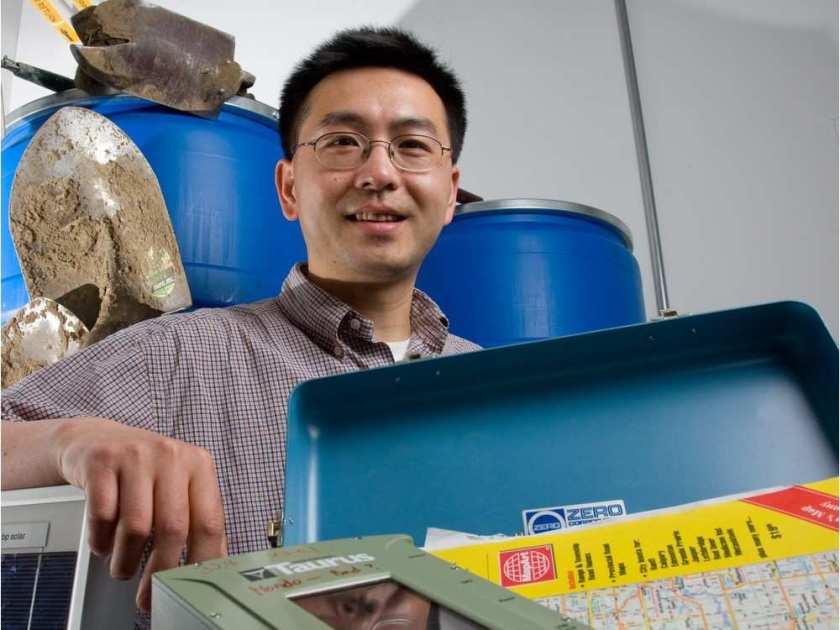
Jeff Gu, a University of Alberta geophysicist, says the scientific community needs to better understand what’s triggering earthquakes near fracking operations. Ryan Jackson / Ryan Jackson/Edmonton Journal


Early in the new year, a tremor shook the area near Fox Creek in northwest Alberta.

It wasn’t the region’s first earthquake, but it was the largest — rattling pictures on walls, but not causing injuries or damage.

However, it did more than simply unnerve local residents.

It reverberated into the Alberta government, which ordered the province’s energy regulator to speed up its examination into the links between hydraulic fracturing and seismic activity.

The tremor that struck just west of Fox Creek on Jan. 12 registered as a 4.8-magnitude event, classified as a moderate quake.

Three months later — and after 23 more seismic events in the area — the province has just received a draft report on the issue from the Alberta Energy Regulator, with a final version expected this fall.

No one is saying what’s in the preliminary version.

But it’s logical to expect the AER will recommend more education, and possibly more monitoring, as more fracking by energy companies takes place.

Hopefully, it will call for more science to understand why this particular area has felt so many tremors, with more than 420 seismic events recorded near Fox Creek since the start of 2015.

The review comes as a new survey published this week by a team of researchers indicates a link between oilpatch hydraulic fracturing in Western Canada and quakes in the region.

The group reviewed data from 12,289 oil and gas wells drilled across the Western Canadian Sedimentary Basin (WCSB) since 1985.

In 39 cases, it found a correlation with earthquakes that registered at a magnitude of 3 or more.

Between 2010 and 2015, more than half of all induced earthquakes of such scale occurred “in close proximity to hydraulic fracturing operations, in both time and space.”

“There’s a scientific consensus that some areas — particularly in the Fox Creek area and parts of the Montney trend of British Columbia — there’s a clear association between hydraulic fracturing and induced earthquakes,” says David Eaton, a geophysicist at the University of Calgary who worked on the report.

Before the fault-line of public opinion splits apart in Alberta, it’s important to put this issue into context.

According to the Alberta Geological Survey, any seismic event of a magnitude under 4 is categorized as being “small, minor or micro,” while under 6 is deemed “moderate.”

Provincial data indicates only four earthquakes near Fox Creek since 2015 have been categorized at a magnitude of 4 or higher.

The industry drills thousands of wells each year. Last year, the AER approved almost 2,000 wells completed by fracturing.

Yet, the study found significant seismic activity occurred in only a tiny fraction of fractured wells, about 0.3 per cent of such cases.

 The AER points out induced seismic activity has not caused any injuries or damage. But that doesn’t mean we should ignore the issue, either.

“Considering that thousands of such wells are drilled every year in the WCSB, the implications for hazard are nonetheless significant … particularly if multiple operations are located in close proximity to critical infrastructure,” the report cautions.

In other words, Alberta only needs one significant man-made seismic headache for the fallout to shake everyone to their core.

Jeff Gu, a University of Alberta geophysicist involved in the study, notes the report uncovers several other findings.

Unlike induced earthquakes in United States, which appear to be tied to underground wastewater disposal, the main source of induced earthquakes in Canada is associated with hydraulic fracturing.

But he believes the scientific community needs to better understand what’s triggering these quakes, why they’re clustered in specific areas — such as the Duvernay formation around Fox Creek — and how the risk can be reduced.

“It’s definitely worth looking into because we don’t know exactly how big these events are or can be, and where the next one will happen,” Gu says.

Canada trails only the United States in developing its shale oil and gas resources, and fracking has allowed the industry to unlock massive petroleum reserves underground.

The method usually involves high-pressure injection of fluids along horizontally drilled wells, often at two or three kilometres deep, to create or open cracks in rock underground to access the resource.

The NDP government took a cautious stance to the new survey this week, saying it’s working with the regulator and industry to better understand the relationship between fracking and seismic activity.

From industry’s perspective, the Canadian Association of Petroleum Producers noted the report reinforces a link between hydraulic fracturing and seismicity established in recent studies in British Columbia — but it also shows the vast majority of seismic events in the basin are minor and localized.

In the regulator’s realm, the AER issued new rules for operators near Fox Creek following an earlier quake in 2015. It requires companies fracking in the area to monitor seismic activity within five kilometres of their wells.

The AER also introduced a traffic light system: if companies record anything above a magnitude 2 event while fracking, they hit a yellow light and must inform the regulator. Anything above a 4-magnitude quake means full stop.

This go-slow approach makes sense. A moratorium, such as in New Brunswick, doesn’t seem like the answer.

And hopefully, the AER examination will get to the bottom of what’s causing the tremors near Fox Creek.

“We have to weigh the economic development against the risks on both sides. There’s a danger in going too far in either direction,” says Eaton.

In other words, proceed with caution.

Chris Varcoe is a Calgary Herald columnist

cvarcoe@calgaryherald.com

Source: Varcoe: Alberta seeks answers on links between earthquakes and fracking | Calgary Herald

Trailer Park Boys release statements from participants

TORONTO, April 2, 2016 /CNW/ – Regarding Mike Smith’s involvement in an incident that occurred early Friday, April 1st in Hollywood, following are statements issued by the participants:

Georgia Ling, described as the victim in this incident, stated: “Mike and I did indeed have a heavy argument but it saddens me the way things are being reported and the way it was handled by the police. At no point did I feel I was in danger, otherwise I would’ve called the police myself, which I did not.  The police were called by others not present in the room who mistakenly perceived the argument to be something other than what it was. When the officers arrived I tried to assure them there was no real issue, but they proceeded to arrest Mike”.

Mike Smith commented:  “Georgia is a friend of mine and we had a loud and heated dispute. That is all. At no time did I assault her. I am not guilty of the misdemeanour charged against me.”

The other members of the Trailer Park Boys and all staff stand behind Mike and look forward to the matter being resolved favourably.

SOURCE Trailer Park Boys

For further information: Sheila Roberts, 647-787-4165

Source: Trailer Park Boys release statements from participants

A&W Tops Up Its Menu with French’s Ketchup and Mustard

A&W will be the first national restaurant to serve French’s Tomato Ketchup and Classic Yellow Mustard in all of its restaurants across Canada. A&W’s Ketchup will be made with locally-sourced tomatoes from Leamington and will be produced and packaged in Ontario. (CNW Group/A&W Food Services of Canada Inc.)

A&W Partners with The French’s Food Company to Serve Condiments Made From High Quality Canadian Ingredients

VANCOUVER, March 29, 2016 /CNW/ – A&W Food Services of Canada Inc., home of Canada’s best-tasting burger, is introducing a new partnership with The French’s Food Company as part of its continued commitment to providing guests with great-tasting food, farmed with care. After more than six months of collaborating with French’s, A&W is proud to announce that it will be the first national restaurant to serve French’s Tomato Ketchup and Classic Yellow Mustard in all of its restaurants across Canada. Both the Ketchup and Mustard are made without preservatives or artificial flavours and colours, and contain 100% Canadian tomatoes and 100% Canadian mustard seeds.

The transition to French’s Tomato Ketchup and Classic Yellow Mustard is already underway and A&W guests across Canada will be able to enjoy the new toppings on all their favourite menu items starting in April.

As a 100 per cent Canadian-owned and operated company, A&W is proud to use locally-sourced tomatoes from Leamington, ON and mustard seeds from Saskatchewan in all of its ketchup and mustard—including in its kitchens, dining areas and take-out orders. The tomatoes and mustard seeds are grown by second and third generation farmers with the expertise to produce the finest crops that are perfect for ketchup and mustard. What’s more, all of A&W’s Ketchup is produced and packaged in Ontario.

A Perfect Partnership
“At A&W, we’re always looking to partner with Canadian suppliers and farmers who are producing natural ingredients,” says Susan Senecal, President and Chief Operating Officer, A&W Food Services of Canada Inc. “The tomato farmers in Leamington and mustard seed farmers in Saskatchewan work hard to produce the best quality ingredients for French’s, and we are proud to add these locally-sourced products to the menu at all of our Canadian restaurants, including our restaurant in Leamington.”

“French’s and A&W are committed to the same values, including great taste, real ingredients and added social responsibility. This is a natural relationship for us,” says Elliott Penner, president, The French’s Food Company. “We have been working with A&W for more than six months to bring this partnership to life, and are excited for such an iconic Canadian company to become the first national restaurant to serve French’s Ketchup and Mustard.”

SOURCE A&W Food Services of Canada Inc.

Source: A&W Tops Up Its Menu with French’s Ketchup and Mustard

North Bay hospital staff report staggeringly high workplace violence rates: Poll

NORTH BAY, ON, April 1, 2016 /CNW/ – A poll of North Bay Regional Health Centre (NBRHC) staff conducted earlier this week shows “staggeringly high rates of workplace violence with virtually no resolve from the hospital,” said Michael Hurley president of the Ontario Council of Hospital Unions (OCHU) that commissioned the poll.

What’s more said Hurley at a media conference to release the poll findings, “it’s a grim and concerning reality that despite the fact incidents are happening almost daily, workers fear reprisal and incidents are under-reported”.

The majority of respondents said that in the last year, in the workplace they had experienced at least one incident of physical violence, but many said they had experienced nine or more occurrences.

The poll shows that registered practical nurses (RPNs) and personal support workers (PSWs) doing direct patient care, are dealing with disproportionately higher rates of workplace violence. 86 per cent of the nurses and PSWs polled experienced incidents of physical violence such as pushing, hitting or having things thrown at them in the last year.

59 per cent of the poll respondents are RPNs or PSWs. Of those respondents 73 per cent are women. 41 per cent of respondents provided other important support services at NBRHC.

A high number, 81 per cent also indicated they witnessed incidents of physical and non-physical violence toward co-workers in the last year.

40 per cent of respondents had experienced sexual harassment or sexual assault either physical or non-physical in the last year.

“These workers are largely women. This is violence against women that’s being allowed to happen here. In what other workplace would sexual harassment and sexual violence, at this level be tolerated?” Asked Sharon Richer, OCHU north eastern Ontario vice-president.

The poll also points to a climate of intimidation in the workplace and an under-reporting of incidents. 51 per cent responded that they are afraid of reprisal if they speak up about an incident of violence. The poll shows that there are far-more incidents of violence experienced by respondents than are actually reported.

“The findings show violence is pervasive in this workplace. It’s an unsafe work environment where something is standing in the way of workers reporting incidents. There is a fear of reprisal if you report. There is also under-reporting, which is linked to reprisal. There is no doubt people are afraid to speak out,” said Hurley.

SOURCE Ontario Council of Hospital Unions (CUPE)

Source: North Bay hospital staff report staggeringly high workplace violence rates: Poll

US news agency Associated Press denies Nazi collaboration claim

The Associated Press has defended its operations during the run-up to World War II after suggestions it collaborated with the Nazi regime. A German researcher claims evidence proves cooperation between AP and Berlin.

The 169-year-old US news organization responded Wednesday to a paper in the German-language Studies in Contemporary History journal, which claimed it supplied American newspapers with material selected by Germany’s propaganda ministry, and in turn allowed the ministry to use AP images for anti-Semitic propaganda.

“AP rejects the suggestion that it collaborated with the Nazi regime at any time,” AP spokesman Paul Colford in a statement. “Rather, the AP was subjected to pressure from the Nazi regime from the period of Hitler’s coming to power in 1933 until the AP’s expulsion from Germany in 1941.”

But Colford added that the news agency is now reviewing its records to better understand its operations during that period.

New evidence claimed

German researcher Harriet Scharnberg, citing documents and interviews, wrote that she found evidence of more cooperation from the AP than previously disclosed.

She noted that the Nazis gained control of the German subsidiary of AP in 1935 as other news organizations left the country. But she argued that by agreeing to a 1934 German law governing the press, the AP “ceded considerable influence over the production of its news photos to the propaganda ministry.”

It has been reported that this agreement enabled the US agency to keep its Berlin bureau open after most other international news organizations departed or were expelled.

The news agency noted that it won American journalism’s highest award for its aggressive reporting on Hitler’s anti-Semitic purges.

“AP’s Berlin bureau chief, Louis P. Lochner, won the 1939 Pulitzer Prize for his dispatches from Berlin about the Nazi regime,” Colford wrote. “Earlier, Lochner also resisted anti-Semitic pressure to fire AP’s Jewish employees and when that failed he arranged for them to become employed by AP outside of Germany, likely saving their lives.”

Germany declared war on the United States in 1941 and expelled all news organizations from Allied countries.

Source: US news agency Associated Press denies Nazi collaboration claim | News | DW.COM | 31.03.2016