Liberals score highest on Nanos Index, NDP hit new three year low (ending July 22, 2016)

The Nanos Party Power Index

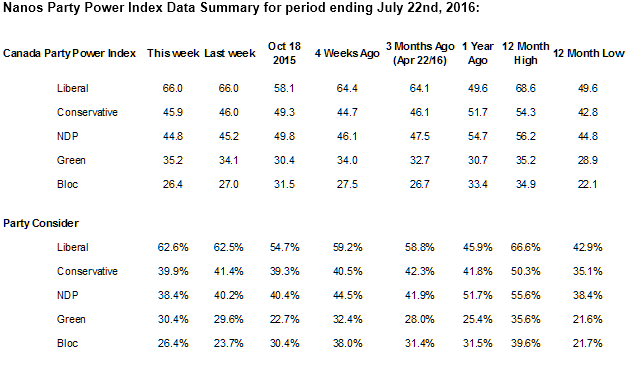
Nanos Party Power Index – The Nanos Index, which is a composite of a series of measures including ballot preferences and impressions of the leaders has the Liberals with 66.0 out of a possible 100 points, the Conservatives registered 45.9 points, the NDP 44.8 points, the Greens 35.2 points and the BQ 26.4 points (Quebec only).  Of note, the score for the NDP represents the lowest score on record since the Index was created in August 2013.

  • Accessible Voters –  Asked a series of independent questions for each federal party, more than six in ten Canadians (62.6%) would consider voting Liberal, 39.9 per cent would consider voting Conservative, 38.4 per cent would consider voting NDP and 30.4 per cent would consider voting Green.
The team at Nanos in conjunction with Klipfolio have launched our new live political data portal where you run the numbers you want and can explore the trends and data you need.  This is part of our campaign, not only to provide the most reliable data to Canadians but to let them use it as they wish. We were the first to do nightly tracking and now we are the first research organization to post live public opinion data for Canadians. Here’s the link to check it out.

To view the detailed tracking visit our website

Methodology

The views of 1,000 respondents are compiled into a party power brand index for each party that goes from 0 to 100, where 0 means that the party has no brand power and 100 means it has maximum brand power. A score above 50 is an indication of brand power for the party and its leader at this time.

The important factors in this weekly tracking include the direction of the brand strength or weakness and also the brand power of one federal party relative to another.The data is based on random telephone interviews with 1,000 Canadians, using a four week rolling average of 250 respondents each week, 18 years of age and over.

The random sample of 1,000 respondents may be weighted by age and gender using the latest census information for Canada, and the sample is geographically stratified to be representative of Canada.

The interviews are compiled into a four week rolling average of 1,000 interviews where each week, the oldest group of 250 interviews is dropped and a new group of 250 interviews is added. The current wave of tracking is based on a four-week rolling average of 1,000 Canadians (250 per week) ending July 22nd, 2016.

A random telephone survey of 1,000 Canadians is accurate 3.1 percentage points, plus or minus, 19 times out of 20.

All references or use of this data must cite “Nanos Party Power Index” as the source.

FireShot Capture 10 -  - file____C__Users_apchernoff_Desktop_Liberals%20score%20highest%20on%20Na

A Russian ‘Lady Cop’: Part Three · Global Voices

Photo: Instagram, edited by Kevin Rothrock.

Three years ago, Olga Borisova decided to join the St. Petersburg police force. Eighteen years old and, by her own description, a petite, fashionable young woman, she wasn’t your average cadet.

After a little more than a year, she quit, and has since become an active member of the Russian democratic opposition.

Earlier this month, Borisova wrote for the website Batenka.ru about her experiences as a police officer.

RuNet Echo is publishing her text, translated into English, in three parts. This is the final installment. You can read her full story here in Russian.

March 2014 came along, and I left the city for a TsPP (professional training center). When I got there, the men in charge made my drunk, insecure bosses look like loving parents.

Future cops from all over the city are made on the parade grounds. You’ve got to look sharp. The man in charge walks up and down the line with his hands behind his back. They assign you courses and they put you into a squad. You get a schedule of classes. On the one hand, the first day is a lot like the first day of school. Everyone looks good, and everyone is a bit nervous. On the other hand, it’s probably what the first day in the army looks like, too. They select the squad leader from the more experienced staff. Our leader was a man named Vitya. He was plump as a pastry.

The whole experience was pretty fun. There was flirting and there were flings. You made friends and passed notes in class. It was all like being in school. Police academy. Firearms training, drill instruction, tactics in maintaining public order, physical training, legal training, medical training, psychological training. In psychology, we once watched the film “The Major” with Yuri Bykov. Some future riot police officer brought it in on a flash drive.

Morning formation, daytime formation, and evening formation. Lunchtime formation. Marching in lockstep. If somebody in the squad “stepped” badly, the whole squad could be left to march until eight in the evening. That’s how they developed discipline.

Don’t ask questions. Just take orders.

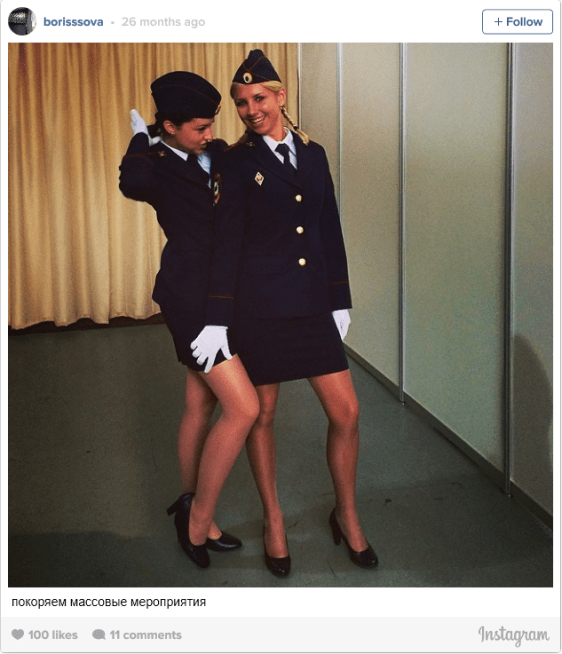
You’re not allowed to paint your nails. You’re not allowed to wear jewelry. Once, I showed up to formation with long press-on nails painted aqua blue. Then the course officer somehow noticed me, a short woman four rows back, as if he could sense my panic.

“Junior Sergeant Borisova!”

“Present!”

“Step forward!”

“Yes sir!”

Coming to the front of the formation and marching two steps forward, like they taught us, I turned and faced the squad.

The colonel then walked up to me, grabbed my hand, and showed my manicure to everyone in class, saying “What is this?!”

The whole class waited to hear what my punishment would be.

I didn’t flinch, making “big eyes,” I turned to him and said, “But, comrade colonel, it’s the color of the uniforms.”

I watch as a hundred police cadets tried to contain their laughter. The colonel was in a good mood, and he liked my joke. He smiled and said, “I expect those to be gone by tomorrow.” And I answered, “Yes sir.”
FireShot Capture 5 - A Russian ‘Lad__ - https___globalvoices.org_2016_07_24

But there were also times when he spent a half-hour chewing out somebody in front of everyone for one little mistake in their uniform. Showing everyone who’s boss.

And so, well after all your classes had ended, you spent 40 minutes standing still, in melting heat or freezing cold, and you wait for the colonel to finish his ego trip, so you can go home.

During my training, one of the cadets lost his mind. He was living in the barracks and one day he just didn’t get out of bed and come to class. First, the squad and even the squad leader tried to rouse him. Then the colonel came. And then the center’s director. But even then, the guy just stayed in his bed silently, staring up at the ceiling. They took him to a hospital, and then to a mental ward. They dismissed him for health reasons, and now he’s registered with a psychiatrist.

His story turned out to be pretty cliché, too: his father was a police officer, and he insisted that his son follow in his footsteps, to keep up the family trade. The guy had no wish to be in the academy. In our class on tactics in maintaining public order, he got four straight D’s. He worried that he wouldn’t live up to his father’s hopes, but being a cop wasn’t the life he wanted for himself.

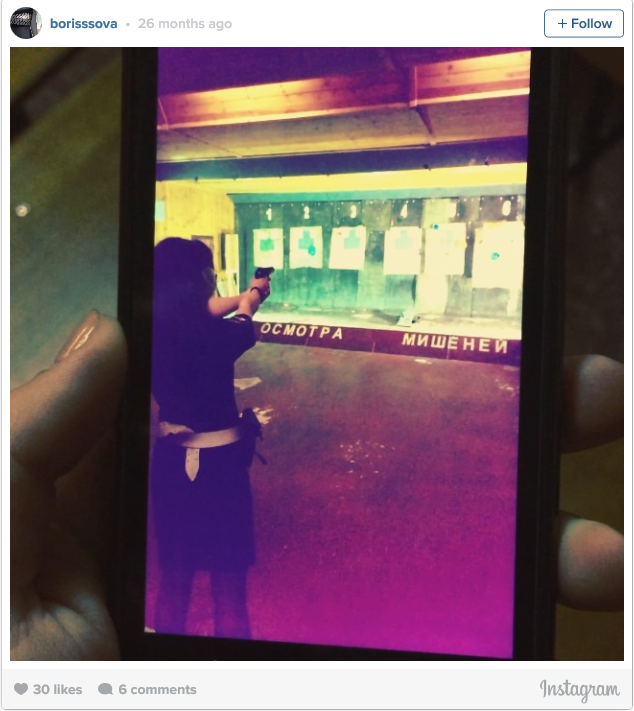
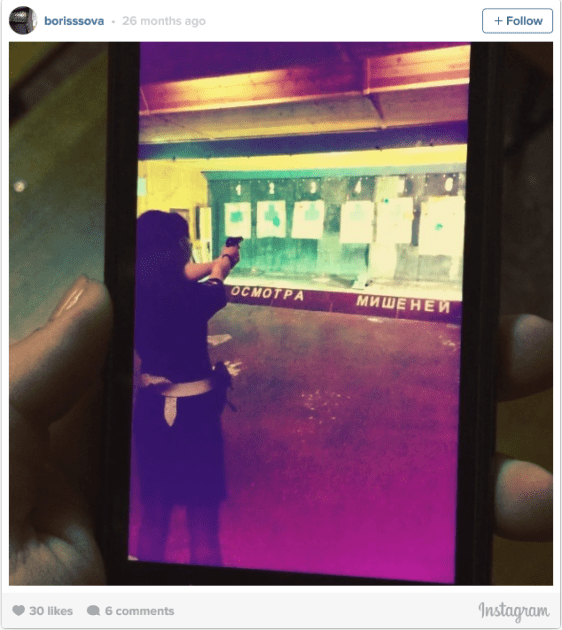
I liked the practical exercises in firearms training the best. I was a good shot.

Once the colonel-instructor looked at my target, and called to the riot police cadets, who liked to flaunt their skills more than anyone, and he said, “Look over here and learn something, boys!”
FireShot Capture 6 - A Russian ‘Lad__ - https___globalvoices.org_2016_07_24

Apart from being able to handle a weapon and knowing the necessary laws and regulations, the most important professional skill you’re taught is obedience. I was struck by how they rewarded the dumbest guys who couldn’t recite a single criminal statute, just because they were loyal to the bosses—for ratting out other cadets, for being ready to carry out any order, for “offering to be of service.”

Classes go for four months, then there are final exams, then you take the oath, and poof now you’re a certified cop. And you head back to your own precinct.

In the meantime, a lot of good people had left. But there were still some, like my partner Andrei, who never took a bribe, who did his work honestly, but the captain saw him as weak and he saw himself as strong, taking every opportunity to humiliate him. I worked with Andrei most of all. We’d talk often, and I’d ask him—a 23-year-old young man, who’d aged nearly a decade after just five years on the force—why he put up with it all.

“Eh, big deal. That’s the cost,” Andrei told me.

That was the moment I understood that “professional deformation” isn’t just developing the habit of noticing anyone walking around with open cans of beer (I still can’t turn it off); it’s also learning to “swallow” personal injustices and later injustices aimed at others. Those who don’t learn to swallow it don’t last long. And [President Medvedev’s] police reforms, because they added to the number of inspections, gave cops like my boss even more levers for filtering out the “defiant” ones.

To summarize, here’s the conclusion I drew two years ago: the people on the force can be divided into two categories: rats and wimps.
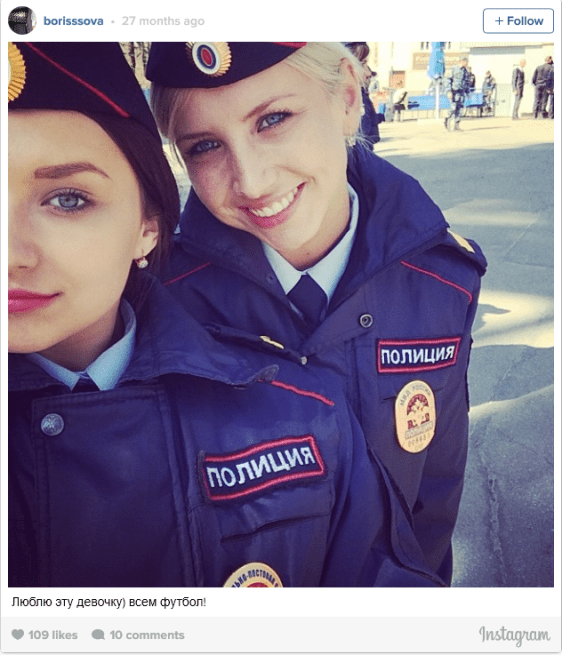
FireShot Capture 7 - A Russian ‘Lad__ - https___globalvoices.org_2016_07_24

My story in the police, which lasted one year and three months, ended with my realization that I didn’t want to become a wimp. Many people observe the injustices perpetrated by the authorities, but too many people don’t understand how much injustice goes on inside the system itself on a daily basis.

So I quit.

***

Two years passed, and I found myself in Montenegro, working on an art project together with my friend Masha Alekhina [of Pussy Riot]. By now, I had some experience doing election work for the opposition; I’d helped with dozens of trials against opposition activists and artists; I’d put together my own political art performance; and I’d helped organized a signature campaign to help my friend in the opposition get on the ballot.

I stepped onto the balcony, and fired up my iPhone screen. I had a new message on Vkontakte. It was from “Sweetie.”

“Olya, please forgive me for everything. If you’re ever in Petersburg, come visit, and I’ll tell you the news about how I’ve got my own office now. They got rid of the precinct chief, and now it’s that other one. And remember Yulia from criminal investigations? They’ve brought two charges against her. It’s half her own fault, but, you understand, I can’t discuss the details here.”

I looked at the screen and saw that there was still more.

“Every day, I go to bed and think that today there was a little less bad than good. Of course, every day doesn’t turn out that way, but still. And if you’re mad at me for any reason, I’m sorry,” he wrote.

“I don’t get offended that easily,” I answered, and I dropped the phone back into my pocket.

This text was translated from Russian by RuNet Echo’s Kevin Rothrock. Read the first installment here and the second here.

Creative Commons License     Written by Olga Borisova  

Source: A Russian ‘Lady Cop’: Part Three · Global Voices

Canucks president doesn’t rule out acquiring a player with Evander Kane’s type of history

Jason Botchford: Why Olli Juolevi still hasn’t signed with the Canucks

Vancouver Canucks draft choice Olli Juolevi is the only remaining 2016 top-10 pick waiting on a contract. Bruce Bennett / Getty Images

Jason Botchford   July 26, 2016   http://theprovince.com

At some point, the Canucks will sign their prized first-round draft pick, Olli Juolevi. It just might not be anytime soon.

Juolevi is the last signable player taken in the top 10 of the 2016 NHL Entry Draft without an entry-level contract. There are, of course, two players in that top 10 who have committed to college and won’t be signing contracts this year.

So, what gives with Juolevi? Those with connections to the talks say it’s not hard to figure out. Just look at the numbers. There are a couple of million of them in play here.

In signing entry-level deals, player agents can negotiate two types of bonuses, Schedule A and Schedule B. The maximum is US$850,000 per year for Schedule-A bonuses and every player in the top 10 signed for the max. That’s a lock for Juolevi.

The Schedule B maximum is $2 million in bonuses per year and only one player, Auston Matthews, got that. But every player in the top four had significant Schedule-B bonuses worked into their contracts.

Drafted at No. 4, Jesse Puljujarvi’s contract includes $1.65 million per year in potential Schedule-B bonuses. Interestingly, Matthew Tkachuk, who was taken by Calgary at No. 6, got none in his. That’s a significant drop-off in potential money. Guess who was sandwiched in the middle of those two on draft day?

Asked specifically if the Canucks were taking a hard line on Schedule B bonuses, Juolevi’s agent, Markus Lehto, would say only: “There have been discussions, but I don’t negotiate through the media.”

Asked about Juolevi’s contract status on TSN 1040 on Tuesday, Canucks president Trevor Linden suggested a timeline of a few weeks for a deal. Linden did appear to brush off concern about Juolevi’s contract status as no big deal, and he’s probably right.

But it’s worth mentioning that Toronto general manager Lou Lamoriello was criticized harshly by some when the Matthews talks lagged a bit. It was suggested then that Lamoriello risked alienating Matthews, while delivering a negative message to the rest of the league on how the Leafs treat their stars. Of course, Matthews was soon signed and all that talk was made to look pretty foolish.

Maybe more interesting was Linden’s suggestion that the most likely landing spot for Juolevi this fall is playing back in the OHL. Vancouver, and Lehto, believe the prospect isn’t eligible for the AHL this season. But he could play in Europe and, for whatever the reasons, the Canucks haven’t yet openly said it’s an option, even though it’s something that is being considered strongly by the Juolevi camp. Lehto said teams in both the Swedish and Finnish elite leagues have contacted him inquiring about the possibility of Juolevi playing there.

“All of the European teams see themselves as having a great development program,” Lehto said. “There is interest when they see a Finnish guy get drafted where he did and one who played really well at the U20 tournament, maybe the best defenceman in the tournament.

“Wouldn’t you think that kind of guy is very attractive? But what I’ve said all along, (Juolevi’s) priority is to make the Vancouver Canucks.”

That remains remotely possible. But if he doesn’t, wouldn’t there be more for Juolevi to gain playing in Europe against men in a high-quality league, rather than going to the OHL, where he’s accomplished about all he can accomplish, to play against a lot of teenagers? It’s at least something that should be considered while the Canucks are killing time before they sign Juolevi.

2016 NHL DRAFT TOP 10  — Annual average value of their contract

1. Auston Matthews, US$3.775 million.
2. Patrick Laine, $3.575m.
3. Pierre-Luc Dubois, $3.425m.
4. Jesse Puljujarvi, $3.425m.
5. Olli Juolevi, unsigned.
6. Matthew Tkachuk, $1.775m.
7. Clayton Keller — committed to college.
8. Alexander Nylander $1.775m.
9. Mikhail Sergachev $1.775m.
10. Tyson Jost — committed to college.

Schedule-B bonuses the team and the player can negotiate (maximum total is US$2 million per year)
1. Finishing in the top five for Hart, Norris, Selke and Richard.
2. Finishing in the top three for Calder and Lady Byng.
3. Making the first- or second-team all-star group.
4. Winning the Conn Smythe.
5. Finishing in the top 10 among defencemen in goals, assists or points.
6. Finishing in the top 10 in points-per-game (must play 42 games).
7. Finishing in the top 10 in average time-on-ice (must play 42 games).

Source: Jason Botchford: Why Olli Juolevi still hasn’t signed with the Canucks | The Province

Brace yourself for a fall in oil prices: Morgan Stanley warns ‘correction is upon us’

The global oil market is ‘severely oversupplied’ with gasoline, meaning oil’s biggest consumers, refineries, will start cutting back next month, says analysts. Bloomberg

Siddharth Verma, Bloomberg News | July 25, 2016

Gear up for a fall in oil prices.

The global oil market is “severely oversupplied” with gasoline — with stocks at a five-year high — serving as a blow to crude prices from next month, reckon Morgan Stanley analysts led by Adam Longson.

In a report published on Sunday, the analysts foresee “worrisome trends” for oil supply and demand, led by refineries generating too much gasoline in recent months. Faced with the need to cut back on capacity utilization to protect profit margins, these refineries are set to crimp crude oil purchases and drag prices lower, the analysts say.

FP0725_Gasoline_Glut

“Crude oil demand is trending below refined product demand for the first time in three years,” they write. “Refineries are the true consumer of crude oil, and crude oil demand is ultimately more important than aggregate refined product demand for oil balances. Given the oversupply in the refined product markets, fading refinery margins, and economic run cuts, we expect crude oil demand to deteriorate further over the coming months.”

A glut of gasoline could weigh significantly on oil prices, which have been lifted in recent weeks by supply disruptions and healthy petrol demand in emerging markets. Excess gasoline also means that refiners may close their doors sooner and for longer than usual during their traditional summer production shutdown, taking further demand out of the market.

In a report published on Monday, analysts at Citigroup Inc. also take up the refining theme. “Refinery margins are under pressure due to falling gasoline cracks as strong gasoline demand growth has been met by even stronger refinery supply,” Citi analysts led by Aakash Doshi write. They believe that the elevated stock of crude and petroleum product, macro concerns, and a stronger U.S. dollar are all headwinds for oil prices.

FP0725_Oil_Price

Source: Brace yourself for a fall in oil prices: Morgan Stanley warns ‘correction is upon us’ | Financial Post