Vanessa Kabore: Political Greed, Government Corruption, “The Bank” And Ill Gotten Gains

By Andrew Phillip Chernoff   Sept 1, 2016

From the strange and unusual comes a great tale.

One of intrigue and curiosity, that is pulled from the headlines of political greed, government corruption at the highest levels and complicity of the financial sector.

From Vaneesa Kabore, manager of  bill and exchange of “The Bank”, to greedy African politicians that used “The Bank” to launder money overseas through the help of their political advisers for over seven years.

They all wanted their share of ill gotten gains from funds which were transferred out of the shores of Africa from gold and oil money that was supposed to have been used to develop the continent.

And Kabore was no different. She had her reasons.

Kabore siphoned off part of the funds, worth five million five hundred thousand  U.S. dollars for herself, ensuring no official trace of how much was transferred as all the accounts used for such transfers of the funds were closed after transfer.

Kabore’s motive was simple: As the account officer to most of the politicians, when she discovered that they were using her to succeed in their greedy act, she cleaned some of their banking records from “The Bank” files and no one cared to ask her for the money as she was in control. She was able to divert her share which was put in an escrow transit account in the bank.

But seven years later, things are unravelling.

Now “The Bank” is very anxious to know the “real” beneficiary of the funds because they have made a lot of profit with the fund.

Complicating matters, Kabore is soon to retire from the bank and is looking for somebody to take transfer of the money into their account quickly. Her dreams of a happy and secure retirement are threatened.

The willing person must agree to Kabore coming to the recipients’ country for the sharing of the fund. The fund will be shared 50% for Kabore and 40% for you, and the other 10% for the orphanages and poor.

How will it end? Most of the politicians that participated in the illegal conspiracy and stealing of funds are no longer in power and they don’t use “The Bank” to transfer funds overseas anymore since their tenure has expired. Will they be found out and be brought to justice?

And Kabore, will she find a willing partner to assist her get access to her millions of U.S. dollars and make her retirement a happy and fulfilling one?

Look for the book or movie………or email….to be coming your way.

How good is the Vancouver Canucks’ prospect depth? | National Post

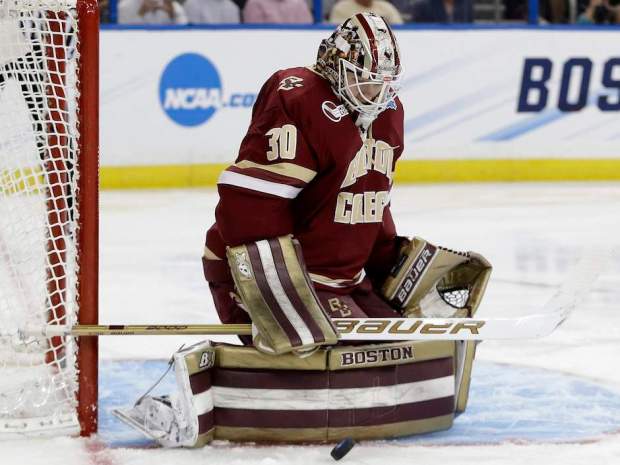
“I’ve developed well and have had some success and I’m a guy who has always stepped up to the next level when the challenge is calling,” Thatcher Demko said.

Patrick Johnston, Postmedia Network | August 30, 2016

It all depends on how you look at it.

At the top end, it’s strong.

But the list just isn’t that long.

That’s the conclusion reached by ESPN prospect guru Corey Pronman, who has the Canucks 13th overall in the latest edition of his prospect pool ranking.

There’s plenty of reason to be excited about the golden trio of Olli Juolevi, Thatcher Demko and Brock Boeser. One could be a top-end defenceman, another an elite starter in net and the third looks to have elite sniper written all over him. The 2018-19 Canucks could be a real hotshot team.

Juolevi’s hockey brain is his most notable asset, Iain Macintyre wrote in early July.

“I think it’s the same thing for your whole life: whether it’s on the ice or off the ice, you have to be confident,” Juolevi, 18, explained. “Be yourself. Don’t be fake or anything. If you know your strengths, you can use those. If you’re good at something, you can say that. But you also have to know you have to improve other things.”

Demko’s set to spend a season in Utica, working with goalie guru Rollie Melanson.

After he signed on with the Canucks, leaving behind a stellar record at Boston College, he told Ben Kuzma he’s ready to take on the challenge.

“I’ve developed well and have had some success and I’m a guy who has always stepped up to the next level when the challenge is calling,” added Demko. “I did get the opportunity to play at the world juniors against (Connor) McDavid, (Max) Domi and (Anthony) Duclair and that’s the closest I’ve been to the pro game. I expect faster guys and the pucks is going to be moving quicker.

“It’s just an adjustment period from a physical sense and just learning the grind of a pro schedule.”

And Boeser did everything you could imagine a college freshman could do, and then probably more.

He could have turned pro, especially with his father dealing with Parkinson’s and his mom working two jobs to support the family, but Boeser said he wanted to do another year of education. The Canucks’ cap planning benefits too. They save another entry-level contract year and you’d think they’d want to slot him right into the NHL. Boeser at 20 will surely be even better dynamite than he will be at 19. Muscle does matter.

“There’s definitely a thought about helping support them and getting some money,” Brock said. “But they also wanted me to go back to school and get another year under my belt, closer to a degree.

“It wasn’t that hard a decision. I think Vancouver and I were on the same page. Another year would really help me develop. I think I took a big step this year and I think I can take another step next year. (The Canucks) agreeing with me really helped. They didn’t push on me.

“I think it helps me build a relationship with them. It made it easier for me to make the decision to stay.”

The depth, though, isn’t much. The list has names like Gaunce, Pedan, Subban, Cassels, Sautner, Stecher, Brisebois and Zhukenov on it. Those are all interesting names — the first two have already played NHL games of course — but none of them screams possible star like Juolevi, Boeser and Demko do.

Source: How good is the Vancouver Canucks’ prospect depth? | National Post

Nigeria: Curbing the Tide of Ethnic Hate — Online and Off

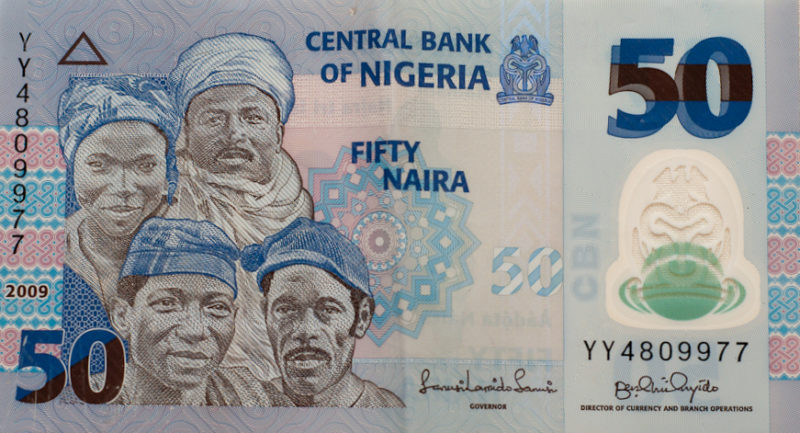
Nigeria’s 50 naira bank note bears images of people of Hausa, Igbo and Yoruba ethnicity. The country recognises over 250 ethnic groups and 500 languages. PHOTO: Shardayy (CC BY 2.0)

The right of citizens to talk, to express opinions, and to keep tabs on governance is an inherent aspect of any democratic culture. But conversation spaces have long expanded from pubs and other physical spheres to include digitally mediated online public spaces. My country, Nigeria, is the most active African country for political conversations on Twitter, followed by South Africa, Ethiopia, Burundi and Egypt. Our vibrant digital sphere, however, is fraught with hatred and vile speech.

A good portion of the hate speech in Nigeria is ethno-religious. With over 250 ethnic groups and 500 languages, the country has a history of conflict dating back at least to 1914, when Great Britain joined the colonial territories of Southern and Northern Nigeria to create a single state. Ethno-religious conflict continued to bedevil the nation after independence in 1960, though draconian laws suppressing free speech and association during the decades of military dictatorship kept the situation relatively in check.

But it was the peace of a graveyard. The 28 years of military intervention in fact aggravated the ethnic divide by bringing ethnic rivalry to the forefront of national life. Everything was viewed from the prism of us versus them.

“The 28 years of military intervention in fact aggravated the ethnic divide by bringing the negative forms of ethnicity to the forefront of national life. Everything was viewed from the prism of us versus them.”

Nigerians were thus hopeful at the return of democracy in 1999. The ethnic tensions that had characterized the country’s politics—with the annulment of the June 12, 1993 presidential elections by General Ibrahim Babangida, and the truncated self-succession attempt by late General Sani Abacha—seemed to have been neutralised by the election of President Olusegun Obasanjo. The national mood at that time appeared to be a fulfillment of some part of the old national anthem: “Though tribe and tongue may differ/In brotherhood we stand”.

Sadly, this hope was short lived. The spectre of ethnic rivalary was resuscitated with the constitution of the Human Rights Violation Commission (Oputa Panel), in which different ethnic groups sought justice for perceived crimes against them. The macabre tales that flowed from the various petitions showed that the old wounds and bottled-up grievances were far from healed.

Party politics in Nigeria has no ideological foundation. A lust for power and looting the public till is the only unifying factor. Thus civilians who have aided the military, retired soldiers, and their cronies continue to dominate party politics. This makes the problem of ethnic conflict even more intractable, as those who wield power have a vested interest in maintaining the status quo.

For social media and its influence on Nigerian politics, the turning point was the 2015 presidential elections. Digital media asserted itself as the new medium of choice for political parties seeking to influence public opinion and canvass votes. While social media may not yet be a primary factor in determining elections outcomes or propelling electoral campaigns, almost half of Nigeria’s population—46.1% of a population of 170 million—now has Internet access, and for the 18-35 age group, social media do play a major role in influencing political choices.

“The influence of Nigerian online “overlords”, who can influence the opinions and actions of their numerous followers regarding topical issues, has transformed social media into a very effective amplifier of hate speech…”

Like any communications tool, the internet can be the purveyor of both the good and the ugly. It has also been shown to be something of an “echo chamber”, a space where individuals connect and associate primarily with people similar to themselves. The influence of Nigerian online “overlords”, who can influence the opinions and actions of their numerous followers regarding topical issues, has transformed social media into a very effective amplifier of hate speech, and the ability for users to remain anonymous exacerbates this.

During the 2015 election campaign period, ethnocentrism flourished on social networks. A research study in which I was involved did content analysis of 250 tweets bearing the #Igbo hashtag, referring to the Igbo people of southeastern Nigeria—one of the country’s three main ethnic groups. [Full disclosure: I’m Igbo]. The findings were alarming. We found a prevalence of derogatory, mocking tweets blaming one ethnic group for not voting for President Muhammadu Buhari. The findings were reinforced by the official results released by the national electoral umpire, which showed that voting in the 2015 elections occurred along ethnic lines.

Nigeria is hardly the only country in the world where ethnic divisions appear to be deepening. The US is currently grappling with the most decisive presidential election in the country’s history, in which one of the candidates has turned hate into a weapon for canvassing votes. The UK’s #Brexit referendum in June is alleged to have been propelled by the bitterness of some Britons with regard to immigration. And here on the African continent, ethnocentric hatred was instrumental in the violent clashes that occurred after the 2007 elections in Kenya, and was propagated largely through digital technology.

“…preserving the right to freedom of speech….becomes even more important in light of the fact that the online space on the African continent is already jeopardized by government interference.”

The essence of participatory democracy, however, means that preserving the right to freedom of speech online is incontestable. This becomes even more important in light of the fact that the online space on the African continent is already jeopardized by government interference.

The detention of a pro-government blogger here in Nigeria; the assault on digital media in Ethiopia; the imprisonment of dissidents in the Gambia; the social media blackout imposed during the recent Ugandan elections; moves by the governments of Uganda and Nigeria to impose stricter controls for social media: these all demonstrate the lengths to which states will go to suppress free expression in the online space.

We cannot afford to self-immolate or to hand our rights over to hawks looking for any excuse to subvert free speech, either online or offline. But Nigerians also need to guard against the hijacking of public conversation by forces which promote division.

A practical solution would be to adopt the report of the 2014 National Conference (#NGConfab). As imperfect as it is, one of the recommendations of the #NGConfab was the rotation of the office of President between the North and South through the country’s six geo-political zones (North East, North West, North Central, South East, South West and South-South). An arrangement like this could go a long way toward curbing the tide of ethnic hate and its attendant bile, in political conversation—both online and offline—in Nigeria.

Death Penalty Still Looms for Mauritanian Blogger Who Spoke Out Against Caste-Based Discrimination

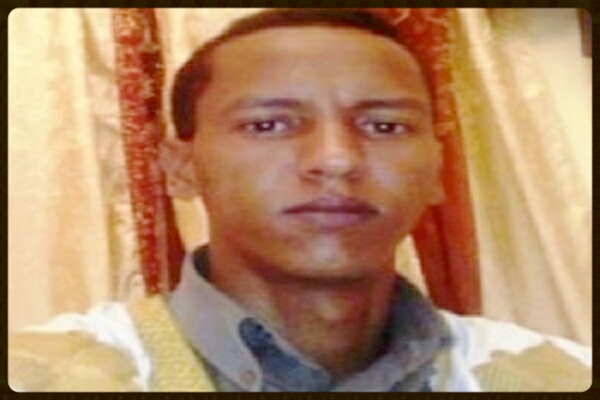
Mohamed Cheikh Ould Mohamed, published on ODH Mauritanie

A Mauritanian blogger has been sentenced to death by Nouadhibou Criminal Court after writing a blog post criticising the use of Islam to justify a caste system that dates back to the Middle Ages.

Mohamed Cheikh Ould Mohamed Ould M’kheitir, whose father is prefect for Nouadhibou, the economic capital in the south of the country, is a 29-year-old trained accountant. They are part of a caste group known as les forgerons (the “forger cast”), one that was originally made up of blacksmiths.

He has appealed the conviction, which dates back to 2014. Writing for the website Chezvlane on 25 December 2014, he said:

For those who dare to invent fake hadith and attribute them to the Prophet (peace be unto Him), no morals and no religion can stop them from interpreting an article written by a simple normal young man — a layman at that. They won’t spare any effort in stirring up collective Muslim discontent to serve their interests. That’s how they claimed that the forgerons blasphemed against the Prophet (PBUH) in an article one of them wrote. It was just like when they claimed that it was a forgeron who was responsible for the Prophet’s teeth falling out during the Battle of Mount Uhud.

Bearing that in mind, I’d like to confirm here the following:

1. I have not, consciously or unconsciously, blasphemed against the Prophet (PBUH) and I will never do so. In actual fact, I don’t believe there’s anyone in the world who shows him greater respect than myself (PBUH).

2. All the facts and accounts I cited in my previous article were historically accurate. These accounts can of course be interpreted literally and superficially or looked at more closely and deeply.

On 21 April 2016, the Court of Appeal in Nouadhibou confirmed his sentence to death after re-examining the case. The accused is no longer considered to be an apostate but simply a non-believer.

Following this re-examination of the accusations against him, human rights campaigners in Mauritania remain hopeful that the Supreme Court will dismiss the death sentence and announce a more lenient sentence.

The Senegalese website Setal recalled the turn of events:

This Thursday, the Court of Appeal did not follow the accusation which called for his death sentence to be upheld. Lawyers are happy with the turn of events, even if for them it’s clearly not enough. It’s been two years and three months since Mohamed Cheikh ould Mkheitir was arrested for a simple article posted on the Internet. This article was judged as being blasphemous towards the Prophet and Islam. This shocked the most conservative section of Mauritanian society who at the time called for him to be sentenced to death.

This is the most severe sentence possible for the blogger — a severe sentence that many believe was issued due mostly to internal political strife. In a 26 April 2016 post on the Amnesty International website, human rights journalist and campaigner Sabine Cessout quoted a colleague (who remains anonymous) who commented on the case:

The whole affair reveals “the internal politics…with a tribunal which wants to fund Salafis, a spiraling trend in our country, as throughout the whole Arab-Muslim world”

International Federation for Human Rights (IFHR) quoted Fatimata Mbaye, President of l’Association Mauritanienne des Droits Humains (AMDH) (The Mauritanian Association for Human Rights), former vice-president of the IFHR and advocate for anti-slavery campaigners speaking on the issue:

This sentence — the first for “apostasy” in Mauritania since Independence — signifies a step backwards in terms of tolerance and shows just how much issues of cast, religion, slavery and therefore democracy are taboos in Mauritania. We’re noticing society and politics is becoming less tolerant towards voices of dissent on these issues.

After the post was published, religious extremists sparked public calls for the blogger to be hanged. The Senegalese website Leral described the public sentiment which had been stirred up in Mauritania against the accused:

A year ago thousands of Mauritanians took the streets of Nouakchoutt, Naouadihbou and elsewhere demanding he be hung, plain and simple. Some of these had read the incriminating article — others had never even seen it. The Republican President, in front of a crowd of protesters which had grouped in front of the entrance to the palace, declared: “Thank you from the bottom of my heart for gathering in such numbers here to condemn the crime committed by a individual who is against Islam, the religion of our people, our country, the Islamic Republic of Mauritania, which as I’ve said in the past and I’m reaffirming today, is not secular and never will be… I assure you that as a result, the Government and I myself will stop at nothing to protect and defend this religion and its sacred image…”. This declaration made by the President, those of other different political parties along with the protests and fatwas demonstrated their reasoning.

The 2006 of the Noble Peace Prize winner Aminetou Mint Noctar also drew outrage from extremists after she expressed support for the blogger, some of whom issued a fatwa against her. Noctar is also the 2010 winner of the medal of Chevalier in the French Legion of Honour. According to the website Africa News, Noctar was the first Mauritanian woman to be nominated for the Noble Peace Prize for her commitment and work towards human rights.

On the website aw41k.com, Yehdhih Ould Dahi, head of the radical Islamist movement “Ahbab Errassoul” (Friends of the Prophet) condemned Noctar for defending the blogger:

May this villain who’s defending Mkheitir, saying that he’s a prisoner of conscience and demanding he be released so he can go back home to his wife, be cursed by Allah, the Angels and all people. This woman compares the Friends of The Prophet to members of Boko Haram and Takfiris because they call for the Prophet to be respected and honoured. Today, with the blessing of Allah, I declare her to be an apostate for having tempered the outrage in defence of the honour of the Prophet. She’s an infidel and it this therefore lawful to seize her family members and assets. Those who kill or poke out her eyes will be rewarded by Allah.

Amid the public vitriol around Mohamed Cheikh Ould Mohamed Ould M’kheitir’s case, his life hangs in the balance. For now, he will continue to languish in prison.

Positive jump in views on personal finances along with arrival of Canada Child Benefit while real estate slides (released August 29, 2016)

Bloomberg-Nanos Economic Banner

Bloomberg Nanos Weekly Consumer Confidence Tracking

Two forces seem to be at play for this week’s Bloomberg Nanos Canadian Confidence Index.  On the one hand views on personal finances rose coincidentally with the new Canada Child Benefit kicking while perceptions on the future value of real estate dampened.

“Fluctuations beneath the top-line index on personal finances and real estate suggest Canadians are cross pressured – on the one hand taking the newly changed Child Benefit but increasing concern about the value of real estate,” said Nanos Research Group Chairman Nik Nanos.

“While households are apparently reacting to policy attempts to mitigate the housing bubble, there has been a 15-month uptrend in the hiring intentions of Canadian businesses that could be attributed to policy attempts to jump start a sustainable recovery. The translation of those intentions into actual labour-market gains could eventually retake center stage”, Bloomberg economist Robert Lawrie.

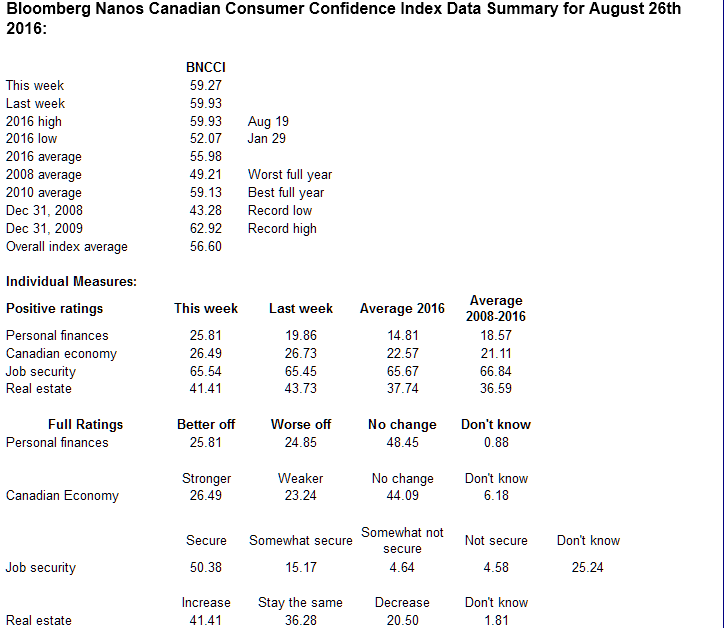
The BNCCI, a composite of a weekly measure of financial health and economic expectations, registered at 59.27 compared with last week’s 59.93. The twelve month high stands at 59.90.

The Bloomberg Nanos Pocketbook Index is based on survey responses to questions on personal finances and job security. This sub-indice was at 62.51 this week compared to 61.08 the previous week. The Bloomberg Nanos Expectations Index, based on surveys for the outlook for the economy and real estate prices, was at 56.04 this week (compared to 58.77 last week).

The average for the BNCCI since 2008 has been 56.60 with a low of 43.28 in December 2008 and a high of 62.92 in December 2009. The index has averaged 55.98 this year.

To view the weekly tracking visit our website.

Methodology

The BNCCI is produced by the Nanos Research Corporation, headquartered in Canada,  which operates in Canada and the United States.  The data is based on random telephone interviews with 1,000 Canadian consumers (land- and cell-lines), using a four week rolling average of 250 respondents each week, 18 years of age and over. The random sample of 1,000 respondents may be weighted by age and gender using the latest census information for Canada and the sample is geographically stratified to be representative of Canada. The interviews are compiled into a four week rolling average of 1,000 interviews where each week, the oldest group of 250 interviews is dropped and a new group of 250 interviews is added. The views of 1,000 respondents are compiled into a diffusion index from 0 to 100. A score of 50 on the diffusion index indicates that positive and negative views are a wash while scores above 50 suggest net positive views, while those below 50 suggest net negative views in terms of the economic mood of Canadians.

A random telephone survey of 1,000 consumers in Canada is accurate 3.1 percentage points, plus or minus, 19 times out of 20.

All references or use of this data must cite Bloomberg Nanos as the source.

index1