Food waste could store solar, wind energy

Date: September 15, 2016

Source: American Chemical Society (ACS)

Saving up excess solar and wind energy for times when the sun is down or the air is still requires a storage device. Batteries get the most attention as a promising solution although pumped hydroelectric storage is currently used most often.

Now researchers reporting in ACS’ Journal of Physical Chemistry C are advancing another potential approach using sugar alcohols — an abundant waste product of the food industry — mixed with carbon nanotubes.

Electricity generation from renewables has grown steadily over recent years, and the U.S. Energy Information Administration (EIA) expects this rise to continue. To keep up with this expansion, use of battery and flywheel energy storage has increased in the past five years, according to the EIA. These technologies take advantage of chemical and mechanical energy.

But storing energy as heat is another feasible option.

Some scientists have been exploring sugar alcohols as a possible material for making thermal storage work, but this direction has some limitations. Huaichen Zhang, Silvia V. Nedea and colleagues wanted to investigate how mixing carbon nanotubes with sugar alcohols might affect their energy storage properties.

The researchers analyzed what happened when carbon nanotubes of varying sizes were mixed with two types of sugar alcohols — erythritol and xylitol, both naturally occurring compounds in foods.

Their findings showed that with one exception, heat transfer within a mixture decreased as the nanotube diameter decreased. They also found that in general, higher density combinations led to better heat transfer.

The researchers say these new insights could assist in the future design of sugar alcohol-based energy storage systems.

Story Source:

The above post is reprinted from materials provided byAmerican Chemical Society (ACS). Note: Content may be edited for style and length.


Journal Reference:

  1. Huaichen Zhang, Camilo C. M. Rindt, David M. J. Smeulders, Silvia V. Nedea. Nanoscale Heat Transfer in Carbon Nanotubes – Sugar Alcohol Composite as Heat Storage Materials. The Journal of Physical Chemistry C, 2016; DOI:10.1021/acs.jpcc.6b05466
Source: Food waste could store solar, wind energy

There’s an open sea at the North Pole, and it’s got experts very worried 

RAFI LETZTER, BUSINESS INSIDER

Sept 15, 2016

Writing about climate change presents an interesting challenge. It’s a slow, constant process. Global temperatures rise a little every year, bit by bit accruing disastrous consequences.

We get used to hearing that this year, like many years in recent memory, will be the hottest on record. That glaciers are melting. That food insecurity is increasing. That more and more people face climate-induced natural disasters.

As with any slow-moving (on human timescales) tragedy, it’s difficult to sustain the degree of attention and horror that each new development deserves.

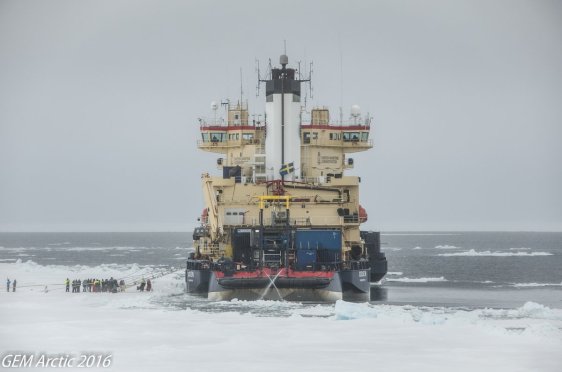
But then you see something like this:

cq8eyckwgaag2ri

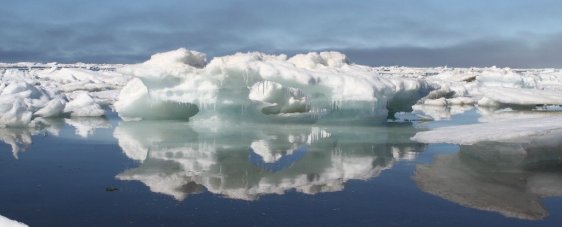
That’s a photo of a Swedish icebreaker sitting in open water at the North Pole, published about two weeks ago. (I first saw it retweeted on weather writer Eric Holthaus’s Twitter account.)

Let’s put that in context. The North Pole has been entirely covered in ice, including during the summer, for thousands of years. That was still the case when I graduated from high school, and I’m 24.

But a few years ago, predictions that our warming climate would cook the Arctic ice cap until it melted came true.

Photos of a lake near the North Pole went briefly viral, then quickly faded from view. Now, the Canadian Coast Guard can publish images of open sea at the North Pole and it can pass largely unnoticed.

(One caveat: Though the CCG describes this image as from the North Pole, we don’t know exactly where in the Arctic sea it was shot. I’ve reached out to them for comment and will update if I hear back.)

The thing is, people know that climate change is a problem. Gallup reports that 64 percent of US adults are worried “a great deal” or “a fair amount” about climate change.

It’s hard to stay energised when there’s so much else happening to worry about, though, and that often means that the conspiracists and truthers are the loudest voices.

But in a world where a major presidential candidate can offer no policy proposal at all to address climate change, without any apparent political repercussions, I still think a picture of open ocean at the North Pole is worth paying attention to.

Source: There’s an open sea at the North Pole, and it’s got experts very worried – ScienceAlert

Canada’s Wage Gap Is Worse Than The OECD Average

Sept 15, 2016

TORONTO — A global education study reveals larger-than-average earning gaps between Canadian men and women, but that narrows as women pursue higher levels of study.

The report from the Organization for Economic Co-operation and Development analysed data from 35 member countries and 11 partner countries.

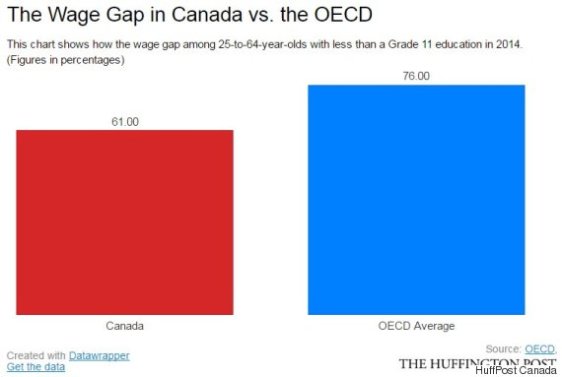
Among 25- to 64-year-olds with less than a Grade 11 education, Canadian women earned 61 per cent of what men earned in 2014, compared with the 76 per cent average across OECD countries.

wage gap

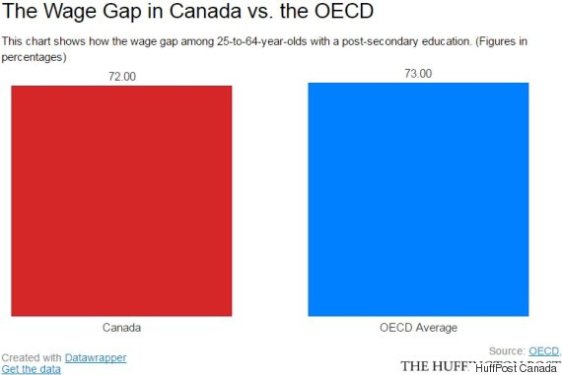
Canadian women who achieved post-secondary studies fared a bit better at 72 per cent of what men earned, which is comparable to the OECD average of 73 per cent.

wage gap

In other data, Canada had the largest share of adults with post-secondary education but a lower-than-average share of masters and doctoral degrees in 2015.

Last year, 55 per cent of Canadian adults had post-secondary education, the highest share among OECD countries compared to an average of 35 per cent.

Canada also spends more per post-secondary student than almost all of the OECD countries, at US$21,500. That places Canada sixth overall, after Luxembourg, Sweden, Switzerland, the United Kingdom and the United States.

Source: Canada’s Wage Gap Is Worse Than The OECD Average

World must ready for global microcephaly ‘epidemic’ regarding Zika virus: study

September 15, 2016

The world should prepare for a “global epidemic” of microcephaly, a condition which restricts head growth in foetuses, as the Zika virus takes root in new countries, researchers said Friday.

Scientists from Brazil and Britain said they had found additional evidence that Zika is what causes the often debilitating disorder, a link already widely accepted in medical circles.

In a study conducted among newborns in Brazil—hardest hit by a joint outbreak—nearly half of 32 infants with microcephaly had traces of Zika virus in their blood or , the team reported.

None of 62 infants born with normal heads tested positive for Zika in their blood.

This “striking association”, the researchers wrote in The Lancet Infectious Diseases journal, led them to “conclude that the microcephaly is a result of congenital Zika virus infection”.

If this is the case, “we should prepare for the epidemic of microcephaly to expand to all countries with current (local) Zika virus transmission and to those countries where transmission of the virus is likely to spread,” the team wrote.

“We recommend… that we prepare for a of microcephaly and other manifestations of congenital Zika syndrome.”

The researchers also proposed adding Zika to a category of congenital infections known to happen before or during birth. The list includes toxoplasmosis, syphilis, rubella, cytomegalovirus, HIV and herpes.

Zika is a spread mainly by mosquitoes, but in rare cases via sex.

In most people, including , it is benign with mild or no symptoms.

No cure, no vaccine

But in an outbreak that started mid-2015, it has been linked to microcephaly and rare, adult-onset neurological problems such as Guillain-Barre Syndrome (GBS), which can result in paralysis and death.

More than 1.5 million people have been infected with Zika, mainly in Brazil, and more than 1,600 babies have been born with microcephaly since last year, according to the World Health Organization (WHO).

There is no cure or vaccine.

The researchers said theirs was the first study to compare children with microcephaly to a “control” sample of healthy children—two controls for every malformed baby.

Using a control group is a way for scientists to test the impact of a single variable—in this case Zika infection—between two groups that are otherwise as similar as possible.

Eighty percent of women who gave birth to babies with microcephaly had been infected by Zika while pregnant, the team found—compared to 64 percent of mothers who delivered healthy offspring.

This meant a very high percentage of pregnant women overall had been infected in Brazil’s Zika epidemic area.

These were preliminary results, the team said, with findings on another 400-plus babies included in the study to follow later.

Interestingly, the team found that not all infants diagnosed with microcephaly had abnormalities show up in brain scans

Source: World must ready for global microcephaly ‘epidemic’: study

Low oil prices cause Russian pain

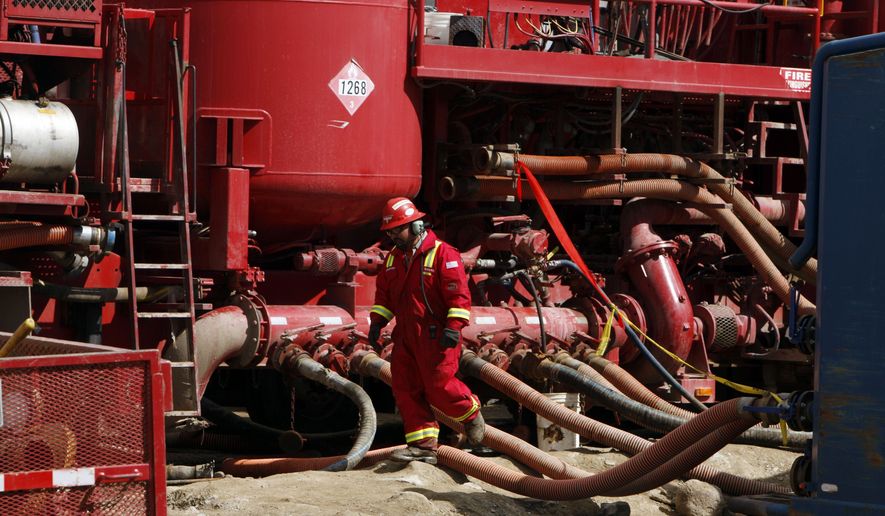
Photo by: David Zalubowski A worker steps through the maze of hoses being used at a remote fracking site in Rulison, Colorado. (Associated Press/File)

– – Thursday, September 15, 2016

ANALYSIS/OPINION:

There were some happy campers in Moscow recently when the price of crude oil pushed past $50 a barrel.

The Kremlin seems to have successfully talked up the market by signaling it was ready for a production ceiling deal with OPEC. You could hear the collective sigh of relief from those controlling the Russian federal budget.

But that euphoria ebbed once again as American shale producers picked up the slack to boost production and reduce prices. Brent crude is now back down to the mid-$40s because of a supply glut of oil and natural gas.

The sustained low price of hydrocarbons is beginning to cause substantial pain in Russia: Last month, Moscow again dipped heavily into its reserve fund to plug a whopping hole in the budget. Officials can’t keep doing this. The rainy-day funds could be exhausted at some point in 2018.

The employment picture inside Russia is worsening as well. Companies are moving out of high-rent districts in Moscow to the suburbs, meaning workers face higher commuter fees in addition to all the other economic hardships.

It’s an employers’ market. Workers can work for peanuts or find themselves without a job.

This is the reality facing the Kremlin over the next several years as American shale production seems to have changed the oil markets for good. Now that they’re built, these fracking wells clearly can be turned back on quickly with minimal cost. That provides for an instant injection into the markets whenever pricing becomes attractive. Restarting a conventional well is expensive and risky.

The Kremlin has made a bet that it can inject enormous funds into its military as a way to provide a safety valve for social unrest due to a worsening economy.

If things get too bad, Russia can always get involved in another conflict, blame the U.S. or the West, and ask the long-suffering Russian people to tighten their belts further for the good of the Motherland.

The fact that Moscow knows it enjoys a free rein under President Obama’s lack of a foreign policy also enables this policy.

This could be why Moscow has massed troops on the Ukrainian border and complained of a fictitious Ukrainian “border excursion” into Crimea. The Ukraine feint serves two purposes: providing a rallying cry for the Russian people and putting pressure on the West to remove painful economic sanctions.

This is also why Moscow wants so strongly to show that the U.S. and Russia are working together to destroy the Islamic State in Syria. This tactic is for domestic consumption. The message is that the pain that Russians are feeling right now is worth it: “See? Russia is saving the world from terrorism. We are leading the only superpower in the world to do the right thing!”

The West should not underestimate the Kremlin’s ability and need to maintain this strategy. It is an imperative for President Putin and his aides, who have failed to diversify the energy-dependent economy or to tackle the question of pervasive corruption. In the short run, Moscow will continue to sell Iran shiploads of sophisticated weaponry to bring in foreign hard currency and support an industry that is vital to the Russian economy.

All of those billions in cash that President Obama flew to Iran in the middle of the night in January went straight to the Russian federal budget.

The ramifications of continued oil price weakness will inflict further pain on ordinary Russians. The misery index — unemployment plus inflation — will continue to rise. Moscow will need to find new ways to relieve this pressure.

The remaining months of the Obama presidency will be an especially dangerous time, but it’s the next U.S. president who will have to deal with a bear backed into a corner.

L. Todd Wood is a former special operations helicopter pilot and Wall Street debt trader, and has contributed to Fox Business, The Moscow Times, National Review, the New York Post and many other publications. He can be reached through his website, LToddWood.com.

Source: Low oil prices cause Russian pain