“The Conservatives will have only themselves to blame when the votes are counted next Monday” says Geoffrey Stevens, an author and former Ottawa columnist and managing editor of the Globe and Mail, teaches political science at Wilfrid Laurier University and the University of Guelph.
Say it isn’t so? Gentle my heart….Proof that Santa Claus exists…..Must get that Lotto 649 ticket NOW!!!
BRITISH COLUMBIA ELECTION OF 2013
As a British Columbian, since the provincial election of 2013 (2013 B.C. election: The post-mortem), forgive me for being once bitten, twice shy. The BC NDP were to win by a landslide. The polls said so. The electorate said so. The province had enough of the Liberals and it was time to strike them down and put an end to that totalitarian government once and for all.
Yeah, right. The polls lied. British Columbians lied.
When it came to actually putting their vote where it counted, too many British Columbians committed hari kari and drank the BC Liberal juice.
On Monday, October 19, will Canadians from coast-to-coast-to coast make the pollsters right? Will there be at least a federal Liberal minority government, if not majority government, in place on Tuesday, October 20? Or, will it be a minority NDP federal government? Or, dread the thought, more of the same?
Both Stephen Harper and his government were supposed to be regulated to the opposition last election. Remember?
Canadian voters have radically redrawn the country’s political landscape, handing the Conservative Party its long-sought majority in an election that decimated the Bloc Québécois and humbled the Liberals.
For the first time in history, the New Democratic Party will form the Official Opposition after an extraordinary breakthrough that propelled the party to more than 100 seats.
The extent of the transformation is startling. The Liberals now hold just four seats west of Guelph, Ont. The Conservatives, formerly shunned by Toronto voters, won nearly half of the seats in that city, twice as many as the Liberals. The Bloc Québécois, which defined Quebec federal politics for two decades, no longer qualifies for official party status. And Green Party Leader Elizabeth May won the party’s first seat, and the right to a place in the next election’s debates.
Bloc Leader Gilles Duceppe lost his seat and resigned. Liberal Leader Michael Ignatieff lost his riding. Both defeated leaders were squeezed, like many of their candidates, between growth in Conservative support and Jack Layton’s surging New Democrats.
The night belonged to Stephen Harper, who put his party over the top after five years of minority government and becomes just the third Conservative leader since Confederation to win triple victories.
Federal elections are much tougher to win, I must admit and the NDP did make a strong showing, to become the official opposition.
But……Canadians are like teenage girls drawn to “bad boys”……they are drawn to Harper and the rest of the Conservatives “bad boys…and girls”. Whatever the bad boys do opposes the book of rules which they rewrite for their own needs and purpose and that’s how they succeed to trigger an adrenaline rush in the Canadian electorate and draw them in for four more years.
I mean, how else do you explain the sado masochistic tendency that occurs every time Harper leads his Conservative party into a federal election. Between elections Canadians complain about everything and swear on everything including the Bible that change must occur: we must get rid of Harper and his Conservatives and elect a different federal party to be the government of Canada.
The polls prove it…..remember 2011…..and those trusting polls…..the Conservatives on the ropes….the NDP support….the Liberals.
The lesson from the 2011 federal election….the lesson the provincial BC NDP learned the hard way in 2013, repeating the history of the 2011 federal election….is that most polls aren’t worth believing: Canadians love to hear themselves complain and do nothing about it when it counts. Talk talk. Talk talk.
10. Most polls aren’t worth more than a glance of Canada’s political future through a crystal ball.
Most polling firms underestimated the Tories’ strength and overestimated the Liberals’ influence. So what did Canadians learn from the raft of fluctuating numbers and contradictory public opinion polls?
According to Harris-Decima chairman Allan Gregg, not much. “[They learned] that sometimes it’s better to be uninformed than misinformed,” he said.
Mr. Gregg says methodological issues are skewing results of telephone and online polls, including a dwindling number of landlines and people not answering their home phones to avoid telemarketers.
“The industry is going through a transition, and as a result our work is more imperfect than it is at the best of times,” he says. “We cannot predictbehaviour, predicting turnout is impossible, and answers are only reflections of the questions that are asked.”
Ipsos Reid proved to be the most accurate of the country’s data slingers, posting poll results that closely mirrored the final tally. But Ipsos Reid’s Darrell Bricker says he doesn’t count on results purely from the so-called “random sample.”
“The real issue is coverage and making sure you have an adequate representation of the population in the sample,” he said. “What it comes down to is good science and being skeptical by your own numbers. The job of good social science is you never take anything from one source.”Ten lessons to learn from the 2011 election National Post (blog)-May 3, 2011
So what will it be? C’mon I have to know right now. What’s it gonna be? Harper’s Conservatives, Trudeau’s Liberals or Mulcair’s New Democrats?
I know….I know….the same ole tune, right. Let me guess…..
Let me sleep on it Baby, baby, let me sleep on it Let me sleep on it And I’ll give you an answer in the morning Let me sleep on it Baby, baby, let me sleep on it Let me sleep on it And I’ll give you an answer in the morning Let me sleep on it Baby, baby, let me sleep on it Let me sleep on it And I’ll give you an answer in the morning
My prediction is….more of the same….the Harper Conservatives are the federal party Canadians love to hate, and the majority of Canadians are too far-gone on that Harper Conservative cocktail. It’s an obsession you just can’t quit. Defies all logic and common sense.
In the end, you disavow any personal responsibility. Harper made you do it. That bad boy.
Like the song says:
I couldn’t take it any longer Lord I was crazed And when the feeling came upon me Like a tidal wave I started swearing to my god And on my mother’s grave That I would love you to the end of time I swore I would love you to the end of time
Arctic Ozone Layer Concerns Raised After Odd Arctic Ozone ‘Hole’ Found in 2011
October 8, 2015 Andrew Chernoff
It was this time last year that the United Nations released a report heralding the news that the the ozone hole that appears annually over Antarctica was showing it had stopped increasing and was showing signs of thickening.
The report published by the World Meteorological Organization (WMO) and the UN Environment Programme (UNEP), also indicated that it would take at least a decade before the hole over the Antarctic would start to shrink.
According to the report:
The phase-out of ozone depleting substances has had a positive spin-off for the global climate because many of these substances are also potent greenhouse gases. However, the assessment report cautions that the rapid increase in certain substitutes, which are themselves also potent greenhouse gases, has the potential to undermine these gains. The assessment also notes that there are possible approaches to avoiding the harmful climate effects of these substitutes.
“There are positive indications that the ozone layer is on track to recovery towards the middle of the century. The Montreal Protocol – one of the world’s most successful environmental treaties – has protected the stratospheric ozone layer and avoided enhanced UV radiation reaching the earth’s surface,” said UN Under-Secretary-General and UNEP Executive Director Achim Steiner.
“However, the challenges that we face are still huge. The success of the Montreal Protocol should encourage further action not only on the protection and recovery of the ozone layer but also on climate. On September 23, the UN Secretary General will host Heads of State in New York in an effort to catalyse global action on climate. The Montreal Protocol community, with its tangible achievements, is in a position to provide strong evidence that global cooperation and concerted action are the key ingredients to secure the protection of our global commons,” he added.
“International action on the ozone layer is a major environmental success story,” said WMO Secretary-General Michel Jarraud. “This should encourage us to display the same level of urgency and unity to tackle the even greater challenge of climate change. This latest assessment provides solid science to policy-makers about the intricate relationship between ozone and climate and the need for mutually-supportive measures to protect life on earth for future generations.”
“Human activities will continue to change the composition of the atmosphere. WMO’s Global Atmosphere Watch programme will therefore continue its crucial monitoring, research and assessment activities to provide scientific data needed to understand and ultimately predict environmental changes, as it has done for the past 25 years” said Mr Jarraud.
Researchers at Leeds University in northern England said two computer models highlighted the impact of so-called ‘very short-lived substances’ (VSLS) that deplete the stratospheric shield.
The damage they do to the ozone layer is significant and likely to increase, they said, as emissions of man-made chlorine gases rise.
Ironically, one of the chemicals named in the report, dichloromethane, is used in the manufacture of substitutes for ozone-depleting gases outlawed by the UN’s 1987 Montreal Protocol.
VSLS are gases that usually break down in less than six months. They are not covered by the landmark Montreal Protocol that requires the phaseout of longer-lasting chlorofluorocarbon (CFCs) and halon gases.
“Our model simulations indicate that VSLS account for a significant portion of ozone loss in the stratosphere,” lead investigator Ryan Hossaini said.
“In the Antarctic region, where the ozone hole forms each year and where ozone decreases are the most dramatic, we estimate that VSLS account for about 12.5 per cent of the total ozone loss.
“Globally averaged, the ozone loss due to VSLS in the lower stratosphere could be as much as 25 per cent, though it is much smaller at higher altitude.”
Around 90 per cent of VSLS are natural — they are bromine compounds produced by seaweed and the ocean’s phytoplankton.
The rest is man-made chlorine gases, and their contribution to the VSLS total is rising fast.
“Dichloromethane appears to be one of the most abundant man-made VSLS that we know of,” said Hossaini.
Compared with the notorious CFCs, dichloromethane’s impact today is small. The computer models suggest it reduces the ozone layer by less than one per cent, he said.
“However, our study also shows that the atmospheric concentration of dichloromethane has increased dramatically in recent years,” said Hossaini.
“At some locations its atmospheric concentration has doubled since the late 1990s.”
ARCTIC OZONE LAYER
In 2011, according to a NASA study, cold temperatures, chlorine and a stagnant atmosphere caused a thinning in the ozone layer over the Arctic in 2011.
According to the study conclusion:
Even when both poles of the planet undergo ozone losses during the winter, the Arctic’s ozone depletion tends to be milder and shorter-lived than the Antarctic’s. This is because the three key ingredients needed for ozone-destroying chemical reactions -chlorine from man-made chlorofluorocarbons (CFCs), frigid temperatures and sunlight- are not usually present in the Arctic at the same time: the northernmost latitudes are generally not cold enough when the sun reappears in the sky in early spring. Still, in 2011, ozone concentrations in the Arctic atmosphere were about 20 percent lower than its late winter average.
The new study shows that, while chlorine in the Arctic stratosphere was the ultimate culprit of the severe ozone loss of winter of 2011, unusually cold and persistent temperatures also spurred ozone destruction. Furthermore, uncommon atmospheric conditions blocked wind-driven transport of ozone from the tropics, halting the seasonal ozone resupply until April.
“You can safely say that 2011 was very atypical: In over 30 years of satellite records, we hadn’t seen any time where it was this cold for this long,” said Susan E. Strahan, an atmospheric scientist at NASA Goddard Space Flight Center in Greenbelt, Md., and main author of the new paper, which was recently published in the Journal of Geophysical Research-Atmospheres.
“Arctic ozone levels were possibly the lowest ever recorded, but they were still significantly higher than the Antarctic’s,” Strahan said. ” There was about half as much ozone loss as in the Antarctic and the ozone levels remained well above 220 Dobson units, which is the threshold for calling the ozone loss a ‘hole’ in the Antarctic – so the Arctic ozone loss of 2011 didn’t constitute an ozone hole.”
Strahan and her team calculate that two-thirds of the thinning was caused by a combination of chlorine pollution and extreme cold. The remaining third was caused by the oddly quiet atmosphere, which prevented ozone molecules from elsewhere from moving in to fill the gap.
The ozone layer over the Arctic returned to normal in April 2011. It’s unlikely that such thinning will become a reoccurring problem, because the meteorological conditions were so odd, Strahan said. Not only that, but CFC levels in the atmosphere are still declining.
“If 30 years from now we had the same meteorological conditions again, there would actually be less chlorine in the atmosphere, so the ozone depletion probably wouldn’t be as severe,” she said.
Ongoing scrutiny continues on the Arctic and its ozone layer, as the following video indicates:
What does all this mean?
While we are doing more to lessen the impact of human pollution on earth, more still needs to be done. In saying that though, odd weather happenings and other climate issues out of our immediate, short term control, still impact our ability to continue and advance the timetable that we set for ourselves to solve the many issues affecting our environment……Just saying….
Young Canucks Inherit The Future Helped By Current Leaders
The second full season of the Canucks under the leadership of Trevor Linden, President of Hockey Operations; Jim Benning, General Manager; and Willie Desjardins, Head Coach, gets underway tomorrow (October 7, 2015) when they open up their 46th NHL season.
Out from last season are Kevin Bieksa, G Eddie Lack, F Zach Kassian, F Nick Bonino, D Adam Clendening, F Shawn Matthias, F Brad Richardson. In are F Brandon Sutter, F Brandon Prust and D Matt Bartkowski.
What is more significant are the young Canucks that have made the roster for Vancouver’s inaugural game of the 2015-2016 season against the Calgary Flames on Wednesday night.
Jake Virtanen, age 19; Ben Hutton, age 22; and Jared McCann, age 19, “the three Musketeers”, were rewarded for their exceptional training camps, resulting in Vancouver Canucks General Manager Jim Benning on Monday, placing forward Linden Vey and defencemen Frank Corrado, Alex Biega on waivers with the intention of assigning them to the Utica Comets.
PROJECTED DEPTH CHART
Forwards
Daniel Sedin – Henrik Sedin – Brandon Sutter
Sven Baertschi – Bo Horvat – Radim Vrbata
Alex Burrows – Jared McCann – Jannik Hansen
Brandon Prust – Adam Cracknell – Derek Dorsett
Jake Virtanen/Chris Higgins (injured)
Defensemen
Alexander Edler — Chris Tanev
Dan Hamhuis — Matt Bartkowski
Ben Hutton — Luca Sbisa
Alex Edler
Goaltenders
Ryan Miller
Jacob Markstrom
The Canucks are trying to do what the Detroit Red Wings have being doing for years and add in players into the line-up without skipping a beat, staying competitive and being among the top four teams in their conference, making the playoffs for the second straight year.
While that could be a challenge for the Canucks this season, the Canucks are steadfast in believing that the youth movement and promoting from within is the way to go, and are hoping that the young Canucks will inherit the future helped by the current veteran leadership that includes Daniel and Henrik Sedin (both 35),Ryan Miller (35), Radim Vrbata (34), Alex Burrows (34), Dan Hamhuis (32) and Brandon Prust (31).
Along with Brandon Sutter (26), Matt Bartkowski (27), sophomore Bo Horvat (20), Luca Sbsia (25), Chris Tanev (25), and Jacob Markstrom (25), Canucks management are hoping and are optimistic that they are on the right track.
The young players on the Canucks believe they definitely deserve the opportunity that they have earned and would like sufficient time to develop the chemistry with the veteran mix, to craft that future. McCann and Virtanen will both receive their 10 game look before the Canucks will have to decide whether to keep them or send them back to their respective junior teams.
This should be good news all around as the Canucks that did not make the team will provide the Canucks farm team with excellent depth should any injuries happen with the NHL team.
Head Coach Desjardins likes knowing when the Canucks go on the ice what each player will give him as it reinforces his confidence in that player and confidence that the game plan that the team was prepared to execute will result in a win and two important points in a division that missing out on too many points will result in a long summer.
On the other hand, Desjardin also knows the only way his confidence in a player can be developed and reinforced is by giving the players a chance to play, which could result in mistakes, including the possible loss of the game, and there’s the rub: without the chance, there is no experience, no mistakes, no learning, no proving you have learned your lesson and earned the confidence of your coach, your teammates and the organization.
PREDICTION
The Canucks had 101 points last season and it went down to the final few days of the season before the Canucks placing in the standings was known and they made it into the playoffs.
They will need at least that many points to make it into the playoffs in 2016 and they do not have a tested backup goaltender like Eddie Lack was when Miller got hurt late last season and the Canucks rode Lack’s coattails into the playoffs. And there will be no goalie in Utica that the Canucks can be confident in like Lack, if Miller gets hurt late in the season.
The youth movement is needed. There is no right time to start it. So, might as well go with it now. Saying that, there may be some games that the Canucks should win, that they lose.
I believe the Canucks will need at least 107 points to make the playoffs in 2016.
Most likely the Canucks will finish with 93 points, due to the youth movement and an unproven backup goaltender; and their inability to score timely goals. Also, of concern is their depth upfront to move players in and out to deal with scoring issues. You can only change lines so often during a game; and once again, you can only look to the farm team so much if you are going to make a shake up to boost an offence that is stalling. And stall it will.
Yet, I take the high road, and make this prediction:
Canucks to finish with 107 points, making the playoffs for the second straight season.
How will it be done? Hell, all they have to do is out work, out play, out shoot, out hit, and out chance their opponent’s both at home and on the road.
The topic of this column is the B.C. glacier melt that has been scientifically proven to be accelerating and become a concern not only in Canada but the United States.
PhD student Matt Beedle (left) and professor Brian Menounos measure changes in glacier thickness using GPS
While glaciers are melting elsewhere in the world, a team of researchers at the university are focused on glacier melting in Western Canada.
According to the university:
A comprehensive study of the current state and future fate of glaciers in BC and Alberta is currently underway, and the early results are disturbing.
Imagine filling up BC Place Stadium with water. Then empty it. Now repeat the process 8300 times. This would require 22 billion cubic metres of water, the same amount that BC’s 17,000 glaciers are permanently losing EACH YEAR.
“Glaciers are sensitive indicators of climate, but they are also among western Canada’s most important freshwater resources. This project is allowing us to calculate the number, and total area, of glaciers in BC and Alberta. Even more importantly, we are able to assess – for the first time – how quickly these glaciers are melting in the current climate,” says Dr. Brian Menounos, a UNBC Geography professor who is leading the research program. Researchers from Universities in Alberta, BC, Washington State, in addition to scientists from the federal government are part of the study, which aims to document recent glacier retreat and the current health of glaciers to be able to predict what their fate will be up to 150 years from now.
The research team is focusing their efforts on several glaciers and icefields in BC. The list includes the Lloyd George Icefield west of Fort Nelson, Castle Creek Glacier near McBride, Klinaklini and Tiedemann glaciers in the Coast Mountains, and glaciers in the Columbia River Basin. At each site, meteorological measurements such as air temperature, wind speed, precipitation, and humidity are being taken to better understand the controls of glacier nourishment and melt. The researchers are also measuring changes in thickness, extent, volume, and movement of hundreds of glaciers throughout the mountain ranges of western Canada. This work requires the analysis of thousands of aerial photos, some of which go back 70 years.
This image features a close-up of the moraines left behind by the Castle Creek Glacier as it receded.
But the Castle Creek Glacier is a significant research site for other reasons. As it has been melting, the glacier has left a series of rows of rock and earth (called moraines) that precisely indicate how much the glacier has retreated each year. Similar to tree rings, they extend into the valley 750 metres from the glacier’s current edge, providing a unique geological record of this glacier’s retreat over the past 50 years.
“We’ve never seen moraines like this outside of Iceland,” says Beedle, who has also worked on glaciers in Alaska. “These moraines allow us to see even subtle annual variations in glacial retreat. What a global treasure.”
The research team is about half-way through the five year project. By 2010, they’ll be able to predict the rate and magnitude of glacial retreat under various climate scenarios. Their results bear directly on how we manage our water resources, access fresh water, and even produce electricity in the near future.
The research is being funded by an investment of nearly $2.2 million from the Canadian Foundation for Climate and Atmospheric Sciences and cash contributions from universities and network partners such as BC Hydro and the Columbia Basin Trust. Other participating institutions include the University of British Columbia, Simon Fraser University, University of Alberta, University of Calgary, University of Victoria, University of Washington, federal and provincial governments, Natural Resources Canada, and the Columbia Basin Trust.
A study published in the International Weekly Journal of Science, on April 9, 2015, claims the Interior and Rockies regions, “ice area and volume losses will exceed 90 per cent,” except in the most optimistic climate change scenario considered, it says. Glaciers in coastal northwestern British Columbia are expected to “survive in a diminished state.”, according to CBC news, How Western Canada glaciers will melt away: B.C., Alberta glaciers will shrink 70% by 2100.
The following is a quote from a summary of their research paper:
Hold on though. Charlie Daniels has something to say. Charlie who, you ask….Charlie Daniels is a legendary American singer, song writer, guitarist, and fiddler famous for his contributions to country and southern rock music. Daniels has been active as a singer since the early 1950s. He was inducted into the Grand Ole Opry on January 24, 2008, and earlier in 2015 wrote an article on global warming, saying it is a scare tactic predicated on a lie.
Let me preface this column by first of all admitting that I don’t believe in man-made global warming – that the temperature of this and every other planet is controlled by the hand of the Creator – and that it is arrogant for man to think he could assume that role for either bad or good purposes.
I do not deny that the earth warms and cools, but that is a natural occurrence that has taken place since the earth was created and will continue as long as the world exists.
My source, The Holy Bible: “As long as the earth endures, seed time and harvest, cold and heat, summer and winter, day and night will never cease.” – Genesis 8:22.
Thus has it been, and thus shall it ever be, as long as earth endures. And though man can certainly contribute to making the earth a better place to live, he will never be able to bring the global temperature up or down by as much as one degree, greenhouse gases and other factors notwithstanding.
Maybe it is a matter of percentages then….over time….lots of time…….lots and lots and lots and lots…..of time….the earth can get warmer…..warm enough to melt glaciers…..and then over time……lots of time……lots and lots and lots and lots….of time….the earth can get colder and if the conditions return like they did, like they did before, glaciers could return.
Genesis 8:22 does not give specifics of how long the earth will endure…..how long or short seed time and harvest will be…..how much cold will be in the world and when; or how much heat will be in the world and when; does not claim to say how long summer and winter, day and night will be in length of time……just that it will never cease. We all know their is a relationship between the earth and the sun, that even Daniel’s cannot deny, as well.
So, it is a natural occurrence that has taken place, that takes place, since the earth was created, and will, according to Charlie Daniels opinion, will continue as long as the world exists.
Well, this natural occurrence sucks and is having dire consequences on B.C. glacier melting and the future of Kokanee Beer, and other glacier made beer in British Columbia, and I want it stopped. Now!!!!!
Even Kokanee Beer company is feeling the heat, and the board of directors sweating under their collars, about this occurrence, so much so, they are putting money where they have never gone before..
Yes, the Kokanee Beer company has decided to assist in glacier research as they have agreed to contribute $10,000 dollars to fund glacier research by Dr. Brian Menounos at the University of Northern British Columbia. After all, Gods plan to have the glaciers melting be accelerated has Kokanee beer company concerned about its longevity into the next century.
In exchange for five liters of meltwater from 1962, the Kokanee Beer company agreed to contribute $10,000 dollars to fund glacier research by Dr. Brian Menounos of the University of Northern British Columbia. The money has been given with no strings attached, Menounos told GlacierHub.
“We don’t endorse products but welcome any industry to contribute to funding research,” he said. “Glaciers are a shared resource and if we can get the word out about why the public should care about them, all the better.”
Kokanee beer will contribute further to this research with the funding. The exchange also allows the company to revive its beginnings.
“Because we were able to grab some of the remaining ice from Dr. Menounos, we were able to, in spirit, look at recreating one of the first-ever batches of Kokanee,” Candy Lee, Kokanee brand manager, told CBC news.
I am disturbed more now than ever, that the accelerated melting of our glaciers in B.C. is having such a dramatic and appalling affect….on our glacier fresh water that is so instrumental behind Kokanee made beer!!!
The future of our B.C. glaciers, the affect on the future of British Columbia are of concern for sure…..but the glacier freshness of Kokanee beer is being threatened…..the glacier melting is threatening a provincial treasure, an iconic beer, a world-wide export with world acceptance and world acclaim.
Wake me up from this nightmare….make it not so….tell me its a trick of the B.C. Liberals and the Federal Conservatives, the World Government…..that it is just part of the cyclical nature of the weather of Planet Earth….and that the future of all glacier B.C. beer just may be a good one into the next century, the pundits being wrong and the cyclical nature of the weather changing in time to save BC glacier made beer…..Just saying…..asking, too….
Ben Carson, currently a top contender for the GOP presidential nomination, taking third place with 14% of support in the latest CNN/ORC poll, released Sunday, is having to defend his thoughts about whether he would support a Muslim for, and as President, of the United States of America.
Nihad Awad, executive director of the Council on American-Islamic Relations, responded in part by saying Carson’s views are inconsistent with the Constitution, as the document states that there shall be “no religious test” for candidates seeking public office.
So, what does the United States Constitution say about “no religious test”? The history behind this is as follows, from Wikipedia, the free encyclopedia:
Echoing the language of the founder of the first Baptist church in America, Roger Williams—who had written in 1644 of “[A] hedge or wall of separation between the garden of the church and the wilderness of the world”—Jefferson wrote, “I contemplate with sovereign reverence that act of the whole American people which declared that their legislature should ‘make no law respecting an establishment of religion, or prohibiting the free exercise thereof,’ thus building a wall of separation between Church & State.”[1]
Jefferson’s metaphor of a wall of separation has been cited repeatedly by the U.S. Supreme Court. In Reynolds v. United States (1879) the Court wrote that Jefferson’s comments “may be accepted almost as an authoritative declaration of the scope and effect of the [First] Amendment.” In Everson v. Board of Education (1947), Justice Hugo Black wrote: “In the words of Thomas Jefferson, the clause against establishment of religion by law was intended to erect a wall of separation between church and state.”[2]
However, the Court has not always interpreted the constitutional principle as absolute, and the proper extent of separation between government and religion in the U.S. remains an ongoing subject of impassioned debate.[3][4][5][6]
In political elections voters support particular people running for election for a number of reasons, including ones faith whether it be a religion or otherwise.
And it could be said that ones faith, whatever a person chooses to believe/not believe, will help develop and shape a persons values and principles, keeping in mind, that life experience, and as people age through life, may be redevelop and continue to shape a persons vales and principles.
1. confidence or trust in a person or thing: faith in another’s ability.
2. belief that is not based on proof: He had faith that the hypothesis would be substantiated by fact.
3. belief in God or in the doctrines or teachings of religion: the firm faith of the Pilgrims.
4. belief in anything, as a code of ethics, standards of merit, etc.: to be of the same faith with someone concerning honesty.
5. a system of religious belief: the Christian faith; the Jewish faith.
6. the obligation of loyalty or fidelity to a person, promise, engagement, etc.: Failure to appear would be breaking faith.
7. the observance of this obligation; fidelity to one’s promise, oath, allegiance, etc.: He was the only one who proved his faith during our recent troubles.
So, if you lose confidence or trust in a person or thing; if you are given proof or fact that does not support; if the observance of the faith is left lacking for some reason, a persons values and principles may be subject to change or refinement.
As a human being, it is impossible to live in isolation. We live in a society of which we are a part and follow the unwritten rules, mores, customs, and traditions deemed right for the individuals. These rules can be about morality as to what is right and what is wrong or they can be religious in nature. There are two concepts of values and principles that become a guiding force in the lives of most of us. Though closely related and almost intertwined, values and principles have differences that will be talked about in this article.
Values
Values are sets of beliefs about good and bad, right and wrong, and about many other aspects of living and interacting in the society with others. Though there are universal values like love and compassion, it is found that values vary from culture to culture, and there are also personal values that are dear to people. Values are beliefs and opinions that people hold regarding issues and concepts such as liberty, freedom, love, sex, education, relations, friendship etc. Most of the times, values tend to have a religious sanction and people hold them without knowing much about them. They consider some things as sacred and some others profane just because it is written in their sacred texts.
Values serve as a guiding force in life and provide a sense of direction to an individual in a society. There are times when there is a lot of confusion in the minds of people regarding an issue or a feeling. At times like these, clear cut values help an individual to come out of dilemma and move ahead in life. For example, abortion may be prohibited and disapproved by a religion, but the modern government in a country may allow it to allow women to decide their family size. If a woman holds positive views about abortion, she will not have any dilemma, and there will be no battle between her own value about abortion and what her religion says about this issue. In the case of contradiction between values, there can be a lot of mental conflict that can torment an individual.
Principles
Principles can be described as rules or laws that are universal in nature. These principles are about human behavior and set or govern the interaction between people in a society. Principles are unwritten laws that are expected to be followed and those seen flouting these principles are looked down upon in a society. People also make their own guiding principles in life. Whenever they are in doubt, they can take recourse to these principles, and all doubts are cleared. Having a set of principles is like having a compass in the journey of life when we feel that we are lost or unable to find the right path.
As described above, principles are always about universal truths or standards. One must have clear cut principles about concepts such as fairness, justice, equality, truthfulness, honesty, etc so as to be able to take a stand on any social issue or event. Having a principle allows one to have a stand that is a comforting thought as he is not groping in the dark as to what he feels about important issues and concepts.
What is the difference between Values and Principles?
• Both values and principles serve important roles in the life of an individual while dealing with others and social issues and concepts.
• Values are sets of beliefs about subjective traits and ideal while principles are universal laws and truths.
• Principles serve the role of an anchor for a ship in its journey when confronted with conflicting issues, while values allow us move ahead with confidence expressing our beliefs.
Carson’s business manager, Armstrong Williams, told CNN that Carson was not trying to “hurt or offend” but came to his conclusion about Islam “because of his love for America.”
“What an individual believes impacts how America is governed and what we become as a nation,” Williams said, adding that Carson is not alone in his view of Islam.
“There are many Americans, if they search their hearts, they believe the same thing — they don’t want to believe it but when they look at the world and look at how Islam has become polluted and what is happening in Europe and in the Middle East and around the world, you have to take time to pause and ask what is happening around the world?” Williams said.
Williams also slammed what he called the “destructive tenets of Islam and Sharia law.”
The Anti-Defamation League, a group that fights anti-Semitism and other bigotry, called Carson’s comments “deeply offensive, un-American and contrary to the Constitution” in a statement from ADL National Director Jonathan Greenblatt.
“As the campaign season advances, we urge all presidential candidates to avoid innuendo and stereotyping of all sorts, including against people based on their faith, particularly American Muslims and, instead, to confront all forms of prejudice and bigotry. Remarks suggesting that all Muslims follow extremist interpretations of Islam have no basis in fact and fuel bigotry,” Greenblatt said.
Sooooo, love of country; painting all Muslims with the brush of “extremist interpretations of Islam”; belief in what an individual believes impacts how America is governed; and finally, a Gallup poll in June suggesting 38 per cent of Americans polled saying they would not support a Muslim candidate for President: what does all this mean??????
Have world events in the last two years including 9/11, helped spread fear mongering and led to generalizing all Muslims of the Islam faith as supporting the extremist view of their faith? Has fear replaced faith in Ben Carson and his supporters???? http://www.gotquestions.org/faith-vs-fear.html
Question: “Faith vs. fear – what does the Bible say?”
Answer: Faith and fear cannot exist together. Faith is described in Hebrews 11:1 as being “certain of what we do not see.” It is an absolute belief that God is constantly working behind the scenes in every area of our lives, even when there is no tangible evidence to support that fact. On the other hand, fear, simply stated, is unbelief or weak belief. As unbelief gains the upper hand in our thoughts, fear takes hold of our emotions. Our deliverance from fear and worry is based on faith, which is the very opposite of unbelief. We need to understand that faith is not something that we can produce in ourselves. Faith is a gift (Ephesians 2:8-9) and is described as a fruit (or characteristic) which is produced in our lives by the Holy Spirit (Galatians 5:22). The Christian’s faith is a confident assurance in a God who loves us, who knows our thoughts and cares about our deepest needs. That faith continues to grow as we study the Bible and learn the attributes of His amazing character. The more we learn about God, the more we can see Him working in our lives and the stronger our faith grows.
In all due respect to Ben Carson, I would suggest he come clean about his Christian faith and admit fear of Muslims in general and Islam period, which has weakened his belief in the word of his God to the point of fear mongering and spreading untruth of Muslims and Islam in general.
Love of country??? What does that mean?
Belief in what an individual believes impacting how America is governed?…..Remember Richard Nixon?
Nixon was a Quaker, commonly referred to as Religious Society of Friends.
His religious faith did not stop him from the scandal of Watergate:
The Watergate scandal was a major political scandal that occurred in the United States in the 1970s as a result of the June 17, 1972 break-in at the Democratic National Committee (DNC) headquarters at the Watergate office complex in Washington, D.C., and President Richard Nixon‘s administration‘s attempted cover-up of its involvement. When the conspiracy was discovered and investigated by the U.S. Congress, the Nixon administration’s resistance to its probes led to a constitutional crisis.[1] The term Watergate has come to encompass an array of clandestine and often illegal activities undertaken by members of the Nixon administration. Those activities included such “dirty tricks” as bugging the offices of political opponents and people of whom Nixon or his officials were suspicious. Nixon and his close aides ordered harassment of activist groups and political figures, using the Federal Bureau of Investigation (FBI), the Central Intelligence Agency (CIA), and the Internal Revenue Service (IRS). The scandal led to the discovery of multiple abuses of power by the Nixon administration, articles of impeachment,[2] and the resignation of Nixon as President of the United States in August 1974. The scandal also resulted in the indictment of 69 people, with trials or pleas resulting in 48 being found guilty and incarcerated, many of whom were Nixon’s top administration officials.[3]
America had no doubts at all about what Nixon believed as exhibited by his actions. Yet Nixon was no Muslim. He was a Christian, so he said.
Jeb Bush, present candidate for GOP for 2016 Presidential election, was at one time of the Episcopalian religion:
The Episcopal Church was active in the Social Gospel movement of the late 19th and early 20th centuries.[11] Since the 1960s and 1970s, the church has pursued a more liberal course. It has opposed the death penalty and supported the civil rights movement and affirmative action. Some of its leaders and priests marched with civil rights demonstrators. Today the church calls for the full legal equality of gay and lesbian people, a movement partly inspired by their similar call for racial equality during the mid-1950s. The church’s General Convention has passed resolutions allowing the blessing of same-sex partnerships, and also approved an official liturgy to bless such unions, though it is not an official liturgy within the Book of Common Prayer. On the question of abortion, the church’s 26th Presiding Bishop, Katharine Jefferts Schori, adopted what she calls a “nuanced approach.”[12] The Episcopal Church ordains women to the priesthood as well as the diaconate and the episcopate.
In 1995, Jeb Bush converted to Catholicism. To this day, his father and brother, George H.W. Bush and George W. Bush, past President of the United States, remain of the Episcopalian religion.
Would Carson suggest that the actions and comments of three past presidents and Jeb Bush, as declared Christians, of their Christian denominations (Catholicism and Episcopalian) are “inconsistent with the values and principles of America” and inconsistent with the U.S. Constitution?????
The enigmatic Protestant group emerged out of the Second Great Awakening — a 19th century American Christian revival movement — but has unusual origins. Its founder, Baptist preacher William Miller, was convinced he knew the exact date of Jesus Christ’s prophesied Second Coming, or return to earth. When several of Miller’s suggested dates passed without incident, however, swaths of his followers abandoned the tradition — including many who had given away all their possessions to be a part of the group. Still, a sizable portion kept the faith while fracturing into several subgroups, the largest of which is today’s Seventh-day Adventist Church, which now claims around 18 million members worldwide— but less than 7 percent reside in the United States.
Despite these odd beginnings and some unusual practices (for instance, members of the SDA church worship on Saturday, not Sunday), Carson has made it clear that he embraces many of his church’s eccentric teachings — especially its endorsement of health as a spiritual discipline. Carson, a highly successful pediatric neurosurgeon, has championed his faith’s reverence for a healthy body, where religious support for exercise, good diet, and aversion to alcohol and drugs has made it so that members of the SDA church live roughly 10 years longer than the average American. Carson has clearly taken this to heart himself, and an SDA Church-affiliated medical school in Nigeria currently bears his name.
Is the religion of Mr. Carson “inconsistent with the values and principles of America” and inconsistent with the U.S. Constitution????? We are all the same Christians, are we not. Just like all Muslims are the same because they are of the same Muslims faith. Right????
Carson has repeatedly voiced respect for multiple faith traditions, and described a tolerant approach to religious pluralism in his 2012 book America the Beautiful.
“As a Christian, I am not the least bit offended by the beliefs of Hindus, Buddhists, Muslims, Mormons and so forth,” Carson wrote. “In fact, I am delighted to know that they believe in something that is more likely to make them into a reasonable human being, as long as they don’t allow the religion to be distorted by those seeking power and wealth.”
By the way, Mormons consider themselves Christians: https://www.mormon.org/faq/mormon-christian And Carson puts them into the same vein as Hindus, Buddhists, Muslims “and so forth”
What is all that about, Mr. Carson? Mitt Romney might want to talk to you about that, Mr. Carson.
Let me wrap this up by finally dealing with what’s been going on, Donald Trump, and a deal with a questioner that claimed that the president was Muslim. Let me ask you the question this way. Should a President’s faith matter? Should your faith matter to voters?
BEN CARSON: Well, I guess it depends on what that faith is. If it’s inconsistent with the values and principles of America, then of course it should matter. But if it fits within the realm of America and consistent with the constitution, no problem.
TODD: So do you believe that Islam is consistent with the constitution?
CARSON: No, I don’t, I do not.
TODD: So you–
CARSON: I would not advocate that we put a Muslim in charge of this nation. I absolutely would not agree with that.
Now we are at the heart of it: it is not Ben Carson’s God that the faith is to be consistent with. Faith can not be inconsistent with the values and principles of America.
Damn the Seventh Day Adventist Christian denomination bible. It comes down to the values and principles of America.
So what are those values and principles of America that Carson knows all too well?
I am conflicted and can not conclude this edition of Just Saying…..
I have too many questions that I need answers to:
1)-What are those values and principles of America that you know all too well, Mr. Carson?
2)-What religion/religious denomination must the President of the United States be of?
3)-Can President of the United States be an atheist, not a believer of any “God”?
4)-Who do you consider to be the greatest President of the United States and why?
I welcome your thoughts….. I will start first at answering my own questions:


 PhD student Matt Beedle (left) and professor Brian Menounos measure changes in glacier thickness using GPS
 This image features a close-up of the moraines left behind by the Castle Creek Glacier as it receded.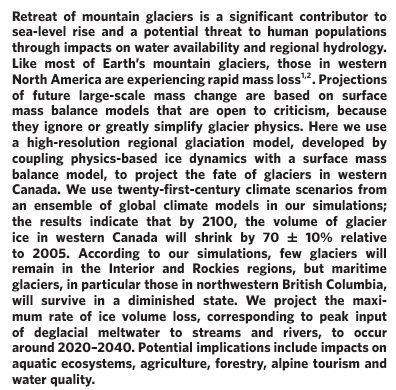
 Andrew Phillip Chernoff