Bringing the Union Advantage to Those Who Need it Most


Thursday, May 8, 2014   http://www.cope378.ca

Wednesday at the Canadian Labour Congress Convention centred around bringing the benefits of unions to people who don’t currently have access: unorganized workers, particularly young workers, racialized workers, migrant workers, women, and people with disabilities.

On a morning panel, “The Labour Movement is About a Better Life for Everyone”, activists from other organizations talked about labour’s ability to make positive change for everyone.

Acting General Secretary of the Bangladesh Free Trade Union Congress Repon Chowdhury talked about the positive impact of the union-driven Accord on Fire and Building Safety in Bangladesh.

“We must work together and the Accord is one of the best things around the world that we have, from trade unions working together,” Chowdhury said. But he also noted there are companies that have not signed on, and he urged Canadians to pressure companies who have not yet signed the accord.

Vice-President of the Canadian Association of Retired Persons (CARP) Susan Eng said they rarely use their organization’s full name anymore, “because so few of our members can afford to retire.”

She thanked the labour movement for leading the drive to expand the Canada Pension Plan, even though many union members have workplace pensions: “The key is that we put our shoulder to the wheel, even when it doesn’t benefit our organizations.”

She advised unions to join with allies and to focus their efforts on one thing at a time: “The need is to mobilize, to concentrate, to get that specific thing done first, even if you have ten other things you must do, you must do this one thing first.”

Finally, Anthony Pizzino from the Occupational Health Clinics for Ontario Workers said a key role unions can play is helping raise awareness of issues that affect all working people.

“In Canada…five workers a day don’t come home,” he said, adding that Canadians most aware of the shocking numbers of workplace injuries and deaths.

Another afternoon panel, “Bringing the Union Advantage to Those Who Need it Most”, had labour academics and activists talk about helping unorganized workers to join unions.

File 7691

Brock University Labour Studies Professor Dr. Kendra Coulter (right) began by talking about how unions can reach out to people to show how important they are to a fair society.

Coulter said we need to look to countries like Sweden that have high union density, which came about because “workers in the past collaborated, not just in solidarity at work but also a sense of social solidarity, which is that we all do better when things are fair at work.”

“We need to reclaim [job creation] as a workers’ agenda and creating good jobs,” Coulter said, “If we don’t raise this low wage floor, if we don’t tackle this scourge of precarious work, in 20 years we

Acting Director of the AFL-CIO Department of Investment, Brandon Rees, said unions have to work globally, because the growing inequality we see in Canada is growing in the rest of the world too.

“The challenge is that capital is global and corporations are increasingly global…that means that we too must be organizing on a global scale to address these economic challenges that globalization presents,” said Rees.

Next, AFL-CIO Organizer Chloe Osmer talked specifically about how we need to change strategies to organize in the service-based economy, with the proliferation of precarious work.

“The lack of regulation, the shift to a service sector has made it more challenging to organize but it has also given us a lot of opportunities,” Osmer said.

Osmer talked about her experience organizing car wash workers in Los Angeles, and how it was important to mobilize younger organizers and students.

“We have to use every tool that we can to turn people’s public perceptions of unions around, because most people you’ll run into in the workplace haven’t had the experience of being in a union. They don’t know what the reality of the situation is. The more that young people are reflected in our unions and the way we operate and our organizers the more young people will see it’s about them.”

During the day delegates to convention debated several resolutions. In the morning, delegates passed a resolution on mental health, one opposing the end of Canada Post home mail delivery, and another committing the Canadian Labour Congress to developing an educational module on violence against women and other steps on this issue, including supporting a federal inquiry into missing and murdered Aboriginal women and the creation of a national action plan on violence against women.

In the afternoon the convention passed the final convention policy paper “Organizing for a Fairer Tomorrow” and passed more resolutions, including one on labour rights and another directing the CLC to develop a national young workers’ strategy, including opportunities for young workers in the workforce and the labour movement.

Near the end of the day COPE 378 Human Rights Committee Chair and Executive Board Member Joyce Galuska spoke on a resolution on human rights. She wanted to particularly highlight the issue of missing and murdered indigenous women.

“I’m kind of sad to be standing here three years after the last conference knowing my CLC hasn’t been bold enough to fight this issue,” Galuska said. She thanked COPE 378 for their campaign, which allows members to send messages to Harper in support of justice for these women.

“I want to inundate the Harper government with a mountain of shame letters because I wanted the CLC to encourage every one of their affiliates to write to Stephen Harper, either by creating their own campaign or joining the Amnesty International Stolen Sisters campaign.”
IBEW 213 & COPE 378 Locked Out FortisBC Workers Rally Held In Trail B.C.

December 7, 2013   By Andrew Chernoff, West Kootenay Labour Council

TRAIL-IBEW 213 and COPE 378 locked out FortisBC workers, labour and community supporters along with distinguished dignitaries gathered at the FortisBC office in downtown Trail, B.C. on December 7, 2013.

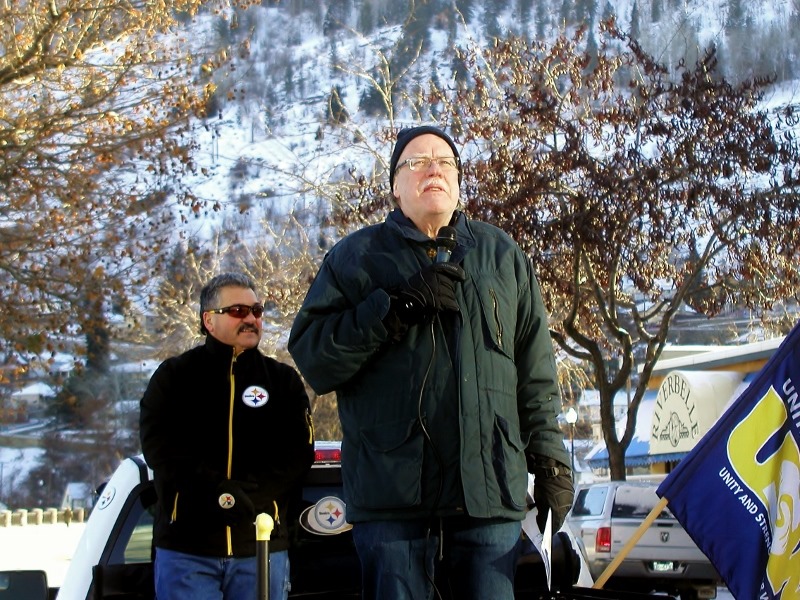
Jim Sinclair (right), president of the BC Federation of Labour addressing locked out FortisBC workers and their supporters at rally in Trail on December 7, 2013. Armiindo deMedeiros (left) president of USW 480.                                                                                                                                                              Jim Sinclair, president BC Federation of Labour speaking at support rally for locked  out FortisBC workers in Trail B.C. on December 7, 2013.

Those at the rally braved wind and cold temperatures as cold as –16 degrees Celsius, listening todistinguished speakers demanding that FortisBC do what it did with COPE 378 FortisBC inside workers last week——bargain in good faith a new and fair collective agreement—–and end the six month lock out imposed by them on June 26.

Speaker after speaker…….

  • Jim Sinclair, president of the BC Federation of Labour;
  • David Black, president of COPE 378;
  • Katrina Conroy, NDP MLA Kootenay West;
  • Susan Lambert, past president of the B.C. Teachers Federation;
  • Andy Davidoff, president of the Kootenay-Columbia Teachers’ Union;
  • Rod Russell, IBEW 213 business manager
  • Armindo deMedeiros, president USW 480

—–all encouraging locked out FortisBC workers to continue standing their ground.

The speakers also appealed to FortisBC locked out worker supporters in the community and the House of Labour, to continue demanding FortisBC do the respectful and dignified thing: sit down and negotiate in good faith a new and fair collective agreement, and end this lockout that is now in its sixth month.

Unless a Grinch’s heart grows, this story of 225 locked out electrical workers won’t have a very merry ending. The latest round of negotiations between FortisBC and its electrical workers failed earlier in the week; all but ensuring the workers will be locked out for the holiday season.

Two days of talks broke off on December 5, 2013 with no end in sight for the nearly six month lockout that began on June 26.

For 225 workers across the southern interior who haven’t seen a paycheque in six months, Christmas is going to be really tough. For FortisBC which has saved over $7 million dollars and is only raising rates another 19% by 2018, obviously Christmas doesn’t matter much. Except of course for its CEO, who will take in another $1.4 million this year. He’ll certainly be jolly, while his workers are freezing and his customers are paying more.

Since locking out its electrical employees FortisBC has continued to only add requirements for a deal to be done. Negotiations collapsed today because the company will not budge from two significant demands: a mandatory compressed work week which entails longer working days for less money, and the Union’s surrender of its legal right to labour action in the System Control Centre.

After suffering six months without pay, the Union wanted its members back to work so at least Christmas could be a happy time spent with their family. Seeking to be flexible, three proposals were brought to the table. One was the same, identical deal FortisBC signed yesterday with COPE 378, its office workers, and the company said no. The second proposal was a basic, plain back-to-work agreement, that included only minimal wage increases of 2.5%-2%-2%-2.5%-2.5%, no other changes, and the company said no.

An IBEW 213 statement released after talks broke off on Thursday, stated:

Though it would be hard for workers with young families, the third proposal included a compromise on the mandatory compressed work week. All workers would be forced to be on the compressed work week if 50%+1 of the crew voted for it or if 75% of the workers’ headquarters voted for it. The company had already agreed to a 5% premium as compensation for working the longer 10 hour day which would significantly encourage workers to vote for it. However FortisBC rejected this compromise.

If these demands of a compressed work week and giving up right to strike were so important for FortisBC, why didn’t the company bring them up earlier? Why did FortisBC only make these demands months after its workers were locked out? It would appear FortisBC isn’t interested in a deal or compromise; it just wants its workers locked out until FortisBC can get whatever it wants.”

More pictures of rally:

David Black, Sean Smith, Stephanie Smith At FortisBC Locked Out Workers Rally In Trail, B.C. on December 7, 2013Kootenay-Columbia Teachers' Union Supporting FortisBC Locked Out Workers At Rally in Trail on December 7, 2013Nelson District Teachers Association and BCGEU union members supporting FortisBC Locked Out Workers At Rally in Trail on Decemb er 7, 2013Susan Lambert, former BCTF President Supporting FortisBC Locked Out Worker At Rally in Trail on December 7, 2013Armindo deMedeiros, USW 480 President speaker at rally in support of FortisBC locked out workers in Trail on December 7, 2013Supporters of locked out FortisBC workers, and locked out FortisBC workers at rally in Trail on December 7, 2013 to get public support to have FortisBC end lockout.Rally in Trail supporting locked out FortisBC workers on December 7, 2013Armindo deMedeiros (left) and Katrine Conroy NDP MLA Kootenay West at rally supporting locked out FortisBC workers in Trail on December 7, 2013.David Black (right) COPE 378 president addressing rally in support of locked out FortisBC workers on December 7, 2013 in Trail B.C. Armindo deMedeiros (left) USW 480 president.Rocco Mastrubono, president CUPE Local 339-Nelson Civic in Trail on December 7, 2013 supporting locked out FortisBC workers at rally.Andy Davidoff, president Kootenay-Columbia Teachers' Union  preparing to speak at rally in support of locked out FortisBC workers in Trail B.C. on Decemb er 7, 2013. Armindo deMedeiros (left) lets out a laugh as Davidoff prepares to speak.Locked out FortisBC workers at their rally in Trail B.C. on December 7, 2013 listening to speakers demanding FortisBC negotiate new collective agreement and return locked out IBEW 213 and COPE 378 workers back to work.Rod Russell IBEW 213 business manager speaking at rally in support of locked out FortisBC workers in Trail B.C. on December 7, 2013.Susan Lambert, former BCTF president bringing greetings from current BCTF presidednt Jim Iker and addressing rally in support of locked out FortisBC workers in Trail B.C. on December 7, 2013.

IMPORTANT EVENT: FortisBC Locked Out Workers Rally, December 7, 2013 in Trail, B.C.

IBEW 213 & COPE 378 Locked Out FortisBC Workers-RALLY

Saturday, December 7, 2013

1:00 pm – 3:00 pm

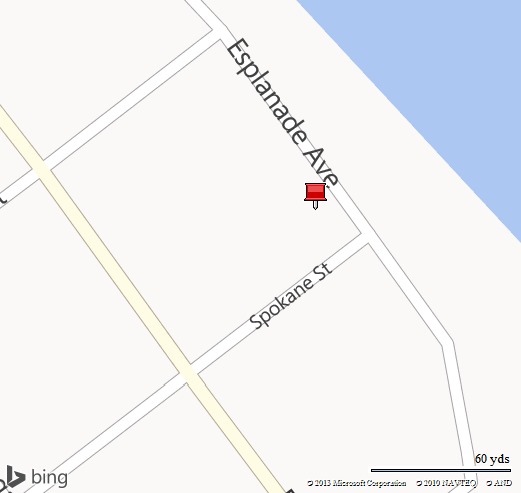
Location: FortisBC Building, 1290 Esplanade Avenue, Trail, BC

Bring your banners and flags!

Map picture

War of words continues in FortisBC lockout, union says company saving $7 Million in wages

by Bruce Fuhr on 01 Dec 2013 http://thenelsondaily.com

Members of the IBEW say FortisBC should pass on savings due to the lockout back to customers. — The Nelson Daily file photo

Members of the IBEW say FortisBC should pass on savings due to the lockout back to customers. — The Nelson Daily file photo

The war of word continues to be exchanged between the two sides in the labour dispute at FortisBC.

The locked out International Brotherhood of Electrical Workers 213 said in press release FortisBC has saved $7 Million from not paying wages and should not be granted an increase to raise rates by the BC Utilities Commission.

“Considering FortisBC has saved millions of dollars from not paying its locked out workers, these rate increases do not seem fair or right,” said Rod Russell, Assistant Business Manager of IBEW Local 213.

“FortisBC should not be profiting from locking out its workers, especially since its billing customers for services they are not receiving.”

The IBEW Local 213 said in an October 18 submission to the BC Utilities Commission FortisBC outlined its five year plan to raise rates by 3.3%, 3.6%, 3.6%, 3.6% and 3.6%; through compounding these increases will make FortisBC rates 19% higher than they are now.

However, speaking on behalf of FortisBC, Director of Communications Joyce Wagenaar said, although labour costs have decreased, there have been increases in other areas such as “such as management and exempt staff covering work usually done by IBEW employees and legal costs.” 

“We’ve provided these updates to the BCUC as part of our annual rate setting process,” Wagenaar told The Nelson Daily.

“As part of this rate setting process, we provided a five-year plan to the BCUC that anticipates electricity rate increases of 17.7 per cent over five years. “

“These increases are required to make necessary investments in the electrical system and to address rising costs,” Wagenaar added.

“This plan does not factor in BC Hydro increases or the addition of any major projects, which are taken into account during the annual rate setting process.”

FortisBC managers have been performing the work of unionized workers since the company locked out IBEW Local 213 June 26.

More than 200 employees (all with FortisBC Electric) that includes electricians, linemen, millwrights, meter readers and office staff have been affected by the lockout that stretches from Princeton to Creston and up through the Okanagan Valley to Winfield.

FortisBC and IBEW Local 213 have been without a contract since January 31, 2013.

Russell said FortisBC is doing a less than perfect job servicing customers during the lockout.

Not only are customers getting less services from management staff, they are paying the same monthly costs as FortisBC estimates electricity consumption through the dispute instead of reading meters to obtain the correct charge.

“A lot of people are struggling to pay their electricity bills and that’s including FortisBC’s own locked out workers,” Russell explained.

“But not only has FortisBC locked them out in the cold and deprived them of a paycheque, it’s raising their bills too.

“We do not know how FortisBC intends to correct customer billing given they have their two tiered rate structure and have not been reading meters consistently.”

Waganeer disputes the union claims saying the company has been following the Essential Services Order won by the IBEW through application to the B.C. Labour Relations Board, which restricts company managers from reading customer meters,

“Since June 26, we have been estimating customers’ electricity use,” said Waganeer.

“Our estimates are based on historical usage at their address.”

Waganeersaid for new customers without any historical information, FortisBC uses a comparison based on the region where they live.

“Since September, our ability to read meters has increased but we are assessing and prioritizing based on the limited resources we have available to fulfill these duties,” Waganeer said.

“At any time, if customers feel that their bill does not reflect their use, or that energy use has changed, please call our contact center at 1-866-436-7847.”

Russell said the IBEW Local 213 has been contacted directly by customers asking if the union would lead a class action suit to recover these funds. 

IBEW Local 213 is looking into a class action suit feeling FortisBC should ensure customers are not overbilled. 

The lockout entered its sixth month last week.

No new talks are planned as the sides are spending more time at the B.C. Labour Board than at the negotiating table.

The last labour dispute at the power company was in 2001.

The job action in 2001 lasted almost four months.