Federal Budget 2016: First steps towards a fairer and more prosperous Canada | Canadian Labour Congress

Tuesday, March 22, 2016

The Canadian Labour Congress responded to today’s federal budget announcement with optimism, saying it begins the important work of reinvesting in Canadian communities, creating jobs, addressing children’s and seniors’ poverty, and repairing the programs and services Canadians rely on.

“This budget is a step in the right direction for our economy, particularly the Employment Insurance improvements, which will make a big difference for unemployed Canadians, and help stimulate the local economies that need it most right now,” said Canadian Labour Congress President Hassan Yussuff.

Yussuff also highlighted the government’s infrastructure commitments: “I’m pleased to see significant funding for public transit, affordable housing, social infrastructure and green infrastructure. We can look forward to this creating jobs and helping to build communities across Canada.”

In terms of skills training and workforce development, Yussuff noted that the budget contained promising measures, but fell significantly short of what was promised in the government’s election platform.

However, Yussuff said he was encouraged to see the government announce significant and long-overdue investments in First Nations communities, including support for education, child care and infrastructure, particularly water and wastewater infrastructure.

“It is inexcusable that in a nation like ours, a critical necessity like clean water is not available to all. I’m very glad to see the government recognize that and commit the funding necessary to end boil water advisories on reserve in five years,” Yussuff said.

Finally, Yussuff said he was pleased to see the government’s action on both child poverty and seniors’ poverty in today’s budget.

“Returning the OAS eligibility age to 65 and increasing the Guaranteed Income Supplement for single low-income seniors are important signs that this government believes seniors should not be forced to retire in poverty. The next step on this issue is universal expansion of the Canada Pension Plan,” Yussuff added.

Other aspects of the 2016 budget the CLC highlighted include:

  • The government’s budget projections maintain the Conservatives’ reduced health care transfers to provinces and territories. The CLC said they are disappointed by that, but hopeful that continued talks between the Health Ministers will result in new, sustained funding for health care that allows our system to meet the needs of our aging population.
  • An additional $245 million to welcome and resettle an additional 10,000 Syrian refugees to Canada. The CLC commended the government for this announcement, and pledged to continue unions’ support for refugees.
  • Commitment to a National Early Learning and Child Care Framework, although no immediate investments are promised in the coming year outside of improvements to on-reserve child care facilities. The CLC believes families could have benefited by immediate, modest investments this year, to help provinces and territories begin to address child care access and affordability.
  • Restoration of the Court Challenges Program, an important service cut by the Conservatives that made financial assistance available to individuals and groups to assert their equality rights in Canada’s courts.
  • Support for the automotive sector and the promotion of food safety. However, the CLC noted that these and many other positive aspects of the budget could be compromised if the government ratifies the Trans-Pacific Partnership.

Source: Federal Budget 2016: First steps towards a fairer and more prosperous Canada | Canadian Labour Congress

Job numbers highlight need for urgent EI reform

Friday, February 5, 2016

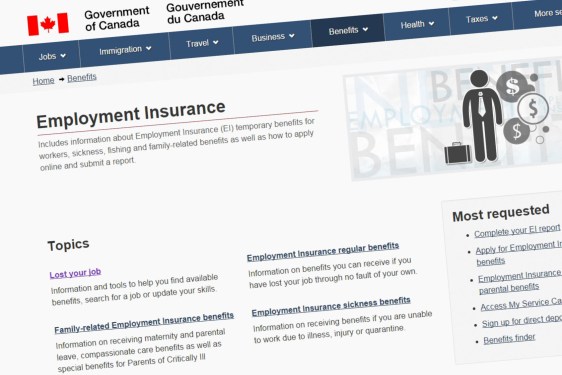
Canada’s largest labour organization says today’s job numbers from Statistics Canada highlight the need for the kind of economic stimulus that urgently needed Employment Insurance (EI) reforms would produce now.

The job market was stagnant in January and unemployment rose to 7.2 percent. In Alberta, unemployment rose to 7.4 percent, the first time it has been above the national average since 1988.

Over the past year, unemployment has risen by 123,000 workers across the country: more than half of these (69,000) are in Alberta. Most job creation has been in Ontario, while other provinces continue to struggle with slack labour markets.

Self-employment has grown twice as fast (1.3 percent) as employment (0.6 percent). Private sector job growth continues to be weak, adding only 30,000 jobs over the past 12 months — a growth rate of only 0.3 percent. Two sectors account for most job growth over the last year — health care and social assistance added 90,000 positions, and professional, scientific, and technical services added 38,000 positions.

“These job numbers and the slow economic growth we’re seeing now demonstrate the need for the kind of immediate stimulus that would come from urgently needed fixes to the employment insurance program,” said CLC president Hassan Yussuff.

The Liberal government has promised to review and improve the program, but Yussuff says there are urgently needed reforms that can be immediately implemented.

“Fewer than 40 percent of unemployed Canadians – and fewer than 37 percent of unemployed Albertans – are receiving EI,” said Yussuff. “Part of the problem is that workers run out of benefits before they can find a new job.”

The immediate reforms the CLC hopes to see include:

  • Temporarily extending EI benefits for an additional five weeks to help displaced workers who risk exhausting their benefits while hunting for hard-to-find jobs. This would be especially helpful in hardest hit regions where jobs are especially scarce.
  • Returning to the previous definition of “suitable employment” and restoring the “best 14 weeks” pilot programs that created a single national standard for determining benefit levels.
  • Eliminating the eligibility requirement of 910 hours of insured employment for new entrants and re-entrants to the labour market to make access to EI fairer, especially for young workers and new Canadians.
  • Hiring staff to make up for years of devastating cuts under the Conservatives to help eliminate unacceptable delays faced by workers trying to get benefits approved, decisions on appeals, or questions answered.
  • Implementing the election promise for an increase of $200-million in funding for provincial literacy and essential-skills training aimed at those who don’t qualify for EI. While it’s not part of EI, it would help where it’s needed most.

“It takes time for infrastructure spending to kick in and create jobs, so let’s act now to stop penalizing unemployed workers, get them the benefits they paid into and so urgently need, and help them start contributing to their local economies again,” said Yussuff.

           Labour Force Survey

Source: Job numbers highlight need for urgent EI reform | Canadian Labour Congress

Liberals shouldn’t sign Harper’s TPP deal

The massive Trans-Pacific Partnership puts corporations, not Canadians, first and the federal Liberal government should not sign it.

Representatives of the 12 countries involved in the TPP are gathering in New Zealand Feb. 4 to sign the far-reaching treaty.

The deal was reached in the dying days of the Harper Conservative government and during a federal election. The full text was only made public in November. The new government is still analyzing the 6,000-page text and has yet to carry out an economic impact assessment. So why the rush to sign?

“You or I would never sign a contract without reading the fine print,” said CUPE National President Mark Hancock. “But that’s exactly what the Liberals are about to do. It’s a serious mistake that will have consequences for decades to come.”

What we already know about the TPP is bad news.

The TPP gives new rights to the world’s richest corporations, while workers and the environment lose ground. The deal supports privatization, will drive down wages, and increases the cost of health care and education. A recent study shows Canada will lose at least 58,000 jobs in the first decade under the TPP.

Independent analysis confirms the TPP is not about helping Canadian exports – 97 per cent of our exports to TPP countries are already duty-free.

The TPP extends the length of patents on prescription drugs – a move that could cost our health care system up to $630 million a year, and is a major roadblock to a universal national prescription drug program. The TPP’s longer and stricter copyright protections could mean higher costs for schools, universities and libraries.

The TPP’s investor-state dispute settlement (ISDS) system will let foreign corporations sue governments if a law or regulation interferes with their investments – and profits. Under these NAFTA-style rules, Canada is already the most-sued developed country.

“Governments, not corporations, should set our country’s laws and policies. The TPP stands in the way of immediate and bold action on climate change,” said CUPE National Secretary-Treasurer Charles Fleury.

The Harper government tried to buy its way around some of the deal’s consequences, promising billions in compensation for auto parts makers, as well as dairy, egg and chicken farmers. And the full social and economic costs of the TPP are only now being tallied.

“The TPP is a corporate rights deal. It rewrites laws and regulations in the interests of big business, at the expense of citizens and the environment,” said Hancock. “Canada should not sign this dangerous deal.”

Source: Liberals shouldn’t sign Harper’s TPP deal

Labour power among the rank and file


June 13, 2014 http://rankandfile.ca

AC_pension_workers

ByDavid Bush

For the first time in Canadian Labour Congress (CLC) history an incumbent presidential candidate was defeated. The house of labour has its first new president in 15 years, but what does that really mean for the labour movement?

Newly elected Hassan Yussuff used increasingly militant rhetoric throughout his campaign and began to speak about the need for more grassroots organizing, a change from former CLC president Ken Georgetti’s conservative approach to membership mobilization. Yussuff’s campaign was, no doubt, influenced by the rhetoric coming from Hassan Husseini’s presidential campaign, which was focused on restoring workers’ power at the CLC. For those who are concerned about rebuilding the trade union movement and empowering workers to engage in collective struggle, this change can be nothing but positive.

However, the change possible as a result of new leadership is limited. Many on the left, from social democrats to the far left, cling to a narrative that says those at the top dictate the direction of the labour movement. This can lead to problematic conclusions such as believing a new leader will bring about a new day for labour, or that weak leaders are holding the workers’ movement back.

Yes, we need better leaders; leaders who are willing to use their bully pulpit and open up the space for action. And yes, we need to organize to win local and national leadership contests on progressive terms. But in the absence of an organized rank and file willing to seize these opportunities, even the most radical labour leadership can do little.

Perhaps the most compelling story of the importance of grassroots organizing comes from the Chicago Teachers Union; its inspiring defense of public education was made possible by grassroots activists. Facing a conservative union leadership, teachers organized through the Caucus of Rank and File Educators began to organize a network of progressive teachers that eventually won leadership. CORE remained active and helped push their union towards a very strong strike mandate: of the 90 per cent of CTU members who voted, 98 per cent were in favour of striking. The successful strike reinvigorated activists in Chicago to fight against neoliberal policies that affect both schools and communities.

In Canada, despite union density remaining somewhat stable, the Canadian labour movement faces a challenging situation. The employer offensive has put unions on their back foot. We have seen an increasing number of lockouts, a higher frequency of legislative attacks, a pattern of concessionary bargaining at the table and a decline in days lost to strikes.

Objective economic and political factors explain the weak position that unions find themselves in: the decline of manufacturing, the restructuring away from larger workplaces (which are and have been bastions of high unionization), the growth of the service sector, the decline of the American labour movement, the ideological shift towards neoliberalism and so forth. But there are also subjective factors such as a move away from devoting resources to organizing, the entrenchment of a servicing culture within unions and the inability of unions to mobilize their membership around political goals beyond their own workplaces.

Union administration is often seen as a layer of individuals whose social position within the union structure leads them to be more conservative, no matter how great or progressive they are on an individual level. Analyses can collapse into simply blaming the bureaucracy: elected officials and staff are motivated to rein in the class struggle in order to preserve the material benefits and political voice their position affords them. The nature of their position also separates them from the day-to-day concerns on the shop floor.

This analysis doesn’t acknowledge deeper structural realities of trade unions in our society.

The trade union movement is the product of a deeply unjust and unequal economic system called capitalism that aims to squeeze as much profit from workers as possible. Unions were formed to defend and increase what little power workers had through collective action. Through many hard fought battles, labour activists won collective legal rights. This allowed unions to entrench more gains at the bargaining tables but it also created the conditions for the growth of bureaucratic structures to regulate and manage labour relations under the new and increasingly specialized legal framework.

To understand the trade union bureaucracy as only a layer of individuals whose social position is divorced from the rank and file rather than a structural product of the class struggle opens the door for a less than helpful understanding of the problems facing unions. It is not a matter of union leaders and bureaucrats simply holding back the union movement. In this regard, a certain leftist criticism of the union bureaucracy begins to dovetail with a very conservative reading of how change is enacted: everything focused on the top.

We must start to think about how change happens in the union movement.

Last February, when a UPS worker in Queens, New York, was unfairly fired, a union briefing turned into a wildcat strike of 90 minutes. After the wildcat, UPS made their intentions clear to fire all 250 workers involved, and started firing workers at random. Thanks to intense organizing, enough pressure was placed on UPS by their clients and other unions that they were forced to re-hire all threatened workers.

As Sarah Jaffe notes, “the wildcat action had to be backed up with organizing both inside the union and within the community.” Indeed, the militancy of the membership, and their willingness to place their jobs on the line to save a colleague’s won the day.

As  a good friend of mine once told me, those who want the labour leadership to simply call for the most militant of tactics without actually doing the work of creating the conditions for this happen ourselves, want to substitute the power of workers for the pronouncements of leaders. You want to wildcat, go on general strike or occupy your workplace? Great, but if we can’t win that argument in our own workplace then why should we expect leadership to do the heavy lifting for us?

To make the union movement a stronger force for the whole working class, we must move beyond expecting leaders and bureaucrats to lead the charge, or blame them when militancy fails to materialize. The left must organize to empower the widest layer of workers to take action to better their lives. This means actively engaging with all unions, regardless of if they are deeply conservative.

Scapegoating the labour leadership for a variety of collective failures won’t turn the tide of the attacks. The only way we can begin to challenge the forces lined up against it is to reach out to and empower the broader working class to fight back.

This can only truly happen if rank and file activists organize from the bottom up.

This piece was first published on Rabble.ca

May 17th is the International Day Against Homophobia and Transphobia 2014

Ten years ago, on May 17th homosexuality was removed from the International Classification of Diseases of the World Health Organization (WHO). This victory was a historic step towards recognizing freedom from discrimination based on sexual orientation and gender identity as a fundamental basic human right. Today the Canadian Labour Congress (CLC) stands in solidarity with the lesbian, gay, bisexual, trans and queer (LGBTQ) community in the struggle to end homophobia and transphobia.

Over the past ten years the movement to end homophobia and transphobia has gained strength.  Most recently, the struggle for protection from discrimination based on gender identity and gender expression has built momentum.  Many provinces and territories are either working on or have included gender identity and gender expressions in their human rights codes.  Ontario, Manitoba, Nova Scotia, Newfoundland, Prince Edward Island, and the Northwest Territories already include gender identity and gender expression as forbidden grounds for discrimination under their Human Rights Codes.  Bill C-279, which would amend the Human Rights Act to include gender identity is now awaiting a vote in the Senate.

We still have many challenges.

Despite the work that has been done to eliminate homophobia and transphobia, crimes and hatred against the LGBTQ community still exist at home and abroad. Over 76 countries around the world have deemed same-sex relationships illegal, and in some areas being a member of the LGBTQ community is still punishable by death (capital punishment). In Uganda, draconian anti-homophobic legislation has resulted in increased violence and murders of gay activists, individuals and allies. Russia’s law banning “homosexual propaganda”  has sparked an increase in homophobic violence.  The law even imposes fines for anyone providing information on homosexuality to minors and puts the children of same-sex families at risk. 

Even in Canada there are challenges to overcome. Despite the many gains in legislation and recognition for same-sex relationships and families, there is an increased backlash which puts these gains at risk.

Trinity Western University, a private Christian university in British Columbia is trying to establish a law degree program that would purposely exclude any student openly LGBTQ from graduating. The school has also asked its students to avoid homosexual sexual activities. Despite these clearly discriminatory policies, the new program has received preliminary approval from B.C.’s Ministry of Advanced Education, and from the Federation of Law Societies of Canada.

The Ontario English Catholic Teacher’s Association (OECTA) has faced considerable backlash for its decisions to support  Gay-Straight Alliances in schools and participate in Toronto’s World Pride parade. 

Teachers understand that LGBTQ students still face extreme cases of bullying which lead to dropping out of school, social isolation and, tragically, death and suicide.  According to OECTA’s President, James Ryan, “OECTA believes that taking the public stand of marching in the WorldPride Parade 2014 will provide comfort and support to our students and teachers who frequently struggle in a hostile environment that does not offer them the support and protection they are owed as citizens of Ontario and Canada”. The Canadian Labour Congress commends the dedicated teachers and students who fight these injustices everyday by forming Gay Straight Alliances, safe spaces, who teach anti-bullying and promote acceptance of all gender identities in the school.

Canada’s labour movement will continue to fight for fairness and equality for our LGBTQ members and their loved ones―in the workplace and in the broader community. We are committed to continuing the fight for workplace legislation against violence and bullying, as well as federal legislation and stronger collective agreement language for LGBTQ people. The CLC will continue to work with our allies to mobilize the Senate to pass Bill C-279 for trans people to have full rights under Canada’s Criminal Code and the Canadian Human Rights Act.

Together, we will end homophobic and transphobic discrimination in our workplaces and communities.